
8 Best Alternatives to Custom Jewelry for Brands & Importers
8 Best Alternatives to Custom Jewelry for Brands & Importers
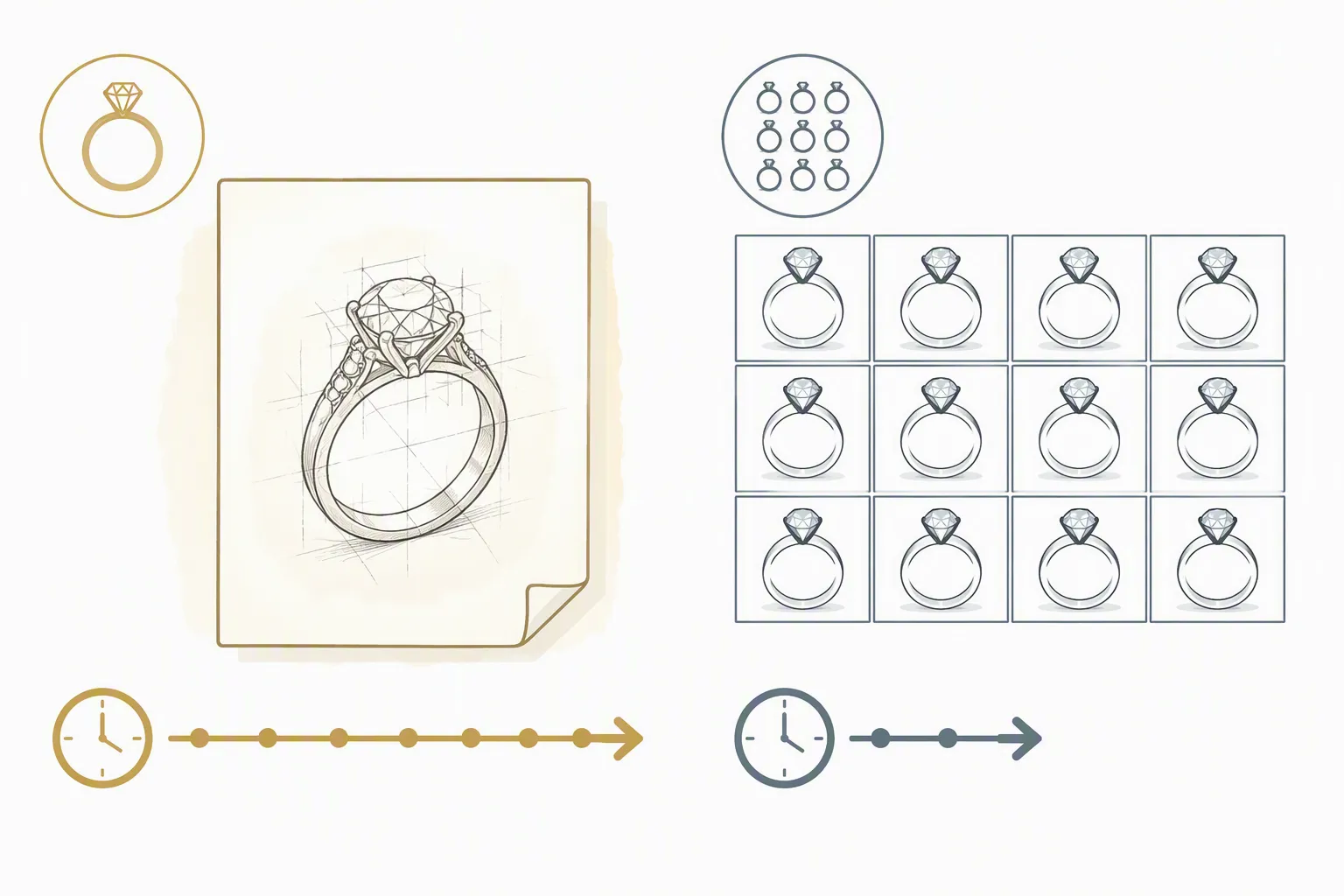
Custom jewelry solves a specific problem well — unique designs tied to your brand identity or customer's sentiment. But it also creates specific problems: high per-unit costs, long lead times, and minimum order commitments that punish early-stage buyers who aren't ready to bet on a single design at scale.
If you've been quoted a 500-piece MOQ for a first sampling run, or waited 12 weeks for a production batch only to find the quality inconsistent, you already understand why "custom" doesn't always mean "right." The alternatives listed here span the full spectrum — from DTC personalized jewelry brands for consumer-facing businesses to vetted OEM wholesale suppliers for importers and B2B buyers actively sourcing at volume.
Why Look for Alternatives to Custom Jewelry?
Cost is usually the first trigger. Full custom jewelry — where you're submitting CAD files, approving wax casts, and running bespoke production — carries premium unit economics that don't compress easily. When a DTC store owner needs 50 units of a drop earring to test a new design with their audience, custom OEM often prices them out before they can validate demand.
Lead times compound the problem. A standard custom production cycle runs 6–10 weeks from artwork approval to shipment. For seasonal businesses — those building inventory around Valentine's Day, the holiday window, or regional fashion weeks — a missed cycle isn't just inconvenient; it's lost revenue. Stock catalog suppliers and semi-customizable alternatives can fulfill in days to weeks, not months.
Lock-in and communication risk matter more than buyers admit upfront. Full custom jewelry ties you to a single factory's capabilities, pricing, and availability. If your manufacturer raises MOQs mid-season or misses a quality standard on plating thickness, your options narrow fast. Buyers sourcing amethyst pendants, garnet drop earrings, or turquoise-set chokers have found that stock suppliers with strong QC infrastructure de-risk re-order cycles considerably.
What to Look for in a Custom Jewelry Alternative
Before comparing options, align on what you actually need. Buyers landing here from different starting points have different answers:
- MOQ flexibility: Can the supplier fulfill 12–50 units per style for testing, or is 300+ the floor?
- Material and finish range: Do they stock gold-plated and rhodium-plated copper, 925 sterling, or natural stones like peridot, garnet, and amethyst?
- Customization depth: Is branding (packaging, hang tags, logo engraving) available, or is it purely off-the-shelf?
- Quality assurance process: Is there in-house QC before shipment, or does the buyer absorb inspection costs separately?
- Trade terms and payment flexibility: T/T, PayPal, L/C, and Xtransfer each matter to different buyer profiles in the US, EU, and MENA markets.
- Lead time transparency: Published production windows versus quoted-at-inquiry windows are very different commitments.
- Multilingual support: If your procurement team operates in French, Arabic, German, or Spanish, supplier communication quality directly affects order accuracy.
Top 8 Alternatives to Custom Jewelry
1. STRAND — Low-MOQ OEM Wholesale Jewelry from Hangzhou
Best for: Importers, B2B buyers, and DTC store owners sourcing earrings, sets, and chains at scale without high MOQ barriers.
Pricing: Available on request via strandjewelry.com; EXW and FOB trade terms available.
Key strengths vs custom jewelry:
- MOQ of 12 pcs/style on 109 of 114 catalog styles — meaning you can test a garnet drop earring and a two-tone rhinestone necklace set in the same order without committing to 300 units of each
- Select styles available from 1 piece, which eliminates the minimum commitment problem entirely for sampling
- In-house QC inspection before every shipment — not a third-party cost the buyer absorbs
- Multilingual sales team covering EN, FR, AR, ES, DE, and RU, which directly serves procurement teams across the US, EU, UK, and MENA
Limitations / trade-offs:
- Best suited for B2B and DTC buyers, not individual consumers buying a single piece
- Full bespoke CAD design from scratch requires engaging the custom OEM path rather than the stock catalog
- Catalog is 114 styles, so buyers needing hundreds of SKUs will need to supplement
How it compares to custom jewelry: Traditional custom jewelry gives you unlimited design freedom but charges for every revision, requires high minimums, and builds in long sampling cycles. STRAND's approach — a vetted stock catalog with custom OEM available — lets buyers validate designs at 12 pcs/style before scaling into full custom production. The custom OEM path includes gold-plated and rhodium-plated copper finishes, 925-style silver options, glass bead and natural stone settings, giving serious buyers comparable material depth without the exploratory cost.
[For a deeper look at how OEM suppliers compare across sourcing models, see: Custom Jewelry: 6 Sources Buyers & DTC Brands Need in 2026]
2. Jewlr — Consumer Personalized Jewelry at Scale
Best for: DTC brands wanting to benchmark consumer personalized jewelry pricing and feature sets.
Pricing: Personalized Name Necklaces from $84 (as of September 2026); pieces range broadly across birthstone rings, engravable pendants, and photo lockets.
Key strengths vs custom jewelry:
- 641 personalized jewelry products across rings, necklaces, bracelets, and earrings — among the largest ready-to-configure catalogs available
- Engravable options with birthstone selections including amethyst, garnet, peridot, and aquamarine give consumers meaningful personalization without bespoke production timelines
- Materials include 18K Gold Plated Silver, 925 Sterling Silver, and Vermeil — covering mid-market to near-luxury positioning
- Free shipping and a 99-day return policy significantly reduce consumer purchase risk
Limitations / trade-offs:
- Consumer-direct only — no wholesale or B2B purchasing path
- Personalization is configuration-based (engraving, birthstone swaps), not true bespoke manufacturing
- DTC store owners cannot white-label or resell Jewlr products
How it compares to custom jewelry: Jewlr sits at the consumer end of the personalization spectrum. Where custom jewelry means working with a manufacturer on original designs, Jewlr lets consumers configure existing templates. That's a significant limitation for buyers who need branded product, but a useful benchmark for DTC operators who want to understand what consumers are willing to pay for personalized pieces before commissioning custom production.
3. Kendra Scott — Retail-Level Customization with Brand Recognition
Best for: DTC brands studying how established fashion jewelry brands handle customization and in-store experiences.
Pricing: Mid-range retail; customization options typically add $10–$30 to base prices.
Key strengths vs custom jewelry:
- Kendra Scott's Color Bar concept lets customers swap stones (including turquoise and amethyst) in real time at stores — a low-friction customization model
- Strong brand equity that DTC operators can learn from when designing their own product customization flows
- Clean aesthetic positioning bridges fashion and near-luxury without diamond pricing
Limitations / trade-offs:
- No wholesale or OEM path — Kendra Scott is purely a retail brand, not a supplier
- In-store Color Bar experience doesn't translate to e-commerce in the same way
- Premium retail pricing makes it a poor direct comparison for importers sourcing at volume
How it compares to custom jewelry: Kendra Scott offers the appearance of customization — stone swaps within existing settings — rather than true custom manufacturing. For buyers, the relevant takeaway is positioning: customers pay a premium for perceived customization even when the underlying product is semi-fixed. That's a pricing lesson worth applying to your own catalog strategy.
4. Kay Jewelers & Jared — Mass Retail with Personalization Services
Best for: Understanding what mainstream US retail stores offer in the personalized jewelry category.
Pricing: Mid-to-luxury retail; diamond and gemstone personalized pieces often start at $200+.
Key strengths vs custom jewelry:
- Jared and Kay stores offer engraving, birthstone selection, and ring resizing at point of sale — convenient for consumers
- Nationwide retail presence builds consumer trust that online-only brands have to earn
- In-store consultants guide consumers through design options, reducing abandonment
Limitations / trade-offs:
- No B2B or wholesale supply path — these are retail chains, not suppliers
- Premium retail markup makes unit economics irrelevant for import buyers
- Personalization depth is limited to configuration within existing styles, not original design
How it compares to custom jewelry: Kay and Jared stores occupy the traditional jewelry retail space that custom jewelry disrupted — they're reference points for consumer expectations around service and quality, not competitors on price or MOQ. Importers won't source from them, but DTC store owners should understand what the brick-and-mortar luxury experience delivers, since their online customers are comparing against it.
5. Made by Mary — Fine Personalized Jewelry for the DTC Market
Best for: DTC store owners studying fine jewelry personalization at the upper end of the fashion segment.
Pricing: Mid-to-fine range; personalized necklaces typically $60–$200+.
Key strengths vs custom jewelry:
- Dainty, minimal aesthetic with strong gifting appeal — birthstone and initial pieces perform well in the Valentine's Day and holiday windows
- Direct-to-consumer brand built around personalization storytelling, not just product specs
- Gold-filled and solid gold options position above fashion jewelry without full fine jewelry pricing
Limitations / trade-offs:
- No wholesale or resale path for B2B buyers
- Style range is narrow — the minimalist niche limits buyers needing statement pieces or vintage styles
- Production is US-centered, which means longer-term scaling costs more than China-based OEM sourcing
How it compares to custom jewelry: Made by Mary competes with custom jewelry at the consumer end — offering meaningful personalization within a defined aesthetic at predictable pricing. For importers, it's a design reference, not a supply chain option. The brand's strong customer loyalty around personalized gifting does illustrate a market segment worth serving with your own branded catalog.
6. Catbird NYC — Designer Personalized Jewelry
Best for: DTC operators targeting the design-conscious, ethical-sourcing consumer segment.
Pricing: Fine jewelry range; personalized pieces often $100–$500+.
Key strengths vs custom jewelry:
- Strong brand identity around ethically sourced materials and New York designer aesthetics
- Personalization catalog covers rings, necklaces, and stacking pieces with a cohesive visual identity
- Appeals to consumers who want personalization with a luxury positioning
Limitations / trade-offs:
- Price point limits the addressable market considerably
- No B2B sourcing path — purely DTC retail
- Style range skews very specifically toward minimal fine jewelry; not useful for buyers needing fashion-forward statement pieces
How it compares to custom jewelry: Catbird NYC competes with custom jewelry by offering thoughtfully designed, semi-personalized pieces that feel one-of-a-kind without full bespoke manufacturing. The ethical sourcing positioning is a differentiator custom jewelry often can't match at equivalent price points. For importers, the brand illustrates what consumers pay for storytelling and design credibility — a useful benchmark for positioning your own catalog.
7. JewelryThis — Online Personalized Jewelry Platform
Best for: Buyers looking for a mid-market consumer personalized jewelry reference point.
Pricing: Entry-to-mid range; accessible personalized pieces typically under $100.
Key strengths vs custom jewelry:
- Accessible price points expand the addressable market beyond mid-luxury buyers
- Online configurator approach makes personalization low-friction for gift buyers
- Covers birthstone, initial, and name personalization across standard categories
Limitations / trade-offs:
- No wholesale or bulk purchasing capability
- Design depth is shallower than premium personalized jewelry brands
- Brand awareness is lower, requiring more consumer education
How it compares to custom jewelry: JewelryThis occupies the value end of consumer personalization — accessible price points that custom jewelry can't match at bespoke quality levels. For DTC operators, the platform illustrates that personalization doesn't always require a premium price, and that there's a large market segment prioritizing affordability over craftsmanship.
8. Traditional Alibaba / Trade Platform Sourcing
Best for: Cost-focused buyers with volume requirements and internal QC capability.
Pricing: Very low per-unit; MOQs vary widely by supplier (often 100–500 pcs/style).
Key strengths vs custom jewelry:
- Lowest per-unit costs available for commodity fashion jewelry styles
- Wide supplier competition keeps pricing competitive
- Full OEM capability available at scale
Limitations / trade-offs:
- No in-house QC before shipment — buyer assumes full inspection responsibility
- Communication quality varies enormously across suppliers
- MOQ floors are often higher than buyers expect for new design sampling
- No multilingual sales support; disputes require platform mediation
How it compares to custom jewelry: Trade platform sourcing offers custom manufacturing capability at the lowest raw cost, but transfers substantial operational burden to the buyer — inspection, supplier vetting, communication management, and compliance. For buyers who have the internal infrastructure to manage this, it works. For those who don't, the hidden costs of mistakes often exceed the unit cost savings.
Side-by-Side Comparison Table
| Alternative | Best For | MOQ | Customization Depth | QC Included | B2B Path |
|---|---|---|---|---|---|
| STRAND | Importers, DTC store owners | 12 pcs/style (most styles) | Stock + custom OEM | Yes (in-house) | Yes |
| Jewlr | Consumer personalization benchmark | 1 (consumer) | Configuration-based | N/A | No |
| Kendra Scott | Retail positioning reference | 1 (consumer) | Stone swap only | N/A | No |
| Kay / Jared | Mass retail benchmark | 1 (consumer) | Engraving + stone | N/A | No |
| Made by Mary | DTC fine jewelry reference | 1 (consumer) | Name / birthstone | N/A | No |
| Catbird NYC | Designer / ethical-sourcing DTC reference | 1 (consumer) | Semi-personalized / curated | N/A | No |
| JewelryThis | Mid-market consumer personalization reference | 1 (consumer) | Name / birthstone / initial | N/A | No |
| Traditional Trade Platform | High-volume cost buyers | 100–500+ pcs | Full custom OEM | No (buyer-managed) | Yes |
How to Pick the Right Alternative
You're a DTC store owner testing a new product line: You need low MOQ, fast turnaround, and the ability to order across multiple styles without committing to deep inventory. STRAND's 12 pcs/style minimum on most catalog styles — including vintage crystal drop earrings and two-tone glass bead sets — makes this the most practical starting point. Use consumer brands like Jewlr as market research on what personalization features command premium pricing with your audience.
You're an importer placing volume orders and need full custom OEM: Traditional trade platform sourcing offers the lowest unit cost but transfers all QC and vetting burden to you. STRAND's custom OEM path covers gold-plated and rhodium-plated copper, 925-style silver finishes, and natural stone settings — with in-house QC before shipment. That's a meaningful risk reduction for buyers managing cross-border logistics without a local inspection team.
You're building a brand around personalized jewelry and need to understand the competitive landscape: Study Jewlr's catalog depth (641 personalized products as of September 2026), Kendra Scott's in-store customization model, and Catbird NYC's ethical sourcing narrative. These aren't supply chain options for you — they're market maps of what your end customers are comparing against.
You're in the EU, UK, or MENA and need a supplier with multilingual support: Communication quality matters at every stage of a sourcing relationship. STRAND's multilingual sales coverage (EN, FR, AR, ES, DE, RU) means your procurement team can specify amethyst versus garnet stone preferences, request specific plating microns, or clarify packaging requirements without losing detail in translation. Most trade platform suppliers don't offer this.
You're evaluating luxury positioning: If your buyer is comparing your product against Jared stores or Kay's diamond personalized pendants, understand that the luxury comparison is anchored in service and in-store experience, not just materials. Building a strong brand narrative around your sourcing standards, QC process, and material quality (gold-plated copper, natural stone, faux pearl) can close that gap for the right consumer segment.
Conclusion
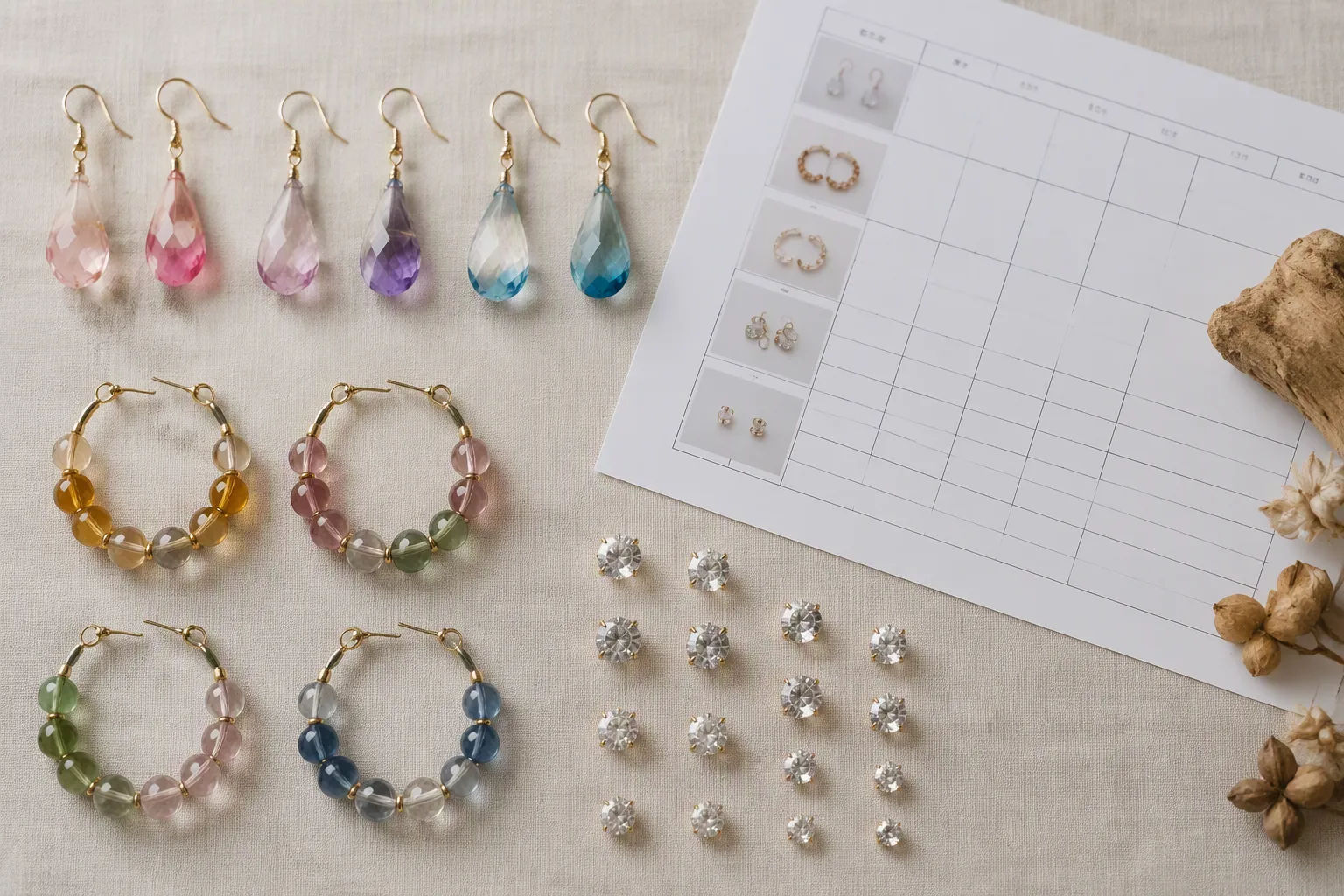
The right alternative to custom jewelry depends entirely on where you sit in the supply chain. Consumer brands like Jewlr and Made by Mary serve end buyers, not importers. Retail chains like Jared and Kay stores benchmark the consumer experience, not the sourcing economics. What most buyers actively looking for custom jewelry alternatives actually need is a supplier who can handle OEM customization at manageable minimums with transparent QC — and that's a narrower field.
STRAND's position as a Hangzhou-based supplier linking vetted Chinese workshops directly to overseas buyers is worth evaluating seriously if you need fashion earrings, necklace sets, or custom OEM pieces with real MOQ flexibility and multilingual procurement support.
If you're ready to compare lead times, review the stock catalog, or start a custom OEM discussion, Request a Quote at strandjewelry.com — bring your target SKUs, preferred materials, and order volume and the team will respond with current MOQ and pricing terms.