
The Smart Buyer's Guide to Jewellery in Wholesale
The Smart Buyer's Guide to Jewellery in Wholesale
Buying jewellery in wholesale means purchasing pieces in bulk directly from a manufacturer or distributor at a reduced per-unit cost — giving retailers, importers, and DTC brands the margin to build a profitable product line. Whether you're stocking a boutique, supplying an e-commerce store, or building a private label collection, understanding how wholesale jewellery sourcing works is the single most important skill you'll need before placing your first order.
This guide covers everything: what wholesale jewellery is, how procurement actually works, what to evaluate before committing a budget, which product categories matter most, and how to avoid the mistakes that cost buyers time and money. If you've been searching for a clear, practical breakdown, this is it.
For a closer look at the components and materials that underpin most wholesale orders, the Jewellery Wholesale Supplies: The Smart Buyer's Guide is a useful companion to what you'll find here.
What Is Jewellery in Wholesale?
Wholesale jewellery is the trade of finished or semi-finished pieces sold in volume — typically from manufacturer to retailer, importer, or brand — at a price below standard retail. The difference between that wholesale price and your selling price is your gross margin.
Three tiers define the supply chain:
- Manufacturer / Factory — produces the goods, often sets a minimum order quantity (MOQ) per SKU or per total order value.
- Distributor / Wholesaler — buys from factories in large volumes and resells to smaller buyers, sometimes with lower MOQ thresholds.
- Retailer / Brand — the end seller to consumers, whether through a physical store, an online shop, or a marketplace.
When people search for "jewellery in wholesale," they're usually operating at the retailer or brand level — looking for a distributor or manufacturer who will sell to them below retail. The key variables at this level are price per unit, MOQ, material quality, lead time, and consistency of supply.
One important distinction: wholesale is not the same as closeout or clearance. Reputable wholesale suppliers, some of whom have served the jewelry trade for over 40 years, maintain stable catalogs of standard pieces rather than offloading end-of-season surplus.
Why Wholesale Jewellery Matters for Your Business
Buying jewellery at wholesale changes your unit economics entirely. A piece that retails at $40 might cost $8–$14 at wholesale, depending on material and supplier. That spread — when maintained across a full catalog — is what funds marketing, operations, and growth.
Beyond margin, wholesale sourcing gives you:
Catalog depth without capital risk. Ordering 50–200 units of a proven SKU is far more capital-efficient than developing a custom piece from scratch. You validate demand before committing to larger production runs.
Material consistency. A good wholesale supplier locks in the same alloy, plating thickness, and stone grade across reorders. This matters enormously for brand reputation — customers who reorder a necklace expect it to look the same as the first one they received.
Speed to market. Manufacturers often quote 30–90 day lead times for custom production. Wholesale suppliers carrying stock can ship in days. For DTC brands responding to a trend cycle, that difference is significant.
Negotiating leverage over time. As your order volume grows, a wholesale relationship gives you room to negotiate better pricing tiers, dedicated stock allocation, or priority production slots — none of which are available to one-time retail buyers.
How Wholesale Jewellery Sourcing Actually Works
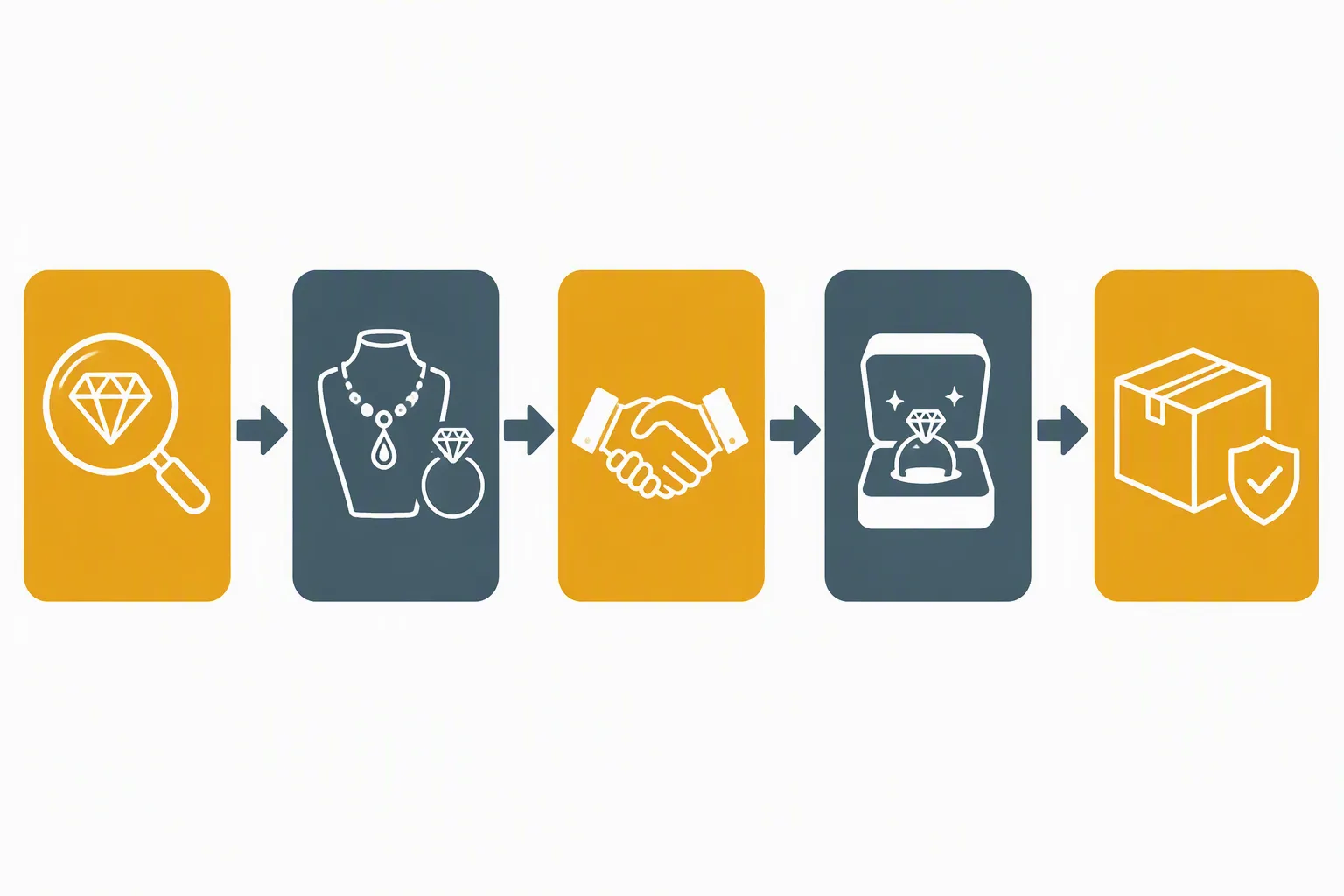
The process from "I want to stock jewellery" to "order is on the way" has five distinct phases. Compressing any of them tends to create expensive problems downstream.
Step 1: Define Your Criteria Before You Contact Anyone
Before reaching out to a single supplier, write down:
- Material requirements — sterling silver, gold-filled, stainless steel, plated brass, or copper? Each carries different price points and customer expectations. As of late August 2026, sterling silver is priced at approximately $69.37 per troy ounce and gold at $4,560.00 — knowing spot price helps you evaluate whether a supplier's pricing reflects the market.
- Finish preferences — polished, oxidized, matte, hammered, plated in yellow/rose gold tones?
- Target SKU count — how many distinct styles do you need to launch?
- Budget and MOQ tolerance — what's your opening order budget, and what's the minimum per-style quantity you can absorb?
- Target market — pieces for MENA markets, for example, tend to favor 18K gold tones, heavier weight, and more ornate settings than minimalist Scandinavian-style pieces popular in European markets.
Getting clear on these before you engage suppliers saves dozens of back-and-forth emails.
Step 2: Source and Vet Suppliers
Supplier sourcing channels include trade shows (BIJORHCA, IJL, JCK Las Vegas), B2B directories, manufacturer marketplaces, and referrals from other buyers. Each channel has trade-offs between discovery speed and due diligence quality.
When vetting any supplier, ask for:
- Business registration documents or trade license
- Past client references, ideally from buyers in your country or region
- Lab or assay certificates for precious metal pieces
- Plating specifications (micron thickness) for gold-filled or gold-plated items
A supplier who can't answer these questions with documentation is a supplier to skip.
Step 3: Request and Evaluate Samples
Never skip sampling. A photo communicates color and shape; a physical sample communicates weight, clasp feel, stone security, and how a piece wears over time. Request samples of every style you intend to stock.
Evaluate each sample against:
- Weight consistency across units (deviation signals inconsistent casting or stamping)
- Clasp and closure function after 50+ open-close cycles
- Stone or bead security (tug test, flex test)
- Finish durability under light abrasion
- Tarnish resistance over 30 days (simple accelerated test: store sample in a humid environment)
Step 4: Negotiate Terms
Wholesale terms aren't fixed. The negotiable elements typically include:
- Price per unit — especially at higher quantities
- MOQ per SKU — some suppliers allow a blended MOQ across a style group
- Payment terms — many require 30–50% deposit, balance before shipping
- Lead time — stock items versus made-to-order
- Packaging — individual polybags, gift boxes, or custom-branded packaging at added cost
Step 5: Place, Track, and Inspect
Once terms are agreed, place the order in writing with a detailed purchase order specifying every SKU, quantity, material, finish, and price. On receipt, conduct a quality inspection — even a 10% random sample check can catch a production issue before it becomes a customer service problem.
Key Product Categories in Wholesale Jewellery
Not all wholesale jewellery categories carry the same margin, velocity, or sourcing complexity. Here's a practical breakdown of the most commonly traded categories:
Findings and Components
Findings — clasps, jump rings, ear wires, crimp beads, and chain segments — are the structural elements of any piece. Wholesale Jewelry Supply Co. specializes in findings, beads, and chain, and these components are available in sterling silver, gold-filled, stainless steel, plated, copper, and oxidized finishes. If you're supplying makers or running a studio, findings are a steady-volume, repeat-purchase category.
For buyers specifically sourcing components and craft materials at scale, the Wholesale Jewellery Making Supplies: The Complete Buyer's Guide covers this category in depth.
Finished Necklaces and Chains
Chain is one of the most liquid wholesale categories — gold-filled, sterling silver, and stainless steel chains sell consistently across markets. Finished necklaces (pendants on chain) add complexity: stone sourcing, setting quality, and pendant-to-chain proportion all affect perceived value.
Earrings
Earrings are typically high-velocity in DTC environments. Lightweight hoops, studs, and drop styles in gold-filled and sterling silver are perennial best-sellers. When evaluating wholesale earring suppliers, confirm whether pieces are nickel-free or hypoallergenic — particularly important for buyers targeting European markets where nickel regulations are strict.
Bracelets and Bangles
Stacked bracelet sets have driven significant volume in DTC jewellery brands. At wholesale, bangle weight and internal diameter consistency (sizing) are the two most common quality issues. Specify these in your purchase order.
Beads and Accessories
Beads, charms, and pendant accessories round out a wholesale catalogue. Desert Pearl Beads, Soft Flex beading wire, and specialty cords are stocked by specialized wholesalers serving the craft and fine jewellery market.
What to Evaluate Before You Buy: The Procurement Checklist
Buyers close to a purchasing decision should work through these evaluation dimensions before committing:
Price and availability Request a current price list and confirm stock status. Ask whether quoted prices include or exclude shipping, duties, and packaging. Inquire whether the supplier adds a surcharge to the metal market price — some wholesalers pass spot price changes through transparently, which protects your margins when metals fluctuate.
Minimum order quantities Confirm MOQ per style, per category, and per total order. Some suppliers set a minimum total order value (e.g., $500) rather than a per-SKU minimum, which gives you more flexibility to test a wide assortment.
Lead time and shipping Ask for two numbers: lead time for stock items and lead time for made-to-order or restocking a depleted SKU. Understand which carriers the supplier uses, whether they offer DDP (Delivered Duty Paid) pricing, and how returns or replacements are handled for defective pieces.
Quality documentation Ask for assay certificates for precious metals, RoHS compliance documentation for stainless steel items, and any third-party quality audits the supplier has on file.
Returns and warranty Clarify what happens when pieces arrive damaged or fail within a reasonable wear period. A supplier who doesn't offer any recourse for manufacturing defects is a risk.
Communication responsiveness This is underrated. A supplier who takes four days to answer a pre-sales question will take longer when there's a problem with your order. Test response time before you buy.
Common Mistakes Wholesale Jewellery Buyers Make
Skipping samples to save time. The sample stage feels like a delay. It isn't — it's the cheapest insurance you can buy. One bad bulk order costs more than ten sample shipments.
Under-specifying the purchase order. "Gold necklace, 18 inches, 50 units" is not a purchase order. Specify alloy, plating thickness, clasp type, packaging, and any certifications required. Vague POs produce vague results.
Choosing the lowest price without understanding why it's low. Unusually low pricing usually means thinner plating, lower-grade base metal, lighter chain weight, or inconsistent stone grading. Each of these affects your return rate and customer satisfaction.
Ignoring landed cost. The unit price from a supplier is not your landed cost. Add freight, import duties, customs brokerage, and any inspection fees. This total cost is what determines your actual margin.
Ordering a wide assortment before validating demand. Start with a tight, curated selection across a few proven styles. Validate sell-through rates before broadening. Wholesale minimums exist — don't let them pressure you into overbuying unproven SKUs.
For buyers sourcing accessories alongside finished jewellery, The Complete Buyer's Guide to Jewellery Accessories Wholesale covers category-specific sourcing considerations worth reviewing before your first order.
When Should You Buy Jewellery in Wholesale?
Wholesale is the right channel when:
- You're selling volume — even modest DTC stores shipping 50+ orders per month will benefit from wholesale pricing over retail reselling.
- You need consistent replenishment — wholesale suppliers with stable catalogs allow you to reorder the same SKUs reliably, which matters for bestsellers.
- You're building a brand identity — curated wholesale sourcing lets you select pieces that reflect a coherent aesthetic, unlike dropshipping catalogs.
- You have enough capital for the MOQ — buying wholesale below your cash flow capacity creates inventory problems. Know your numbers before placing.
Wholesale is less suited to one-off gifting purchases or individual buyers who don't have a resale context. The economics only work when the volume justifies the per-unit price advantage.
Evaluating a Wholesale Supplier: Questions to Ask Before You Buy
Walk into any supplier conversation prepared. These are the questions that separate serious buyers from browsers — and they also signal to the supplier that you're worth prioritizing:
- What is your MOQ per style, and is there a minimum total order value?
- Do you carry stock, or is everything made to order? What's the restock lead time for your top 20 SKUs?
- What's included in your quoted price — packaging, labeling, freight to port?
- Do you offer DDP shipping options for my destination country?
- What quality control steps happen before shipment?
- What are your defect and return policies for manufacturing issues?
- Do you offer tiered pricing for larger orders?
- What certifications do your sterling silver and gold-filled pieces carry?
A supplier who answers these questions clearly and specifically is a supplier worth working with. Vague or evasive answers to basic procurement questions are a reliable warning signal.
Building a Long-Term Wholesale Relationship
The best wholesale pricing and terms go to buyers who show up consistently. One-time opportunistic orders rarely attract a supplier's best attention. Volume buyers who pay on time, communicate clearly, and provide feedback on quality get priority production slots, early access to new styles, and flexibility on MOQ when they need it.
Treat wholesale relationships the same way you treat good client relationships: show up professionally, communicate promptly, and be honest about your volume expectations. Suppliers who trust your forecast allocate inventory accordingly.
Your Next Step: Get the Details That Matter
Understanding wholesale jewellery sourcing puts you ahead of buyers who are still browsing retail channels without a clear procurement strategy. The principles here — define criteria first, sample before you commit, evaluate landed cost, build relationships — apply whether you're sourcing sterling silver findings or finished gold-filled necklace collections.
STRAND works with DTC stores, importers, and procurement teams sourcing vetted, crafted jewellery for international markets. If you're ready to discuss materials, MOQ, lead time, or shipping options specific to your business, [Contact the supplier] to start the conversation. Bring your criteria and your sample request — the more specific you are, the faster the conversation moves to an order.
For further reading, explore Jewellery Wholesale Supplies: The Smart Buyer's Guide and The Complete Buyer's Guide to Jewellery Accessories Wholesale to build out your sourcing knowledge across adjacent categories.
Frequently Asked Questions
What is jewellery in wholesale?
Jewellery in wholesale refers to the purchase of jewellery pieces in bulk quantities directly from manufacturers or distributors at significantly reduced per-unit prices, intended for resale through retail channels. For overseas buyers — DTC stores, importers, and procurement teams — wholesale sourcing typically involves defined MOQs (minimum order quantities), negotiated lead times, and consistent quality standards across production runs. STRAND operates in this space by connecting vetted, crafted jewellery collections with serious buyers who prioritize material integrity (sterling silver, gold vermeil, brass with plating specifications) and reliable fulfillment over commodity volume.
How to jewellery in wholesale?
To source jewellery in wholesale through STRAND, begin by identifying your product category (e.g., 925 sterling silver, 18K gold-plated brass, or gemstone-set pieces), then submit a trade inquiry specifying your target MOQ — typically starting at 50–100 units per SKU — along with preferred materials, finishes, and delivery timelines. STRAND's procurement process includes sample verification before bulk production, with standard lead times of 15–30 days and shipping options via air freight or sea consolidation to major import hubs. Once terms are confirmed, a formal purchase agreement covers unit pricing, quality inspection checkpoints, and packaging specifications tailored to your retail or import requirements.
Why is jewellery in wholesale important?
Wholesale jewellery is essential for DTC stores, importers, and procurement teams because it enables consistent product supply at margins that support retail pricing — without wholesale access, small and mid-sized buyers cannot compete on cost or maintain steady inventory depth. For buyers sourcing through STRAND, wholesale relationships also mean access to vetted, crafted pieces with predictable MOQs, lead times, and quality standards rather than ad-hoc sourcing with unpredictable results. Ultimately, a reliable wholesale partner is the backbone of any jewellery retail operation, directly impacting assortment breadth, cash flow, and customer trust.
When should I use jewellery in wholesale?
Wholesale jewellery is the right channel when you're stocking a DTC store, fulfilling importer orders, or building out a seasonal collection that requires consistent supply across multiple SKUs — typically at MOQs of 50–200 pieces per style depending on material (sterling silver, brass with gold vermeil, or 14k gold-fill). It's also ideal when your procurement cycle demands reliable lead times (usually 15–30 days from production-ready approval) and flexible shipping options such as consolidated sea freight or express air for urgent replenishment. For STRAND buyers serving MENA markets, wholesale sourcing is especially strategic when curating gold-toned, modesty-aligned pieces in volume ahead of key gifting seasons like Eid or National Day.
What are the benefits of jewellery in wholesale?
Buying jewellery wholesale through STRAND gives retailers and importers significant cost advantages — lower per-unit pricing across curated collections means stronger margins without compromising on craftsmanship or material quality. Wholesale access also enables consistent inventory depth, with predictable MOQs and lead times that support reliable restocking for DTC stores and procurement teams. Beyond pricing, partnering with a vetted wholesale supplier reduces sourcing risk, as quality standards, hallmarking, and shipping specifications are already established and repeatable across orders.