
Silver Hoop Earrings: US Buyer's Guide for Importers & DTC Brands
Silver Hoop Earrings: US Buyer's Guide for Importers & DTC Brands
Updated June 2026 | For US-based buyers, importers, and DTC jewelry brand owners
Silver Hoop Earrings in the United States — Market Overview
The United States remains one of the world's largest and most dynamic markets for fashion jewelry, and silver hoop earrings sit at its reliable commercial core. Driven by a combination of enduring style cycles, social media trend amplification, and the explosive growth of direct-to-consumer jewelry brands, demand for silver hoops has remained consistently strong across demographic segments. Industry estimates suggest the US fine and fashion jewelry market generates well over $30 billion in annual retail sales, with sterling silver and silver-toned pieces accounting for a significant share of the mid-market and accessible luxury segments.
Buyer profiles in the United States are diverse. At one end, large-volume importers and wholesale distributors supply department stores, boutique chains, and regional jewelry retailers. At the other end, an expanding cohort of DTC brand owners — many operating via Shopify, Amazon, or their own branded storefronts — source silver hoop earrings in smaller batches and depend on reliable overseas suppliers for consistent quality and quick replenishment. Between these two poles sit private label brands, subscription box curators, and lifestyle brands adding jewelry as a category extension. What unites all these buyers is a shared need: sourcing silver hoops that meet US consumer expectations on look, feel, and durability, while remaining price-competitive enough to sustain healthy margins.
Demand drivers in 2025 and 2026 include the continued influence of "quiet luxury" aesthetics (which favor understated silver hoops over bold gold statement pieces), the resurgence of Y2K-influenced jewelry styles popular with Gen Z shoppers, and the growing gifting market around holidays, graduations, and Valentine's Day. Platforms like TikTok Shop and Instagram Shopping have compressed the trend-to-purchase cycle dramatically, meaning buyers need suppliers who can match speed-to-market timelines that were unthinkable five years ago.
What's Specific About the United States
Regulatory and Compliance Environment
Jewelry sold in the US market is subject to several overlapping regulatory frameworks that buyers and their suppliers must navigate carefully.
FTC Jewelry Guides (16 CFR Part 23): The Federal Trade Commission sets enforceable guidelines for how jewelry metals must be described. Products labeled as "sterling silver" must contain at least 92.5% pure silver content. Labels using "silver" alone may imply sterling unless a qualifier like "silver-plated" or "silver-filled" is used. Misrepresentation can result in FTC enforcement action or consumer litigation. Any supplier you work with should be able to provide material composition documentation confirming 925 sterling content for products marketed as sterling silver hoops.
California Proposition 65: If you sell into California — which, given population size, virtually all US sellers do — Proposition 65 requires businesses to provide warnings for products containing chemicals listed as causing cancer or reproductive harm. Nickel, lead, and cadmium are all relevant in the jewelry context. Buyers sourcing from overseas suppliers should request Prop 65 compliance testing or Nickel Release Testing results (mirroring the EU's EN 1811 standard is a widely accepted proxy in US procurement).
CPSC Product Safety: The Consumer Product Safety Commission governs children's jewelry separately. If any silver hoop earring product is marketed to children under 12, additional lead content restrictions apply under CPSIA. Most adult fashion jewelry falls outside these rules, but buyers sourcing "mini hoop" styles popular with teens should confirm the age-targeting with their supplier and document compliance accordingly.
CBP and Import Classification: Silver hoop earrings typically enter the US under HTS code 7113.11 (articles of jewelry of silver, whether or not plated or clad with other precious metal). Buyers need to account for applicable import duties and ensure country-of-origin marking on packaging meets CBP requirements. Section 301 tariffs on goods of Chinese origin have been a persistent cost variable for US importers; as of mid-2026, many categories remain subject to elevated duties, so total landed cost calculations must factor this in.
Cultural and Market Norms
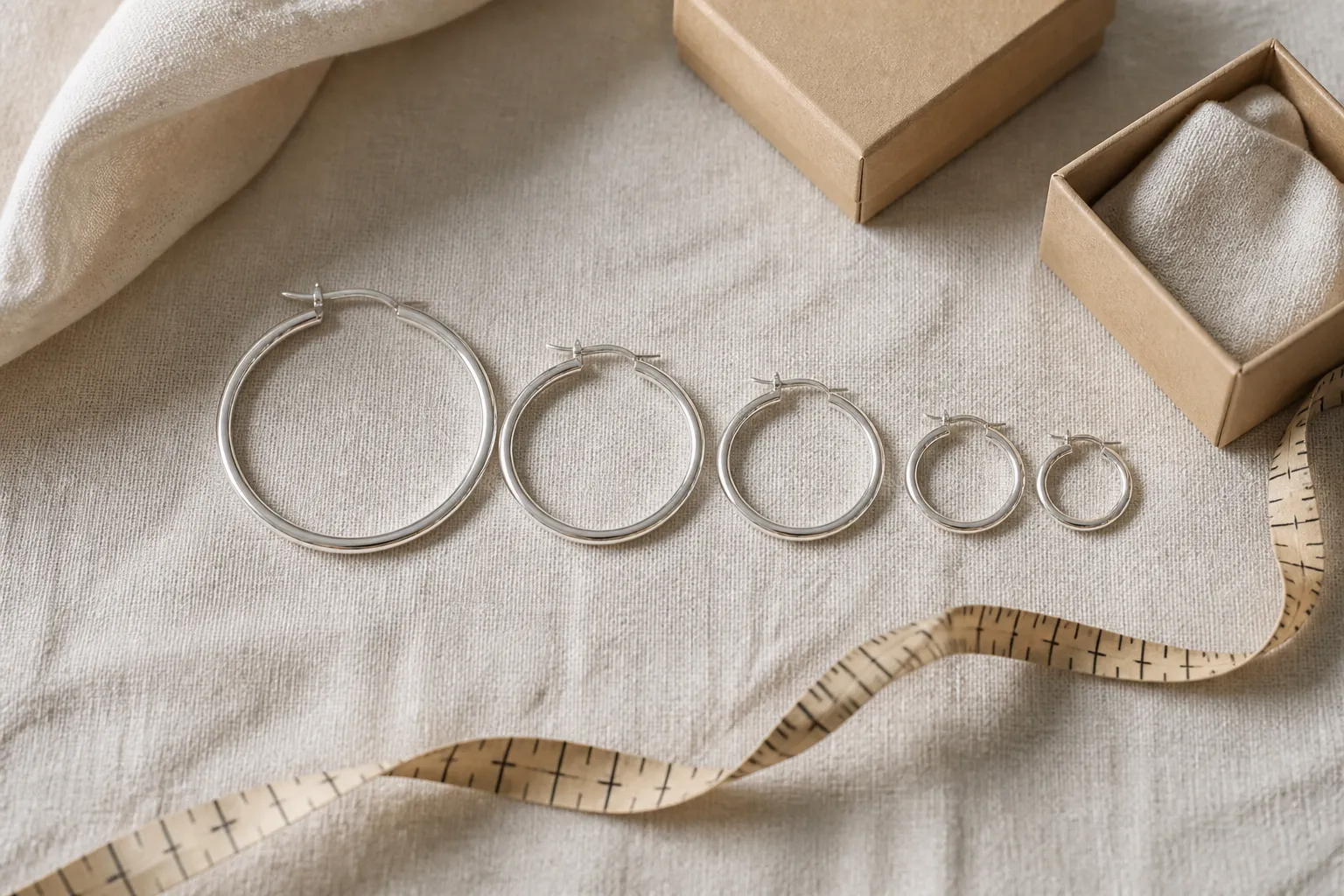
American consumers expect clear size labeling (diameter in millimeters or inches), hypoallergenic claims to be substantiated (often meaning no nickel in the ear wire), and packaging appropriate for gifting. Unboxed or poly-bagged product that might be acceptable at wholesale in other markets will likely underperform in US DTC channels. Returns policies are generous by global standards — most US e-commerce customers expect 30-day no-questions-asked returns, which has implications for how you specify quality standards with your supplier.
Payment terms in US B2B trade are typically net-30 or net-60 for established relationships, though importers sourcing directly from China more commonly operate on T/T (telegraphic transfer) with a 30% deposit and 70% before shipment, or use trade finance instruments like letters of credit for larger orders. PayPal Business and platforms like Wise are common for mid-sized transactions with overseas suppliers.
How to Choose a Silver Hoop Earrings Provider in the United States
Whether you are a first-time importer or a scaling DTC brand evaluating a new supply chain partner, the evaluation criteria for silver hoop earring suppliers in the US market are both universal and locally specific.
Material Certification and QC Documentation
Start with documentation. A credible supplier should be able to provide metal assay certificates confirming 925 sterling silver content, REACH / Nickel Release test reports from accredited labs, and ideally, SGS or Bureau Veritas test reports for the US or California market. Suppliers who cannot produce these on request should be disqualified early in the vetting process, regardless of price.
Minimum Order Quantities (MOQ) and Flexibility
US DTC brands, especially early-stage ones, rarely need thousands of units of a single SKU. Look for suppliers offering low MOQ options — ideally 12 pcs per style — with the ability to scale. STRAND, a Hangzhou-based cross-border jewelry brand, works directly with overseas buyers including US DTC store owners and importers, offering OEM manufacturing with flexible MOQ and fast lead times. Their model links vetted Chinese workshops directly to overseas buyers, cutting out middlemen while maintaining in-house QC before shipment.
Lead Times and Production Capacity
For trend-driven silver hoop styles, speed matters. Understand your supplier's standard production lead time for reorders versus new styles requiring tooling. Ask specifically about capacity during Q4 — the US holiday season (October through December) is peak demand, and many overseas manufacturers are constrained during Chinese New Year in January/February. Mapping your order schedule around these windows is essential supply chain hygiene.
Language and Communication Support
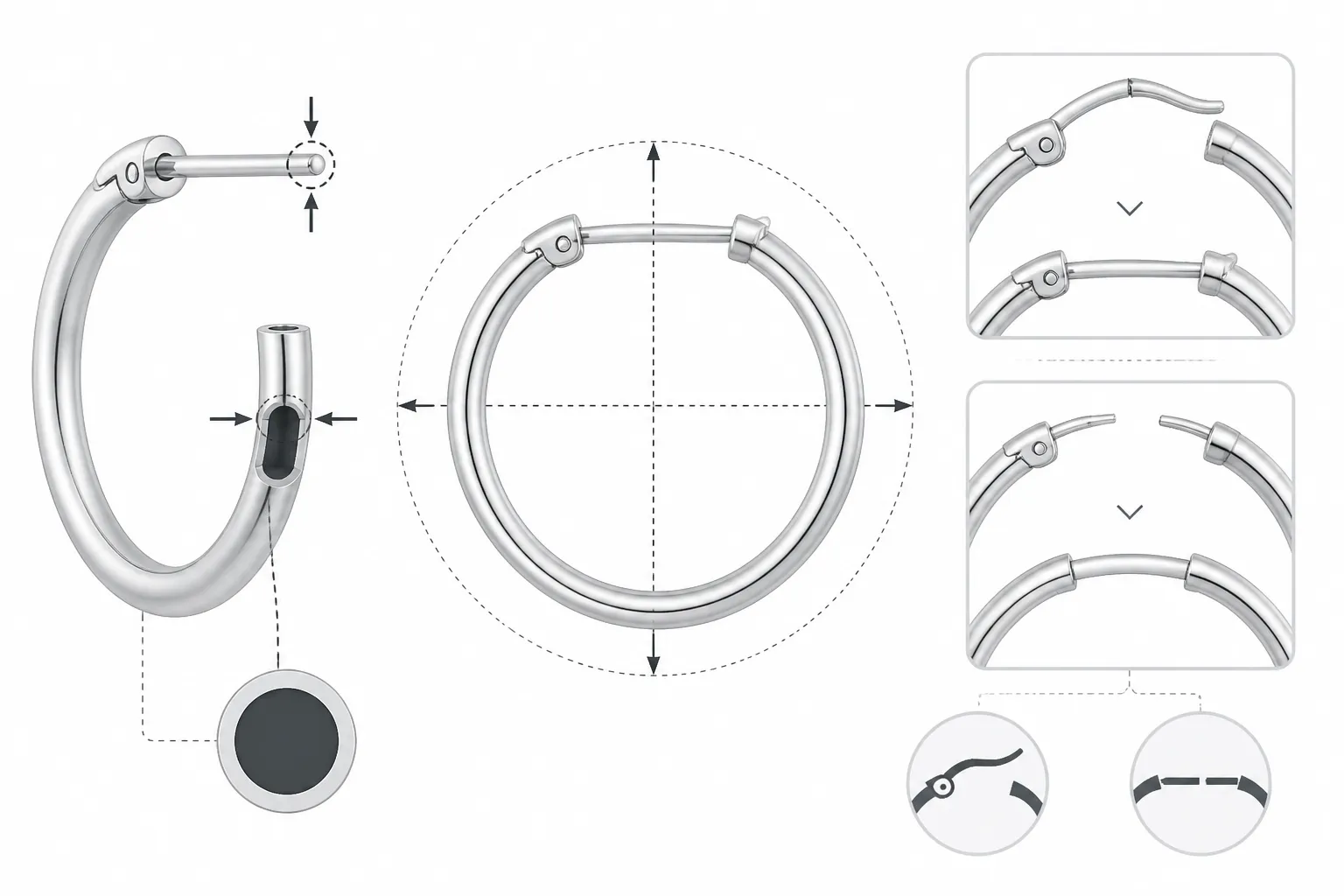
Procurement teams at US jewelry brands often interact with supplier contacts across time zones, and miscommunication over specifications (diameter, wire gauge, post thickness, clasp type) is a leading cause of quality failures. Suppliers with native or fluent English-speaking sales contacts substantially reduce this friction. STRAND provides multilingual service including English, Arabic, and Spanish, which is particularly useful for US-based buyers with multicultural procurement teams or for brands simultaneously sourcing for multiple markets.
OEM and Customization Capability
Many US buyers are not just importing catalog product — they want private label silver hoops with custom engravings, branded packaging, or proprietary silhouettes. Evaluate whether the supplier has genuine OEM capability (in-house design support, tooling capacity, ability to match a reference sample) versus simply applying a logo to an existing mold.
Pricing in the United States
Silver hoop earring pricing in the US spans an enormous range depending on material grade, style complexity, and retail channel.
Retail Price Benchmarks (USD)
- Fashion / costume silver-toned hoops (brass or zinc alloy base, silver plating): $5–$25 at retail, common in fast fashion and mass-market channels.
- Sterling silver fashion hoops (925 silver, mid-market DTC): $25–$80 at retail, the sweet spot for direct-to-consumer brands with a margin-conscious sourcing model.
- Sterling silver with embellishments (rhinestone, crystal, two-tone glass bead, or gradient crystal accents): $40–$120 at retail, overlapping with accessible luxury positioning.
- Fine silver or high-karat silver hoops with designer branding: $100–$400+, typically sold through specialty retailers or branded storefronts.
What Affects Landed Cost for US Importers
The retail price you can achieve is only meaningful in the context of your landed cost — the sum of factory price, freight, import duties, customs clearance fees, and any compliance testing costs. Key variables:
- Silver spot price: Sterling silver content means your unit cost fluctuates with commodity markets. Build pricing reviews into supplier contracts.
- Section 301 tariffs: Chinese-origin jewelry has faced elevated US import tariffs. As of June 2026, confirm the current applicable tariff rate with your customs broker before finalizing cost models.
- Freight mode: Air freight maintains speed but significantly increases per-unit cost versus sea freight LCL or FCL for larger volumes.
- Testing and compliance: Budgeting $300–$800 per style for Prop 65 and Nickel Release testing is a real line item for small-volume importers.
When requesting a quote from suppliers like STRAND, ask for an itemized FOB or CIF price alongside a sample invoice that allows your freight forwarder or customs broker to model total landed cost accurately.
Common Challenges for Buyers in the United States
Logistics and Lead Time Variability
Shipping from China to US ports (Los Angeles, Long Beach, New York/Newark) has remained volatile in the post-pandemic era. Port congestion, vessel space allocation, and geopolitical disruptions can add weeks to sea freight lead times without warning. Buyers relying on just-in-time inventory for seasonal silver hoop campaigns are particularly vulnerable. Best practice is to build 4–6 weeks of buffer stock for bestselling SKUs and maintain open communication with your freight forwarder about current port conditions.
Regulatory Complexity Across States
The US is not a single regulatory jurisdiction for jewelry. California's Prop 65, for instance, applies only to California but given California's market size (roughly 12% of US GDP), effective compliance means national compliance. Buyers who source product from overseas without verifying chemical compliance risk both regulatory action and reputational damage from consumer complaints about skin reactions or discoloration.
Supplier Reliability and Consistency
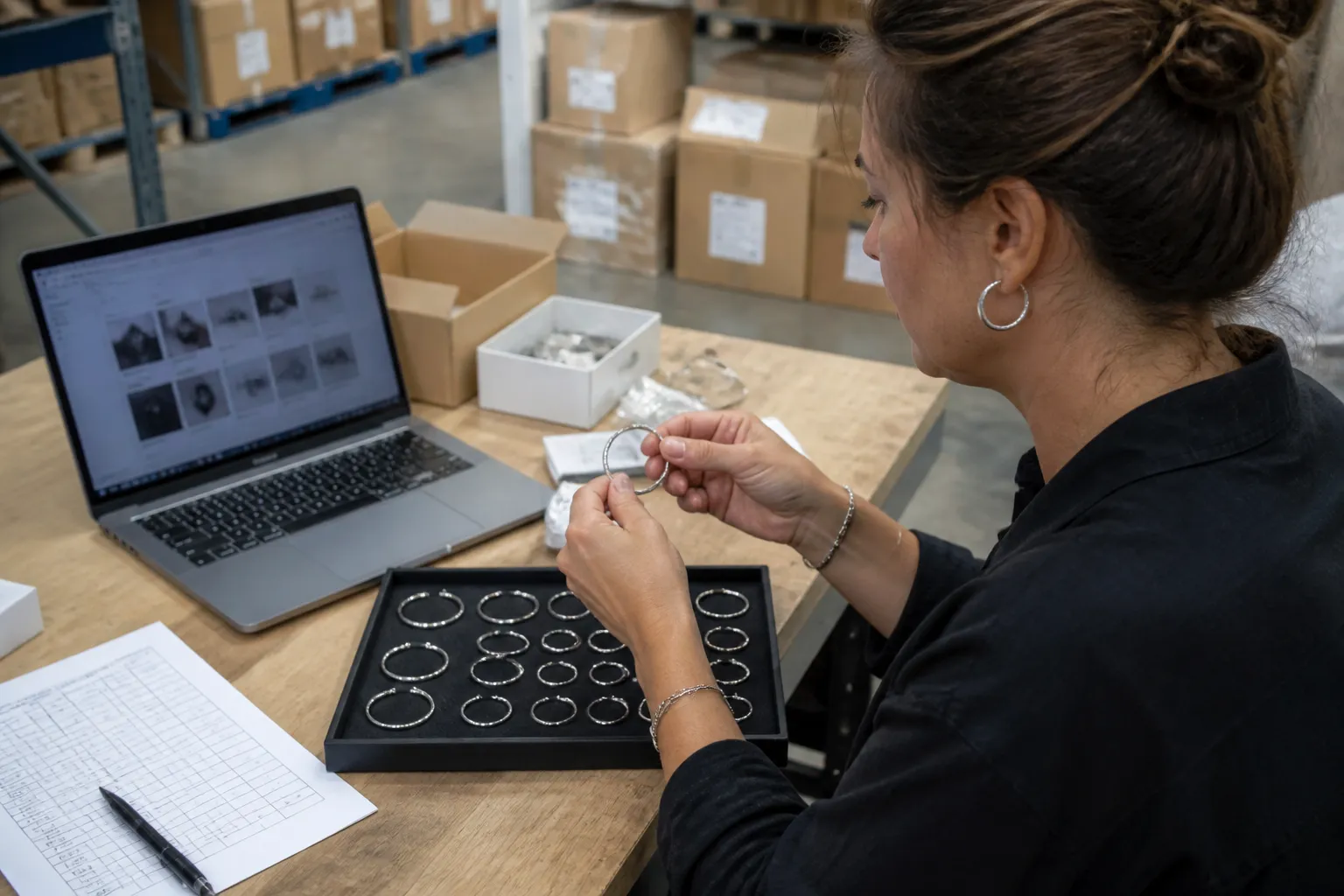
Quality drift between production batches is a common complaint among US importers of fashion silver hoops. Plating thickness, stone setting consistency, and clasp durability can vary significantly when factory floor conditions change. Requiring pre-shipment inspection reports (from your own QC team or a third-party inspection service like QIMA) provides a contractual checkpoint before goods leave the origin country. Suppliers like STRAND who offer in-house QC before shipment reduce this burden for buyers who lack the capacity to manage independent inspection logistics.
Currency and Payment Risk
Most overseas jewelry suppliers quote in USD, which is a convenience for US buyers. However, wire transfer fraud targeting import transactions is a documented risk — always verify banking details directly with a known contact via a confirmed phone number before initiating large transfers, and be alert to last-minute bank account change requests in email.
Intellectual Property and Design Protection
US buyers sourcing OEM silver hoop designs that they intend to protect should be aware that design patents in the US (filed with the USPTO) offer limited protection against offshore copying. Practical mitigation includes maintaining clear written agreements with suppliers about design exclusivity, fragmenting tooling across suppliers for unique elements, and registering copyrightable design elements where applicable.
Frequently Asked Questions (United States-Specific)
Q: What does "925 sterling silver" mean, and is it required for hoops sold in the US?
A: 925 sterling silver contains 92.5% pure silver and 7.5% alloy (typically copper). The FTC requires that products marketed as "sterling silver" in the US meet this standard. It is not required by law for all silver-toned jewelry, but products that fall below 92.5% purity must not be labeled sterling — they must be labeled "silver-plated," "silver-filled," or similar qualifying language.
Q: Do I need to test silver hoop earrings for Prop 65 compliance if I'm not based in California?
A: If you sell to California residents — including online — California Prop 65 obligations apply. Given that nearly all US e-commerce stores reach California shoppers, effective compliance means treating Prop 65 as a national standard. Testing for nickel, lead, and cadmium is prudent for any silver hoop earring imported for US retail sale.
Q: What's a realistic minimum order quantity (MOQ) for importing silver hoops from China?
A: MOQ varies significantly by supplier and style complexity. Catalog styles at established suppliers can sometimes be ordered in quantities as low as 50–100 pairs per SKU, while custom OEM styles with unique tooling typically require higher minimums to justify tooling investment. When sourcing through a supplier like STRAND, asking directly about OEM MOQ for your target style is the right first step — MOQ flexibility is often negotiable based on the overall order value.
Q: How long does it take to receive a first production order of silver hoop earrings from China?
A: For catalog or near-catalog styles, production typically takes 15–25 business days after deposit confirmation, plus transit time (5–7 days for air freight, 25–35 days for sea freight to US West Coast ports, longer for East Coast). Custom OEM styles requiring new tooling add 10–20 business days for sample development before mass production begins.
Q: Are silver hoop earrings subject to import tariffs when entering the US from China?
A: Yes. As of mid-2026, many jewelry categories of Chinese origin remain subject to Section 301 tariffs in addition to standard MFN duty rates. The applicable HTS code for silver hoop earrings is typically 7113.11 (articles of jewelry of silver). Consult a licensed US customs broker to confirm the current applicable rate and calculate accurate landed cost before placing orders.
Q: What certifications should I ask a Chinese silver hoop supplier to provide?
A: Request SGS or Bureau Veritas test reports for Nickel Release (EN 1811 or equivalent), heavy metals (lead, cadmium), and REACH compliance. For sterling silver, a metal assay certificate confirming 92.5% silver content is standard. Suppliers selling into the US market regularly should have these reports on file for their core styles.
Q: Can I request custom packaging for private-label silver hoops?
A: Yes — most OEM-capable suppliers offer branded packaging options including custom boxes, pouches, and hang tags. This is particularly important for US DTC brands where unboxing experience directly impacts customer reviews and repeat purchase rates. Confirm minimum packaging quantities and lead times separately from jewelry production, as they sometimes involve different vendors.
Get Started in the United States
If you are a US-based DTC brand owner, importer, or retail buyer evaluating silver hoop earring suppliers, the most valuable next step is establishing direct contact with a supplier who understands the US market's compliance requirements, can demonstrate quality documentation, and has the OEM flexibility to match your brand's direction.
STRAND is a Hangzhou-based cross-border jewelry brand that connects verified Chinese workshops directly with overseas buyers including US importers and DTC store owners. Their catalog includes drop earrings, stud earrings, necklace and earring sets, and a range of silver hoop styles spanning vintage, gradient crystal, two-tone glass bead, and rhinestone designs — with custom OEM available for buyers who need proprietary silhouettes or private label packaging. In-house QC before shipment, transparent trade terms, and multilingual service (English, Arabic, and Spanish) make STRAND a practical first contact for US buyers navigating cross-border procurement for the first time or scaling an existing import program.
Concrete next steps for US buyers:
- Define your SKU list and target retail price points — this determines whether you need catalog product, modified OEM, or fully custom tooling.
- Request a sample pack — evaluate material quality, plating durability, and clasp function on actual product before committing to a production order.
- Ask for compliance documentation — Nickel Release test reports, metal assay certificates, and any Prop 65-relevant testing on your target styles.
- Get a landed cost model — ask for FOB pricing alongside estimated freight and work with your customs broker to calculate total landed cost including applicable duties.
- Negotiate MOQ and lead time — especially important if you are a first-order buyer or have aggressive seasonal launch timelines.
Ready to source silver hoop earrings for the US market?
Contact STRAND's English-speaking procurement team to get MOQ details, pricing, sample availability, and OEM customization options for your US business.
Get MOQ & Pricing | Request a Sample
STRAND serves buyers in the US, EU, UK, and MENA with multilingual support and transparent trade terms. Hangzhou-based. Shipped worldwide.