
Custom Jewelry vs. Alternatives: Which Sourcing Path Wins?
Custom Jewelry vs. Alternatives: Which Sourcing Path Wins?
Custom jewelry gives you brand control, margin depth, and product exclusivity — but it requires lead time, MOQ commitments, and supplier vetting. Off-the-shelf alternatives (retail chains, DTC brands, generic stock wholesalers) let you move faster with less upfront risk, but you sacrifice differentiation and often pay more per unit at scale. Which path wins depends entirely on your volume, timeline, and how much your brand identity hinges on product uniqueness.
TL;DR / Quick Verdict
If you're a DTC store owner, importer, or buyer building a private-label jewelry line, custom OEM jewelry from a vetted manufacturer is almost always the better long-term play — lower COGS, exclusive designs, and a brand story that can't be copied by a competitor who orders from the same stock catalog. Retail alternatives like Kay Jewelers or DTC brands are better fits for individual gifting or low-volume test orders, not commercial resale or brand-building at scale.
At-a-Glance Comparison Table
| Dimension | Custom Jewelry (OEM/Wholesale) | Retail/DTC Alternatives |
|---|---|---|
| Unit Economics | Low at volume; MOQ from 1–12 pcs/style | High per-unit; no volume breaks |
| Design Exclusivity | Full — your logo, silhouette, finish | None — same SKUs on competitor sites |
| MOQ | As low as 12 pcs/style (some from 1 pc) | 1 pc minimum, but MSRP pricing |
| Lead Time | 2–6 weeks typical for OEM | Immediate stock, 1–4 weeks personalized |
| Customization Depth | Material, plating, stone, packaging | Engraving, birthstone swap, nameplate |
| Quality Control | In-house QC before shipment (supplier-dependent) | Brand-managed; inconsistent across tiers |
| Payment Terms | T/T, L/C, PayPal, Western Union, Xtransfer | Credit card, retail financing |
| Target Buyer | Importers, DTC brands, boutique chains | End consumers, gift buyers |
| Scalability | High — production scales with your PO | Limited by retail inventory |
| Multilingual Support | Available (EN, FR, AR, ES, DE, RU) | English-primary |
Custom Jewelry: What It Is and Who It's Built For
Custom jewelry — specifically OEM and wholesale custom production — means working directly with a manufacturer to produce designs under your brand. You specify the metal base (typically copper with gold-plated or rhodium-plated finish, or 925-style silver), stone types (amethyst, garnet, peridot, turquoise, glass bead, faux pearl, rhinestone), silhouette, and packaging. The supplier handles production, QC, and fulfillment to your port or warehouse.
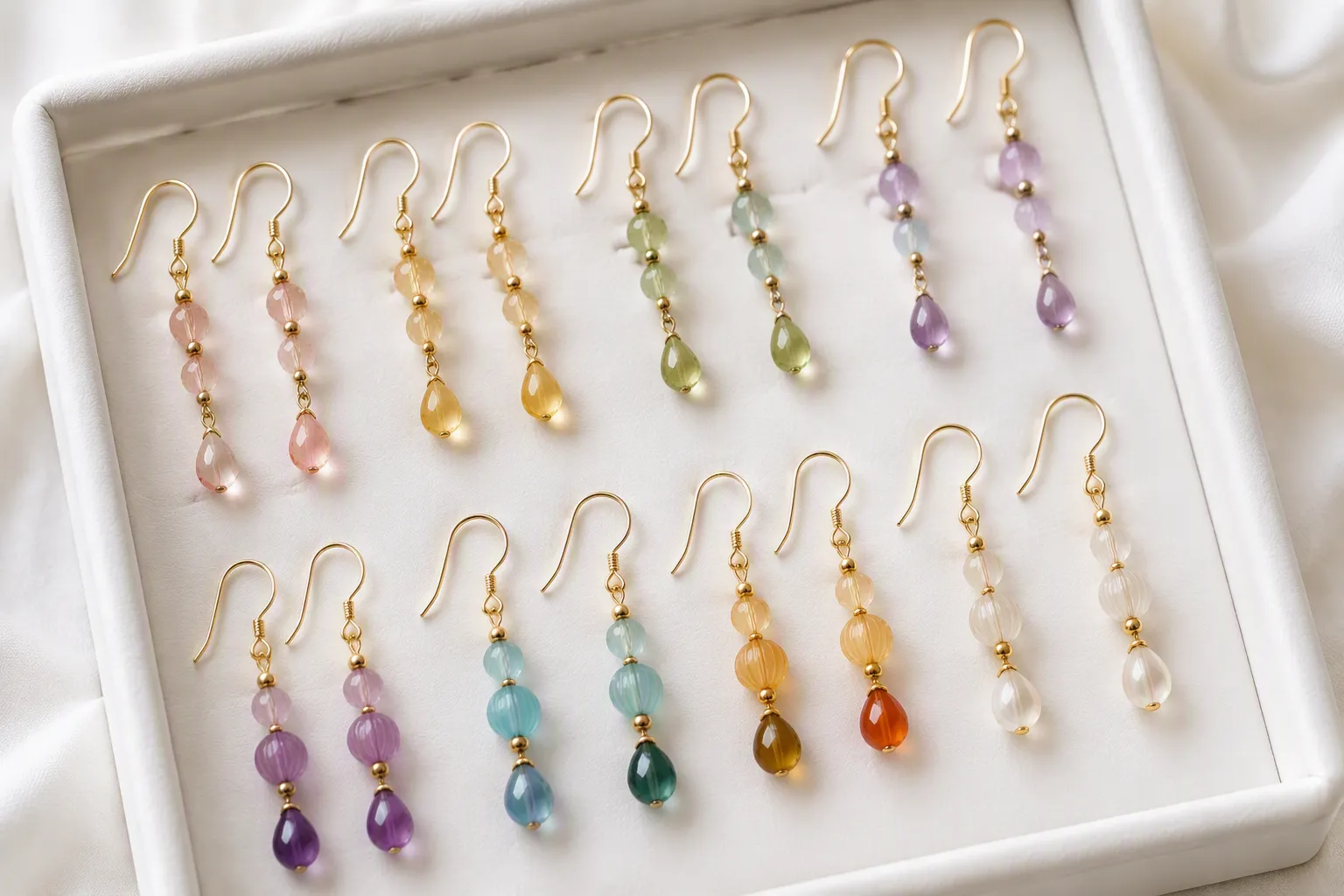
This model is built for buyers and brands that need margin, exclusivity, or both. A DTC earring brand selling gradient crystal drop earrings at $38 retail cannot afford to source from a domestic boutique at $18 wholesale — that's a 2x markup that leaves nothing for customer acquisition, returns, and ops. Working directly with a Hangzhou-based supplier like STRAND compresses COGS to a fraction of that, with MOQs as low as 12 pieces per style on most catalog designs (109 of 114 styles at that threshold) and select styles available from a single piece.
The profile of a custom jewelry buyer is specific: they already have a sales channel (Shopify store, Amazon brand registry, wholesale accounts, or a physical boutique), they know their customer's aesthetic, and they're making decisions based on COGS targets and style exclusivity — not browsing for inspiration.
Alternatives Overview: Retail Chains, DTC Brands, and Generic Stock Wholesale
"Alternatives" covers a wide range, and they're not all equivalent:
Retail chains (Kay, Jared, Kendra Scott, and similar stores) exist to serve end consumers, not resellers. Kay Jewelers, for instance, has a dedicated Personalized section with engraved pieces, birthstone jewelry, and nameplate necklaces — designed for a shopper buying a gift, not a buyer building a catalog. Their engagement rings are offered in center stones including diamond, with shapes ranging from round to marquise to heart. The KAY Credit Card and in-store appointment booking tools confirm the retail-consumer focus. Reselling from Kay at retail is not a viable business model.
DTC personalized brands (Made by Mary, Jewlr, Catbird) sit in a different tier: quality-forward, direct-to-consumer, with prices reflecting handcraft and brand equity rather than production cost. They're competitors to your store, not suppliers to it.
Generic stock wholesalers — marketplaces, clearinghouse suppliers, Alibaba storefronts — offer low MOQs and fast turnaround but no QC consistency, no design exclusivity, and no service infrastructure. You're buying what's in stock, not what your brand needs.
For B2B buyers, the only real "alternative" to custom OEM is generic stock wholesale. That's the honest comparison.
Feature-by-Feature Breakdown
Pricing and MOQ
Custom OEM pricing scales with volume and complexity. On a stock-catalog basis, MOQs of 12 pieces per style are practical entry points — enough to test a style without overcommitting inventory. Fully custom designs (new tooling, custom stone sourcing) carry higher MOQs and sampling costs, which should be confirmed directly with the supplier.
Generic stock wholesalers often advertise lower MOQs (sometimes 1 piece) but at prices that don't leave room for branded resale margin. The per-unit cost advantage of custom OEM compounds as volume grows.
Retail alternatives like Kay Jewelers price at consumer MSRP — engagement rings under $2,000 are positioned as accessible luxury for the end buyer, not a sourcing price point. There is no wholesale channel.
Customization Depth
Custom OEM wins this dimension outright. You can specify:
- Metal base and plating (gold-plated copper, rhodium-plated copper, 925-style silver finish)
- Stone type (natural stone, glass bead, faux pearl, rhinestone, amethyst, turquoise, garnet, peridot)
- Silhouette and finish
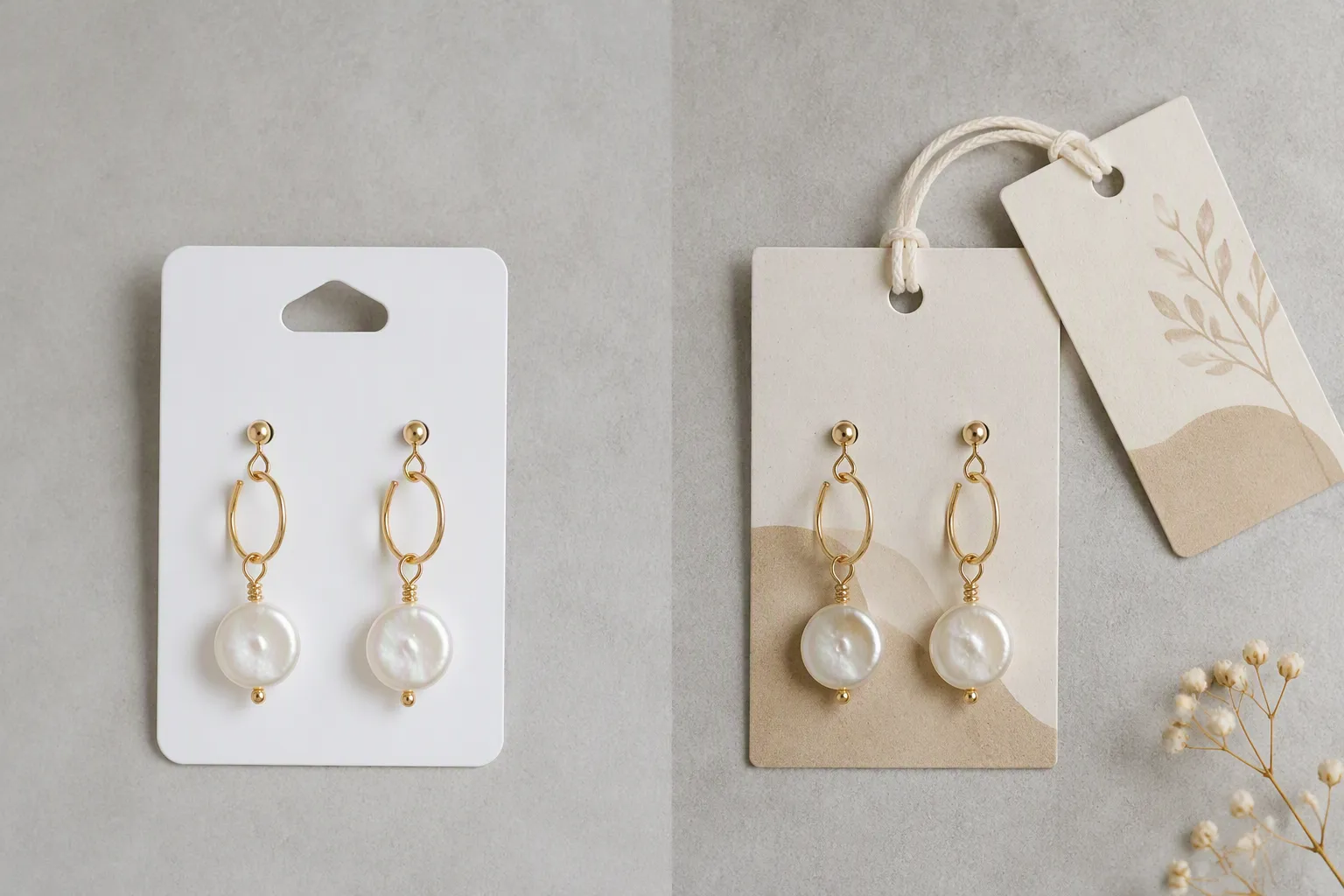
- Packaging and labeling for private label
Retail personalization is surface-level: engraving a name, swapping a birthstone, adding an initial. That's consumer customization, not brand-building customization.
Quality Control
This is where supplier selection matters most in custom OEM. A reputable manufacturer runs in-house QC inspection before every shipment — checking plating consistency, stone setting, clasp function, and packaging integrity. Without that step, defect rates can spike and chargebacks follow.
Retail chains manage QC at the brand level, which is generally consistent but irrelevant for resellers. DTC brands similarly maintain quality standards for their own product lines.
For importers, the operative question is: what does your QC protocol look like, and can I see inspection reports? That's a qualification question to ask any OEM supplier before placing a production order.
Lead Time and Capacity
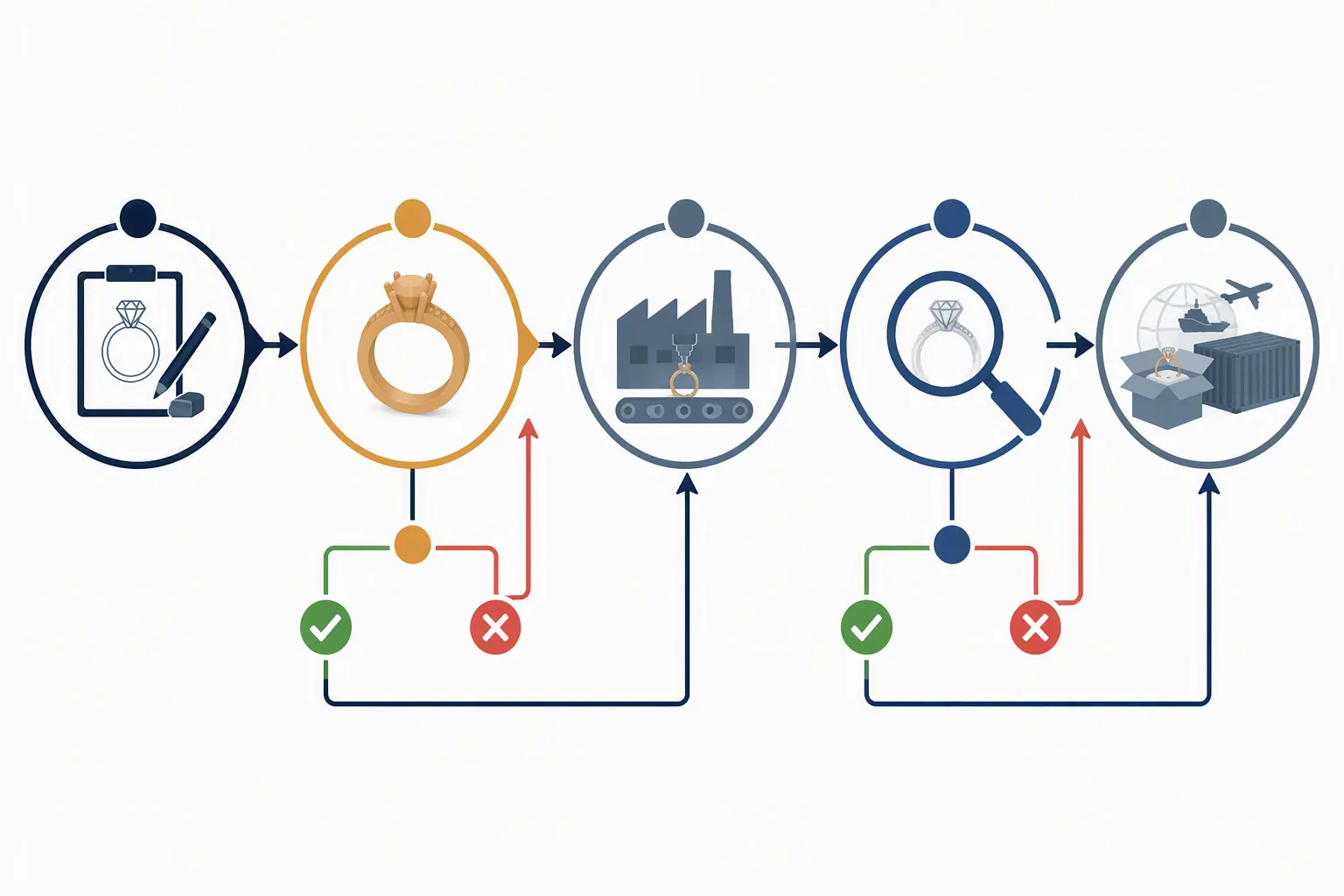
Custom OEM involves a production cycle — sampling, approval, production run, QC, and shipping. Air freight shortens transit; sea freight reduces cost for larger volumes. Stock catalog orders move faster than new tooling designs. Plan for 2–6 weeks from PO to delivery as a working assumption, and confirm current lead times with your supplier.
Off-the-shelf stock from a retailer or generic wholesaler ships immediately. If you need product in 48 hours, OEM is not the answer. If you're planning a seasonal drop 6–8 weeks out, OEM is a better fit.
Support and Communication
Multilingual support is a real differentiator for international procurement teams. Buyers operating in MENA, the EU, and Latin America frequently encounter language barriers with Chinese suppliers — documentation errors, spec misunderstandings, and shipment delays that trace back to a failed communication, not a failed production process.
Suppliers offering sales support in Arabic, French, Spanish, German, and Russian alongside English reduce that friction meaningfully. Retail chains offer English-primary service with limited B2B accommodation.
Trade Terms and Payment
Custom OEM suppliers typically offer trade-standard terms: EXW or FOB, with payment via T/T bank transfer, L/C, PayPal, Western Union, or fintech rails like Xtransfer. These terms are compatible with how import businesses actually operate.
Retail purchases require credit cards or consumer financing — not workable for volume purchasing or cross-border business accounts.
Pros and Cons
Custom Jewelry (OEM)
Pros
- Exclusive designs your competitors can't replicate
- COGS advantage compounds at scale
- Full control over materials, stones (amethyst, garnet, peridot, turquoise, rhinestone, etc.), finish, and packaging
- Trade-compatible payment terms and shipping options
- In-house QC reduces defect risk when supplier is vetted
- Multilingual support available from quality suppliers
Cons
- Lead time requires planning (not a same-week solution)
- Sampling costs for new designs add upfront expense
- Supplier vetting is your responsibility — quality varies widely
- MOQ commitments require inventory conviction
Alternatives (Retail / DTC / Generic Stock)
Pros
- Immediate availability
- No MOQ commitment
- No sampling phase required
- Familiar brands (Kay, Jared, Kendra Scott) carry consumer trust for gifting
Cons
- No margin for resale — retail pricing = consumer pricing
- Zero design exclusivity
- No trade terms or B2B infrastructure
- Personalization is cosmetic, not structural
- Cannot build a brand identity on shared stock
When to Choose Custom Jewelry
You're building or scaling a private-label brand. If your Shopify store or Amazon brand registry needs a coherent, exclusive product line, custom OEM is the only path that doesn't put your designs in a competitor's catalog by next quarter.
You're an importer sourcing for boutiques or chain accounts. Buyers supplying multi-door retailers need consistent production, predictable lead times, and QC documentation. Stock wholesalers can't reliably deliver that.
You have style conviction but need price-competitive manufacturing. A luxury-positioned rhinestone or natural stone earring line that retails at $45–$85 needs a COGS structure that makes the margin work. Custom OEM from a vetted Chinese manufacturer delivers that; domestic or retail sourcing does not.
You operate in multiple languages or markets. Procurement teams working across MENA, Europe, and North America need a supplier who can communicate in their language and handle multi-currency, multi-incoterm transactions cleanly.
When to Choose Alternatives
You need product in less than two weeks. Custom OEM has a production cycle. If a pop-up or trade show is imminent and you need inventory now, stock wholesale or retail sourcing is your only option.
You're validating a concept before committing to OEM. Ordering a handful of pieces from a stock catalog or DTC brand to test customer response before locking in a custom design run is a legitimate use of retail alternatives. Prove the demand; then go custom.
You're purchasing for gifting, not resale. Retail chains like Kay Jewelers exist to serve this use case — their personalized jewelry section, appointment booking, and store finder are built for the gift buyer. If you're not building a business around the purchase, retail is the right channel.
Final Verdict
For commercial buyers — DTC store owners, importers, and boutique procurement teams — custom OEM jewelry is not the riskier option. It's the defensible one. Retail alternatives provide no resale margin, no exclusivity, and no B2B infrastructure. Generic stock wholesale offers speed but no brand moat.
The decision comes down to a single question: are you building something proprietary, or are you filling a shelf? If you're building, the next step is qualifying a supplier on MOQ tiers, sampling workflow, production lead times, and QC process — not browsing retail sites.
For buyers evaluating custom OEM sourcing, the STRAND custom jewelry supplier comparison is a practical starting point for understanding how vetted Chinese workshops stack up on the dimensions that matter to importers. If you're ready to scope a production run, request a quote at strandjewelry.com — bring your target COGS, style references, and destination market, and get MOQ and pricing back in the language you work in.