
The Ultimate Guide to Wholesale Jewellery That Actually Works
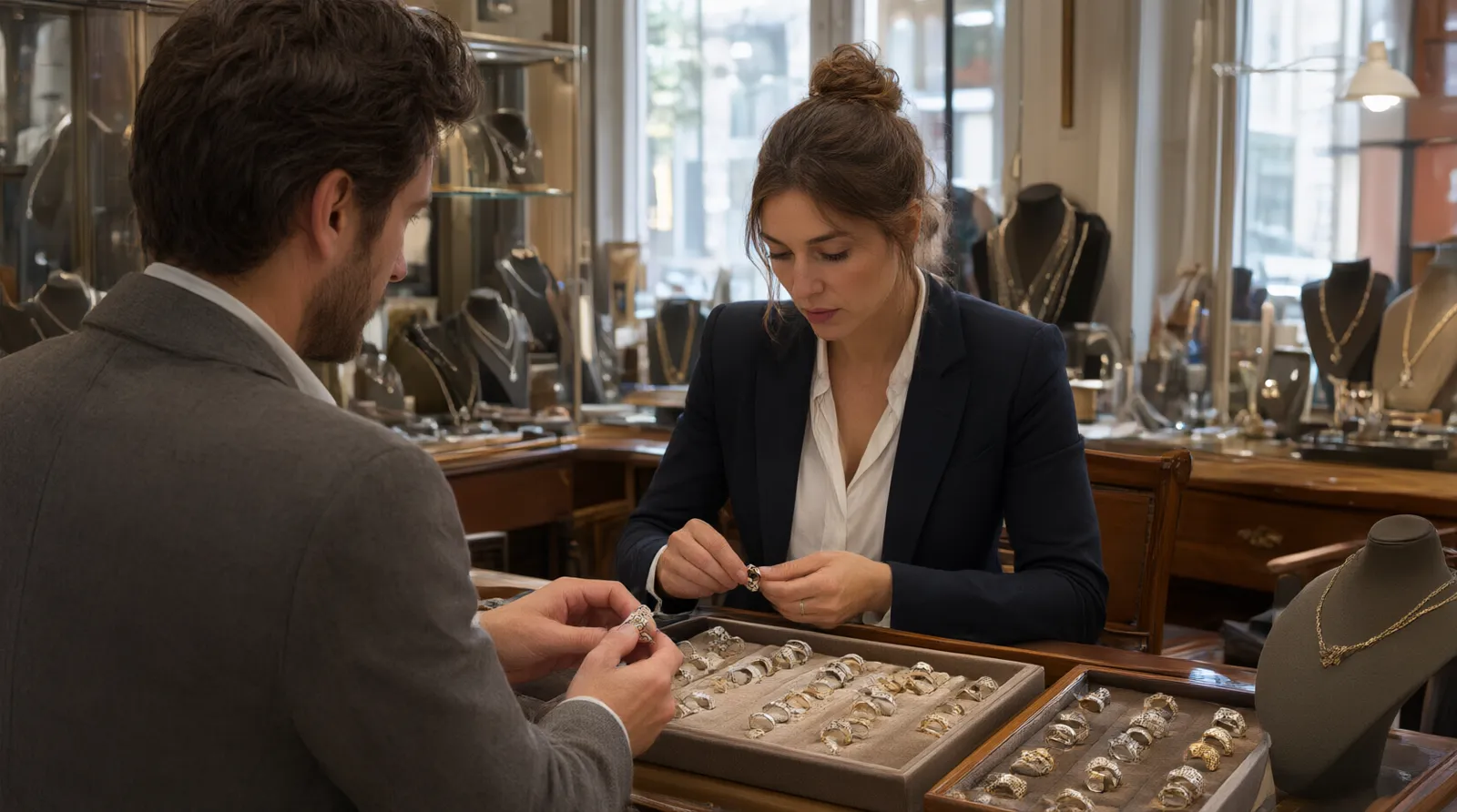
The Ultimate Guide to Wholesale Jewellery That Actually Works
Wholesale jewellery is the bulk purchasing of finished adornments—rings, necklaces, bracelets, and earrings—directly from manufacturers or authorized distributors at prices significantly below retail. Buyers typically need to meet a minimum order quantity (MOQ) to access these rates. For overseas direct-to-consumer (DTC) stores, importers, and procurement teams, sourcing wholesale jewellery is the primary mechanism for maintaining healthy profit margins while stocking vetted, crafted pieces rather than mass-produced fast fashion.
If you run a boutique in Dubai, manage procurement for a London-based DTC brand, or operate an online store importing into North America, your supplier relationship dictates your entire business model. Buying at wholesale allows you to secure specific materials—such as 18k gold-tone brass, sterling silver, or cubic zirconia (CZ) settings—at a cost basis that supports both competitive retail pricing and sustainable growth. The difference between a thriving jewellery store and one struggling with inventory costs almost always traces back to how effectively the owner sources their wholesale supply.
For buyers evaluating this channel for the first time, understanding the mechanics of pricing tiers, shipping logistics, and quality verification is essential before reaching out to a supplier. We previously explored these foundational steps in The Smart Buyer's Guide to Jewellery in Wholesale, which remains a critical resource for structuring your initial procurement strategy.
What Is Wholesale Jewellery? Understanding the Core Model
At its most basic level, wholesale jewellery refers to the trade of adornments between a manufacturer or primary distributor and a retail business, bypassing the end consumer during the initial transaction. Unlike retail, where a single necklace might be sold for [price], wholesale transactions involve volume commitments. Suppliers in the United States, for example, offer a wide variety of categories including rings, necklaces, bracelets, and custom solutions specifically structured for retailers and businesses (source).
Wholesale vs. Retail: The Structural Differences
The distinction goes beyond simple price tags. When you purchase through a wholesale channel, you are buying into a B2B (business-to-business) framework. This means you gain access to tiered pricing based on your MOQ. Established suppliers specializing in crafted pieces structure these tiers to reward larger, consistent orders without compromising on material integrity.
Retail focuses on individual unit sales, customer experience, and immediate availability. Wholesale focuses on supply chain reliability, material specifications, and lead times. For instance, a wholesaler dealing in CZ and sterling silver fashion pieces, such as J. Good-In, Inc., structures their catalog specifically for business buyers who need to restock seasonal collections efficiently (source).
Materials and Craftsmanship in Wholesale
A common misconception among new buyers is that wholesale automatically implies lower quality. In reality, established suppliers prioritize craftsmanship because their business clients depend on low return rates and high customer satisfaction. When reviewing a wholesale catalogue, look for precise specifications:
- Base Metals: Is the piece solid 925 sterling silver, or is it brass with a specific micron thickness of gold plating?
- Stones: Are the CZ stones hand-set or glued? What is the cut grade?
- Dimensions: Exact chain lengths (e.g., 45cm with a 5cm extender), pendant drop measurements in millimeters, and ring band widths.
Buyers targeting Middle Eastern and North African (MENA) markets should pay close attention to these details. Gold tones (18k and 22k finishes) are culturally preferred, and designs often favor modesty—meaning longer chain drops, higher necklines on pendants, and substantial but elegant bracelet cuffs rather than overly delicate or revealing styles.
How to Source Wholesale Jewellery for Your Store
Procuring wholesale jewellery requires a systematic approach, particularly for overseas importers managing international freight and customs. You cannot simply add items to a cart and check out like a retail consumer. The process demands relationship building, specification alignment, and logistical planning. If you want a step-by-step breakdown of the purchasing workflow, our guide on How to Buy Jewellery Wholesale: The Smart Buyer's Complete Guide covers the exact frameworks procurement teams use to vet suppliers.
Step 1: Define Your Material and Design Specifications
Before contacting any supplier, document exactly what your store needs. If you require 500 units of a gold-tone layered necklace, specify the brass alloy, the exact micron count of the gold plating to prevent tarnishing in humid climates, the clasp type (e.g., lobster claw vs. spring ring), and the packaging dimensions. Vague requests yield vague quotes.
Step 2: Evaluate the Supplier’s Capabilities
Not all wholesalers operate identically. Some focus purely on costume pieces, like JewelOra, which trades heavily in fashion and costume categories within the U.S. market (source). Others, like Teeda-Wholesale, specialize specifically in classic silver styles (source). Match the supplier's core competency with your store's brand positioning. If your DTC brand promises artisanal quality, sourcing from a bulk costume trader will create a disconnect your customers will notice.
Step 3: Request Samples and Verify Lead Times
Never place a full MOQ order without approving a physical sample. Request samples that represent your final production specs. During this phase, clarify the supplier's lead time—the duration between placing the bulk order and the goods leaving the factory floor. For crafted pieces, lead times are naturally longer than for stamped, mass-produced items. Factor this into your seasonal launch calendar.
Step 4: Confirm Shipping and Logistics
For overseas buyers, shipping terms dictate your final landed cost. Ask whether the supplier ships FOB (Free on Board) or DDP (Delivered Duty Paid). U.S.-based suppliers often streamline domestic logistics; for example, TrendyWholesale offers free UPS Ground shipping on orders exceeding $200 within the continental United States (source). However, if you are importing those same goods to Europe or the MENA region, you must calculate international freight forwarding, customs duties, and transit times separately.
Why Wholesale Jewellery Is Important for Business Growth
Sourcing through wholesale channels is not just a purchasing preference; it is a fundamental business strategy that dictates your retail viability. The importance lies primarily in margin protection and inventory control.
Protecting Profit Margins
When you buy a sterling silver ring at retail price and attempt to resell it, your margin collapses. Wholesale pricing creates the necessary gap between your Cost of Goods Sold (COGS) and your retail price. This gap funds your marketing, covers your operational overhead, and generates profit. For a DTC store operating entirely online, where customer acquisition costs can be high, securing the lowest viable wholesale price for high-quality goods is the only way to remain profitable.
Ensuring Inventory Consistency
Retail consumers expect consistency. If a customer buys a pair of gold-tone hoop earrings from your store in March and returns in June to buy a matching set for a friend, the new pair must match perfectly in weight, finish, and dimension. Sourcing from a reliable wholesale partner ensures that your inventory remains uniform across batches. Suppliers that manufacture large volumes of coordinated accessories—such as necklaces, earrings, anklets, and brooches—allow retailers to build cohesive collections rather than piecing together mismatched items (source).
Building Brand Authority Through Curation
Your store's reputation relies on what you choose to sell. By working closely with wholesale suppliers who prioritize craftsmanship, you position your brand as a curator of quality. This is especially vital for importers bringing goods into discerning markets. A buyer in Riyadh or London evaluating your collection will immediately recognize the difference between thoughtfully sourced, durable pieces and generic bulk inventory.
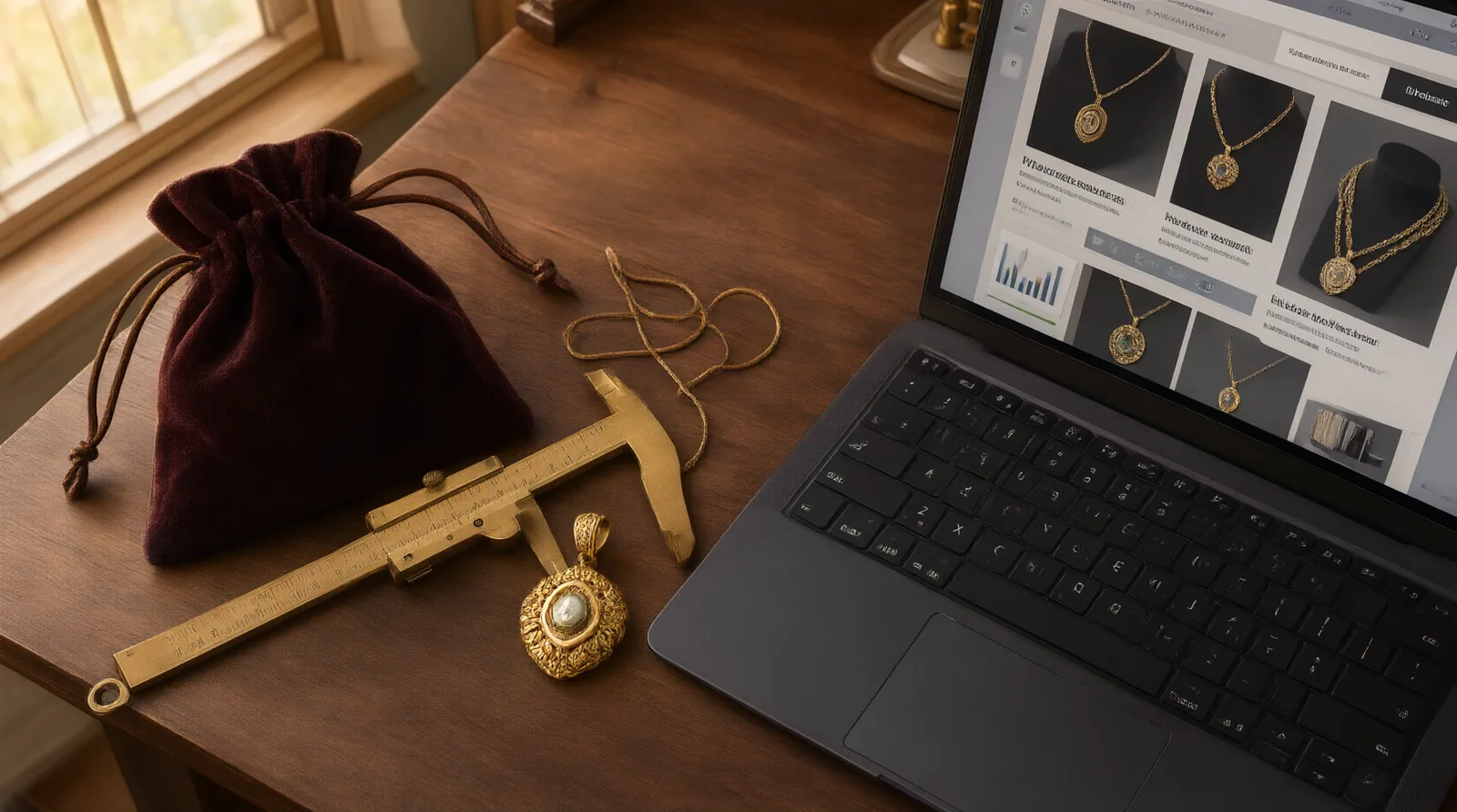
When Should You Use Wholesale Jewellery Channels?
Knowing when to engage a wholesale supplier is just as critical as knowing how. Different stages of your business lifecycle require different sourcing strategies.
Launching a New DTC Brand or Physical Store
If you are opening a new jewellery store, your initial inventory investment will be your largest upfront cost. Engaging wholesale channels early allows you to fill display cases or digital storefronts with a broad range of SKUs—rings, necklaces, bracelets, and watches—without exhausting your startup capital at retail prices. Suppliers offering comprehensive accessory lines make it easier to launch a fully realized brand identity on day one.
Scaling Existing Operations
Once your store establishes a baseline of sales, you will identify which designs convert best. This is the moment to leverage your wholesale relationship to negotiate better pricing tiers by increasing your MOQ on those specific winning designs. Instead of ordering 50 units across ten styles, you might order 300 units of your top three sellers, drastically reducing your per-unit cost.
Preparing for Seasonal or Cultural Demand
Timing your wholesale orders around cultural events is mandatory for global sellers. For the MENA market, inventory must be secured and shipped well ahead of Ramadan, Eid al-Fitr, and wedding seasons. Because crafted jewellery requires specific lead times for manufacturing, plating, and quality checks, procurement teams often need to place wholesale orders months in advance. Failing to align your wholesale purchasing timeline with these cultural peaks results in stockouts during your highest-revenue windows.
The Key Benefits of Wholesale Jewellery Procurement
Beyond basic cost savings, establishing a dedicated wholesale supply chain unlocks several strategic advantages for serious buyers.
Access to Custom and Bespoke Solutions
Many retail buyers do not realize that wholesale suppliers frequently offer custom manufacturing. If your DTC brand requires a proprietary clasp design or a specific gemstone cut that isn't available off-the-shelf, a capable wholesale partner can produce bespoke runs once you meet their custom MOQ. U.S. directories have listed suppliers providing custom jewellery solutions for decades, proving this is a standard industry practice rather than a rare exception (source).
Streamlined Supply Chain Management
Working with one or two primary wholesale partners simplifies your logistics. Instead of tracking shipments from dozens of disparate retail sources, you consolidate freight. You establish standardized communication protocols for quality assurance, returns, and reordering. This consolidation reduces administrative overhead and minimizes the risk of lost shipments or inconsistent packaging.
Quality Assurance and Warranty Frameworks
Reputable wholesale suppliers understand that their business clients face reputational risk if products fail. Therefore, they often provide clearer warranty frameworks and return policies for defective goods than retail environments. Before signing a contract, explicitly ask the supplier about their policy for plating defects, stone loss, or structural failures within the first six months of retail sale. Document their replacement or credit terms in writing.
Evaluating Suppliers: Criteria for Overseas Buyers
For overseas procurement teams, the distance between you and the supplier magnifies every operational flaw. You must evaluate potential partners across strict criteria before committing capital.
Price, Availability, and MOQ Alignment
Request a detailed price matrix. Does the per-unit cost drop significantly if you double your order? Ensure the supplier's standard MOQ aligns with your storage capacity and cash flow. Furthermore, verify current availability. A supplier might list a stunning 18k gold-tone cuff in their catalog, but if the raw brass is backordered, your lead time could stretch indefinitely. Always ask for real-time stock levels or confirmed production slots.
Shipping Options and Transit Reliability
As mentioned earlier, domestic shipping perks—like free ground shipping over certain thresholds—are highly beneficial for local buyers (source). However, international buyers must scrutinize export capabilities. Does the supplier have experience clearing customs in your destination country? Do they use reliable international couriers or freight forwarders? Ask for references from other overseas clients to verify their shipping reliability.
Material Integrity and Ethical Sourcing
Modern consumers demand transparency. Ensure your wholesale supplier can provide documentation regarding the origin of their metals and stones. For gold-plated items, request certification on the plating thickness (measured in microns) to guarantee longevity. Thin plating will wear off quickly, leading to customer complaints and returns that destroy your profit margins.
Returns and Defect Resolution
Clarify the return process for international shipments. Returning defective goods across borders involves reverse logistics costs, customs paperwork, and extended timelines. The best wholesale agreements include a defect allowance—a pre-agreed percentage of credit applied to future orders to account for minor manufacturing variances, eliminating the need to physically ship flawed pieces back to the origin country.
Moving Forward With Your Wholesale Strategy
Sourcing wholesale jewellery is a disciplined process that rewards preparation, specificity, and long-term relationship building. By focusing on material specifications, understanding lead times, and aligning your procurement cycles with your target market's cultural calendar, you transform purchasing from a simple transaction into a core competitive advantage. Whether you are stocking a boutique focused on modest, gold-tone elegance for the Middle East or scaling a global DTC brand, the principles remain identical: demand clarity, verify craftsmanship, and plan your logistics meticulously.
Your next step is to audit your current inventory gaps and draft a precise specification sheet for the pieces you need. Once your requirements are documented, reach out directly to a vetted supplier to discuss MOQ tiers, current lead times, and international shipping options.
[Contact the supplier] to request a quote, review material samples, and begin building a wholesale partnership tailored to your store's exact specifications.
Frequently Asked Questions
What is wholesale jewellery?
Wholesale jewellery through STRAND means sourcing vetted, crafted pieces—such as 18k gold-tone brass or sterling silver rings (available in US sizes 5–9) and hand-set gemstone pendants (15–25mm drop)—directly for your retail or import operations. Our standard MOQ is 50 units per SKU with a production lead time of 3–4 weeks, shipped via DHL Express or air freight to suit DTC stores and procurement teams globally. For MENA buyers, we offer curated selections emphasizing modest silhouettes and rich gold tones that align with regional preferences.
How to wholesale jewellery?
To wholesale jewellery through STRAND, overseas buyers such as DTC stores and importers can request our vetted catalog featuring crafted pieces in 18k gold-plated brass and sterling silver, with standard dimensions of 45cm chains and 12mm–18mm pendants. Our minimum order quantity (MOQ) is 50 units per style, with a production lead time of 3–4 weeks before dispatch via DHL Express or sea freight for larger procurement orders. For MENA markets specifically, STRAND curates modest, longer-length silhouettes in rich gold tones to align with regional preferences.
Why is wholesale jewellery important?
Wholesale jewellery through STRAND gives DTC stores, importers, and procurement teams direct access to vetted, crafted collections—such as 18k gold-tone brass or 925 sterling silver pieces—with clear specifications on dimensions, MOQs starting at 50 units, and lead times of 3–4 weeks. This model supports reliable global shipping options (air freight or sea) while ensuring cultural alignment, such as offering modest designs and rich gold tones suited for MENA markets. Ultimately, it allows buyers to scale with quality and consistency rather than relying on bulk, undifferentiated sourcing.
When should I use wholesale jewellery?
You should source wholesale jewellery through STRAND when your DTC store or import operation requires vetted, crafted pieces—such as 18k gold-plated brass or 925 sterling silver—in reliable volumes starting at a 50-unit MOQ with standard dimensions (e.g., 16–18" chains, 8mm stones). For MENA procurement teams, STRAND offers modesty-appropriate designs in rich gold tones, backed by 3–4 week production lead times and flexible shipping via DHL Express or air freight. This ensures you secure high-quality inventory rather than bulk fast fashion, aligning perfectly with seasonal planning and long-term retail strategy.
What are the benefits of wholesale jewellery?
Sourcing wholesale jewellery through STRAND gives DTC stores, importers, and procurement teams direct access to vetted, crafted pieces—such as 18k gold-tone brass or sterling silver designs with precise millimeter dimensions—at scalable MOQs starting from 50 units. This model ensures predictable 3–4 week lead times and flexible shipping options (air freight or sea) while maintaining the artisanal quality required for discerning markets, including modest, gold-rich assortments curated specifically for MENA buyers. Ultimately, STRAND transforms wholesale procurement into a reliable, high-standard supply chain rather than a bulk commodity exercise.