
Custom Jewelry vs. Alternatives: The Ultimate Sourcing Comparison
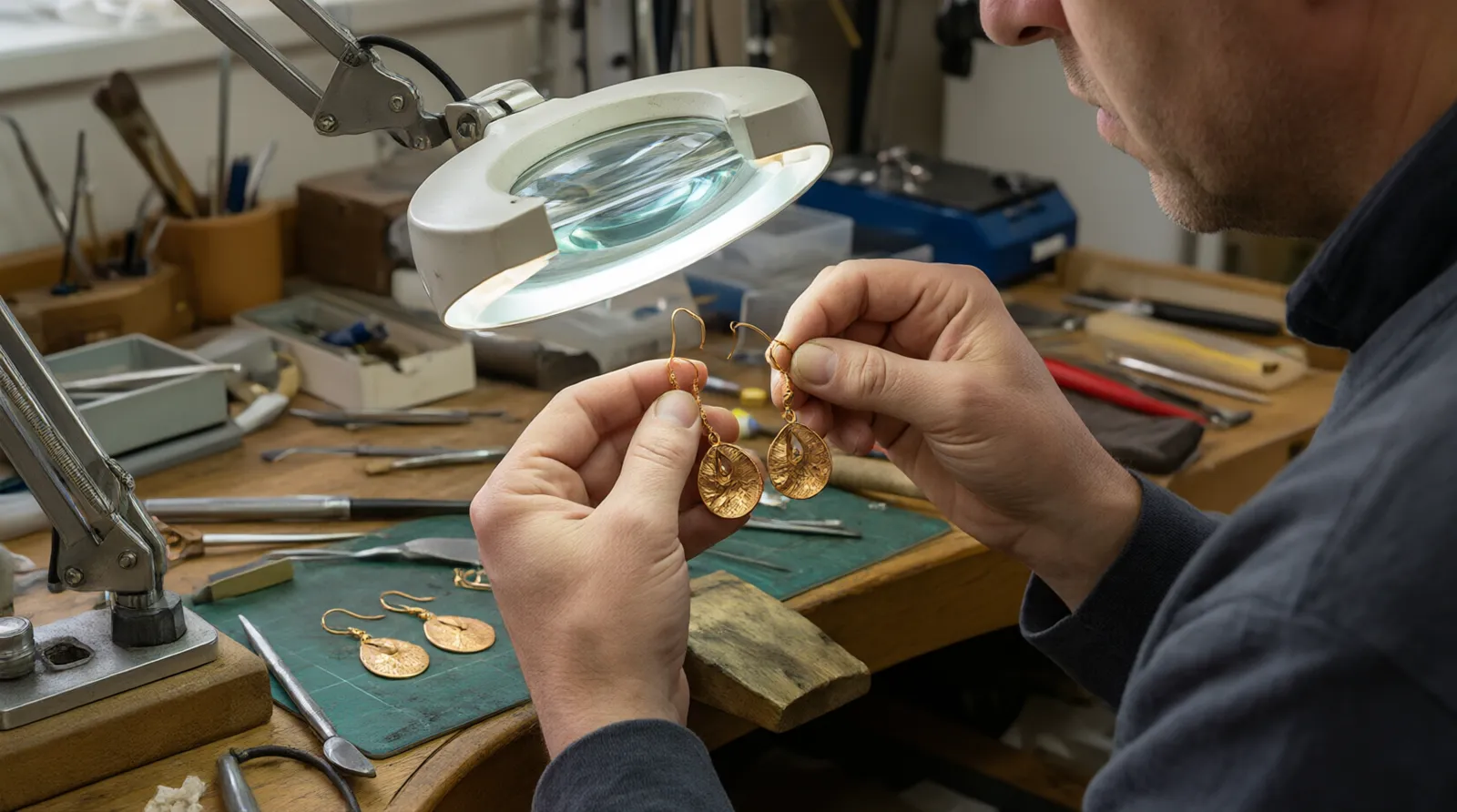
Custom Jewelry vs. Alternatives: The Ultimate Sourcing Comparison
Custom jewelry manufactured through direct-to-factory OEM partnerships offers importers and DTC store owners control over design specifications, plating materials, and bulk pricing at accessible minimum order quantities per style. The primary alternatives—retail bench jewelers, wholesale stock catalogs, and branded distributor programs—trade that manufacturing control for faster turnaround on single units or established brand recognition. If you are sourcing fashion jewelry chains, earrings, or necklace sets for resale across the US, EU, UK, or MENA markets, custom OEM production generally yields higher margins, while retail and stock alternatives suit one-off consumer requests or immediate inventory gaps. For a deeper look at how these models stack up operationally, explore our B2B sourcing comparison.
TL;DR / Quick Verdict
Buyers running DTC stores or managing import supply chains should choose custom jewelry via an OEM supplier when they need specific designs (like gradient crystal drop earrings or two-tone glass bead sets) produced at scale with controlled unit economics. Choose alternatives—such as local retail bench jewelers or pre-made stock catalogs—when fulfilling a single end-consumer’s bespoke request (e.g., resizing a wedding band) or when you need fewer than a dozen units of a proven design immediately. For commercial buyers evaluating their upcoming sourcing strategy, our breakdown of Custom Jewelry: 6 Sources Buyers & DTC Brands Need in 2026 provides a broader look at the supplier landscape.
At-a-Glance Comparison Table
| Dimension | Custom Jewelry (OEM Model) | Alternatives (Retail Bench / Stock Catalogs / Branded Distributors) |
|---|---|---|
| Pricing Structure | Factory-direct EXW or FOB pricing; scales down per unit with volume. | Retail markup (often 3x-5x cost) or fixed wholesale tiers from distributors. |
| MOQ Requirements | Low minimums per style on most designs; select styles available from 1 pc. | Retail: 1 piece. Stock catalogs: Varies, often higher minimum order values. |
| Core Materials | Gold-plated/rhodium-plated copper, 925-style silver finishes, glass beads, natural stone, faux pearls. | Fine metals (gold, tungsten, cobalt), precious stones, or standard base-metal fashion alloys. |
| Design Control | Full specification control (vintage, rhinestone, specific gemstone colors like amethyst or turquoise). | Limited to existing catalog designs or one-off artisan modifications. |
| Lead Time | Production + transit time (air, sea, or express shipping required). | Immediate purchase (retail) or short domestic shipping (stock). |
| Support & Language | Multilingual procurement teams available to support international buyers. | Typically English-only or localized to the jeweler's region. |
| Quality Assurance | In-house QC inspection before every shipment. | Relies on individual artisan skill or distributor return policies. |
| Payment Terms | T/T bank transfer, Western Union, PayPal, L/C, and other international platforms. | Credit card, cash, or standard net-terms for established wholesale accounts. |
Custom Jewelry Overview
Custom jewelry in a B2B context refers to fashion jewelry manufactured to a buyer’s exact specifications by a vetted workshop, bypassing traditional middlemen. This model is built for importers, DTC store owners, and multilingual procurement teams who need consistent supply chains for products like drop earrings, stud earrings, and necklace-and-earring sets.
The standout strength of this approach is the intersection of low minimums and high customization. Direct-to-factory OEM suppliers link overseas buyers directly to workshops capable of producing small-batch runs. Rather than forcing buyers into massive container loads, many manufacturers offer low MOQs per style across their stock catalogs, with select styles available from just a single piece. Buyers can specify vintage aesthetics, gradient crystal arrangements, or two-tone glass bead patterns in gold-plated or rhodium-plated copper. Natural stones such as amethyst, garnet, peridot, and turquoise can be integrated into these designs, alongside faux pearls and rhinestones.
For cross-border trade, logistics and communication are where custom jewelry suppliers differentiate themselves. Trade terms are clearly defined as EXW or FOB, with shipping routed by air, sea, or express courier depending on urgency. Payment infrastructure supports international business realities through T/T bank transfers, Western Union, PayPal, L/C, and other global payment platforms. Because procurement teams span different regions, sales support is often provided in multiple languages to accommodate buyers worldwide. Every shipment undergoes in-house QC inspection prior to dispatch, mitigating the risk inherent in overseas manufacturing.
Alternatives Overview
The alternatives to custom OEM jewelry fall into three distinct categories: retail bench jewelers, ready-made wholesale stock catalogs, and branded distributor programs (such as those offered by large-scale retailers like Jared or Kendra Scott). These options serve different operational needs, primarily catering to end-consumers or buyers who lack the lead time for factory production. Understanding how these retail alternatives compare to OEM manufacturing helps clarify which route fits your current inventory requirements.
Retail bench jewelers focus on one-off, highly personalized fine jewelry. For example, Bulow Jewelers, located at 910 16th Street, Suite 1223, Denver, Colorado 80202, allows customers to build a custom engagement ring from scratch, specifying the exact color, clarity, cut, carat weight, and cost. Their expert designers work closely with individuals to craft rings, necklaces, bracelets, and birthstone jewelry. They can fabricate wedding bands from nearly any metal, including gold, tungsten, and cobalt, and offer custom engraving on any piece. Customers can even bring in their own diamond to be set into a new custom design. You can reach them at (303) 872-2500 for direct consultations.
Wholesale stock catalogs and branded distributors operate differently. Buyers purchase pre-designed, mass-produced items. While this eliminates the wait time associated with manufacturing, it also removes the ability to dictate material composition or exclusive design rights. Large chain stores offer luxury-tier branding but lock independent DTC sellers into competing against established retail pricing and ubiquitous product availability.
Feature-by-Feature Breakdown
Pricing and Unit Economics
Custom jewelry sourced via OEM fundamentally changes unit economics. By purchasing factory-direct under EXW or FOB terms, buyers absorb the raw material and labor costs without paying for a brand's retail overhead. When ordering small batches of rhinestone stud earrings, the per-unit cost allows DTC brands to apply standard retail markups while remaining price-competitive.
Alternatives carry heavier premiums. Retail bench jewelers charge for artisan time, localized overhead, and one-off material sourcing. Buying pre-made stock from branded distributors means paying for their marketing, physical storefronts, and established market positioning. For a buyer importing into the EU or MENA regions, the landed cost of retail-alternative jewelry rarely leaves room for competitive B2C pricing.
Material Specifications and Design Control
With custom OEM, design control is absolute within the parameters of fashion jewelry manufacturing. Buyers dictate whether a necklace set uses natural stone (like peridot or garnet) or faux pearls. They choose between gold-plated and rhodium-plated copper bases, or request 925-style silver finishes. This level of granularity allows brands to build cohesive seasonal collections—such as a vintage-inspired line utilizing two-tone glass beads—that competitors cannot replicate.
Retail alternatives like Bulow Jewelers offer incredible material flexibility for fine jewelry, working with tungsten, cobalt, and customer-supplied diamonds. However, this is geared toward individual consumers buying single luxury items, not commercial buyers sourcing hundreds of matching fashion pieces. Stock catalogs offer zero design control; you buy what has already been produced.
Minimum Order Quantities (MOQ)
MOQ is often the deciding factor for small to mid-sized DTC brands. The modern OEM model proves that custom manufacturing does not require massive volume commitments. With low MOQs per style across most catalog designs—and select styles available from a single piece—buyers can test new designs (like a new gradient crystal earring) in the market without tying up capital in dead stock.
Retail alternatives naturally have an MOQ of 1, which suits individual shoppers but fails commercial buyers needing uniform inventory. Wholesale distributors often enforce higher MOQs or minimum cart values (e.g., $500+ per order) to justify their pick-and-pack operations, limiting a smaller brand's ability to diversify its catalog.
Logistics, Shipping, and Trade Terms
Cross-border fashion jewelry requires precise logistical planning. Custom OEM suppliers structure this explicitly. Buyers choose their shipping method—air freight for urgent restocks, sea freight for cost-efficiency on larger runs, or express couriers for sampling. Trade terms (EXW/FOB) clarify exactly where liability and cost transfer from the factory to the buyer.
Local retail jewelers handle no international logistics. Distributors may ship domestically, but cross-border importers must arrange their own freight forwarding if buying from a US-based wholesaler to sell in the UK or MENA, adding friction and cost to the supply chain.
Quality Assurance and Compliance
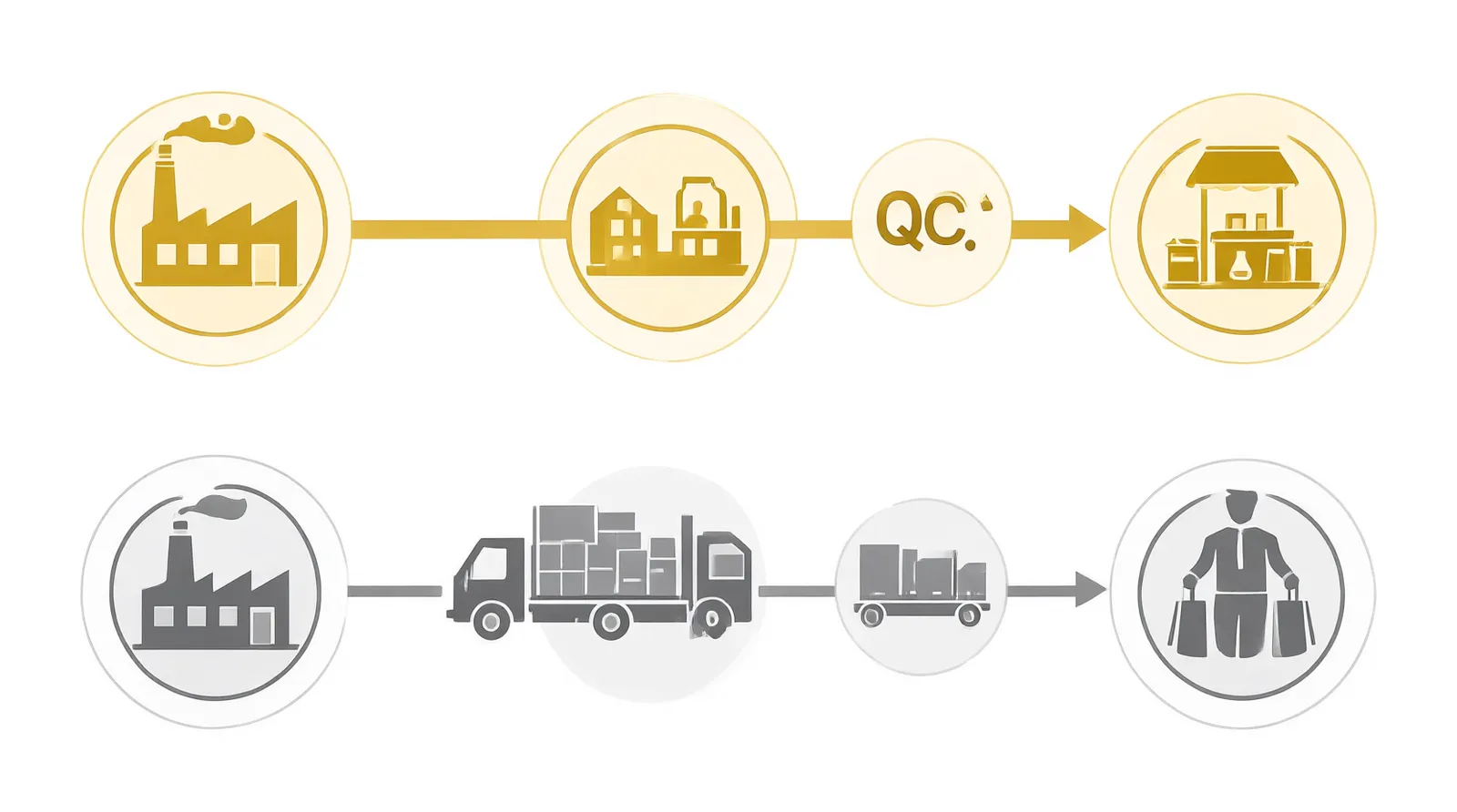
In-house QC inspection before every shipment is a standard requirement for reputable custom jewelry manufacturers. This ensures that the plating thickness on a batch of gold-plated copper earrings meets specifications and that stone settings for turquoise or amethyst pieces are secure before they leave the origin country.
Retail bench jewelers provide personalized quality assurance, standing behind their craftsmanship for individual clients. However, scaling that artisan-level oversight across 500 units of wholesale stock is impossible. Distributors rely on statistical sampling, meaning defective units occasionally slip into commercial orders, leading to customer returns for the DTC brand.
Procurement Support and Communication
Sourcing internationally requires bridging language and cultural gaps. Custom OEM providers address this by staffing multilingual sales teams fluent in several major languages. This allows a procurement manager in Dubai or Paris to negotiate specifications and resolve issues without translation delays. Payment flexibility (T/T, L/C, global payment platforms, PayPal, Western Union) further accommodates regional banking preferences.
Alternatives are usually bound by their geography. A Denver-based jeweler will communicate primarily in English. Large distributors may have international sales reps, but they rarely offer the granular, multilingual, multi-currency support required for agile cross-border fashion jewelry sourcing.
Pros and Cons
Custom Jewelry (OEM)
Pros:
- Direct factory pricing maximizes profit margins for DTC brands.
- Total control over materials (copper plating, natural stones, glass beads).
- Low MOQs reduce financial risk during product testing.
- Multilingual support streamlines cross-border procurement.
- Flexible payment and shipping terms tailored to international trade.
- Pre-shipment QC prevents defective inventory from reaching your warehouse.
Cons:
- Requires lead time for production and international transit.
- Demands more active involvement in spec sheets and design approvals.
- Currency fluctuations and freight costs impact final landed pricing.
Alternatives (Retail Bench / Stock / Distributors)
Pros:
- Immediate availability; no production lead times.
- Retail bench jewelers excel at one-off, highly complex fine jewelry (e.g., resetting a personal diamond).
- No need to manage international shipping or customs clearance.
- Established brand names (like Kendra Scott or Jared) carry built-in consumer trust.
Cons:
- Significantly higher per-unit costs due to retail markups.
- Zero exclusivity; competitors can source the exact same stock designs.
- Limited material choices in fashion jewelry stock catalogs.
- Lack of multilingual B2B support for international procurement teams.
When to Choose Custom Jewelry
Choose custom jewelry if you are a DTC store owner or importer looking to build a proprietary brand identity. If your target market in the US, EU, UK, or MENA demands specific aesthetic trends—such as vintage rhinestone drop earrings or modern two-tone glass bead necklaces—OEM manufacturing is the only way to secure those designs exclusively.
This route is also mandatory when unit economics dictate success. If your business model relies on healthy margins between wholesale cost and retail price, factory-direct pricing with low MOQs allows you to maintain profitability without warehousing thousands of units. For a deeper evaluation of specific manufacturing partners, review our guide on 6 Custom Jewelry Sources Ranked: OEM Suppliers & Retail Benchmarks for 2026.

When to Choose Alternatives
Choose alternatives when the end goal is a single, highly personalized fine jewelry item rather than commercial inventory. If a customer walks into a store wanting to melt down a family heirloom or set their own diamond into a custom tungsten wedding band, a retail bench jeweler like Bulow Jewelers is the correct choice. Their expertise lies in individualized artisan craftsmanship, not scalable fashion jewelry production.
Alternatives also make sense if you are a boutique owner facing an immediate stockout of basic staples and cannot wait for international shipping. Purchasing pre-made stock from a domestic distributor fills shelves instantly, though at the cost of lower margins and zero product exclusivity.
Final Verdict
The decision between custom jewelry and its alternatives comes down to your operational role. Individual consumers seeking luxury, one-of-a-kind fine jewelry should utilize local retail bench jewelers. Commercial buyers, importers, and DTC brand owners building scalable fashion jewelry lines must use custom OEM manufacturing. The ability to dictate design—from the cut of an amethyst to the plating on a copper chain—while maintaining low MOQs and accessing multilingual trade support, makes custom OEM the only viable path for profitable cross-border jewelry retail.
If you are ready to evaluate production specs for your next collection, gather your design references and material requirements. Request a quote, get current MOQ and pricing details, or request a sample directly from an OEM procurement team at https://strandjewelry.com.