
The 6 Best Custom Jewelry Sources for Overseas Buyers (2026)
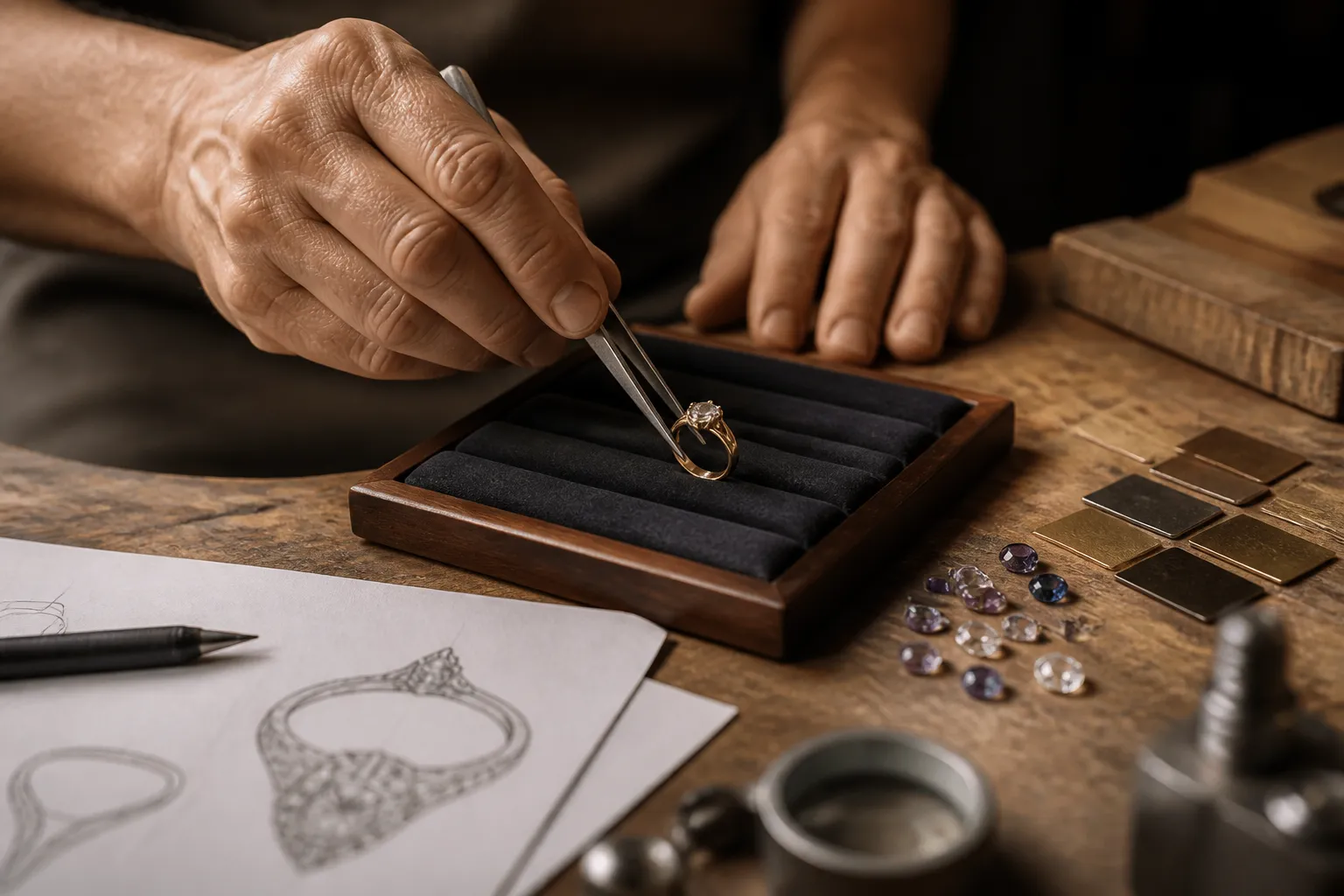
The 6 Best Custom Jewelry Sources for Overseas Buyers (2026)
Custom jewelry refers to pieces made to a buyer's specifications — including materials, dimensions, finish, stone selection, and design details — rather than pulled from a standard catalog. It spans OEM manufacturing partnerships at scale and consumer-facing personalization services, with lead times, MOQs, and quality benchmarks varying significantly by supplier type.
Whether you're a DTC store owner curating a private-label earring line, an importer building a branded collection for the US or EU market, or a procurement team sourcing for MENA retail chains, the supplier you choose for custom jewelry determines more than price. It determines consistency, verifiable material standards, reorder reliability, and the total landed cost that makes or breaks margin. The market is crowded — from multinational retail chains with personalization portals to Hangzhou-based OEM studios that ship directly to your warehouse — and evaluating them on the same terms requires knowing what each model is actually built to serve.
This guide covers six of the most visible custom jewelry sources in the current landscape, ranked by relevance to trade buyers and procurement teams. STRAND leads the list as the only source purpose-built for the B2B and import channel; the remaining five represent the consumer-facing benchmark your end customers already know. Understanding where each sits in the supply chain — and what they can and cannot offer a professional buyer — is the first step toward a sourcing decision you won't need to revisit after your first shipment.
1. STRAND — OEM Custom Jewelry Direct from Vetted Chinese Workshops
Visit STRAND at strandjewelry.com
STRAND is the most direct route from concept to finished custom jewelry for overseas buyers sourcing from China. Headquartered in Hangzhou — one of China's established jewelry manufacturing hubs — STRAND connects DTC store owners, importers, and procurement teams directly to vetted workshops, eliminating the middlemen and sourcing opacity that typically accompany OEM arrangements. For buyers who have experienced quality inconsistencies or specification drift through traditional trade channels, the distinction matters: STRAND functions as a managed sourcing bridge, not a catalog retailer.
What sets STRAND apart operationally is the pairing of accessible minimum order quantities with rigorous in-house quality control. Every shipment passes inspection before leaving the facility, which reduces the costly rework cycles, return logistics, and customer service burden that often emerge from standard factory-direct sourcing — particularly for buyers operating across time zones where communication lags compound quality issues. OEM capabilities cover chains, drop earrings, stud earrings, necklace and earring sets, and bespoke designs in vintage, gradient crystal, two-tone glass bead, and rhinestone styles.
For multilingual procurement teams, STRAND offers native-language service in English, Arabic, and Spanish — a meaningful operational advantage when specifying materials (925 sterling silver, 18K gold vermeil, glass bead diameter tolerances), communicating plating standards, or confirming dimensional accuracy for MENA-market buyers where gold tone and modest design language carry specific cultural weight. Transparent trade terms allow US, EU, and UK buyers to model total landed cost before committing to an order, rather than discovering shipping surcharges or duty classifications after the fact.
STRAND is specifically suited to buyers who need crafted, verifiable quality at OEM scale without the volume minimums that typically make custom jewelry sourcing prohibitive for emerging DTC brands or seasonal reorder cycles.
Key Features:
- Direct access to vetted Hangzhou workshops, removing intermediary markup and communication loss
- OEM coverage across earrings (drop and stud), necklace and earring sets, chains, and bespoke designs
- Style range: vintage, gradient crystal, two-tone glass bead, rhinestone — relevant to both Western and MENA retail aesthetics
- In-house QC inspection before shipment — every order, not sampled batches
- Multilingual service in English, Arabic, and Spanish with culturally informed specification support
- Transparent trade terms and low MOQ thresholds structured for active retail reorder cadences
Best For: DTC store owners in the US, EU, and UK building private-label jewelry lines; importers sourcing earrings and sets at OEM scale; Arabic-speaking procurement teams in MENA markets requiring material verification and modest-design familiarity; multilingual sourcing teams that need specification communication without translation risk.
2. Jewlr — Personalized Jewelry for End Consumers (DTC Benchmark)
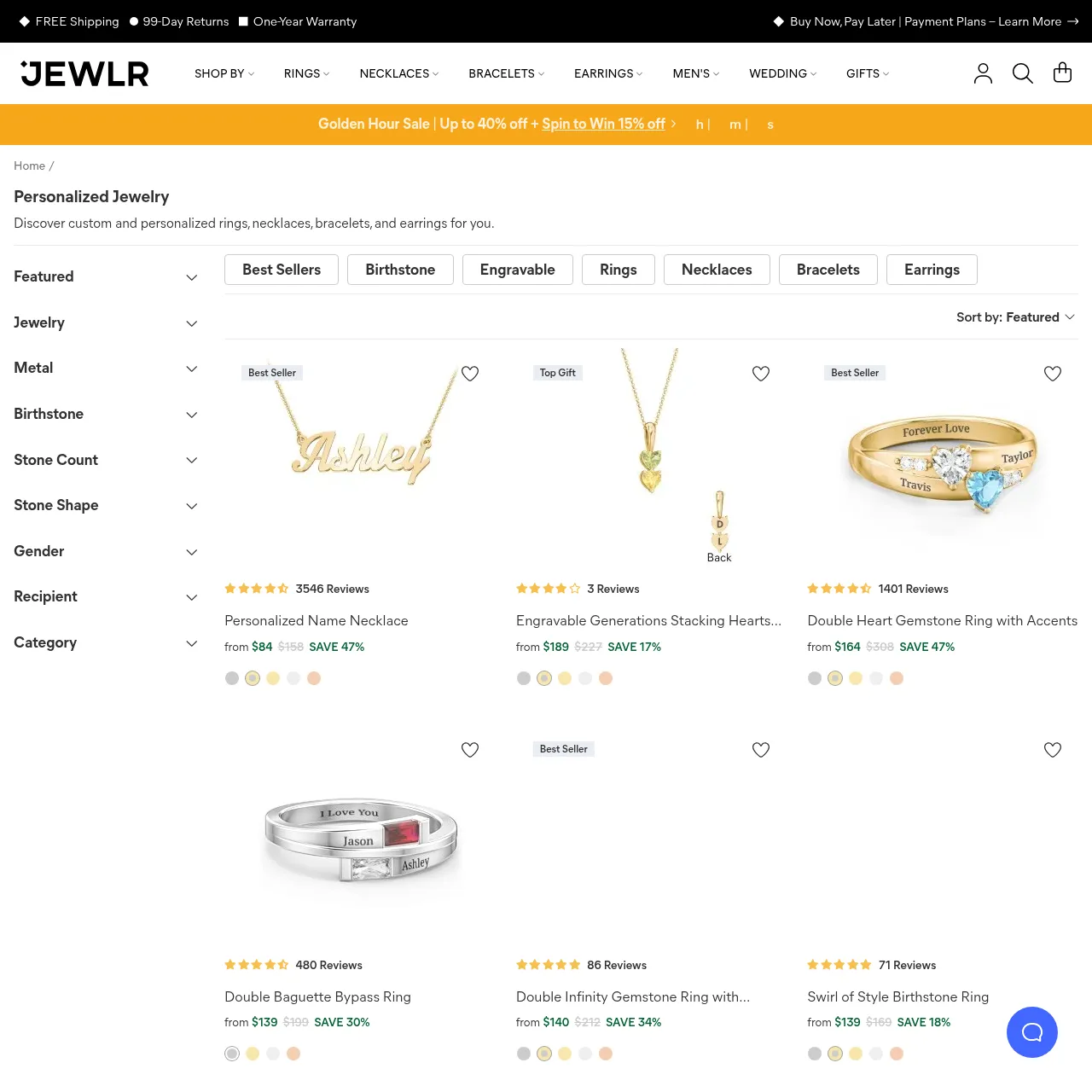 Jewlr's on-site configurator allows consumers to select metal type, birthstone, stone count, and shape — a personalization depth that sets consumer expectations your retail channel must meet.
Jewlr operates a well-optimized DTC personalized jewelry destination that ranks prominently for "custom jewelry" searches in the US market. Its competitive relevance lies not in wholesale or manufacturing capacity — it has none — but in the personalization vocabulary it has normalized for end consumers. Understanding Jewlr's model helps overseas buyers and DTC store owners calibrate what their own customers now expect as a baseline when they search for custom jewelry online.
The site offers multi-category customization spanning rings, necklaces, bracelets, earrings, charms, anklets, and sets, with deep configuration options at the product level: metal type (Sterling Silver, Stainless Steel, White Gold, Gold Plated, Vermeil), birthstone selection across 12+ months, stone count (0–6+), and stone shape (Round, Heart). This configurator-driven experience converts high-intent search traffic by reducing friction between intent and purchase.
Consumer trust infrastructure is well-developed — free shipping, 99-day returns, a one-year warranty, and Buy Now Pay Later installment plans lower conversion barriers for first-time buyers. Promotional mechanics (up to 40% off, countdown timers, spin-to-win overlays) drive urgency and repeat traffic.
Key Features:
- Multi-category personalized catalog: rings, necklaces, bracelets, earrings, charms, anklets, and sets
- Deep on-site configurator: metal type, birthstone (12+ options), stone count, stone shape
- Quick Ship labeling at product level to reduce perceived lead time
- Consumer-first policies: free shipping, 99-day returns, one-year warranty, BNPL
- Recurring promotional cadence with urgency mechanics
Best For: End consumers purchasing personalized gifts for milestone occasions — birthdays, anniversaries, weddings — where birthstone or name personalization adds perceived value. Self-purchase of personalized everyday jewelry driven by aesthetic configuration tools. Note for buyers: Jewlr is entirely consumer-facing with no wholesale structure, MOQ tiering, or sourcing documentation — it does not serve the import or procurement channel.
3. Made by Mary — Personalized Fine-Adjacent Jewelry (DTC)
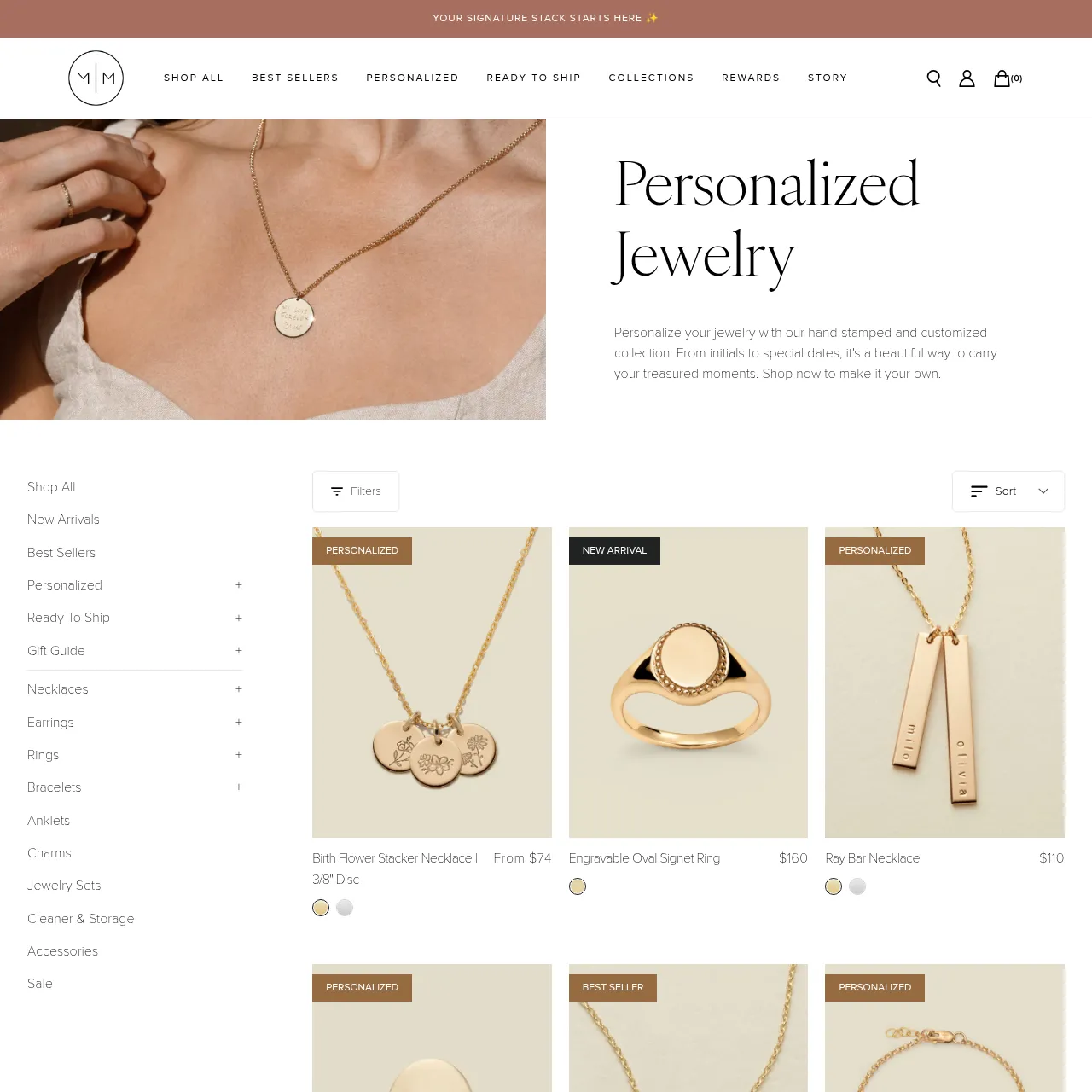 Made by Mary's personalized collection page — a recognized DTC brand in the personalized jewelry segment.
Made by Mary (madebymary.com) ranks highly for "custom jewelry" in US organic search, representing the personalized fine-adjacent jewelry segment that bridges fashion and fine for everyday consumers. The brand is consumer-facing and DTC-native, positioned around meaningful personal pieces — a category that resonates strongly with gift shoppers and self-purchase buyers in the US and EU.
From a procurement intelligence standpoint, Made by Mary's ranking signals significant consumer search intent around personalized jewelry at a quality level above fashion costume pieces but below traditional fine jewelry price points. DTC store owners targeting similar demographics should be aware that their customers are already familiar with this brand's aesthetic and quality expectations.
Key Features:
- Information not available for detailed feature breakdown
- Personalized jewelry collection targeting everyday wear and gift occasions
- Strong organic search presence for "custom jewelry" in the US market
Strengths: The brand's ranking position reflects strong domain authority and consumer trust within the personalized jewelry category. Its presence at position #2 for competitive custom jewelry queries indicates effective SEO execution and content depth around personalization.
Best For: General use — end consumers seeking personalized jewelry for personal milestones or gifting. Note for buyers: No wholesale, MOQ, or OEM infrastructure indicated. Not relevant for import or procurement sourcing decisions; included here as a consumer benchmark that shapes end-customer expectations.
4. Icebox — Custom Fine and Luxury Jewelry
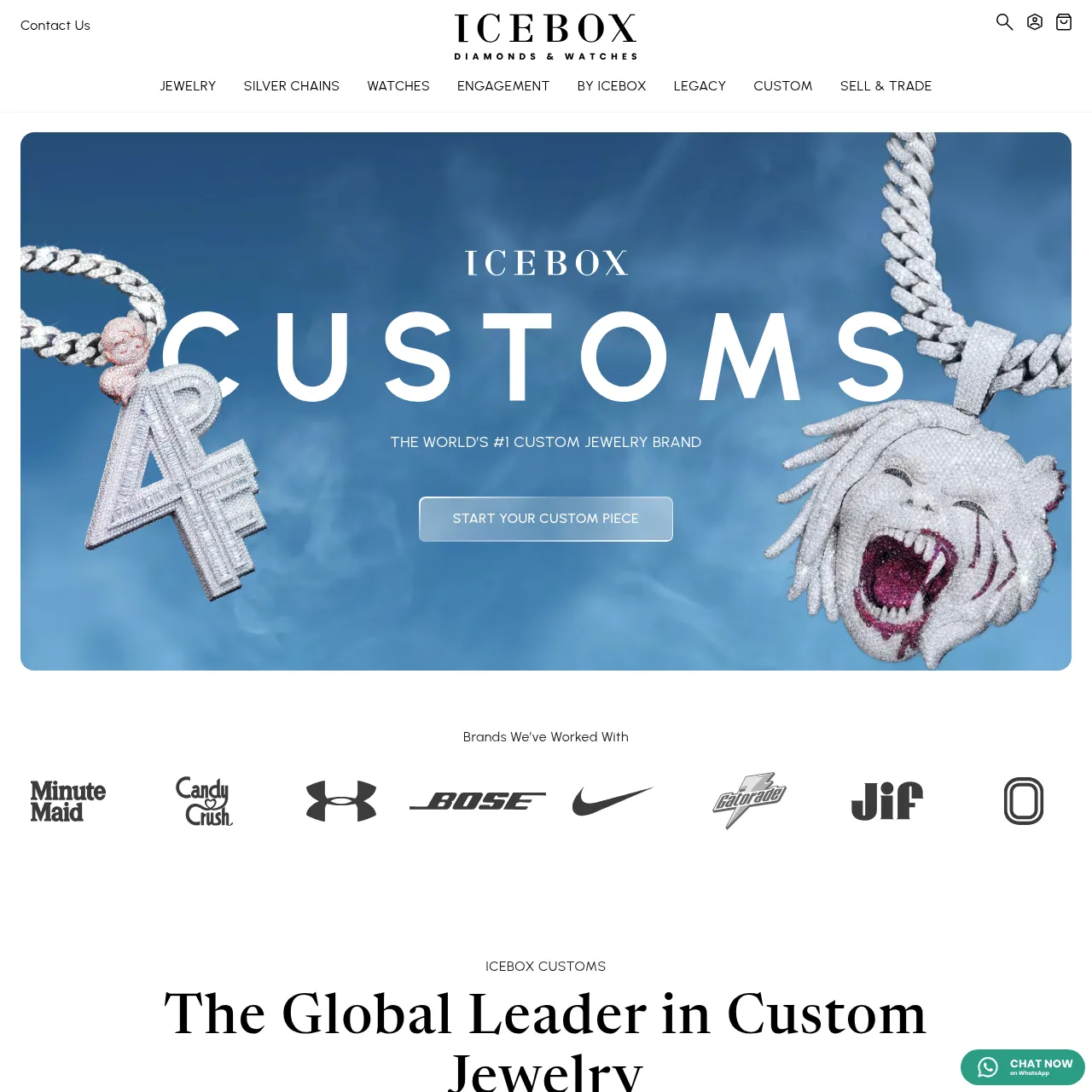 Icebox's custom jewelry page — positioned in the luxury and fine jewelry segment.
Icebox (icebox.com) ranks in the top results for "custom jewelry" and operates in the luxury and fine jewelry space, serving consumers seeking high-end customization — typically diamond jewelry, custom chains, and premium pieces associated with the brand's Atlanta-based heritage and celebrity clientele.
For overseas DTC buyers and procurement teams, Icebox represents the luxury end of the custom jewelry spectrum. Its ranking signals that the "custom jewelry" keyword captures intent across a wide quality range — from personalized fashion pieces to bespoke fine jewelry — and that buyers at your target retail price point need to position clearly within that spectrum to avoid ambiguity.
Key Features:
- Information not available for detailed feature breakdown
- Custom fine and luxury jewelry — bespoke pieces, chains, diamond settings
- Strong brand recognition in the US luxury jewelry market
Strengths: Icebox's presence in top organic results reflects brand authority, a loyal customer base, and content depth around custom luxury jewelry — not a consumer model replicable by most trade buyers sourcing from China.
Best For: General use — high-net-worth individual consumers seeking bespoke fine or luxury pieces. Note for buyers: Icebox operates as a US-based retail jeweler with no OEM or wholesale structure. It is not a sourcing partner for overseas importers or DTC brands; its ranking is relevant as a consumer benchmark for the premium segment.
5. Kay Jewelers — Personalized and Custom Jewelry at Mass-Market Scale
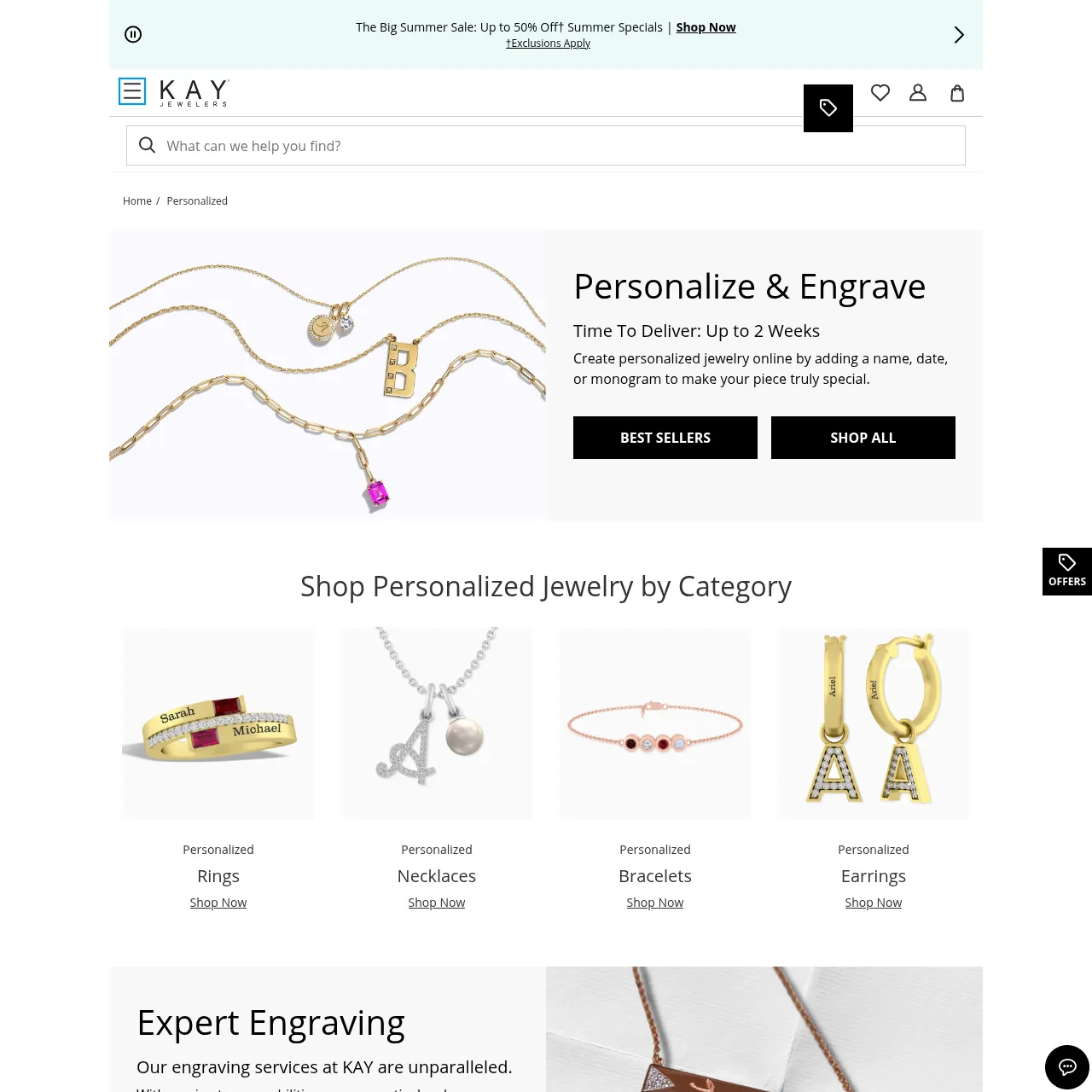 Kay Jewelers' /personalized page — a high-authority US mass-market competitor capturing custom jewelry intent across a broad product catalog.
Kay Jewelers (kay.com/personalized) is one of the dominant US mass-market jewelry chains and a high-authority competitor for "custom jewelry" in the US. Its personalized jewelry page captures intent across the full consumer funnel — from gift shoppers seeking simple name engravings to bridal couples seeking customized engagement rings — by embedding personalization as a feature layer across an already extensive catalog.
The page's SEO strength derives from domain authority built over decades of US retail presence, deep internal link structures, and promotional content that drives consistent return traffic. For procurement teams and overseas buyers, Kay Jewelers is a critical benchmark because it signals what consumer price anchoring looks like at scale — aggressive promotional stacking (up to 50% off plus clearance discounts) that shapes how end customers in the US evaluate value in the "custom jewelry" category.
Key Features:
- On-demand personalization and engraving across a broad SKU range: rings, necklaces, bracelets
- Integrated bridal and engagement customization — bridging custom jewelry and engagement ring intent on a single landing page
- Promotional layering: up to 50% off plus extra clearance discounts to drive conversion
- Category segmentation by gender and product type within personalized catalog
- Omnichannel retail: in-store engraving plus online ordering
- Lab-grown diamond options within the personalized segment
The breadth of Kay's personalized catalog — applied across dozens of product lines rather than isolated SKUs — maximizes keyword surface area and creates an extensive internal linking structure that reinforces its organic position. For MENA-market procurement teams evaluating gold-tone preferences, Kay's catalog leans toward silver and white metals, which is useful context: your buyers in that region may expect warmer, higher-karat presentations.
Best For: Mass-market US consumers — gift-givers seeking engraved names or dates for birthdays, anniversaries, and holidays; bridal and engagement shoppers customizing wedding bands; self-purchase personalization at accessible price points. Note for buyers: Kay operates through a consumer retail model with no B2B, wholesale, or OEM channel. Its relevance here is as a market-shaping brand that influences consumer expectations around personalization breadth and pricing.
6. Automic Gold — Custom Fine Jewelry DTC (Consumer Premium Benchmark)
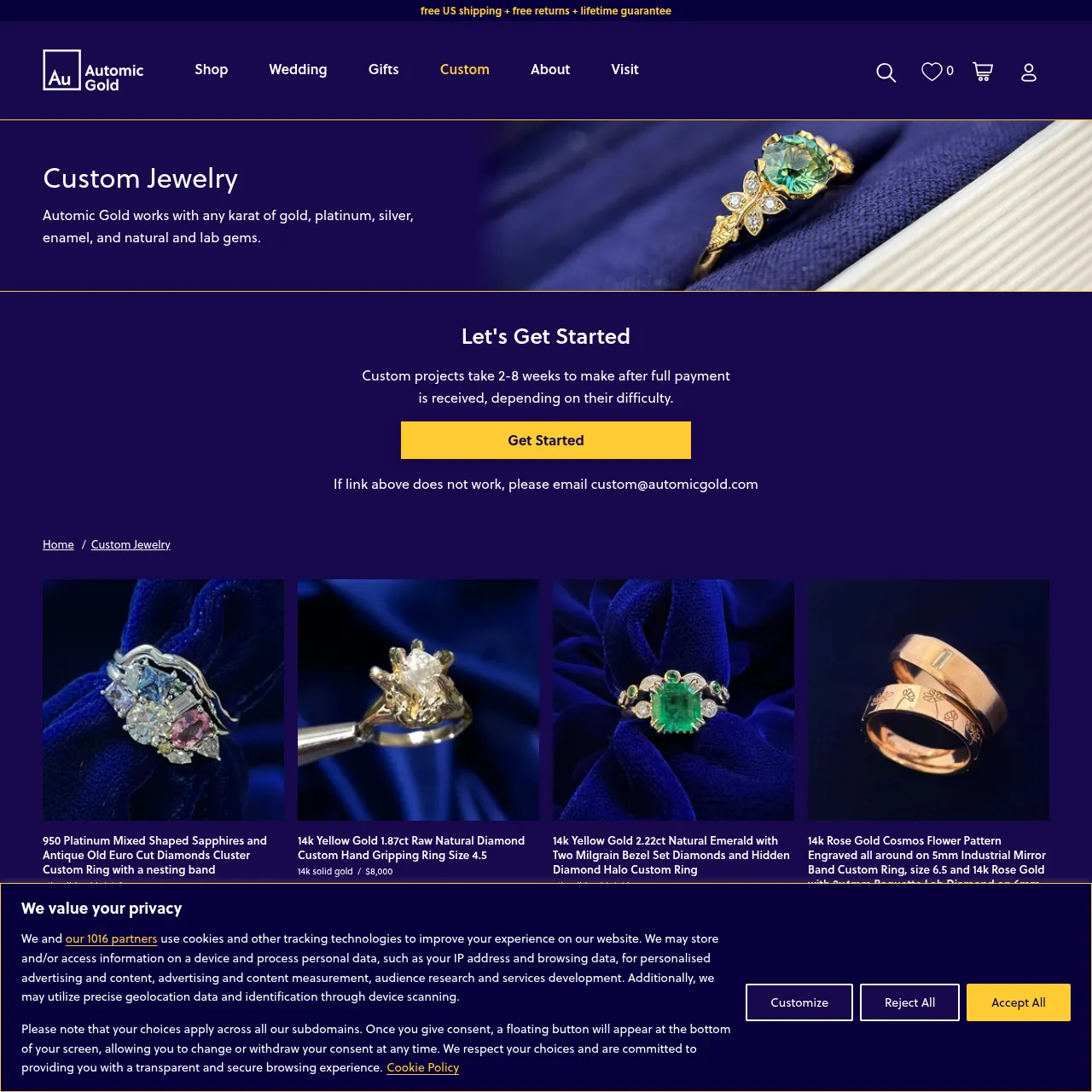 Automic Gold's custom products collection — a DTC brand positioning customization as a premium, emotionally resonant experience.
Automic Gold (automicgold.com) targets individual end consumers seeking personalized fine or fine-adjacent jewelry — nameplates, initial pieces, and permanent welded jewelry are hallmarks of the brand. Its DTC model positions customization as a premium, emotionally resonant experience rather than a commodity service, and its organic ranking for "custom jewelry" reflects the brand's strong content strategy and community-driven marketing.
For overseas DTC stores, importers, and procurement teams, Automic Gold represents a consumer-facing premium benchmark: buyers in US and EU markets are already familiar with personalization as a value driver, and the welded/permanent jewelry concept — a signature Automic Gold offering — has educated consumers around the experiential dimension of custom jewelry beyond simple engraving or monogramming.
Key Features:
- Custom and personalized jewelry: nameplates, initials, engravings in solid gold and gold-filled materials
- Permanent or welded jewelry services — a signature category associated with the brand
- Solid gold and gold-filled material options across the collection, positioning in fine-adjacent rather than fashion jewelry
- Direct-to-consumer e-commerce model with curated, narrative-driven product catalog
Automic Gold wins on brand storytelling and direct consumer relationships — but it does not serve the B2B wholesale or import channel. There are no MOQ tiers, no production documentation, and no wholesale structure for overseas buyers looking to carry similar product in their own retail or import operations. The brand's strength is its content-led consumer loyalty, which is a retail strategy, not a manufacturing model.
Best For: End consumers purchasing personalized gifts for birthdays, anniversaries, and milestones; permanent jewelry pop-up events or in-store experiences built around the brand's welded bracelet concept. Note for buyers: Automic Gold is consumer-only with no wholesale or OEM channel. It is included here because its success demonstrates strong market demand for personalized fine-adjacent jewelry — demand your sourcing from vetted OEM partners can fulfill for your own DTC channel.
What to Evaluate Before Requesting a Custom Jewelry Quote
For procurement teams and buyers close to a sourcing decision, the six options above divide cleanly into two categories: consumer retail personalization services (Jewlr, Made by Mary, Icebox, Kay, Automic Gold) and a B2B OEM manufacturing partner (STRAND). Only one of them is designed to serve your channel.
Before reaching out to any OEM supplier for custom jewelry, evaluate on these dimensions:
Minimum Order Quantity (MOQ). Low MOQ enables testing new styles without overcommitting inventory. Ask your supplier for tiered MOQ by SKU — some manufacturers require higher quantities for fully custom designs versus stock modifications. STRAND structures MOQ to fit active retail reorder cadences; request specifics at strandjewelry.com.
Lead Time and Production Capacity. For DTC operations with promotional calendars, lead time predictability matters more than raw speed. Confirm whether the quoted lead time covers production only, or production plus QC plus shipping preparation. Ask about capacity in peak periods (Q4, major regional holidays) before your reorder date arrives.
Material Specifications and Certifications. Specify material standards in writing: 925 sterling silver, 18K gold vermeil (thickness in microns), glass bead diameter, plating durability. For EU buyers, confirm RoHS and REACH compliance where applicable. For MENA buyers, clarify gold purity presentation and surface finish expectations — warm gold tones and modest design language carry specific cultural weight in those markets.
Quality Assurance Process. Ask whether QC happens in-house at the manufacturer or through a third-party inspection agency. In-house QC — as STRAND provides — means issues surface before shipment rather than after your container clears customs. Request documentation of the QC process and rejection rate benchmarks.
Pricing and Quote Structure. Request itemized pricing that separates unit cost, tooling/mold fees for custom designs, packaging, and shipping. Total landed cost — including duties and last-mile freight — is the figure that determines your actual margin, not the ex-factory price.
Supplier Reliability and Communication. For ongoing OEM partnerships, multilingual service capability is a practical operational requirement, not a bonus. Specification errors caused by translation gaps compound across production runs. Confirm your point of contact's language capacity in your working language before committing.
Conclusion: Matching the Right Custom Jewelry Source to Your Channel
The "custom jewelry" landscape spans consumer personalization portals and manufacturing-level OEM partnerships — and the sourcing decision that drives retail success depends on identifying which model actually serves your channel. Jewlr, Kay Jewelers, Made by Mary, Icebox, and Automic Gold are benchmarks for what your end customers already know and expect. They are not sourcing partners.
For DTC store owners, importers, and procurement teams in the US, EU, UK, and MENA markets who need verified materials, transparent trade terms, low MOQ, and a production partner that communicates fluently across English, Arabic, and Spanish — STRAND is built specifically for that buyer profile.
Where craftsmanship meets the world, one strand at a time.
Ready to evaluate STRAND for your next custom jewelry order?
Request a Quote, MOQ details, and sample availability at strandjewelry.com →
This guide was prepared for professional buyers and procurement teams sourcing custom and OEM jewelry for DTC, import, and wholesale operations. All supplier information reflects publicly available positioning as of 2026.