
Best Alternatives to Custom Jewelry in 2026: Buyers & DTC Stores
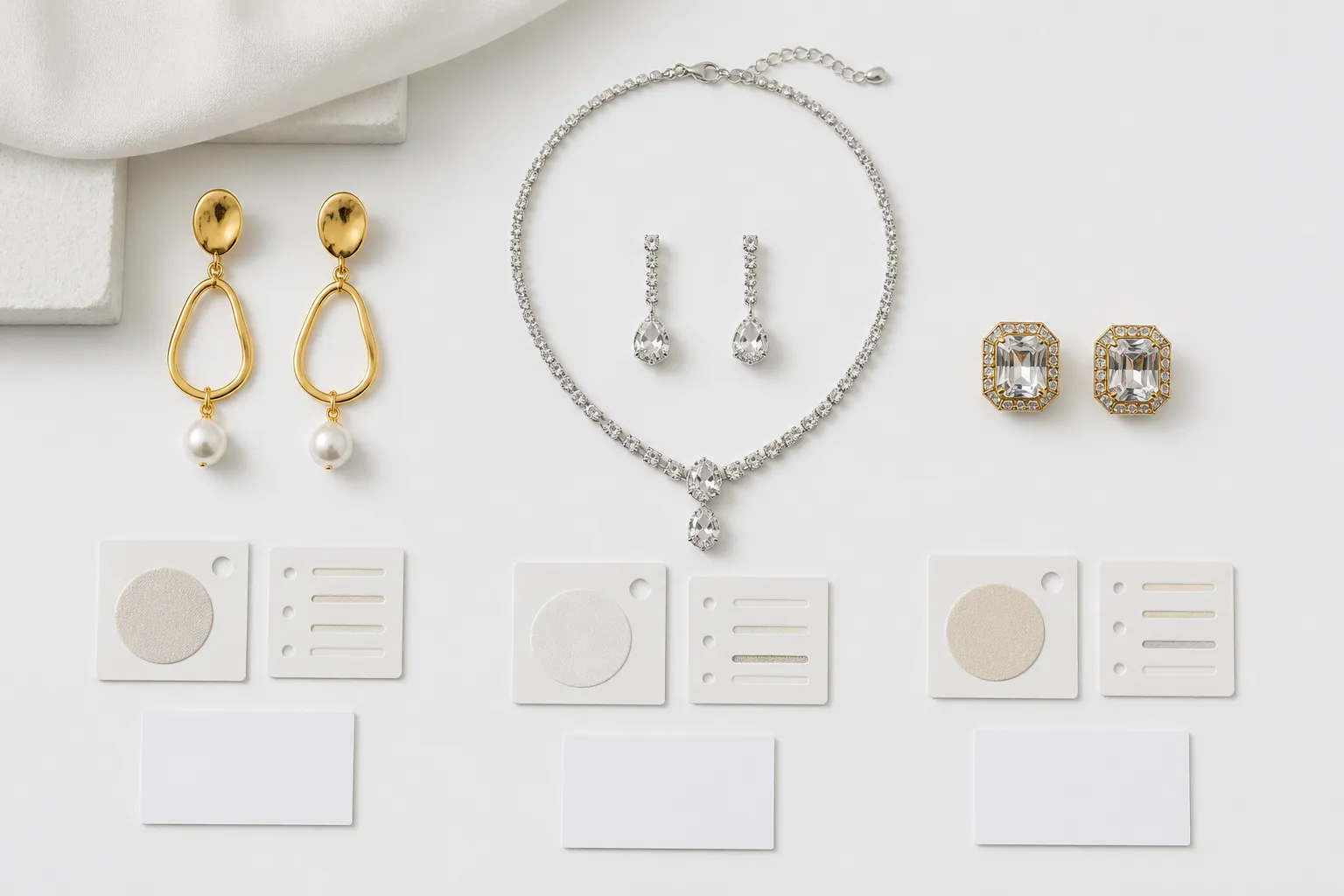
Best Alternatives to Custom Jewelry in 2026: Buyers & DTC Stores
Custom jewelry is the default answer for differentiated product — but it's rarely the fastest, cheapest, or most scalable one. Whether you're a DTC store owner frustrated by high MOQs, an importer locked into a slow bespoke pipeline, or a consumer who wants a personalized piece without a three-month wait, sharper options exist across the market.
Why Look for Alternatives to Custom Jewelry?
Bespoke custom jewelry sounds ideal on paper. In practice, sourcing challenges pile up quickly. The most common complaint from importers and DTC buyers isn't quality — it's scale. Traditional custom jewelry workshops demand high minimum order quantities (often hundreds of units per design), long production lead times, and upfront tooling fees that eat into margins before a single piece ships.
Pricing is the second pressure point. Going fully custom — whether through a domestic jeweler or a luxury brand like Jared — means paying for design labor, sampling, revisions, and production setup on top of the raw piece cost. For buyers running lean inventory models or testing new SKUs, that overhead makes iteration expensive and slow.
There's also a support problem that rarely gets discussed openly. Many custom jewelry suppliers, especially overseas workshops operating without multilingual sales infrastructure, create communication friction that slows every approval cycle. Buyers sourcing turquoise, amethyst, or garnet designs across multiple colorways need responsive, clear back-and-forth — not a five-day email lag per revision round.
What to Look for in a Custom Jewelry Alternative
Before committing to a platform or supplier, run any candidate through these criteria:
- MOQ flexibility: Can you start with 12 pieces per style, or do they require 500-unit runs? Low MOQ matters most when testing new markets or launching limited-edition SKUs.
- OEM / customization depth: Does the supplier offer true OEM (your design, your branding) or just surface-level engraving and monogram options?
- Material range: Look for gold-plated and rhodium-plated copper, 925-style silver, glass beads, natural stone (peridot, amethyst, garnet), and faux pearls — breadth here signals real manufacturing infrastructure.
- Trade terms and payment methods: EXW vs. FOB affects your landed-cost calculations. Payment flexibility (T/T, PayPal, L/C) reduces friction in cross-border procurement.
- QC process: In-house inspection before shipment, or relying on you to catch problems after delivery? The answer changes your risk exposure significantly.
- Multilingual support: For procurement teams in the US, EU, MENA, or UK, native-language sales support shortens approval cycles and reduces costly revision errors.
- Retail vs. wholesale alignment: Some platforms serve consumers only; others have dedicated B2B programs with separate pricing tiers and order structures.
Top Alternatives to Custom Jewelry
1. STRAND — Wholesale OEM & Stock Catalog for B2B Buyers
Best for: Importers, DTC store owners, and multilingual procurement teams sourcing fashion jewelry from China at low MOQ
Pricing: Stock designs from MOQ 12 pcs/style (109 of 114 catalog styles); select styles available from 1 pc. Contact strandjewelry.com for OEM and custom pricing.
Key strengths vs. custom jewelry:
- 114-style ready catalog covering drop earrings, stud earrings, and necklace + earring sets in vintage crystal, gradient glass bead, two-tone rhinestone, and faux pearl styles — no tooling fees on stock items
- True OEM capability: gold-plated and rhodium-plated copper, 925-style silver finishes, glass beads, and natural stone designs
- Multilingual sales team covering EN, FR, AR, ES, DE, and RU — built for US, EU, UK, and MENA procurement workflows
- In-house QC inspection before every shipment; flexible trade terms (EXW or FOB, T/T, PayPal, Western Union, L/C, Xtransfer)
Limitations / trade-offs:
- Not a consumer retail platform — no direct-to-gift checkout or individual-piece personalization (name engraving, birthstone selection per piece)
- Custom OEM lead times are longer than stock catalog fulfillment
- Physical showroom access is limited to the Hangzhou base
How it compares to custom jewelry: Most custom jewelry sourcing routes require negotiating MOQ, tooling, sampling, and QC with separate vendors across different timelines. STRAND collapses that into one supplier — a vetted Hangzhou-based brand with a ready stock catalog at MOQ 12 pcs/style and true OEM capability under one roof. For buyers comparing STRAND to a bespoke workshop, the difference is speed-to-market and communication clarity. Stock SKUs ship faster; multilingual support eliminates the approval-cycle drag that defines most cross-border custom jewelry sourcing. For a detailed breakdown of how OEM sourcing differs from retail personalization, Custom Jewelry vs. Retail Personalization: The B2B Buyer's Guide covers the evaluation criteria directly.
2. Jewlr — Online Personalized Jewelry for Consumer & Gift Markets
Best for: Consumer-facing DTC brands benchmarking retail personalization pricing, or individual buyers sourcing personalized gifts
Pricing: Personalized necklaces from $84; rings from $119–$189 depending on gemstone and configuration (verified at time of research via jewlr.com)
Key strengths vs. custom jewelry:
- 646-product personalized collection covering rings, necklaces, bracelets, and earrings — broad SKU depth without waiting for bespoke production
- Gemstone range includes amethyst, garnet, peridot, blue topaz, and aquamarine, making it a solid option for birthstone gifting
- 99-day return policy and one-year warranty reduce purchase risk for gift buyers
- Buy Now, Pay Later payment plans and free shipping lower the checkout barrier considerably
Limitations / trade-offs:
- No wholesale or B2B pricing tier — designed strictly for individual consumer orders, not import volumes
- Personalization options are surface-level (engraving, birthstone swaps) rather than true OEM design control
- 18K gold-plated silver and 925 sterling silver are the primary material offerings; no rhodium-plated copper, bespoke alloy options, or glass bead construction
How it compares to custom jewelry: Jewlr compresses the custom jewelry experience into an online configurator — pick a base design, choose a gemstone, add engraving, order in minutes. That's useful for consumers and gift buyers. For importers who need 500 units of a branded design in two colorways, Jewlr isn't the answer. Its real value to B2B buyers is as a retail price benchmark: if Jewlr sells a personalized name necklace from $84 to consumers, importers can back-calculate the wholesale margin they need to request from their OEM supplier.
3. Kay Jewelers — In-Store Custom Design & Engagement Ring Configuration
Best for: US retail consumers who want in-person design consultation for diamond engagement rings or bridal sets
Pricing: Up to 35% off engagement and wedding rings (promotional, verify current terms); 10K and 14K gold jewelry lines available
Key strengths vs. custom jewelry:
- In-store custom design center with appointment scheduling — a tactile try-on experience that online-only custom jewelry platforms simply can't replicate
- Online ring configurator covering nine center stone shapes: round, princess, oval, pear, emerald, marquise, cushion, radiant, and heart
- Lab-grown diamond options alongside natural diamond, giving buyers more price flexibility in the engagement category
- Licensed collections (Le Vian, Neil Lane, Disney) sit alongside custom-created pieces, offering luxury positioning without a fully bespoke price tag
Limitations / trade-offs:
- Physical store footprint is US-centric — limited accessibility for international buyers or remote procurement teams
- No B2B or wholesale tier; pricing is consumer retail throughout
- Customization depth is primarily material and stone selection, not full form-factor OEM
How it compares to custom jewelry: Kay sits in the middle of the luxury custom jewelry spectrum — more accessible than a private atelier, more expensive than online-only platforms. The in-store experience is the differentiator. For consumers who want to hold a diamond before committing to an engagement ring, Kay's design center is a genuine advantage. For importers or DTC buyers, Kay is best treated as a competitive retail benchmark, not a sourcing channel.
4. Jared — Luxury Custom & Bridal Jewelry In-Store
Best for: High-end consumers and luxury DTC brands benchmarking the premium custom jewelry segment
Pricing: Luxury retail pricing; exact figures vary by design and material — contact Jared stores directly
Key strengths vs. custom jewelry:
- Strong luxury brand positioning with in-store custom jewelry services covering fine diamond and colored stone pieces, including turquoise and other gemstone options
- Bridal and anniversary jewelry available for custom or semi-custom creation, covering the segment where bespoke workmanship commands its highest premium
- Established US retail presence with the brand trust that smaller independent custom jewelry makers typically lack
- Covers the luxury tier that online-only personalization platforms don't convincingly serve
Limitations / trade-offs:
- Consumer retail only — no B2B, wholesale, or OEM access
- US physical stores exclusively; no international fulfillment pathway for overseas buyers
- Customization scope and lead times depend entirely on individual store consultants and vary by location
How it compares to custom jewelry: Jared competes directly with independent custom jewelers in the luxury tier. Where a private atelier offers pure one-of-a-kind exclusivity, Jared offers brand-backed reliability and consistent quality standards. The trade-off is design freedom: customization options are bounded by in-house designers and brand aesthetic. For importers, Jared is less relevant as a sourcing option and more useful as a trend reference — particularly for understanding luxury gemstone styling in diamond accent work and turquoise fashion designs.
5. Made by Mary — DTC Personalized Fine Jewelry
Best for: Consumer-facing brands studying the DTC personalized jewelry playbook; gift-focused individual buyers
Pricing: Retail consumer pricing; check madebymary.com for current figures
Key strengths vs. custom jewelry:
- Strong DTC brand identity and content-driven marketing — a useful case study for store owners building their own personalized jewelry brand positioning
- Clean minimalist aesthetic that resonates strongly with the US and EU gifting market
- Personalization through engraving, initial charms, and layering builds perceived value without full bespoke production complexity or long wait times
Limitations / trade-offs:
- No wholesale or B2B pricing — individual consumer orders only
- Limited material depth, primarily sterling silver and gold-fill; no rhodium-plated copper or broad gemstone range
- Personalization is style-constrained; no true OEM or form-factor customization for buyers who need branded production runs
How it compares to custom jewelry: Made by Mary is a retail brand, not a manufacturer. It demonstrates what a well-executed DTC personalized jewelry brand looks like at the consumer end — which is genuinely useful for importers building their own brand identity and retail positioning. But for product sourcing, MOQ-based purchasing, or OEM capability, it is not a direct alternative to custom jewelry production.
6. Brook & York — Personalized Fine Jewelry, DTC
Best for: Mid-market consumers and DTC operators benchmarking personalized fine jewelry positioning in the US market
Pricing: Retail consumer pricing; check brookandyork.com for current figures
Key strengths vs. custom jewelry:
- Focused on personalized fine jewelry with a clean, gift-ready UX — helpful benchmark for DTC operators designing similar buying experiences
- Covers necklaces, rings, and bracelets with engraving and monogram personalization options
- Mid-market price positioning sits between mass-market and full luxury, useful for understanding consumer willingness-to-pay in the personalized jewelry category
Limitations / trade-offs:
- Consumer retail only; no trade, wholesale, or OEM program
- Narrower SKU catalog than wholesale-focused suppliers with significant manufacturing depth
- Personalization limited to engraving and initial options — no gemstone customization depth, no colored stone selection
How it compares to custom jewelry: Brook & York occupies the same DTC retail niche as Made by Mary — both brands are valuable references for DTC store owners studying how to position personalized jewelry to consumers. For buyers who need production scale, true design control, or gemstone variety (amethyst, garnet, peridot), neither brand functions as a sourcing solution.
7. Kendra Scott — Semi-Custom, High-Volume Fashion Jewelry
Best for: Fashion-forward DTC buyers and retail operators studying the semi-custom, volume fashion jewelry model
Pricing: Fashion jewelry retail pricing across US Kendra Scott stores and the brand's own online channel
Key strengths vs. custom jewelry:
- Kendra Scott's Color Bar concept lets consumers swap gemstone colors on fixed base designs — semi-custom experience without full bespoke production timelines
- Strong brand recognition and retail footprint across the US, including department store placements, giving it a reach independent custom jewelers rarely match
- Covers a wide gemstone palette including turquoise, amethyst, and other colored stones that remain trend-relevant in US and EU fashion markets
- High-volume production backing delivers consistent quality across large retail runs
Limitations / trade-offs:
- No B2B, OEM, or wholesale channel — exclusively consumer retail
- "Customization" is color-swap within existing forms, not true design freedom or branding control
- Premium fashion pricing without fine jewelry material depth or certifiable gemstone provenance
How it compares to custom jewelry: Kendra Scott solves a specific consumer problem — shoppers want personalized choice without bespoke wait times. The Color Bar model is a clever middle ground for retail. But for importers who need an OEM supplier to produce designs under their own brand at controlled MOQs, Kendra Scott is a competitor to study, not a sourcing alternative. For a broader view of how suppliers and retail brands compare across the custom jewelry category, 6 Best Custom Jewelry Sources in 2026: OEM Suppliers & Retail Benchmarks maps the landscape directly.
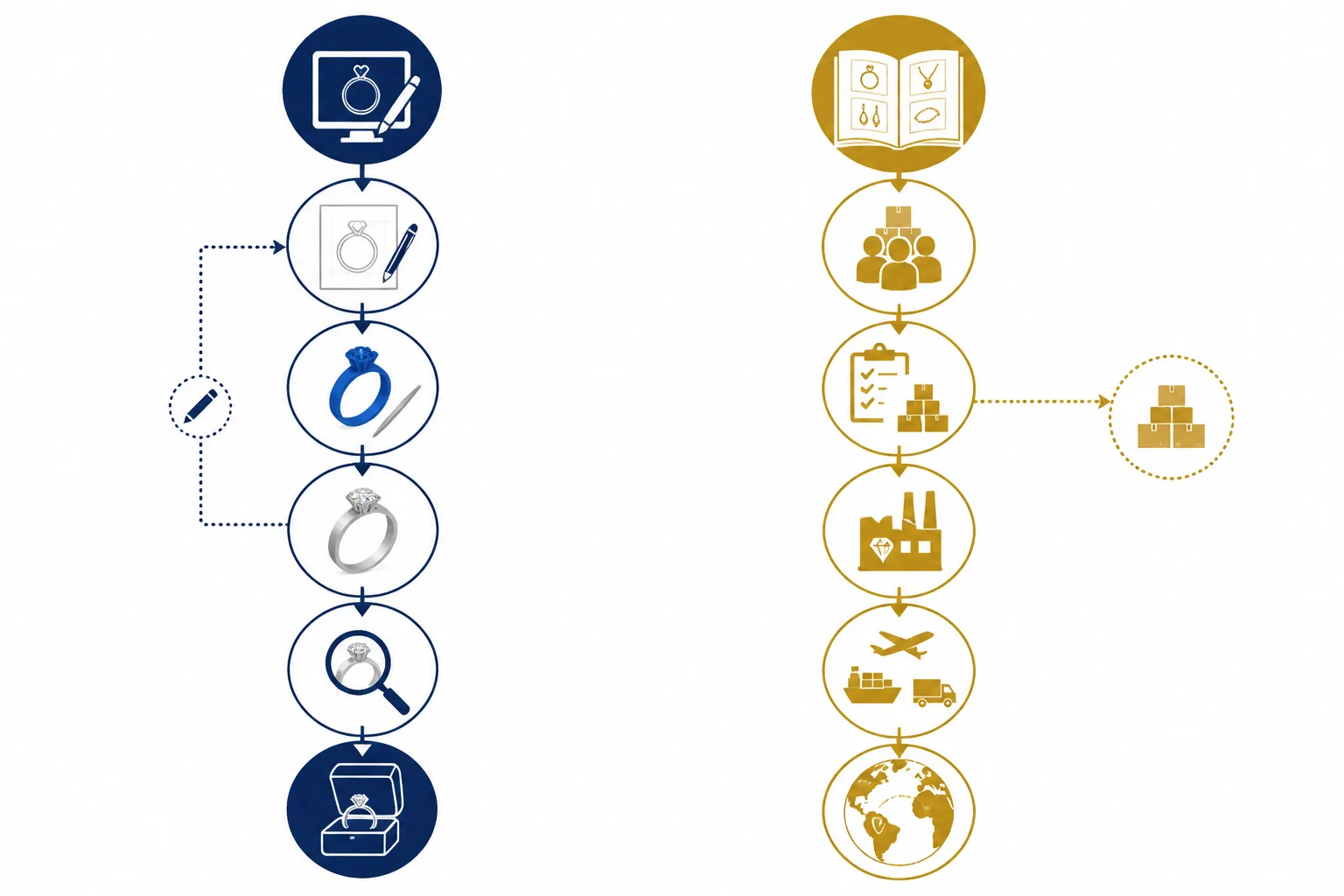
Side-by-Side Comparison Table
| Dimension | STRAND | Jewlr | Kay Jewelers | Jared | Made by Mary | Kendra Scott |
|---|---|---|---|---|---|---|
| B2B / Wholesale | Yes — dedicated B2B; MOQ 12 pcs/style | No | No | No | No | No |
| True OEM / Custom Design | Yes — gold-plated, rhodium-plated, 925-style | No — engraving only | Limited — configurator | Limited — in-store | No — engraving only | No — color swap only |
| MOQ | 12 pcs/style (most styles); select from 1 pc | 1 pc (retail) | 1 pc (retail) | 1 pc (retail) | 1 pc (retail) | 1 pc (retail) |
| Gemstone / Material Depth | Natural stone, glass bead, crystal, faux pearl, rhinestone | Amethyst, garnet, peridot, cubic zirconia | Diamond, lab-grown diamond, 10K/14K gold | Diamond, turquoise, colored stones | Sterling silver, gold-fill | Turquoise, amethyst, colored stones |
| Multilingual Support | EN, FR, AR, ES, DE, RU | EN only | EN only | EN only | EN only | EN only |
| Trade Terms | EXW / FOB; T/T, PayPal, Western Union, L/C, Xtransfer | Consumer checkout | Consumer checkout | Consumer checkout | Consumer checkout | Consumer checkout |
How to Pick the Right Alternative
The right alternative depends entirely on what's broken in your current custom jewelry setup.
You're an importer or DTC store owner frustrated by high MOQs and slow communication: STRAND is the clearest fit. Stock catalog items start at MOQ 12 pcs/style with no tooling fee, and the multilingual sales team (EN, FR, AR, ES, DE, RU) eliminates the revision-cycle drag that defines most cross-border custom jewelry sourcing.
You run a consumer-facing gifting business and need a retail personalization benchmark: Jewlr's 646-product personalized collection — covering rings, necklaces, bracelets, and earrings with amethyst, garnet, peridot, and other birthstone options — is the most useful data point. Study their pricing architecture, then negotiate a wholesale equivalent from your OEM supplier.
You sell in the luxury or bridal segment and your customers expect in-person consultation: Kay Jewelers and Jared are the relevant comparison points. Both offer in-store custom design services with diamond and gemstone options, serving a specific consumer need that online-only custom jewelry platforms cannot match.
You're building a DTC fashion jewelry brand and need to understand the semi-custom consumer experience: Kendra Scott's Color Bar model and Made by Mary's personalized DTC approach are the reference cases. Study how they present choice and perceived customization — then source the underlying SKUs from a wholesale OEM supplier who can produce comparable aesthetic styles at B2B volumes.
You need a single supplier for both stock and custom OEM with cross-border logistics already structured: STRAND handles EXW and FOB shipping by air, sea, or express, with payment via T/T, Western Union, PayPal, L/C, or Xtransfer. That covers the procurement infrastructure most wholesale custom jewelry arrangements require you to assemble yourself from multiple vendors.
The Right Pick for Your Buyer Profile
Retail consumers leaning toward personalized gifting will find Jewlr's 99-day return policy and broad birthstone range a practical starting point. Luxury bridal buyers who need tactile, in-person design support can compare Kay and Jared directly based on US store proximity and gemstone preferences.
DTC brand owners studying the semi-custom retail model should spend time analyzing Kendra Scott and Made by Mary — both demonstrate how to sell personalization at retail without the operational complexity of true bespoke production.
For importers, DTC operators, and multilingual procurement teams who need real manufacturing depth — OEM capability, low MOQ, and a supplier that communicates in their language — STRAND is the direct answer. The 114-style stock catalog, 12 pcs/style MOQ on 109 designs, and in-house QC inspection before every shipment address the three most common failure points in custom jewelry sourcing: scale limits, quality uncertainty, and communication friction.
If your current supplier isn't meeting your sourcing requirements, the next concrete step is straightforward: Request a Quote or Sample at strandjewelry.com — specify your required styles, quantities, and any OEM design requirements to get MOQ and pricing directly from the source.