
How to Buy Wholesale on Jewelry: The Complete Sourcing Guide
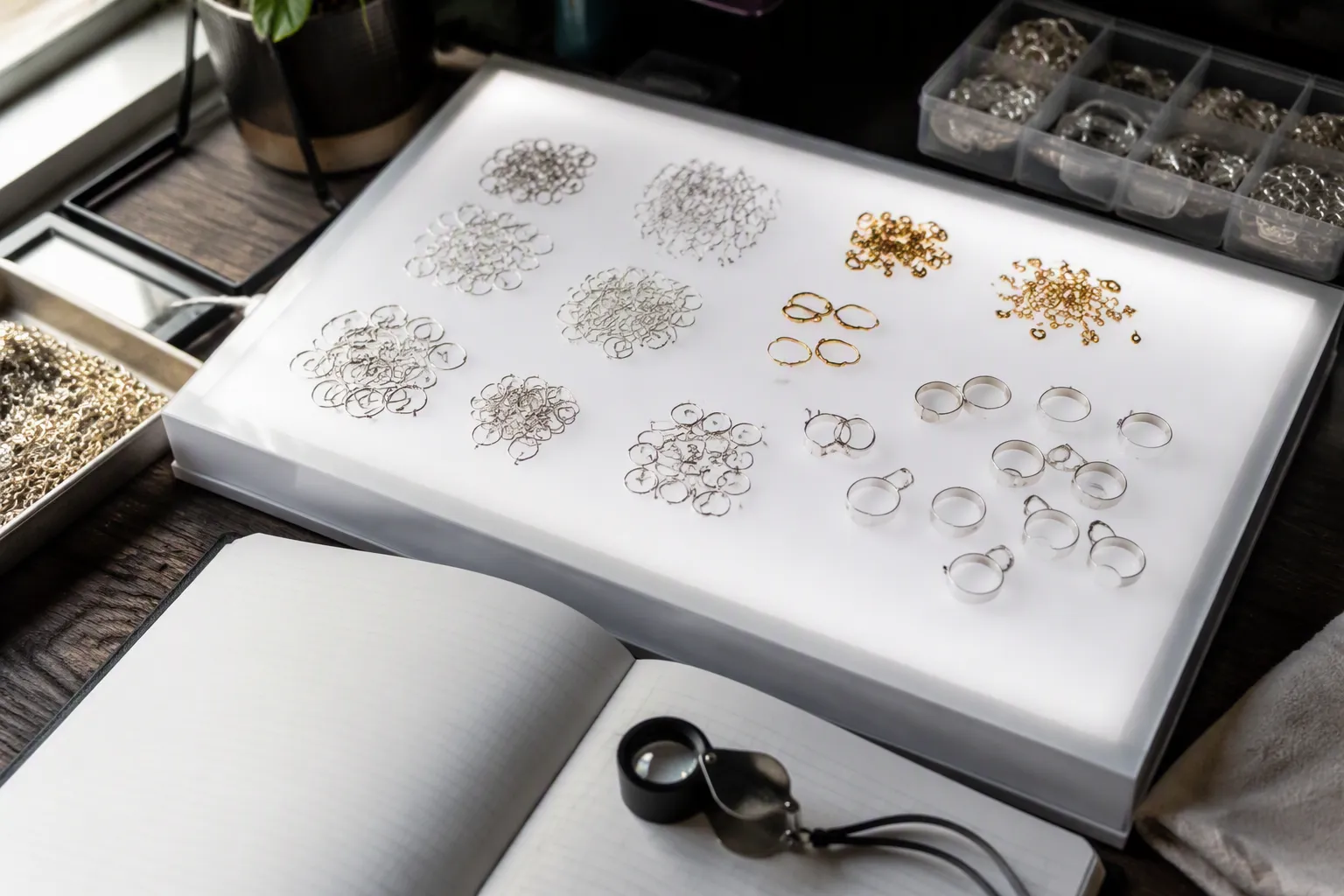
How to Buy Wholesale on Jewelry: The Complete Sourcing Guide
Buying wholesale on jewelry means purchasing finished pieces, findings, or components from a manufacturer or distributor at below-retail pricing — typically structured around minimum order quantities that make bulk sourcing economically worthwhile. For DTC stores, regional importers, boutique buyers, and procurement teams, it's the foundational strategy for building a profitable jewelry catalog without the cost and lead times of bespoke manufacturing.
The market is broader than most new buyers expect. Wholesale jewelry encompasses sterling silver findings, gold-filled earrings, themed collections (nature, beach, Western, Christian), chain sold by the foot, oxidized beads, clasps in multiple gauges, and specialty beading supplies. Getting the sourcing right — right material grade, right supplier credibility, right pricing terms — determines both your margin and your product quality at retail.
This guide walks through every dimension a serious buyer needs to evaluate before placing a wholesale jewelry order: material standards, product categories, supplier vetting criteria, pricing frameworks, and the exact questions to ask before you commit.
What Is Wholesale on Jewelry?
Wholesale on jewelry is the practice of sourcing jewelry products — finished pieces, semi-finished components, or raw findings — directly from a supplier at trade pricing, below what a consumer would pay at retail. The price advantage exists because you're buying in quantity, bypassing retail markups, and often committing to a minimum order.
The distinction between wholesale finished jewelry and wholesale jewelry findings matters for buyers. Finished wholesale jewelry (earrings, pendants, bracelets) ships ready for display and resale — ideal for gift stores, boutiques, and online shops that want to move inventory fast. Wholesale findings (clasps, jump rings, ear wires, chain) are components that jewelry makers or in-house designers assemble into finished pieces — better suited for manufacturers, studio jewelers, and brands that produce custom collections.
Both segments operate on the same core principle: the more you buy, the lower your per-unit cost. Established suppliers in this space have served the trade for decades. The two main pricing inputs that affect your cost on any given day are the live metal market prices for silver and gold — which fluctuate daily and directly impact the per-gram cost of sterling silver and gold-filled goods.
For an in-depth look at sourcing the right components alongside finished pieces, the Jewellery Wholesale Supplies: The Smart Buyer's Guide covers material grades and sourcing strategy in detail.
Who Actually Buys Wholesale Jewelry?
The wholesale jewelry buyer isn't a single profile. The market serves several distinct buyer types, each with different priorities.
Gift stores and boutiques are the most common retail buyers. They want finished, display-ready pieces that sell quickly — easy upsell items that complement a core product line. For these buyers, themed collections (beach jewelry for coastal shops, Western jewelry for lifestyle retailers, Christian jewelry for faith-based gift stores) allow rapid inventory build without product development effort.
DTC (direct-to-consumer) online stores prioritize margin, photography-readiness, and consistent restocking availability. A piece that photographs well, ships reliably, and can be reordered quickly is more valuable than a cheaper piece with unpredictable lead times.
Importers and regional distributors need volume, consistency, and documentation — certificates of material composition, country of origin, and often compliance with local import regulations. For MENA markets specifically, gold tone and modesty-appropriate design (longer chains, minimal exposure, traditional motifs) often outperform trend-driven Western styles.
Jewelry makers and studio brands buy wholesale findings (ear wires, clasps, jump rings, chain) as their production inputs. For them, material grade is non-negotiable — a finding stamped 925 must be genuine sterling, not plated base metal.
Understanding which category you fall into shapes every sourcing decision: what MOQ makes sense, which material grades to prioritize, and how much lead time you can absorb.
Materials That Matter: Sterling Silver, Gold-Filled, and Beyond
Material grade is the single biggest quality differentiator in wholesale jewelry. Get this wrong and you'll deal with customer returns, tarnishing complaints, and brand credibility damage.
Sterling Silver (925) is the most widely sourced material in wholesale jewelry. It's 92.5% pure silver, hypoallergenic for most wearers, and carries consistent daily market pricing (as of late August 2026, sterling silver spot was trading around $69/troy oz). One major trade supplier in this space offered over 155 sterling silver wholesale products at the time of writing — from earring blanks to chain findings, all priced against the live metal market.
Gold-Filled is the second most popular wholesale material. Unlike gold-plated items, gold-filled uses a mechanical bonding process that deposits a thick layer of karat gold (typically 14K) over a brass or copper core — resulting in a product that's far more durable and tarnish-resistant than plated alternatives. Gold-filled is typically priced against live gold market rates, which as of late August 2026 were around $4,550–$4,560 per troy ounce. One established wholesale supplier carried 47 gold-filled wholesale jewelry products across earrings, clasps, and chain at the time of writing.
Gold-Plated Sterling sits between gold-filled and sterling silver — it's a sterling base with a gold electroplating layer, offering the silver price point with gold aesthetics. The plating is thinner than gold-filled, so it's better suited for fashion-forward pieces where turnover is fast rather than heirloom-quality items.
Stainless steel, copper, and oxidized finishes serve specialty niches — oxidized twisted beads (available in 8mm and 4mm sizes from some suppliers) and oxidized jump rings (in 19g and 20g) are popular for artisan and bohemian-style collections.
What to ask any supplier: request material certification documentation for sterling silver and gold-filled goods. A reputable supplier should be able to confirm the alloy grade (925 for sterling, 14/20 for standard gold-filled) and country of manufacture.
Product Categories in the Wholesale Jewelry Market
The wholesale jewelry market breaks into two main streams: finished jewelry and findings/components.
Finished Wholesale Jewelry
Finished pieces are ready for retail display immediately after receiving. Common categories include:
- Earrings — the highest-volume category at most wholesale suppliers. One major supplier listed 77 earring SKUs in their wholesale catalog at the time of writing, spanning sterling hoops, gold-filled studs, and themed drop earrings.
- Charms — popular for charm bracelets and custom jewelry builds; typically 52+ SKUs at specialist suppliers at the time of writing.
- Rings and bracelets — a combined category often comprising 55+ SKUs including stackable rings, bangles, and cuffs, based on catalog counts at the time of writing.
- Chain — sold by the foot or in pre-cut lengths; 18 or more chain styles at specialty wholesale houses at the time of writing.
Findings and Components
Findings are the invisible infrastructure of jewelry — the hardware that holds everything together. Key subcategories:
- Clasps: push-gate clasps (available in 10mm, 12mm, and 14mm in gold-filled from some suppliers), lobster clasps, toggle clasps, spring rings.
- Jump rings: available in multiple gauges (19g, 20g are common) and finishes.
- Ear wires: French hooks, lever backs, posts with butterflies — a high-turnover item for jewelry makers.
- Beads and chain: oxidized twisted beads, Soft Flex beading wire, Desert Pearl Beads.
For buyers sourcing both finished pieces and components, the Wholesale Jewelry Craft Supplies: A Pro Buyer's Complete Guide covers findings selection strategy in detail.
How to Evaluate a Wholesale Jewelry Supplier
A supplier's age in the market is a reasonable first-pass credibility filter. Halstead has operated in the wholesale silver and gold-filled jewelry market for 50 years; Wholesale Jewelry Supply Co. has served the jewelry trade for over 40 years. Longevity signals supply chain stability, consistent quality standards, and a track record that newer suppliers can't match. But tenure alone isn't a complete vetting framework.
Evaluate on these six dimensions:
Material verification: Does the supplier provide documentation for material grade? 925 sterling and 14/20 gold-filled should be provable, not just claimed.
Pricing transparency: Some wholesale suppliers display retail pricing by default and require account approval before revealing wholesale rates. Others publish tiered pricing publicly. Know which model you're working with before spending time on an order.
Metal market pass-through: Reputable suppliers in this space do not add a surcharge to the live metal market price — they pass through the spot price directly. Ask explicitly whether there's a metal market surcharge.
Stock and shipping speed: In-stock items should ship within a defined window (some suppliers ship same-day or next-day on in-stock wholesale jewelry). Confirm before ordering if you're working against a product launch deadline.
Returns and quality guarantee: Understand the return window, condition requirements, and whether they accept returns on made-to-order versus in-stock items. This is especially important for first orders with a new supplier.
Account requirements: Most wholesale operations require business verification (business license, reseller certificate, or equivalent documentation) before granting wholesale pricing access. Have this documentation ready before applying.
Pricing, MOQ, and Lead Times: What to Ask Before You Order
Pricing in wholesale jewelry is never flat — it moves with the metal market. The two live inputs that drive cost are the gold and silver spot prices, updated daily. A piece priced at $X today may cost slightly more or less next week if the market moves. For budgeting purposes, use the live metal price as your baseline and build in a small buffer for fluctuation.
Minimum Order Quantity (MOQ) varies widely by supplier and product type. Some wholesale suppliers have no MOQ on in-stock items; others require minimum dollar amounts per order (e.g., a $50 or $100 minimum per order). Custom or made-to-order pieces typically carry higher MOQs. Ask specifically:
- Is there an order minimum (dollar or unit)?
- Does the MOQ apply per SKU or per total order?
- Are there volume discount tiers above the base wholesale price?
Lead times differ by product type. In-stock wholesale jewelry ships immediately at most established suppliers. Made-to-order or custom pieces typically take longer — ask for a specific production window, not just "a few weeks."
Shipping options matter for international buyers especially. Ask:
- Do you ship internationally, and to which countries?
- Who handles customs documentation and duties?
- Is DHL, FedEx, or another tracked carrier available for international orders?
- Is insurance included on high-value orders?
For a comprehensive breakdown of what to request across the sourcing process, the Complete Buyer's Guide to Jewellery Accessories Wholesale covers evaluation criteria in detail.
When Should You Buy Wholesale Jewelry?
Timing your wholesale jewelry purchases affects both cost and availability. There are four scenarios where buying wholesale makes clear sense — and a few where it doesn't.
Buy wholesale when restocking before peak seasons. Retail jewelry demand spikes reliably around gifting periods: Q4 (holiday), Valentine's Day, Mother's Day, and wedding season (late spring to summer). Placing wholesale orders 8–12 weeks ahead of peak demand gives you buffer for shipping, quality checks, and any reorders on fast-moving SKUs.
Buy wholesale when launching a new collection. A new jewelry line requires a cohesive set of SKUs. Wholesale ordering allows you to test multiple price points and styles simultaneously — rather than reordering individual pieces that sell through.
Buy wholesale when you've validated a hero product. Once a style proves it sells, locking in a larger wholesale quantity at a lower per-unit cost improves your margin on an already-proven winner.
Don't buy wholesale to speculate on untested styles. Ordering large quantities of unproven SKUs to capture a volume discount is a common first-timer mistake. It ties up capital in slow-moving inventory. Start with smaller test orders on new styles, then scale what sells.
Benefits of Wholesale Jewelry for Retailers and Importers
The margin argument for wholesale is straightforward — lower per-unit cost means higher retail margin or a more competitive retail price. But there are less-obvious benefits worth naming.
Inventory depth and consistency. A single supplier relationship with reliable stock means you can reorder a bestseller without reformatting your product listing or explaining a quality change to returning customers.
Easy upsell positioning. Finished wholesale jewelry, especially on-trend or themed pieces (nature motifs, beach styles, geometric minimalist designs), sells as an add-on alongside primary products. For a gift store that primarily sells home goods, a rack of sterling silver earrings at $25–$45 retail is a low-friction upsell with strong impulse-purchase appeal.
Material credibility at the point of sale. Sterling silver and gold-filled pieces, clearly marked, carry a material story that resonates with buyers — particularly in markets where precious metal authenticity is a purchase motivator (this is especially true across MENA markets, where gold-tone gold-filled pieces command buyer confidence over fashion metal alternatives).
Supplier stability as a competitive advantage. Working with a supplier who has operated for 40–50 years in the trade means fewer supply disruptions, established import documentation, and a reliable quality standard that doesn't shift between orders.
Mistakes to Avoid When Sourcing Wholesale Jewelry
Most sourcing errors come down to skipping due diligence in the early stages of a supplier relationship.
Skipping material verification. Never assume a supplier's "gold" or "silver" labeling matches trade standards without asking for documentation. Base metal plated to look like gold-filled is not gold-filled, and the difference is immediately visible to an experienced buyer — or your customer.
Over-ordering on first contact. First orders with a new supplier should be test orders: enough to assess quality, packaging, shipping speed, and accuracy against your purchase order. Scale up only after quality verification.
Ignoring live metal market movement. If you've quoted a retail price to your own customers before locking in a wholesale cost, and the metal market moves significantly, your margin erodes. Build in a buffer or time your wholesale order close to when you've committed retail pricing.
Choosing on price alone. A lower per-unit cost means nothing if pieces arrive damaged, tarnish within weeks, or don't match product photography. Factor in total landed cost (unit price + shipping + duties + returns overhead) when comparing suppliers.
Not asking about international shipping documentation. For importers, incomplete or inaccurate customs documentation causes delays and additional cost. Confirm whether your supplier provides the commercial invoice, HS codes, and country of origin documentation required for your import market.
Build Your Wholesale Jewelry Sourcing Strategy
Wholesale jewelry sourcing rewards preparation. Know your material requirements before you contact a supplier. Understand your MOQ tolerance and cash flow runway. Ask every question on pricing, lead time, shipping, and documentation before your first order — not after a problem surfaces.
STRAND sources and curates wholesale-ready jewelry designed for DTC stores, importers, and boutiques that need consistent material quality and reliable restocking. Whether you're building a sterling silver earring program or sourcing gold-filled findings for a custom collection, the right starting point is a direct conversation about your specific requirements.
[Contact the supplier] to request current pricing, available MOQ tiers, and international shipping options for your market.
For further reading on building a complete sourcing program, start with our Jewellery Wholesale Supplies: The Smart Buyer's Guide — it covers material sourcing frameworks in depth — and the Wholesale Jewelry Craft Supplies: A Pro Buyer's Complete Guide for findings and components strategy.
Frequently Asked Questions
What is wholesale on jewelry?
Wholesale on jewelry refers to the purchase of jewelry in bulk quantities directly from manufacturers or distributors at significantly reduced per-unit prices, intended for resale rather than personal use. Buyers — such as DTC store owners, importers, and procurement teams — typically commit to a minimum order quantity (MOQ) in exchange for tiered pricing that protects their retail margins. For vetted, crafted pieces with transparent materials and reliable lead times, sourcing through a trusted wholesale partner like STRAND ensures consistent quality at scale.
How to wholesale on jewelry?
To wholesale jewelry through STRAND, start by identifying vetted suppliers who meet your quality standards for materials (e.g., 925 sterling silver, 18K gold vermeil, brass with PVD coating) and confirm MOQ, lead time, and packaging requirements upfront — typical MOQs range from 50–200 pieces per style with 30–45 day production lead times. Place sample orders first to verify craftsmanship, dimensions, and finish consistency before committing to bulk quantities. Once satisfied, negotiate tiered pricing, confirm shipping terms (DDP or FOB), and establish a reorder cadence aligned with your inventory cycles.
Why is wholesale on jewelry important?
Wholesale on jewelry is important because it allows DTC stores, importers, and procurement teams to source vetted, quality pieces at competitive unit costs — improving margins while maintaining a curated product offering. For buyers scaling their inventory, wholesale relationships provide access to consistent supply with defined MOQs, lead times, and reliable shipping options that direct retail cannot offer. STRAND's wholesale model specifically connects overseas buyers to crafted, quality-controlled jewelry, enabling partners to build collections that meet their customers' expectations without compromising on material standards or finish quality.
When should I use wholesale on jewelry?
Wholesale on jewelry makes the most sense when you're stocking a retail collection, fulfilling a procurement order, or building consistent inventory across SKUs — typically when your order meets a minimum quantity (MOQ) that justifies the per-unit cost reduction. For DTC store owners and importers, it's the right channel when you need reliable lead times, repeatable quality across batches, and direct supplier relationships that support reordering. STRAND's wholesale program is best engaged when you're planning 4–12 weeks ahead and want vetted, crafted pieces — not spot buys — that hold up to customer scrutiny and return cycles.
What are the benefits of wholesale on jewelry?
Buying jewelry wholesale through STRAND gives DTC stores and importers access to vetted, crafted pieces at significantly lower per-unit costs, protecting retail margins without sacrificing quality. Wholesale arrangements typically come with defined MOQs, consistent lead times, and consolidated shipping options — reducing procurement complexity for international buyers. For MENA-market buyers in particular, sourcing wholesale also enables curated selection across gold-toned and modest-style pieces in volume, ensuring cohesive, market-appropriate inventory.