
Stainless Steel Jewelry Supplies: The Professional Buyer's Guide
Stainless Steel Jewelry Supplies: The Professional Buyer's Guide
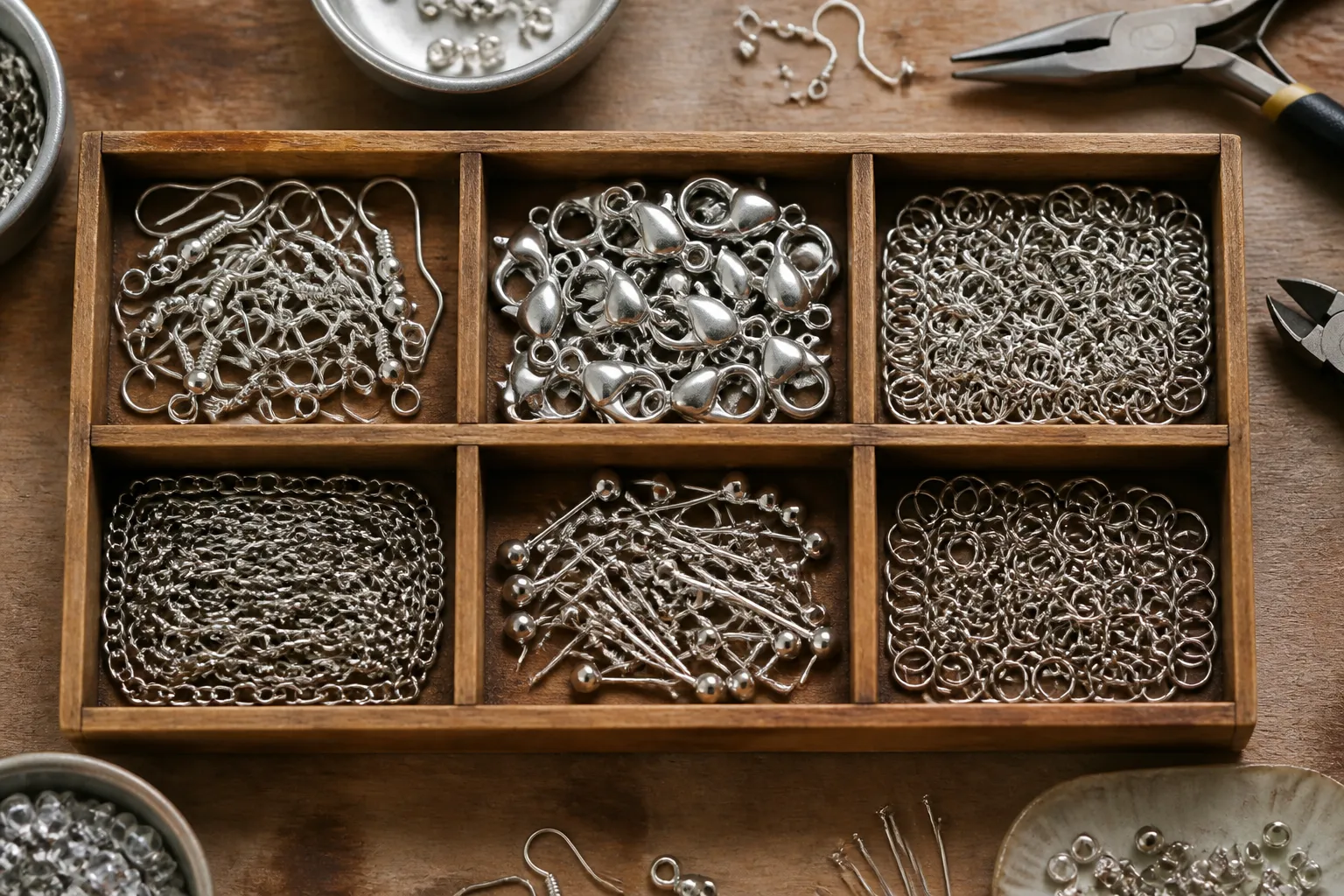
Stainless steel jewelry supplies are the production components — ear wires, clasps, chain, jump rings, findings, wire, and beads — that form the structural foundation of finished jewelry pieces. The alloy's defining property is a self-renewing chromium oxide layer that prevents rust, tarnish, and metal migration into skin, which is why it has become the default specification for hypoallergenic jewelry production worldwide.
This guide covers the full procurement landscape: alloy grades, supply categories, quality verification, pricing structures, and sourcing strategy. Whether you're a DTC brand building your first stainless collection, an importer scaling production volume, or a procurement team rationalizing component suppliers, this is the reference you need before placing your next order.
What Are Stainless Steel Jewelry Supplies?
Stainless steel jewelry supplies encompass any jewelry-making component manufactured from a chromium-iron alloy containing a minimum of 10.5% chromium by mass. That chromium content is the threshold at which the passive oxide layer forms — the invisible surface film that gives the metal its corrosion resistance. Below that threshold, you have ordinary steel that rusts. Above it, you have a material that tolerates daily wear, moisture, sweat, and cleaning products without surface degradation.
The category spans three tiers of material:
- Raw materials — wire, sheet stock, and tubing used by designers who fabricate components from scratch
- Semi-finished goods — chain, mesh, and pre-cut wire in standard gauges
- Ready-to-assemble findings — clasps, ear wires, bail pins, jump rings, earring backs, and connector bars that go directly into production
"Surgical stainless steel" and "medical-grade stainless steel" refer to the same high-biocompatibility grades used in implantable medical devices. In jewelry, this designation signals low nickel release, which is the primary concern for sensitive skin and for regulatory compliance in markets with strict chemical safety standards.
The Two Alloy Grades That Actually Matter
Not all stainless steel is equal, and the grade question matters more than most buyers realize.
The jewelry supply market runs primarily on 316 Stainless Steel and 316L Stainless Steel (the "L" stands for low carbon, which improves weld performance and reduces carbide precipitation). Some suppliers, particularly for chain manufacturing, also use 406 Stainless Steel, a ferritic grade with different workability characteristics. Each grade offers meaningful corrosion resistance, but 316L's 2–3% molybdenum content specifically improves resistance to chloride-based corrosion — the kind caused by saltwater, sweat, and cleaning sprays. For jewelry worn daily in humid climates, including much of the MENA region and Southeast Asia, 316L is the specification that holds up.
Leading suppliers in the category test their material against two established benchmarks: the Mayo Clinic's hypoallergenic recommendations and the EU Nickel Directive's nickel-release limits. Suppliers who can document that their stainless steel exceeds both thresholds are operating at a verifiable quality level — not just making marketing claims.
Why Grade Documentation Is a Quality Gate
Ask any prospective supplier to confirm the alloy grade in writing. A mill certificate or material test report (MTR) takes minutes to provide if the supplier sources material correctly. One who cannot or will not provide it is not operating at professional supply chain standards — a problem that compounds when you discover a mislabeled batch after production is complete.
Core Supply Categories: What to Source and When
Findings
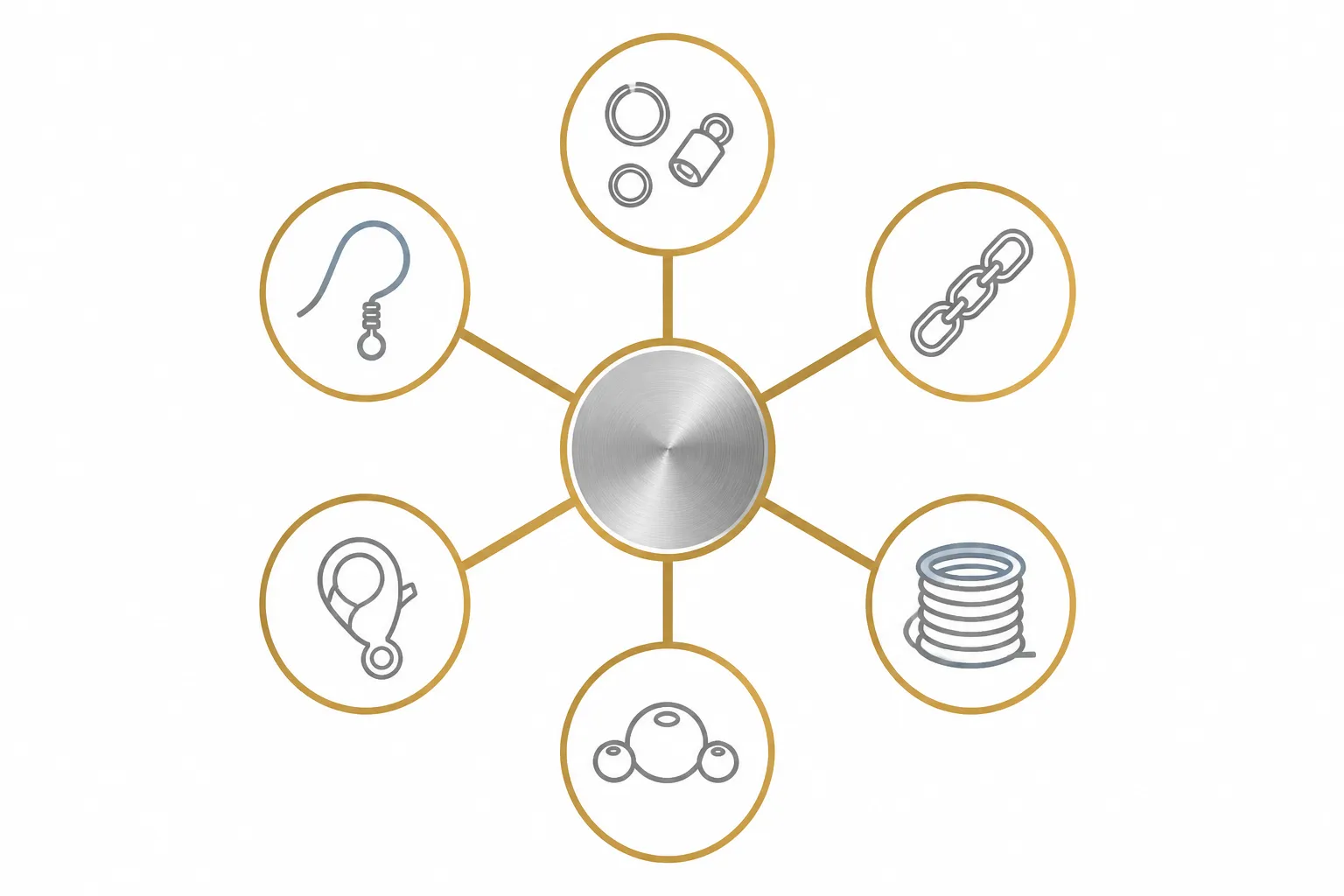
Findings are the functional hardware that connects, closes, or anchors elements in a finished piece. Standard stainless steel findings include:
- Lobster clasps — in swivel and standard versions, from 9mm to 20mm; the workhorse of chain necklace and bracelet closures
- Spring ring clasps — lighter, suited for finer chain designs where a lobster clasp would visually overpower the piece
- Toggle clasps — the closure becomes a design element; common in statement cuffs and layering pieces
- Bail pins and pendant bails — connect pendants and charms to chains
- Earring backs — butterfly backs for standard posts; comfort-disc backs (a surgical stainless steel back paired with a soft plastic disc) that reduce leverage pressure on the earlobe, a specification worth offering in collections targeting extended-wear markets
Ear Wires
Ear wires are the highest-sensitivity category in the supply chain: they pass through pierced tissue and sit in continuous skin contact. The French hook style is the standard, available in wire gauges from 20 to 24 gauge and loop sizes from 14mm to 21mm. For any collection positioning as hypoallergenic, surgical stainless steel ear wires are the minimum specification — and at production volumes, the per-unit premium over non-surgical alternatives is modest.
Chain
Stainless steel chain is manufactured in cable, curb, rolo, figaro, snake, and box link styles from 1mm to 10mm+ in width. The material is harder than sterling silver and holds link geometry under tension without the work-hardening brittleness that affects some softer alloys — useful for production environments where chain is cut and assembled at volume.
Wire
Raw wire is the starting material for chainmaille, wrapped components, and coiled rings. Stainless steel wire is significantly harder to work by hand than fine silver or copper, which affects tooling selection and labor cost estimates. Factor this into your production cost model if you're transitioning from softer metals.
Beads and Spacers
Round stainless steel beads run from 2mm to 10mm and serve as spacers, accent beads, and structural elements in bracelets and necklaces. The material pairs well with softer accent materials — pearl drops, crystal, and rhinestone — without requiring special protective plating between dissimilar metals. STRAND's Minimalist Metal Bar Pearl Drop Stud Earrings show how a stainless steel base finding anchors a pearl accent cleanly, with the metal providing structural integrity without competing with the softer decorative element.
Why Stainless Steel Outperforms Brass and Zinc for Daily-Wear Jewelry
The performance advantages of stainless steel are properties of the alloy, not marketing positions. Three differences from brass and zinc matter most in practice.
Tarnish resistance: Brass oxidizes and develops patina with moisture and skin contact. Stainless steel does not. For a customer who wears a piece daily and doesn't remove it for exercise or bathing, the difference is visible within weeks.
Structural strength: Stainless steel's tensile strength is meaningfully higher than brass alloys, which means clasps and jump rings don't deform under normal use loads. Deformed findings are the primary driver of "the clasp broke" customer complaints — the most avoidable category of returns.
Base metal stability under plating: When plated components wear through to the base metal, brass reveals itself immediately through color change and skin staining. A stainless steel base doesn't cause skin discoloration even when the plating layer wears thin, because the base alloy itself is biocompatible.
For collections that combine structural metal components with decorative elements — rhinestone, crystal, or pearl accents layered over a metal base — the case for stainless steel hardware is straightforward. STRAND's Two-Tone Rhinestone Fireworks Jewelry Set illustrates how decorative elements sit over a structured metal foundation; the hardware quality determines whether the decorative layer performs as intended or fails prematurely.
How to Assess Quality Before You Place an Order
Four verification dimensions filter professional-grade suppliers from the rest.
Material documentation: Alloy grade in writing, plus mill certificate or MTR on request. Non-negotiable for any order above sample quantities.
Finish consistency: Uniform brushed or polished finish across a batch. Inconsistent finish under a loupe — mixed scratch directionality, pitting, or uneven reflectivity — indicates either poor tooling or mixed-lot sourcing.
Dimensional accuracy: Findings must close cleanly and maintain geometry under normal assembly tension. A jump ring that won't close flush, or a clasp gate that sticks, creates downstream assembly defects. Request a product specification sheet with dimensional tolerances before ordering.
Plating thickness (for IP/PVD-finished components): Ion plating and PVD gold or rose gold finishes are measured in microns. The micron count directly determines wear life. Stainless steel bases hold plating better than brass because they don't migrate through the plating layer over time — but only if the plating was applied at adequate thickness to begin with. Get the number in writing.
Pricing Structures, MOQ, and What to Ask Before You Order
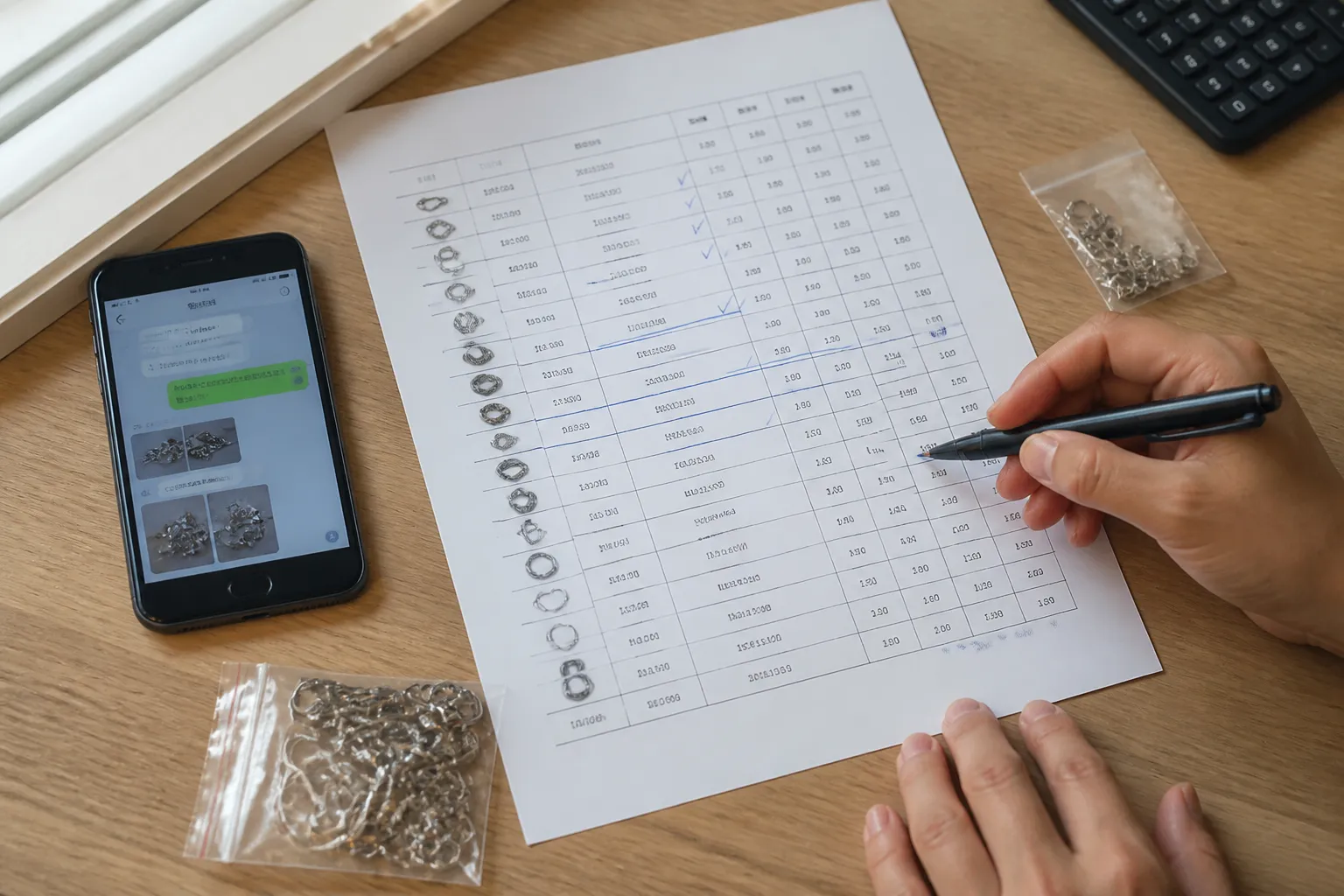
Stainless steel findings are priced on volume tiers — the per-unit cost decreases as order quantity increases. The breaks typically occur at pack multiples: 10-piece, 50-piece, 100-piece. Moving from a small pack to a 100-piece order yields a meaningful per-unit reduction, and that difference compounds significantly across all the findings categories in a production run.
For reference on scale: surgical stainless steel ear wires in standard French hook styles start at small pack prices and drop meaningfully at the 50-unit and 100-unit thresholds. Earring backs with comfort discs follow a similar tiered structure. Exact current pricing varies by supplier and moves with stainless steel commodity costs — always request a current price sheet rather than relying on a catalog from a previous quarter.
Lead Time: The Variable That Breaks Production Schedules
Standard in-stock findings typically ship within 1–5 business days. Specialty sizes, non-standard finishes, or lower-volume items often carry a 1–3 week lead time. For buyers building seasonal collections, this gap is the most common cause of production delays. Order foundational components — ear wires, lobster clasps, jump rings in your standard sizes — well ahead of your production window, not concurrent with it.
Questions to Resolve Before Committing to a Supplier
- What alloy grade(s) do you stock, and can you provide mill certificates?
- What are your pack sizes and minimum order quantities for each category?
- What is the in-stock lead time versus made-to-order lead time for specialty items?
- How do you handle defective components — replacement or credit?
- What incoterms apply to international orders, and what customs documentation do you include?
- For IP/PVD-plated findings, what is the plating thickness in microns and what is the base metal?
A supplier who answers all six clearly and in writing is worth building a relationship with. One who deflects is a risk at scale.
When Stainless Steel Is — and Isn't — the Right Call
Stainless steel is the right specification for:
- Daily-wear pieces exposed to moisture, sweat, or regular cleaning
- Collections positioned as hypoallergenic or sensitive-skin-safe
- Structural findings (clasps, jump rings) where deformation under use is a failure mode
- Markets with nickel-release regulations (EU, UK, and increasingly other jurisdictions)
- Long-run production where replacing tarnished or failed components drives support costs
Consider alternatives when:
- The design requires heavy hand-forming or wire wrapping (fine silver and copper are far more workable)
- An aged, oxidized, or patinated finish is part of the aesthetic — stainless steel does not patinate naturally
- The piece is a one-of-a-kind art object where expressiveness takes priority over structural longevity
Building a Supply Chain That Holds
A single-source strategy for critical findings is a risk, not a simplification. When your primary supplier has a stock gap on French hook ear wires the week before a production run, having a verified secondary source is the difference between a delayed launch and an on-time one.
The practical structure is two tiers: a primary supplier with negotiated pricing and established quality verification, and a qualified secondary source for your highest-volume SKUs. The secondary source is not for price competition — it is for continuity.
Map your design requirements to the appropriate alloy grade. Verify with documentation. Sample before committing to volume. Qualify your secondary source before you need it. That sequence converts stainless steel jewelry supplies from a commodity input into a reliable quality foundation.
Take the Next Step
The right moment to audit your component sourcing is before a production run starts, not after it's derailed by a grade discrepancy or a lead time surprise. Review your current supplier relationships against the criteria above: grade documentation, finish consistency, dimensional tolerances, and confirmed lead times.
If you're sourcing for a new collection or entering a new market, start with a sample order across your core findings categories — ear wires, clasps, and jump rings in the sizes your designs require. Evaluate them against your quality benchmarks, confirm the documentation, then scale with confidence.
[Contact the supplier] to request a current price sheet, available grades with certification, and sample quantities for the stainless steel findings categories your next collection needs.
For a closer look at how quality stainless steel findings perform in finished, production-ready designs, explore STRAND's curated range — including the Minimalist Metal Bar Pearl Drop Stud Earrings, a practical example of refined hardware supporting everyday wearability.
Frequently Asked Questions
What is stainless steel jewelry supplies?
Stainless steel jewelry supplies refer to the raw materials, components, and findings — such as chains, clasps, blanks, bezels, and ear wires — crafted from 304 or 316L surgical-grade stainless steel and used to produce finished jewelry pieces. The material is prized for its corrosion resistance, hypoallergenic properties, and ability to hold PVD coatings (gold, rose gold, black) with long-lasting durability. For DTC stores and importers sourcing through STRAND, these supplies offer a reliable foundation for consistent product quality across collections, with typical MOQs starting at 50–200 units per SKU depending on component type.
How to stainless steel jewelry supplies?
To source stainless steel jewelry supplies, start by selecting the appropriate grade — 304 or 316L surgical-grade stainless steel — based on your end product's durability and skin-sensitivity requirements, with 316L preferred for direct-skin contact pieces. Work with a vetted supplier like STRAND to confirm material certifications, component dimensions (e.g., chain link gauge, clasp dimensions in mm), MOQ per SKU, and lead times (typically 15–30 days for production runs). For international procurement, clarify packaging specs, HS codes, and shipping options (sea freight for bulk, air for samples) upfront to avoid customs delays.
Why is stainless steel jewelry supplies important?
Stainless steel jewelry supplies are important because the material offers exceptional durability, corrosion resistance, and hypoallergenic properties — making it a reliable choice for buyers who need pieces that maintain their finish across diverse climates and skin types without tarnishing or fading. For DTC stores and importers, stainless steel's structural consistency also means tighter quality control across production runs, reducing returns and customer complaints. STRAND sources verified-grade stainless steel components (typically 304 or 316L) that meet international safety and finish standards, giving procurement teams confidence in both product longevity and regulatory compliance.
When should I use stainless steel jewelry supplies?
Use stainless steel jewelry supplies when durability and tarnish resistance are priorities — they're ideal for everyday wear pieces, sweat-resistant designs, or collections targeting active lifestyle markets where longevity matters to the end customer. Stainless steel (typically 304 or 316L surgical grade) is also the right choice when you need consistent finishing across high-volume SKUs, as it holds PVD coatings, gold plating, and IP finishes exceptionally well with minimal variation. STRAND recommends stainless steel components particularly for entry-to-mid price point lines where buyers need reliable quality at sustainable MOQs without compromising on presentation.
What are the benefits of stainless steel jewelry supplies?
Stainless steel jewelry supplies offer exceptional durability and corrosion resistance, making them ideal for pieces that retain their finish through daily wear, humidity, and contact with water — a key advantage for DTC stores focused on customer satisfaction and low return rates. The material is hypoallergenic (316L surgical-grade being the preferred standard), which broadens the addressable market to buyers with nickel sensitivities. STRAND sources stainless steel components with consistent plating adhesion — including PVD gold and rose gold finishes that hold color far longer than electroplated brass alternatives — supporting the quality positioning that overseas importers and procurement teams expect.