
Custom Jewelry vs. Retail Alternatives: A Sourcing Guide for Brands
Custom Jewelry vs. Retail Alternatives: A Sourcing Guide for Brands
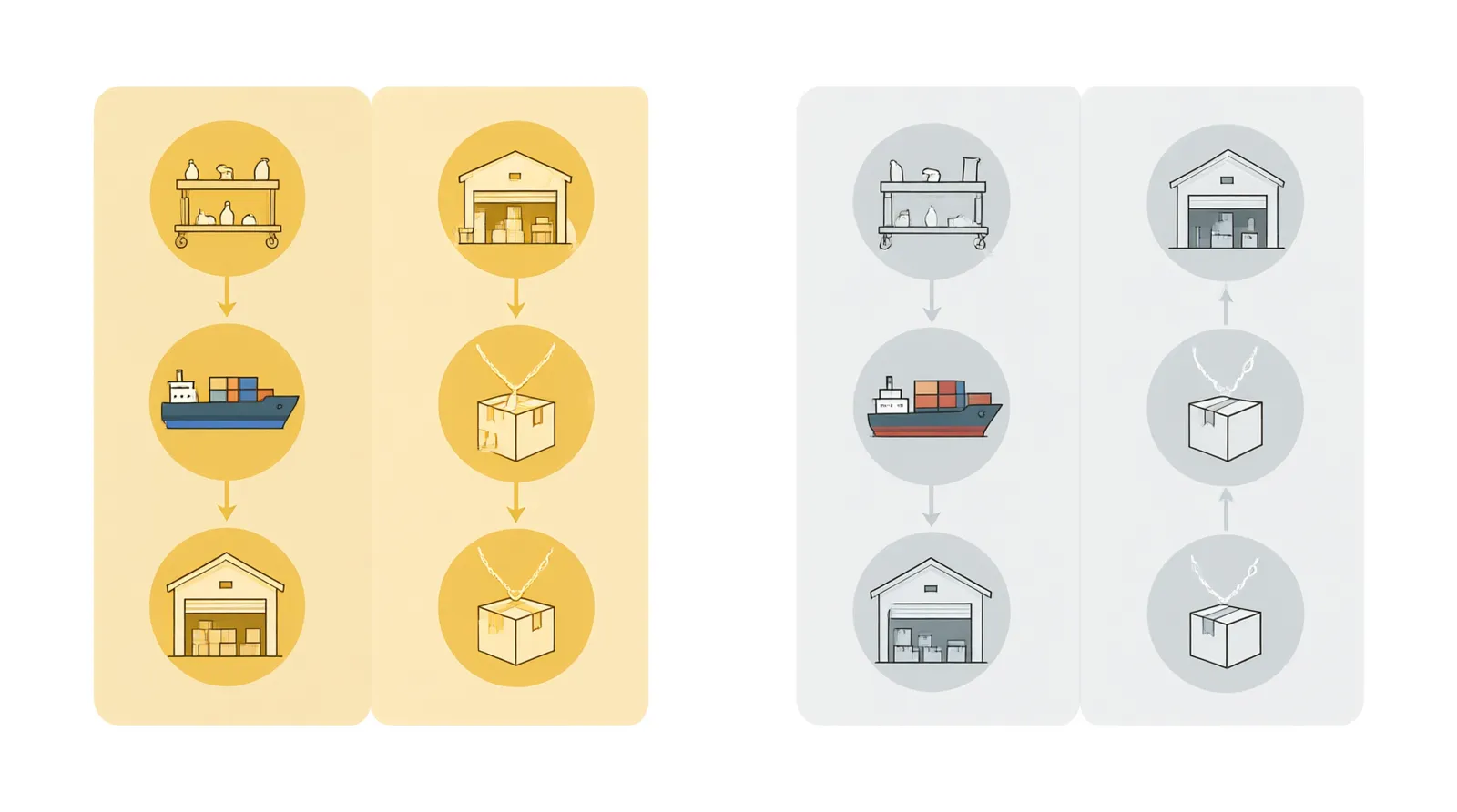
Custom jewelry sourced directly from OEM manufacturers offers B2B buyers unit economics and design control that retail personalization platforms cannot match, while alternatives like online personalization stores serve individual consumers needing single-unit gifts. If you are a DTC store owner or importer sourcing chains, earrings, or sets at scale, direct custom manufacturing is the commercial path; if you are an end-consumer buying one engraved pendant, retail alternatives fit your needs.
TL;DR / Quick Verdict
For procurement teams, importers, and DTC brand owners in the US, EU, UK, and MENA regions, direct custom jewelry manufacturing provides the margin structure, material flexibility, and volume scaling required for commercial resale. Retail alternatives—such as online personalization storefronts or brick-and-mortar jewelers—are built for single-unit consumer purchases, offering convenience but lacking the wholesale pricing, OEM customization depth, and bulk logistics needed for business inventory. Choose custom jewelry when building a product line; choose alternatives when buying a single personalized gift.
At-a-Glance Comparison Table
| Dimension | Custom Jewelry (Direct OEM) | Alternatives (Retail Personalization) |
|---|---|---|
| Target Buyer | Importers, DTC brands, wholesalers | Individual consumers, gift buyers |
| Pricing Structure | Wholesale pricing | Retail pricing subject to time-sensitive promotions (e.g., pendants often discounted on platforms like Jewlr) |
| Minimum Order Quantity | Varies by supplier, with many offering low minimums for stock designs and select styles | 1 piece |
| Material Options | Plated base metals, silver finishes, glass beads, natural stone, faux pearls | Primarily sterling silver, gold vermeil, standard birthstones |
| Product Scope | Drop earrings, stud earrings, necklace + earring sets, vintage/gradient crystal/rhinestone styles | Name necklaces, engravable rings, photo lockets, stacking charms |
| Logistics & Shipping | Air, sea, or express freight | Standard parcel shipping (often free to consumer) |
| Payment Terms | Bank transfer, PayPal, letters of credit, and other international trade methods | Credit card, Buy Now Pay Later plans (Jewlr) |
| Quality Assurance | Supplier quality inspections before shipment | Consumer return policies (e.g., 99-day returns, 1-year warranty via Jewlr) |
| Support Language | Multilingual sales support available through various suppliers | Typically English-only consumer support |
Custom Jewelry Overview
Custom jewelry in a B2B context refers to pieces designed, prototyped, and manufactured by specialized workshops specifically for commercial resale under a buyer's brand or store label. This model is built for importers, wholesale buyers, and DTC store owners who need reliable supply chains, specific material compositions, and scalable production runs.
The standout strength of this approach is the bridge between manufacturing capability and international procurement requirements. STRAND, for example, links vetted Chinese workshops directly to overseas buyers across the US, EU, UK, and MENA markets. The focus here is on fashion jewelry rather than fine luxury goods, utilizing materials like plated copper, glass beads, natural stones, and faux pearls. Styles frequently include drop earrings, stud earrings, and coordinated necklace-and-earring sets featuring vintage, gradient crystal, two-tone glass bead, or rhinestone aesthetics.
For buyers evaluating suppliers, the commercial terms dictate viability. STRAND structures trade terms for international shipping, routing orders by air, sea, or express depending on order urgency and volume. Payment infrastructure accommodates global procurement teams through bank transfers, PayPal, and other standard international trade methods. To remove language barriers for multilingual procurement teams, sales support is provided in multiple languages. Crucially, quality inspections occur before shipments, addressing the primary risk factor in cross-border sourcing. For deeper supplier evaluation criteria, reviewing how different vendors stack up is essential; our guide on 6 Custom Jewelry Sources Ranked: OEM Suppliers & Retail Benchmarks for 2026 breaks down these operational differences further.
Alternatives Overview
Alternatives to direct custom manufacturing encompass retail personalization platforms, branded DTC jewelry sites, and traditional brick-and-mortar jewelers. These channels are built for the end consumer purchasing a single item—such as an engraved nameplate or a birthstone ring—rather than a business stocking inventory.
Platforms like Jewlr list hundreds of personalized items; their catalog features 636 personalized jewelry products spanning rings, necklaces, bracelets, and earrings, categorized by Best Sellers, Birthstone, Engravable, and other consumer-facing tags (Jewlr). Other market players include branded DTC sites like GLDN and Made by Mary, which focus on minimalist personalized pieces, or large-scale retail chains like Jared, Kendra Scott, and Scott Kay, which offer in-store or online engraving services alongside their standard collections.
The strengths of these alternatives lie in consumer convenience. They offer immediate purchasing interfaces, visual customization tools, and buyer protections like free shipping, extended return windows (up to 99 days), and warranties (one year is standard on some platforms) (Jewlr). However, they operate on retail margins. A business attempting to source inventory from these platforms will find the per-unit cost prohibitive for resale, and the design parameters strictly limited to the platform's existing templates. Understanding how custom jewelry vs. retail alternatives compare operationally helps clarify why commercial buyers avoid retail channels for inventory sourcing.
Feature-by-Feature Breakdown
Pricing and Margins
Retail alternatives price their goods for the end consumer. On platforms like Jewlr, personalized name necklaces run seasonal promotions, as do more complex items like the Engravable Generations Stacking Hearts Pendant (Jewlr). These prices reflect retail markups, customer acquisition costs, and single-unit fulfillment expenses. While signing up for an account might yield an extra 15% off, the baseline remains a consumer retail price (Jewlr).
Custom jewelry operates on wholesale pricing models. By dealing directly with manufacturers, buyers eliminate middleman markups. The cost per unit drops significantly as volume increases, allowing DTC brands to maintain healthy profit margins when selling to their own customers. Buyers must request quotes based on their specific material choices and order volumes, but the underlying math always favors direct manufacturing for commercial intent.
Minimum Order Quantities (MOQ) and Inventory Risk
This is the sharpest dividing line between the two options. Alternatives have an effective MOQ of one. You buy what you need, when you need it.
Custom jewelry requires volume, but modern OEM suppliers have drastically lowered the barrier to entry. STRAND maintains a stock catalog where most styles carry a low MOQ per style. Select styles can be ordered from as few as 1 piece. This allows buyers to test new designs—like a specific turquoise glass bead drop earring or a garnet-inspired rhinestone stud—without committing to thousands of units upfront, mitigating inventory risk while still accessing wholesale pricing.
Material and Design Flexibility
Retail alternatives constrain you to their available templates. You can change a name, pick a birthstone (amethyst, peridot, etc.), or select a metal color, but you cannot alter the fundamental architecture of the piece. If you want a diamond-accented setting or a specific luxury finish, you are limited to what major retailers like Jared or Kendra Scott currently have in their display cases.
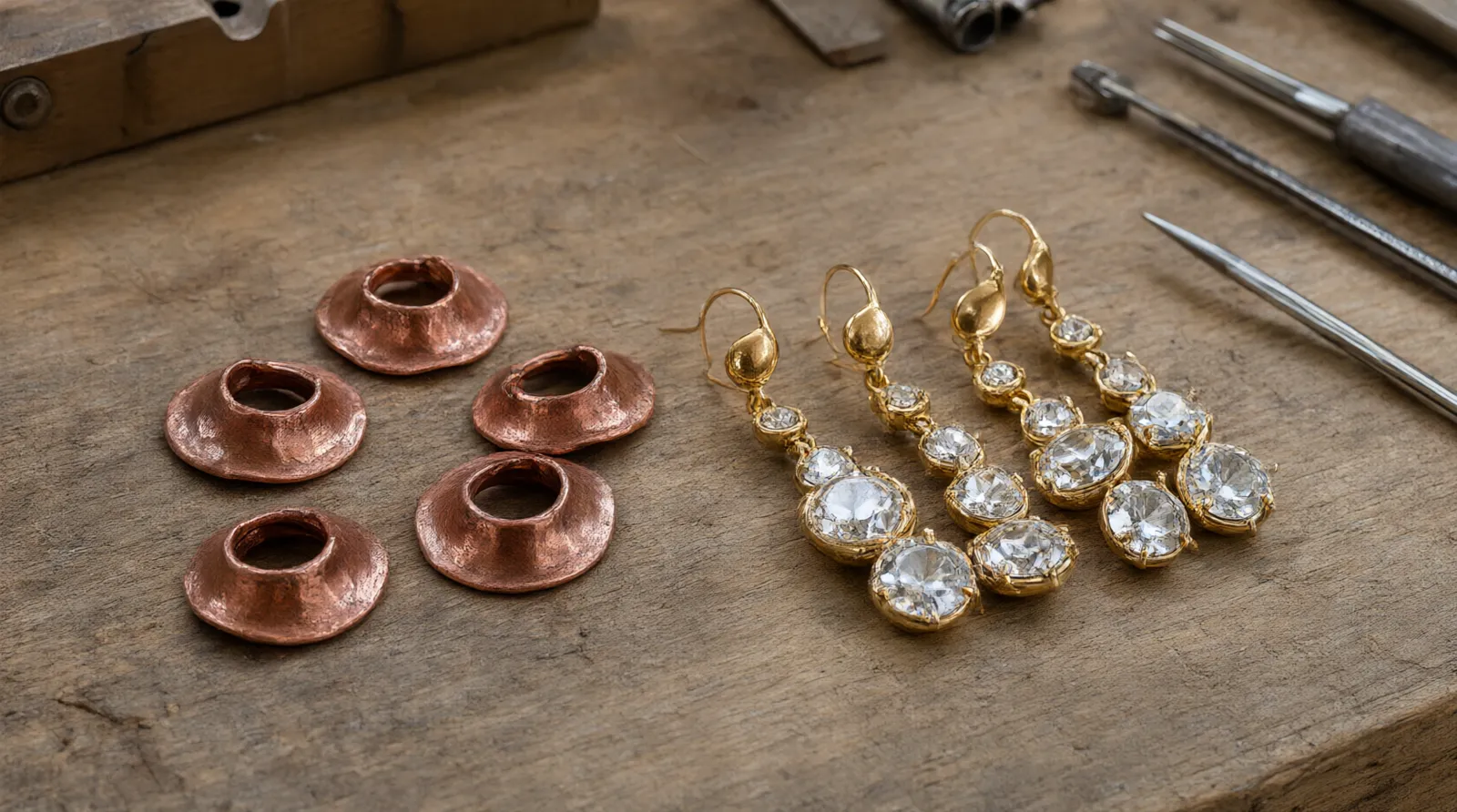
Custom OEM manufacturing removes these boundaries. Buyers can specify exact base metals (gold-plated copper, rhodium-plated copper, 925-style silver finishes), precise stone types (natural stone, faux pearls, glass beads), and specific aesthetic directions (vintage, gradient crystal, two-tone). If your market research shows high demand for a specific peridot-colored rhinestone set in a unique geometric drop earring, a custom manufacturer will build the mold and produce it.
Logistics, Shipping, and Trade Terms
Alternatives handle logistics invisibly for the consumer, usually relying on standard domestic postal services or couriers, often subsidized as "free shipping."
Custom jewelry requires active logistics management suited for international trade. Manufacturers like STRAND offer structured trade terms and route shipments via air freight for speed, sea freight for high-volume cost efficiency, or express courier for urgent sampling. This level of logistical control is mandatory for importers managing landed costs and customs clearance across the US, EU, UK, or MENA regions.
Quality Assurance and Support
Consumer alternatives rely on post-purchase safety nets: return policies and warranties. If a piece arrives flawed, the consumer ships it back.
B2B custom jewelry relies on pre-shipment prevention. Because returning a bulk order internationally is financially unviable, reputable suppliers implement quality inspections before any shipment leaves the facility. Furthermore, communication during the design and production phases must be frictionless. STRAND supports this with a multilingual sales team, ensuring that procurement teams in diverse regions can communicate technical specifications accurately without translation errors causing production defects.
Scalability
If a DTC brand goes viral and suddenly needs 5,000 units of a specific necklace-and-earring set, retail alternatives cannot fulfill that demand. Their systems are built for single-item processing.
Custom jewelry manufacturers are built for scale. Once a design is approved and sampled, production can be ramped up to meet wholesale demands. Understanding how to transition from a small sample run to a 5,000-piece production order is a core competency of direct sourcing. For a broader look at vendor capabilities, our breakdown of Custom Jewelry: 6 Sources Buyers & DTC Brands Need in 2026 details how different suppliers handle scaling. Evaluating custom jewelry vs. retail sourcing models further illustrates why scalability remains exclusive to OEM partnerships.
Pros and Cons
Custom Jewelry (Direct OEM)
Pros:
- Wholesale pricing structures enable viable commercial margins.
- Complete control over materials, including specific plating, natural stones, and faux pearls.
- Low MOQs allow for manageable inventory testing.
- Pre-shipment QC inspections prevent bulk defect issues.
- Multilingual support streamlines cross-border communication.
- Flexible payment methods tailored to international trade.
Cons:
- Requires longer lead times for prototyping and production compared to instant retail checkout.
- Demands basic knowledge of international trade terms and freight logistics.
- Not suitable for purchasing single items for personal use.
Alternatives (Retail Personalization)
Pros:
- Immediate purchasing with no minimum order quantities.
- Consumer-grade protections like 99-day returns and 1-year warranties (Jewlr).
- Easy-to-use visual interfaces for simple text or birthstone personalization.
- No logistics management required for the buyer.
Cons:
- Retail pricing destroys resale margins for businesses.
- Design options are strictly limited to existing templates.
- Cannot accommodate bulk orders or wholesale scaling.
- Lack of dedicated B2B account management or multilingual procurement support.
When to Choose Custom Jewelry
Opt for custom jewelry manufacturing if you fall into any of these commercial scenarios:
- You are launching or restocking a DTC fashion jewelry brand. If your target audience wants trending styles—like vintage gold-plated copper earrings or two-tone glass bead necklace sets—you need the margin protection that only direct OEM sourcing provides.
- You are an importer supplying regional boutiques. Buyers serving the US, EU, UK, or MENA markets require consistent quality and reliable freight options (air, sea, express) that retail platforms do not offer.
- You need specific material compositions. If your brand identity relies on rhodium-plated finishes, 925-style silver aesthetics, or specific natural stones like amethyst or turquoise arranged in proprietary designs, custom manufacturing is the only way to execute this at scale.
- Your procurement team is multilingual. Working with a supplier offering dedicated support in French, Arabic, Spanish, German, or Russian prevents costly miscommunications during the sampling phase.
When to Choose Alternatives
Retail personalization platforms and traditional stores are the correct choice in these specific situations:
- You are buying a single gift. If you need one engraved pendant or a specific birthstone ring for a personal occasion, the convenience of a site like Jewlr or a store like Jared outweighs any other factor.
- You are testing consumer appetite with zero budget. While not a sustainable business strategy, some micro-influencers buy a handful of retail items to photograph for content before committing to actual inventory sourcing.
- You require instant gratification. If the item is needed tomorrow and you are willing to pay a premium retail price for expedited local shipping, brick-and-mortar stores or fast-shipping retail sites are your only option.
Final Verdict
The decision between custom jewelry and retail alternatives is not a matter of which is objectively better; it is a matter of identifying your buyer profile. If you are an individual purchasing a sentimental gift, retail alternatives provide the necessary interface, low quantity, and return policies.
However, if you are a purchase-ready B2B buyer, importer, or DTC store owner, retail alternatives are fundamentally incompatible with your business model. Commercial viability requires wholesale pricing, controlled materials, scalable MOQs, and rigorous pre-shipment quality assurance. Direct custom jewelry manufacturing delivers these operational necessities. Platforms operating on wholesale terms, offering low minimum order quantities across extensive catalogs, and supporting global logistics and multilingual communication are built specifically to protect your margins and ensure supply chain reliability.
To evaluate current pricing, review material specifications, or discuss MOQ requirements for your next collection, reach out directly to the STRAND procurement team. Request a quote, get current MOQ and pricing details, or ask for a sample at strandjewelry.com.