
Chain Fashion Belt Guide: Styling & Sourcing for Retailers
Chain Fashion Belt Guide: Styling & Sourcing for Retailers
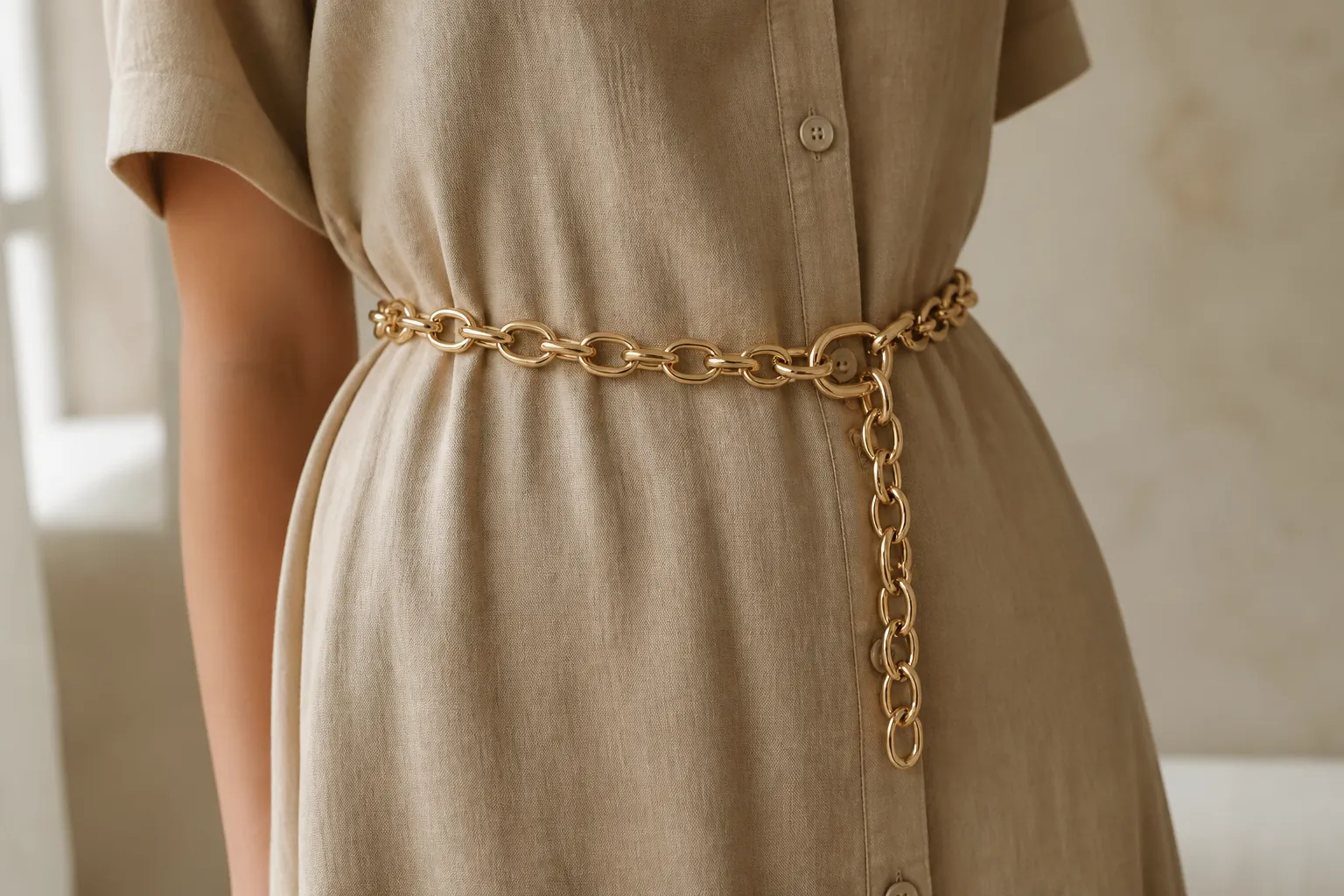
A chain fashion belt is a decorative waist accessory constructed from interlinked metal segments, designed primarily as a styling accent rather than a functional trouser fastener. Unlike traditional leather belts that rely on tension and buckle holes for fit, these accessories utilize adjustable clasps or extender chains to drape over garments, serving as jewelry that defines the silhouette and adds metallic texture to an outfit.
For overseas buyers and procurement teams sourcing for DTC stores, understanding this category requires distinguishing between costume novelty and crafted accessories. A quality piece functions as a bridge between fine jewelry and apparel, requiring specific attention to plating thickness, alloy composition, and weight distribution. This guide breaks down the material specifications, styling applications, and sourcing criteria necessary for evaluating inventory that meets international retail standards, particularly for markets valuing modesty and gold-tone aesthetics.
Defining the Chain Fashion Belt in Modern Retail
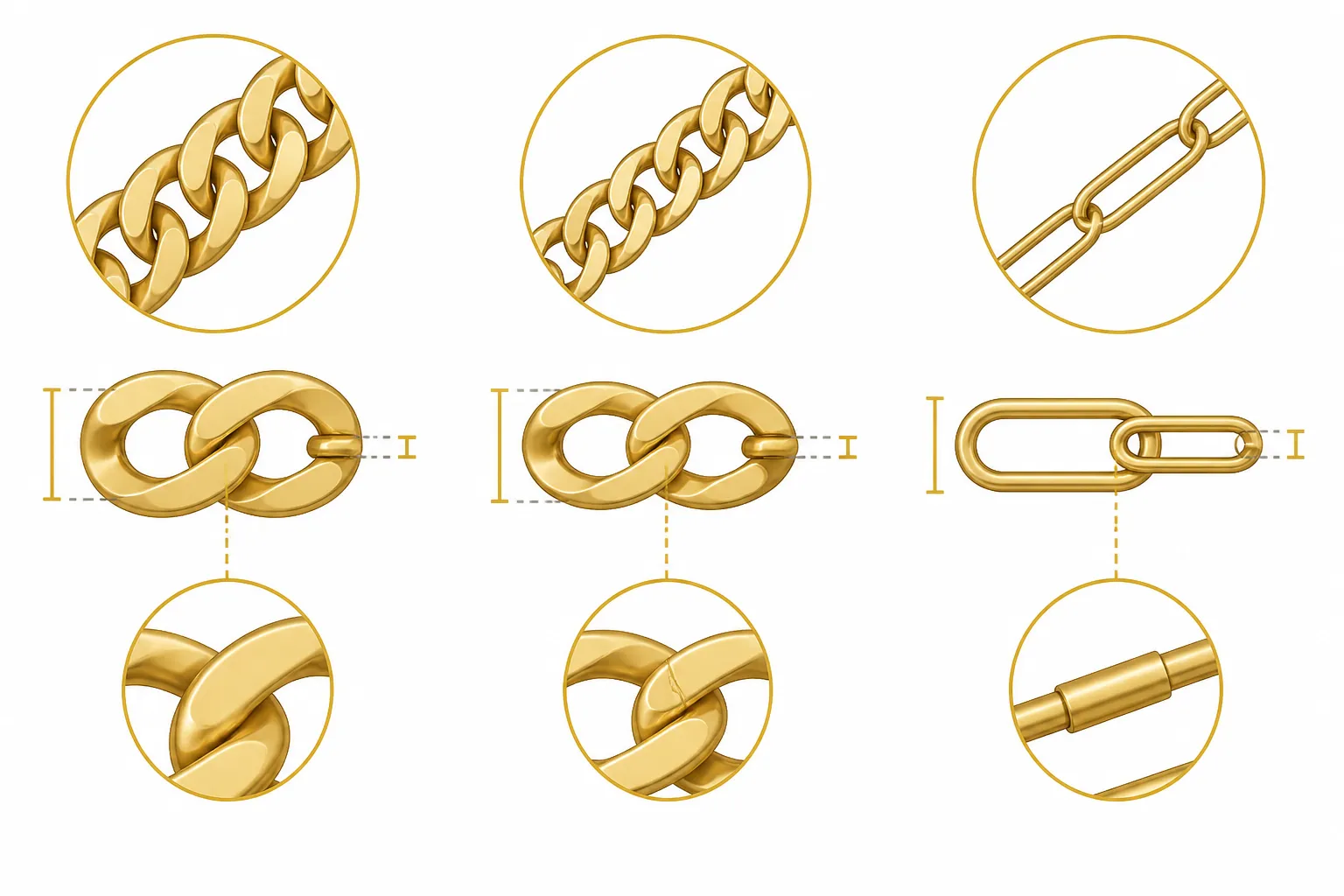
The term "chain fashion belt" encompasses a wide spectrum of products, but for serious retailers, the definition centers on craftsmanship and material integrity. At its core, this accessory consists of interconnected links made from base metals like brass or stainless steel, often finished with gold or silver plating. The distinction between a mass-market item and a curated collection piece lies in the manufacturing tolerances and finishing processes. High-quality versions feature soldered links to prevent snagging on delicate fabrics and use PVD (Physical Vapor Deposition) plating for color retention, whereas lower-tier alternatives may use simple electroplating that tarnishes quickly.
Retailers targeting MENA regions or modest fashion demographics should note that these belts serve a dual purpose. They provide visual interest and waist definition without compromising coverage, making them ideal for layering over abayas, kaftans, or loose-fitting tunics. The aesthetic aligns with cultural preferences for gold tones and ornate metalwork while adhering to modesty guidelines. When evaluating samples, buyers should verify that the metal finish is hypoallergenic and nickel-free, as skin sensitivity is a primary return driver in this category.
Material Specifications and Quality Tiers
Understanding material grades prevents procurement mismatches. Entry-level belts typically use zinc alloy with flash plating (less than 0.5 microns), suitable only for seasonal trend cycles. Mid-tier options, which form the backbone of sustainable DTC brands, utilize brass or 304 stainless steel bases with 1-2 microns of gold plating. Premium tiers incorporate solid sterling silver links or heavy vermeil finishes. For buyers assessing STRAND or similar vetted suppliers, requesting specific plating thickness reports and base metal certifications is standard due diligence. These specifications directly correlate to shelf life and customer satisfaction rates.
Why Chain Fashion Belts Are Important for Assortment Planning
Inventory planning relies on items that drive attachment rates and increase average order value (AOV). A chain fashion belt acts as a high-margin add-on that complements core apparel categories without competing with them. Data from accessory-focused retailers indicates that waist accessories can lift conversion on dress and outerwear product pages by providing a complete "look" solution. For importers, this category offers logistical advantages; belts are compact, lightweight relative to their perceived value, and less prone to sizing returns compared to fitted clothing.
The importance also extends to brand positioning. Offering well-crafted metal accessories signals a commitment to detail that elevates the entire store assortment. While a chain fashion belt focuses on waist styling, the craftsmanship parallels other jewelry categories. For instance, retailers carrying pieces like the Vintage Gemstone Cuban Chain Bracelet-Red — STRAND will find that customers who appreciate substantial link construction in bracelets naturally cross-shop matching waist accessories. The shared design language—specifically the Cuban or curb link patterns—creates cohesive merchandising opportunities that encourage multi-unit purchases.
Cultural Relevance and Market Fit
For buyers targeting Gulf Cooperation Council (GCC) countries and broader MENA markets, gold-tone chain belts hold specific cultural significance. Gold has historically been associated with wealth, celebration, and heritage in these regions. Modern interpretations that blend traditional opulence with contemporary minimalism perform exceptionally well. Procurement teams should prioritize warm gold hues (18k-24k tone) over cool yellow or rose variants unless market testing suggests otherwise. Additionally, designs should avoid overly revealing placements; belts that sit comfortably at the natural waist or hip over opaque garments align better with regional modesty norms than low-rise styles intended for bare midriffs.
How to Style and Merchandise Chain Fashion Belts
Styling education reduces purchase hesitation. Buyers should equip their marketing teams and retail staff with concrete pairing guidelines that translate across cultures. The versatility of a chain fashion belt lies in its ability to transform silhouettes without altering the garment itself. Effective merchandising demonstrates these transformations through specific scenarios rather than abstract fashion concepts.
Structured Layering Over Modest Wear
For long-line garments like abayas or maxi dresses, the belt should be positioned at the smallest part of the torso or slightly below the bust to create proportion without clinging. A medium-weight Cuban link belt (approximately 15-20mm width) provides enough visual anchor to break up vertical fabric expanse without looking costumey. Stylists recommend avoiding excessive tightening; the belt should rest against the fabric with gentle tension to maintain the garment’s drape and respect modesty requirements. This styling approach works equally well for Western oversized blazers and trench coats, making it a trans-cultural staple.
Technical Adjustability and Fit
Unlike leather belts with fixed holes, chain belts offer continuous adjustability through extender chains or toggle clasps. This feature significantly reduces size-related returns, a critical metric for overseas importers managing reverse logistics costs. When merchandising, highlight the adjustable range in centimeters rather than generic S/M/L labels. For example, specifying "adjustable from 70cm to 95cm" gives buyers precise fit information. Ensure product photography shows the extender chain mechanism clearly, as customers need to visualize how the adjustment works before purchasing. Demonstrating the clasp security in video content further builds confidence in the product's functionality.
When to Use Specific Chain Styles and Weights
Not all chain belts suit every occasion or garment weight. Procurement teams should curate assortments based on use-case segmentation to guide B2B buyers and end consumers. Categorizing inventory by weight and link style simplifies the selection process and reduces decision fatigue.
| Chain Style | Typical Weight | Best Garment Pairing | Occasion / Season |
|---|---|---|---|
| Delicate Cable | 30-50g | Silk blouses, light knitwear | Daywear, Summer |
| Medium Curb/Cuban | 80-120g | Linen dresses, tailored trousers | Office, Smart Casual |
| Heavy Statement | 150g+ | Coats, structured abayas, denim | Evening, Winter, Events |
| Mixed Link | Variable | Transitional separates | Versatile / Year-round |
Seasonal and Occasion-Based Selection
Lightweight cable or snake chain belts (under 50g) are optimal for spring/summer collections and delicate fabrics where heavier links would cause pulling or damage. These pieces appeal to customers seeking subtle accent jewelry. Conversely, heavy statement belts (150g+) anchor autumn/winter outerwear and formal evening wear. For MENA markets, heavier gold-tone pieces often see peak demand during Ramadan and Eid seasons when celebratory dressing increases. Buyers should align shipment lead times to arrive 6-8 weeks before these key retail periods to capture full-price sell-through.
When expanding beyond waist accessories into coordinated sets, consider how link styles translate across product types. A buyer interested in the structural integrity of a heavy belt might also evaluate the Vintage Gemstone Cuban Chain Bracelet-Orange — STRAND (СТРЭНД) for matching wristwear. Consistent link profiling across categories strengthens brand identity and simplifies visual merchandising for wholesale partners.
Benefits of Adding Chain Belts to Your Product Line
Integrating chain fashion belt SKUs delivers measurable commercial advantages beyond aesthetic diversity. For DTC stores and importers, these benefits manifest in margin structure, logistics efficiency, and customer retention. Understanding these operational upsides helps justify allocation of open-to-buy budget toward accessories.
Margin Enhancement and Perceived Value
Metal accessories typically command higher markup multiples than textile belts due to perceived material value. A well-plated brass chain belt with durable hardware can retail at price points comparable to leather goods while maintaining lower COGS, provided sourcing is optimized. The key is communicating quality cues—heavy weight, smooth link articulation, secure clasps—that justify premium positioning. Customers associate metal density with longevity, making them willing to invest more upfront for pieces that won’t tarnish after minimal wear.
Reduced Return Rates and Size Inclusivity
Sizing is the single largest friction point in online apparel sales. Chain belts with adjustable extenders accommodate fluctuating body measurements, postpartum changes, and layering variations that fixed-size belts cannot. This inherent flexibility translates to fewer returns and exchanges, directly protecting net margins. For international sellers, reducing return volume also minimizes complex cross-border reverse logistics. Additionally, the universal fit nature of adjustable chains simplifies SKU management; retailers can stock one size variant instead of five, freeing capital for deeper inventory in best-selling styles.
Sourcing Criteria for Overseas Buyers and Importers
Procurement success hinges on verifying supplier capabilities before placing bulk orders. For buyers sourcing from Asian manufacturing hubs for Western or MENA distribution, specific evaluation dimensions separate reliable partners from risky ones. Price alone is an insufficient metric; total landed cost and quality consistency determine true profitability.
Plating Durability and Testing Standards
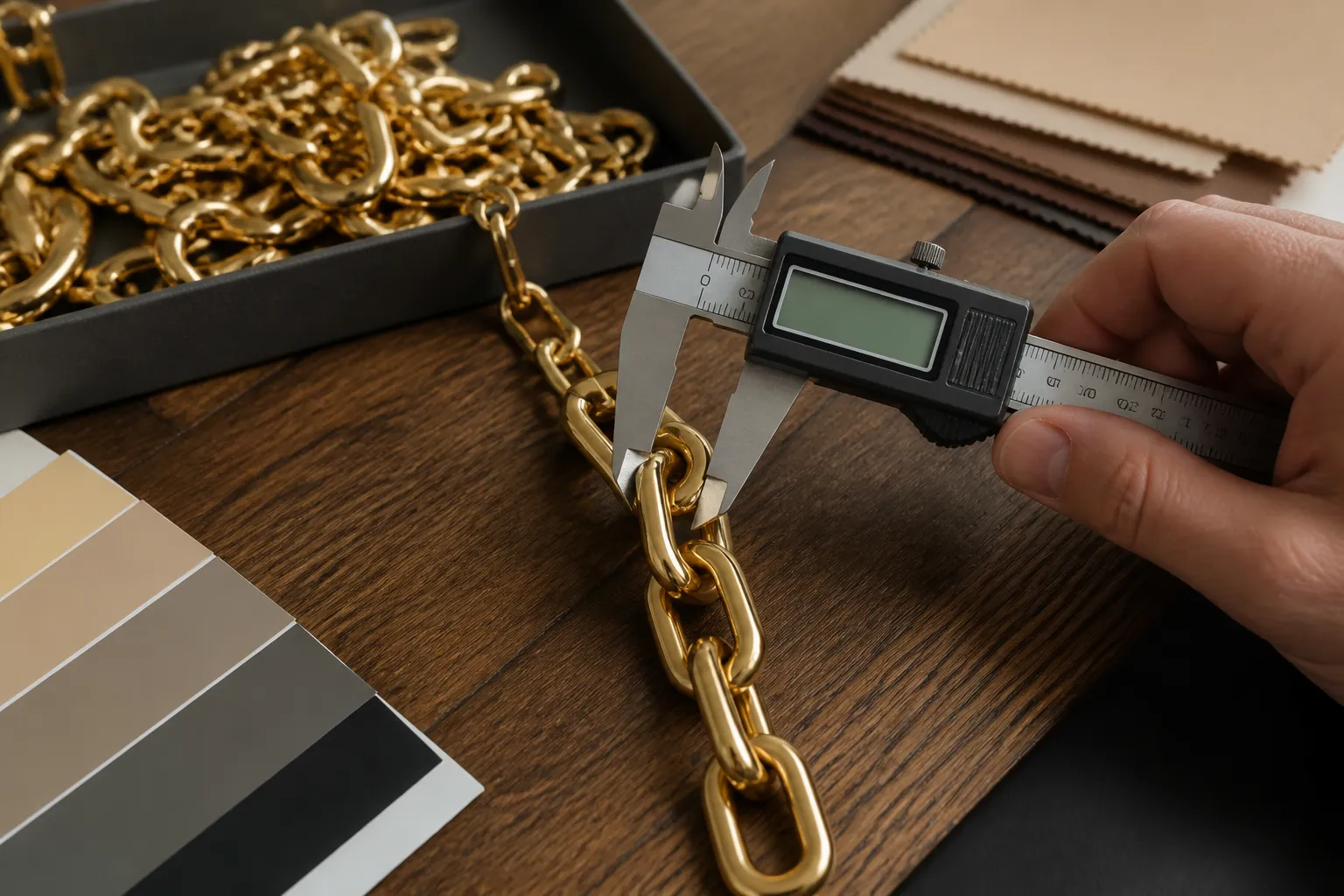
Request third-party lab reports for plating thickness and adhesion. Industry standard for fashion jewelry destined for regular wear is minimum 1 micron of gold plating over a nickel-free barrier layer. Suppliers offering "flash plating" or unspecified "gold color" should be flagged as high-risk for tarnish complaints. Ask for salt spray test results (minimum 48 hours for fashion grade, 96+ hours for premium) to validate corrosion resistance. For MENA markets with high humidity and heat exposure, exceeding baseline durability specs prevents premature degradation that damages brand reputation.
MOQ Flexibility and Lead Time Transparency
Minimum Order Quantities (MOQs) vary significantly by manufacturer. Crafted suppliers like STRAND typically maintain lower MOQs than mass-production factories, allowing buyers to test new styles without overcommitting capital. Clarify whether MOQ applies per style or per color/plating variant. Equally critical is lead time transparency; request production schedules that distinguish between raw material sourcing, assembly, plating, and QC inspection. Buffer 2-3 weeks beyond quoted production time for unforeseen delays, especially when coordinating with international freight forwarders. Air freight options should be available for replenishment orders, while sea freight remains viable for initial bulk shipments to optimize landed cost.
Packaging and Compliance Documentation
International shipments require proper documentation to clear customs efficiently. Verify that suppliers provide commercial invoices with accurate HS codes for metal fashion accessories (typically 7117.19 for base metal imitation jewelry). Packaging should protect chain links from tangling and scratching during transit; individual poly bags with anti-tarnish strips are standard for quality preservation. For EU and US markets, confirm REACH and CPSIA compliance regarding lead, cadmium, and nickel release limits. Suppliers unable to provide current test certificates pose regulatory and liability risks that outweigh any unit cost savings.
Evaluating Price, Availability, and Supplier Reliability
Buyers must balance cost against reliability metrics. The lowest unit price often correlates with hidden expenses: higher defect rates, inconsistent plating, delayed shipments, and poor communication. Establish evaluation scorecards that weight quality consistency and responsiveness alongside pricing. Request pre-production samples from shortlisted suppliers and compare them against approved benchmarks for weight, finish, and clasp function.
Availability transparency prevents stockout crises. Reliable suppliers maintain real-time inventory visibility or provide accurate production capacity forecasts. For made-to-order items, confirm slot reservation policies and cancellation terms. Payment terms also signal supplier confidence; vendors offering net terms or milestone-based payments demonstrate financial stability and commitment to long-term partnerships. New buyers should expect to start with proforma invoice or deposit structures until credit history is established.
Warranty and return policies for B2B transactions differ from consumer protections. Clarify defect thresholds (e.g., acceptable AQL levels), claim windows, and remediation options (credit, replacement, or refund). Suppliers standing behind their craftsmanship with clear quality guarantees reduce buyer risk and foster trust. Document all agreements in writing to prevent disputes over verbal assurances.
Next Steps for Procurement Teams
Evaluating chain fashion belt suppliers requires systematic verification of materials, compliance, and operational reliability. Begin by auditing your current accessory assortment against the quality tiers and styling applications outlined above. Identify gaps in weight categories, link styles, or cultural relevance for your target markets. Compile a supplier shortlist based on verified plating specs, MOQ alignment, and documented compliance.
Request samples with full technical data sheets before committing to purchase orders. Test samples internally for tarnish resistance, clasp durability, and fabric compatibility. Validate supplier claims through third-party labs if entering new markets with strict regulatory environments. Compare total landed costs including freight, duties, and projected defect rates rather than unit price alone.
Ready to source crafted chain belts with verified quality standards? Review current availability and request a detailed quote for your next season’s assortment. [Contact the supplier] to discuss MOQ options, plating specifications, and shipping timelines tailored to your market requirements.
Frequently Asked Questions
What is chain fashion belt?
A chain fashion belt is a waist accessory crafted from durable metal links, typically available in 18k gold-plated brass or stainless steel with adjustable lengths ranging from 70cm to 110cm. STRAND offers these vetted, high-quality pieces with an MOQ of 50 units and a 25-day lead time, featuring modesty-appropriate designs and premium gold tones suitable for MENA markets. Shipping options include DHL Express or air freight to ensure reliable delivery for international procurement teams.
How to chain fashion belt?
STRAND chain fashion belts are styled by looping the 18k gold-plated brass links through belt loops or waistbands and securing them with the adjustable lobster clasp for a versatile fit. These handcrafted pieces feature a 2cm width and 100cm length, available to procurement teams with an MOQ of 50 units and a 4-week lead time via DHL Express shipping.
Why is chain fashion belt important?
Chain fashion belts are important for STRAND because they serve as versatile, high-margin accessories crafted from durable stainless steel or brass with premium gold plating suitable for MENA modesty standards. These pieces offer buyers tangible value through vetted craftsmanship and flexible MOQs starting at 50 units with 15-day lead times, distinguishing them from bulk fast fashion alternatives.
When should I use chain fashion belt?
Chain fashion belts from STRAND are best positioned for evening wear and modest styling in MENA markets, where 18k gold-plated brass over leather adds refined structure to abayas or tailored silhouettes without compromising cultural appropriateness. Available in 2cm width with adjustable lengths (70–100cm), these pieces carry an MOQ of 50 units and a 4-week lead time, with DDP shipping options for seamless procurement by overseas buyers.
What are the benefits of chain fashion belt?
STRAND chain fashion belts offer premium durability through verified 316L stainless steel or 18k gold-plated brass construction, ensuring tarnish resistance suitable for diverse climates including MENA regions. Available in adjustable widths from 15mm to 40mm with a standard MOQ of 100 units and 25-day lead time, these versatile accessories provide reliable inventory planning via DDP or FOB shipping options.