
Stud Earrings for Women: The Complete U.S. Buyer's Guide
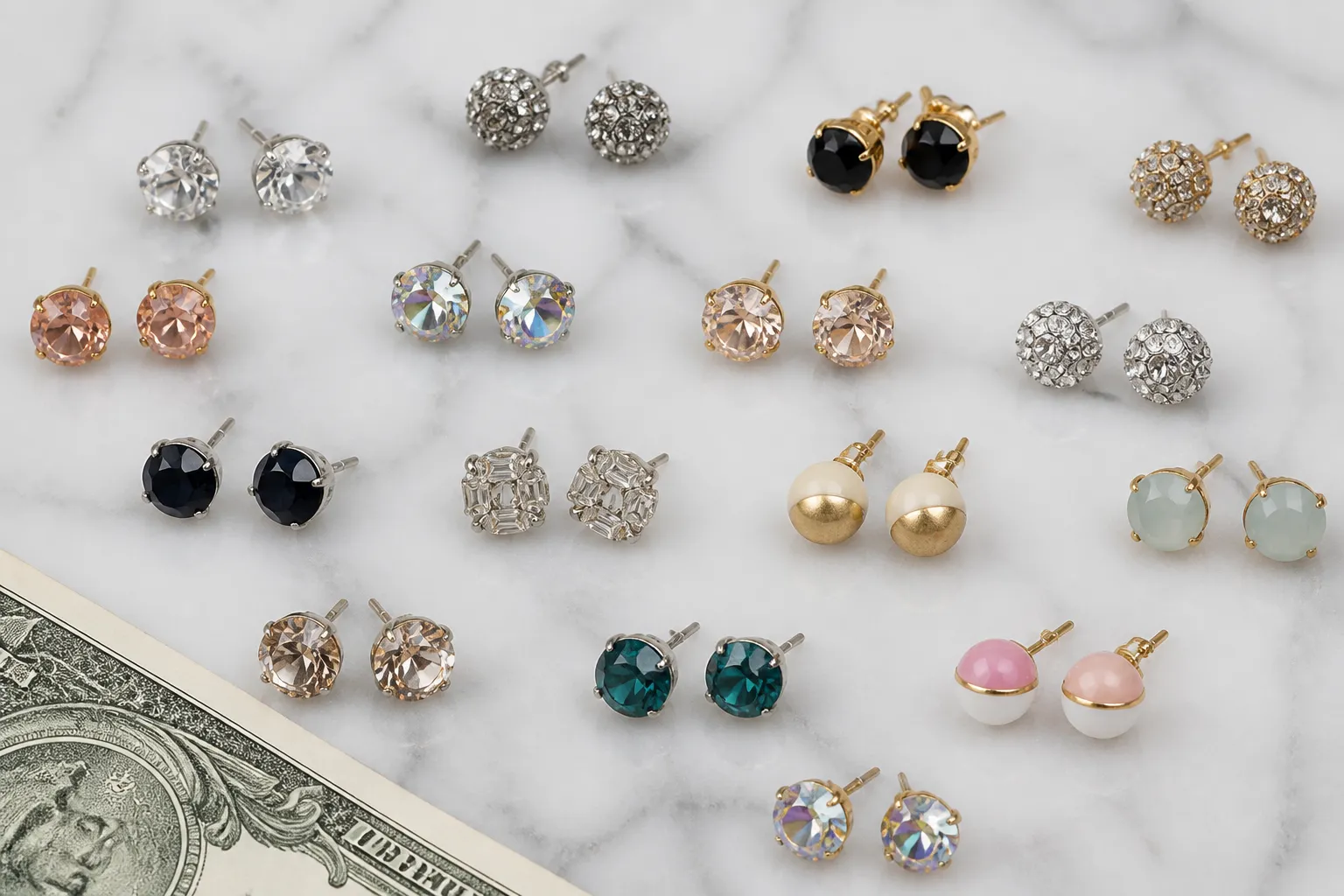
Stud Earrings for Women: The Complete U.S. Buyer's Guide
Stud Earrings for Women in the United States — Market Overview
The United States remains one of the world's largest consumer markets for fashion jewelry, and stud earrings for women sit at the center of that demand. Industry estimates suggest the U.S. fashion jewelry market is valued in the tens of billions of dollars annually, with earrings consistently ranking as the top-selling category. Studs in particular dominate everyday wear because of their versatility — they transition seamlessly from office environments to social occasions, require no special outfit coordination, and suit virtually all age groups. The result is a product category with unusually broad and durable demand across demographics, retail formats, and price tiers.
Demand drivers in the U.S. are multi-layered. Direct-to-consumer (DTC) brands have reshaped the competitive landscape over the past decade, pulling volume away from traditional mall jewelry chains and department stores toward Instagram-native labels and Shopify storefronts. At the same time, the wholesale and import channel remains vigorous: independent boutiques, multi-brand gift shops, e-commerce resellers, and regional chains all source stud earrings in bulk, often from overseas manufacturers in China, India, and Southeast Asia. American consumers have also grown more style-conscious at the accessible price point — rhinestone pavé studs, gradient crystal designs, and vintage-inspired motifs now sell alongside classic pearl and gold-plated options, expanding the SKU range buyers need to stock.
Buyer profiles in the U.S. market span a wide spectrum. At one end are large national retailers with sophisticated procurement teams, formal vendor onboarding requirements, and multi-thousand-unit purchase orders. At the other end are micro-boutique owners and solo DTC operators who may be placing their first import order. Between these poles sits the fastest-growing segment: mid-market e-commerce operators and Amazon/Etsy power sellers who need reliable OEM supply, consistent quality, and low enough minimum order quantities (MOQ) to test new styles without overcommitting capital. Understanding which buyer profile you are — or which one you serve — shapes every sourcing decision downstream.
What's Specific About the United States
Regulatory and Compliance Environment
Sourcing stud earrings for women into the U.S. market carries real regulatory obligations that buyers and importers must account for before placing orders.
Nickel and Metal Content Rules
Unlike the European Union, which enforces strict nickel release limits under EU Directive 94/27/EC and its successor REACH regulations, the United States does not have a single federal nickel standard for jewelry. However, several U.S. states — most notably California — enforce their own regulations. California's Proposition 65 (Safe Drinking Water and Toxic Enforcement Act) requires businesses to provide warnings when products expose consumers to listed chemicals, including certain heavy metals like lead and cadmium that appear in low-quality plating or alloys. If you sell into California, or if any fulfillment center is located there, Prop 65 compliance is not optional.
CPSC Oversight and Children's Jewelry
The Consumer Product Safety Commission (CPSC) regulates jewelry sold to children under 12 under the Consumer Product Safety Improvement Act (CPSIA), which caps lead content at 100 ppm in surface coatings and 300 ppm in substrate materials. For adult women's stud earrings, CPSIA children's rules technically don't apply, but lead and cadmium limits are still widely enforced by major retailers through their own vendor compliance programs (Target, Walmart, and Amazon all maintain internal restricted substance lists that go beyond federal minimums).
Customs and Import Duties
Stud earrings imported from China fall under HTS Code 7117.19 (base metal imitation jewelry) or 7117.90 depending on composition. Under Section 301 tariffs, most Chinese-origin fashion jewelry has faced additional duties — buyers should verify current tariff rates with a licensed customs broker before finalizing landed cost calculations. Customs Bond requirements apply if shipment values exceed $2,500.
FTC Labeling
The Federal Trade Commission (FTC) regulates metal labeling for jewelry sold in the U.S. Terms like "gold," "sterling silver," and "stainless steel" have specific legal definitions. Fashion jewelry marketed with vague metal descriptors (e.g., "gold-tone" vs. "gold") must be accurate. Mislabeling can trigger FTC enforcement or consumer fraud claims.
Cultural and Language Considerations
American consumers and buyers expect English-language documentation, product descriptions, and customer support as a baseline. In major metro procurement hubs — Miami, Los Angeles, New York, Dallas — Spanish-language capability is a meaningful differentiator for suppliers working with Latin-owned boutiques and import businesses. Multilingual supplier support (English, Spanish, and Arabic) such as that offered by STRAND directly addresses the linguistic diversity of the U.S. import ecosystem, particularly in markets like the greater New York area, Southern California, and South Florida.
Payment Methods and Trade Terms
U.S. buyers most commonly transact via wire transfer (T/T), PayPal, credit card, and increasingly Alibaba Trade Assurance for international supplier orders. Letters of Credit (L/C) are standard for larger institutional orders. DTC brands and small importers tend to prefer flexible payment splits (e.g., 30% deposit, 70% before shipment) rather than full prepayment, so suppliers offering staged payment structures earn a competitive edge.
Business Norms
American procurement culture values speed, directness, and written confirmation. Response time expectations are tight — buyers routinely disqualify suppliers who take more than 24–48 hours to reply to a quote request. Transparent trade terms (clear MOQ, lead time, unit pricing, and shipping incoterms published upfront) are treated as a baseline sign of professionalism, not a negotiating advantage.
How to Choose a Stud Earrings for Women Provider in the United States
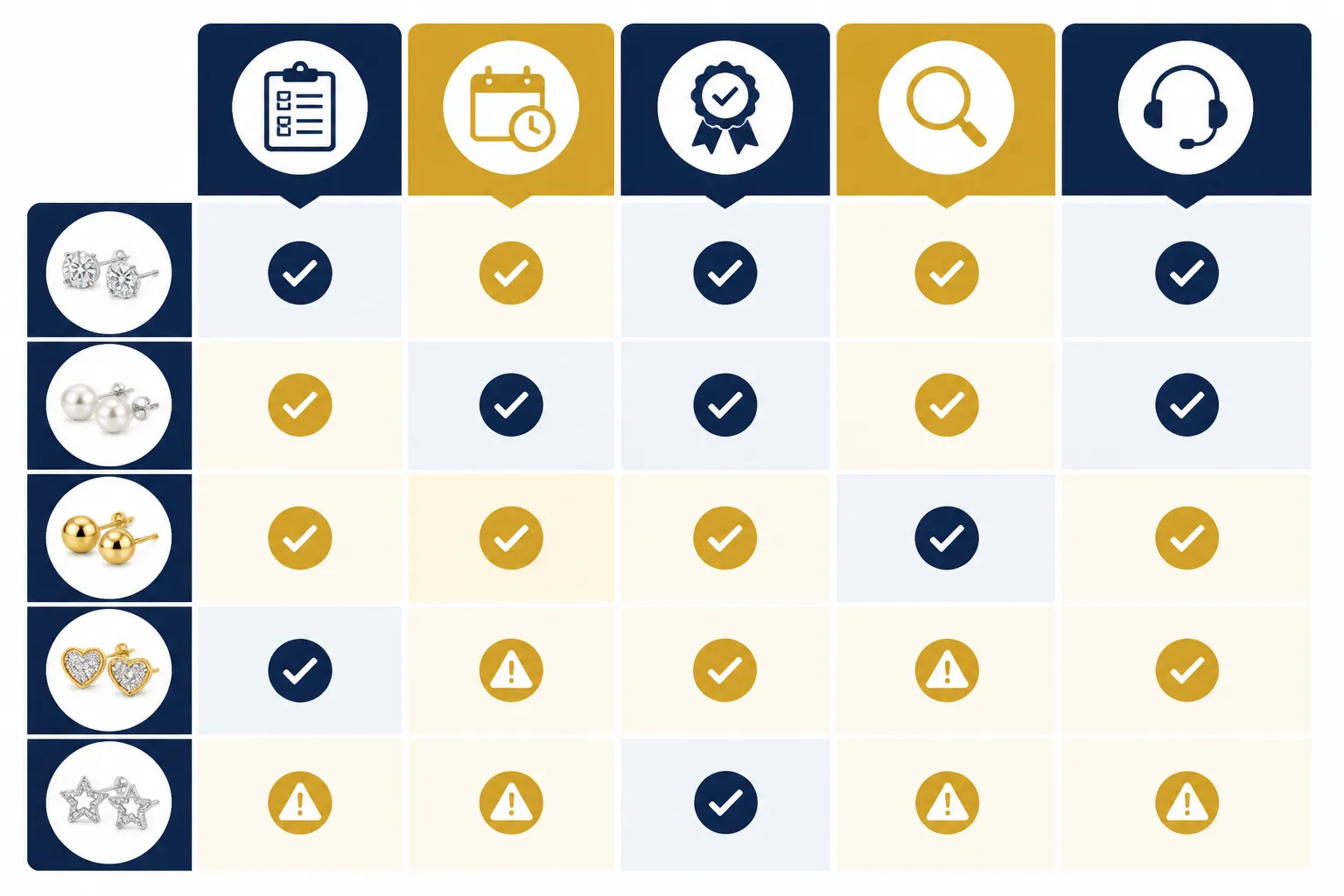
Choosing the right supplier for stud earrings in the U.S. context requires evaluating several dimensions that go beyond catalog appeal.
Licensing and Certifications
Ask prospective suppliers for third-party test reports from accredited labs (SGS, Bureau Veritas, Intertek) confirming compliance with CPSC/CPSIA heavy metal limits and, where applicable, California Prop 65 thresholds. A supplier that can produce these documents on request without delay is demonstrably invested in the U.S. market. Be cautious of suppliers who offer "self-certified" compliance without independent lab backing.
On-the-Ground Presence vs. Export Capability
Many U.S. boutique buyers assume they need a domestic supplier, but this overlooks the sophisticated export infrastructure that Hangzhou and Yiwu-based manufacturers have built for the North American market. The relevant questions are not "where is the factory?" but rather: Does the supplier understand U.S. import requirements? Can they prepare CBP-compliant commercial invoices and packing lists? Do they have documented experience clearing U.S. customs? STRAND, for example, operates from Hangzhou with deep familiarity with U.S. trade documentation and tariff classifications, bridging Chinese manufacturing quality and cost-efficiency with overseas buyer compliance needs.
Time-Zone Coverage and Communication
A supplier operating from China (UTC+8) serves U.S. buyers during U.S. overnight hours by default. Evaluate whether the supplier has overlapping business hours for live calls, how quickly they respond to RFQ emails, and whether they assign a dedicated account contact. Asynchronous communication can work well for established relationships but creates friction during sampling and onboarding.
Language Support
Procurement teams at U.S. importers are increasingly multicultural. Suppliers who can communicate fluently in English, Spanish, and Arabic remove friction at every stage — from initial inquiry to dispute resolution. This is a genuine operational differentiator, not a marketing claim.
OEM Capability and Custom Design
For DTC brands and private-label resellers, OEM capability matters: Can the supplier produce studs to your spec (metal finish, stone color, post type, packaging)? What is the minimum run for custom work? How are samples handled and priced? Evaluate these criteria early; discovering limitations mid-negotiation is costly.
Pricing in the United States
Stud earring pricing in the U.S. varies dramatically by channel, material, and quantity.
Retail Price Ranges (USD)
- Mass market / fast fashion: $5–$20 per pair (e.g., Claire's, H&M, Amazon basics)
- Mid-market DTC and boutique: $25–$80 per pair (branded packaging, better plating, branded story)
- Premium / fine fashion: $80–$300+ per pair (sterling silver, gold-fill, natural stones)
Wholesale / Import Price Ranges (USD, estimated)
- Basic fashion studs (zinc alloy, epoxy, basic plating): $0.50–$2.50 per pair at volume
- Crystal / rhinestone / glass bead studs: $1.50–$5.00 per pair depending on setting complexity
- Two-tone and gradient designs with higher finish quality: $3.00–$8.00 per pair
What Affects Landed Cost in the U.S.
- Section 301 tariffs on China-origin goods (currently applicable to most fashion jewelry HTS codes — verify current rates)
- Shipping mode: Air freight moves product in 5–10 days but costs 4–6x sea freight; FCL/LCL ocean freight is economical for orders above a few hundred kilograms but adds 25–40 days transit from China
- Customs broker fees: Budget $150–$400 per import entry for professional customs clearance
- Compliance testing: Third-party lab reports cost $100–$400 per style but are amortized across large runs
- Plating and stone quality: Vacuum-plated gold over brass holds longer than electroplated zinc, commanding a higher FOB price but reducing customer return rates
Common Challenges for Buyers in the United States
Logistics and Lead Time Management
The single most frequently cited pain point for U.S. importers sourcing stud earrings from overseas is lead time unpredictability. Production schedules shift around Chinese national holidays (Golden Week in October, Lunar New Year in January/February), and ocean freight capacity can tighten sharply during Q4 peak season. Buyers who don't account for these cycles routinely miss holiday selling windows. Work with suppliers who provide written production timelines and proactive shipment tracking, and build at minimum a 2–3 week buffer into any seasonal purchase schedule.
Regulatory Compliance Gaps
U.S. customs has increased scrutiny on fashion jewelry imports in recent years, particularly for shipments flagged for heavy metal content. Receiving a customs hold pending product testing is not uncommon and can delay delivery by weeks while adding unexpected costs. The mitigation is straightforward but requires upfront effort: obtain pre-production or pre-shipment third-party test reports for every new style, and ensure packaging and labeling comply with FTC rules before goods leave the origin country.
Supplier Reliability and Quality Consistency
The fashion jewelry supply chain out of China ranges from well-capitalized, export-focused manufacturers with in-house QC teams to small workshops with minimal documentation. The challenge for U.S. buyers — especially those operating at a distance — is that product photos and sample quality don't always predict production quality at scale. Red flags include: no factory audit available, vague answers about production capacity, inability to provide consistent re-orders, and refusal to share QC documentation. Suppliers like STRAND that employ in-house quality control before shipment and work directly with vetted workshops reduce this risk materially compared to middleman sourcing.
MOQ Constraints for New SKUs
U.S. DTC brands and boutique buyers often want to test 10–15 new stud earring styles per season without committing to 500+ units per style. Traditional wholesale manufacturers have MOQs that make this economically unfeasible. Low-MOQ OEM suppliers — those who can accommodate custom designs in smaller initial runs — have become essential partners for this segment of the U.S. market. Always ask for the exact MOQ per style upfront, not a blanket company MOQ figure, as they often differ.
Intellectual Property and Exclusivity
A growing concern for U.S. DTC brands sourcing custom stud designs is protecting proprietary styles. Without written agreements, a supplier may sell your exclusive design to competing buyers. Before placing a custom OEM order, establish in writing whether the design will be exclusive to your brand, for how long, and across which markets. Reputable suppliers will have a standard NDA/exclusivity addendum; those who resist this conversation are a risk.
Frequently Asked Questions (United States-Specific)
Q: Do I need to test my imported stud earrings for Prop 65 compliance if I'm selling outside California?
A: Technically, California Prop 65 only applies to goods sold to California consumers. However, if you operate an e-commerce store shipping nationally, any California-resident order triggers Prop 65 jurisdiction. Most U.S. import compliance attorneys recommend obtaining Prop 65-passing test reports for any consumer jewelry sold via e-commerce, regardless of where your business is physically located.
Q: What's the minimum I should expect to spend on a sample order from a Chinese stud earring manufacturer?
A: Sample policies vary. Many manufacturers charge a per-sample fee ($5–$30 per style) to cover production and shipping, which is sometimes credited against a subsequent bulk order. Others offer free samples but charge express courier fees. Clarify this before requesting samples — "free sample" claims often exclude shipping, which can be $30–$60 for a small DHL or FedEx parcel from China to the U.S.
Q: How do Section 301 tariffs affect my landed cost for fashion stud earrings from China?
A: As of mid-2026, fashion jewelry under HTS 7117.19 from China carries additional Section 301 tariffs on top of the standard MFN duty rate. Verify exact rates with a licensed customs broker before calculating landed cost — tariff rates have shifted multiple times and the specific rate depends on HTS subheading, declared value, and any applicable exclusions. Factor tariffs into your supplier pricing conversations; a lower FOB price does not necessarily mean lower total landed cost.
Q: What certifications should I ask my stud earring supplier to provide?
A: At minimum, request test reports from an accredited third-party lab (SGS, Bureau Veritas, Intertek, or equivalent) covering CPSC heavy metal limits (lead, cadmium) and, if selling to California consumers, Prop 65 thresholds. For retailers supplying major chains (Target, TJ Maxx, Nordstrom), ask your retailer contact for their vendor compliance manual — it will list additional required certifications, restricted substance standards, and packaging requirements.
Q: Can I order custom stud earring designs (private label) from an overseas OEM supplier with a low minimum quantity?
A: Yes, though MOQ thresholds vary widely. Volume-focused factories often require 500–1,000 units per custom style. OEM-focused brands that cater to the DTC market — like STRAND — typically offer lower MOQs specifically to accommodate U.S. brands testing new designs. Always ask for the custom OEM MOQ separately from the standard catalog MOQ, and ask whether sample/prototype fees apply before bulk production begins.
Q: How long does it take to receive a bulk order of stud earrings from China?
A: Production lead time for standard catalog styles typically runs 15–30 days from order confirmation. Custom OEM styles requiring tooling or design development add 7–14 days. Shipping from China to U.S. East Coast ports via ocean freight takes approximately 25–35 days; West Coast (Los Angeles/Long Beach) is 18–25 days. Air express (DHL/FedEx) delivers in 5–8 business days. Total order-to-door timelines for new OEM styles are typically 45–65 days via ocean freight. Build these lead times into your buying calendar, especially for Q4 seasonal inventory.
Q: What payment methods are standard when ordering from Chinese jewelry suppliers?
A: T/T (telegraphic transfer / bank wire) is the most common method for B2B orders. A typical split is 30% deposit to start production, 70% balance before shipment (or against copy of shipping documents). PayPal and credit card are accepted by some suppliers but often carry a 3–5% surcharge. For buyers using Alibaba, Trade Assurance provides a buyer-protection layer worth considering for first-time supplier relationships. Letter of Credit (L/C) is available for large orders but requires additional banking fees and setup time.
Get Started in the United States

If you're ready to source stud earrings for your U.S.-based business — whether you're a DTC brand building a private-label collection, an importer stocking multiple retail accounts, or a boutique owner looking for reliable wholesale supply — here are the concrete next steps:
1. Define your product and volume requirements.
Before contacting any supplier, clarify: How many styles do you need? What finish and stone types? What's your target retail price, and therefore your target landed cost? Do you need custom OEM, or will catalog styles work? Having these answers speeds every subsequent conversation.
2. Request compliance documentation upfront.
When evaluating suppliers, ask immediately for sample test reports (CPSC/Prop 65 lead-cadmium testing). A supplier who can provide these documents for existing catalog styles within 24–48 hours is operationally ready for the U.S. market.
3. Request samples before committing to bulk.
No matter how strong the product photography, always evaluate physical samples — finish quality, earring post gauge (standard U.S. piercing gauge is 20G), plating durability, and stone security — before placing a production order.
4. Calculate your full landed cost.
Work with a customs broker to verify current Section 301 tariff rates for your specific HTS code, add freight, customs clearance fees, and any compliance testing costs. Compare total landed cost, not just FOB price, when evaluating suppliers.
5. Establish written terms.
Confirm MOQ, unit pricing, lead time, payment schedule, QC standards, and (for custom work) exclusivity terms in writing before any deposit changes hands.
Why Work With STRAND
STRAND is a Hangzhou-based fashion jewelry brand that connects vetted Chinese workshops directly with overseas buyers — eliminating middlemen and the quality uncertainty that comes with them. For U.S. buyers, STRAND offers:
- Stud earrings in crystal, rhinestone, gradient glass bead, two-tone, and vintage styles — with catalog styles and full custom OEM available
- Low MOQ with fast lead times — designed for DTC brands and growing importers who can't absorb large minimum runs
- In-house QC before shipment — every order inspected against agreed specifications before it leaves the warehouse
- Multilingual support (English, Spanish, Arabic) — removing communication friction across multicultural U.S. procurement teams
- Transparent trade terms — pricing, MOQ, lead time, and incoterms communicated clearly from the first inquiry
Whether you need 50 units of a custom stud design to test a new DTC collection, or a recurring wholesale program supplying regional boutiques, STRAND's direct-to-workshop model delivers consistent quality at competitive landed cost for the U.S. market.
Ready to move forward?
Request a Quote — Get MOQ & Pricing →
Submit your style reference, target quantity, and delivery timeline. A dedicated account manager will respond within 24 hours with pricing, lead time, and available customization options for the U.S. market.
For compliance questions specific to your state or retail channel, consult a licensed customs broker or product compliance attorney familiar with U.S. fashion jewelry import regulations.