
Cosmetic Jewelry Wholesale: The Smart Buyer's Sourcing Guide
Cosmetic Jewelry Wholesale: The Smart Buyer's Sourcing Guide
Cosmetic jewelry wholesale gives retailers, DTC brands, and importers access to curated pieces at volume pricing — without the overhead of manufacturing from scratch. If you're building a jewelry line, restocking a boutique, or sourcing for a seasonal campaign, understanding how wholesale procurement actually works will save you time, protect your margins, and prevent costly quality surprises.
This guide walks through everything procurement teams and independent buyers need to know: what cosmetic jewelry wholesale is, how the process works, when it's the right sourcing strategy, and what to evaluate before placing an order.
What Is Cosmetic Jewelry Wholesale?
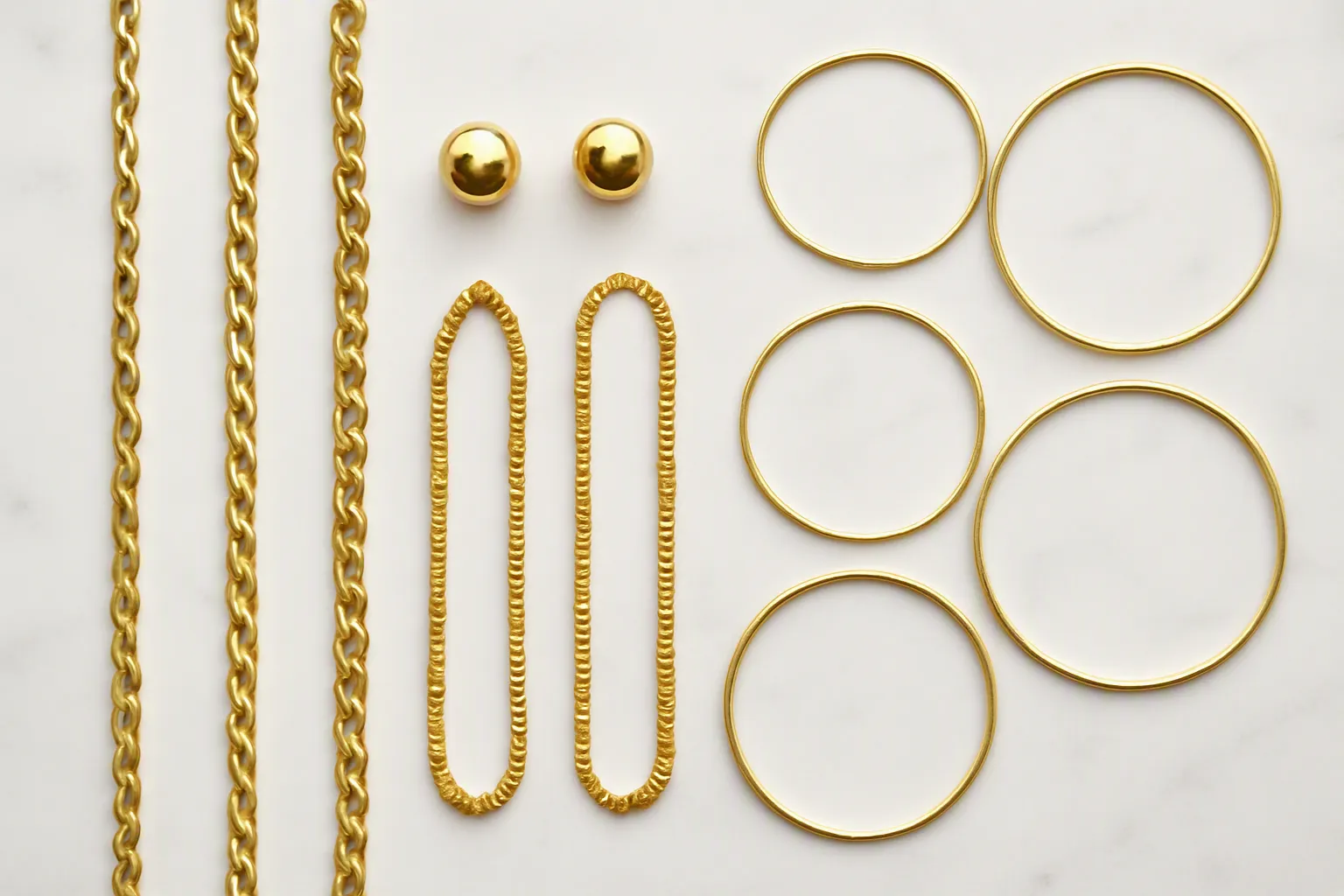
Cosmetic jewelry — also called fashion jewelry or statement jewelry — refers to pieces crafted from non-precious base metals, alloys, or plated components rather than solid gold or sterling silver. Wholesale, in this context, means purchasing these pieces in bulk directly from a manufacturer or distributor at a reduced per-unit cost, typically with minimum order quantities (MOQs) attached.
The category covers a broad range: plated earrings, resin-set pendants, enamel bangles, layering necklaces, and more. What distinguishes vetted wholesale from low-grade mass supply is the attention to plating thickness, alloy composition, and consistent finishing — the details that determine whether a piece lasts through a season or tarnishes in weeks.
Buyers typically source cosmetic jewelry wholesale through manufacturers in China, Turkey, India, or Italy, or through established intermediaries who handle quality vetting, compliance documentation, and logistics on the buyer's behalf.
Why Wholesale Is the Right Move for Scaling Buyers
The economics are straightforward. Buying at wholesale volumes compresses per-unit costs significantly compared to retail reorder, which directly widens your margin — whether you're selling through an online DTC store, a physical boutique, or a regional distribution network.
Beyond price, wholesale sourcing gives buyers leverage. You negotiate on materials, packaging, lead times, and sometimes exclusivity on specific SKUs. That kind of control isn't available when you're reordering single units through a retailer.
For DTC brands in particular, wholesale procurement is the inflection point between "curated collection" and "scalable catalog." Once you have a reliable supplier relationship — one with transparent MOQs, consistent plating quality, and predictable lead times — you can plan seasons rather than scrambling for stock.
If you're evaluating whether to manufacture custom pieces or source from existing wholesale lines, the comparison is worth thinking through. Custom Jewelry: 6 Sources Buyers & DTC Brands Need in 2026 breaks down when custom sourcing makes sense versus ready-to-buy wholesale, which is a useful reference before you commit to either path.
How the Wholesale Sourcing Process Actually Works
Sourcing cosmetic jewelry wholesale isn't a single transaction — it's a process with distinct stages. Here's how experienced procurement teams approach it:
Step 1: Define Your Product Requirements
Before contacting any supplier, document exactly what you need: metal type (brass, zinc alloy, stainless steel), plating specification (14K gold-tone, rhodium, rose gold), stone or resin type if applicable, sizing, and target price per unit. Vague briefs lead to inconsistent samples.
Step 2: Identify and Vet Suppliers
Look for suppliers with documented plating micron standards, material safety certifications (REACH, CPSC compliance for US markets, or equivalent), and clear MOQ tiers. Request a line sheet or catalog before asking for samples — it tells you quickly whether the supplier's aesthetic and quality level match your brand positioning.
Step 3: Request Samples
Never place a bulk order without physical samples. Assess plating uniformity, clasp durability, stone setting tightness, and finish consistency across multiple pieces from the same batch. A reliable supplier will provide production-representative samples, not hand-selected showpieces.
Step 4: Negotiate Terms
Key terms to lock in writing: unit price per MOQ tier, packaging specifications, lead time from order confirmation to shipment, incoterms (FOB, CIF, DDP), and any quality rejection or rework clauses.
Step 5: Place and Track the Order
Confirm the production timeline in writing. For first-time orders with a new supplier, request mid-production quality check photos or arrange a third-party inspection if your volume warrants it.
What to Evaluate Before Committing to a Wholesale Partner
Not every cosmetic jewelry supplier is equipped to serve international DTC buyers or importers with consistent quality across reorders. Before you commit, run through these evaluation dimensions:
Material & Plating Quality
Ask for the specific plating thickness in microns — a meaningful spec rather than a marketing claim. For gold-tone pieces, anything under 0.5 microns tends to tarnish quickly under normal wear. Brass base metal holds plating better than zinc alloy for most applications. Request test results or certifications if selling into regulated markets (EU, US, Gulf).
MOQ Flexibility
Some suppliers require large minimums per SKU; others offer blended MOQs across a category. If you're testing new styles before committing to depth, look for suppliers who accommodate mixed-style orders within a single minimum. This matters especially for early-stage DTC brands building catalog breadth.
Lead Times
Standard production lead times for cosmetic jewelry wholesale range broadly depending on supplier capacity and order complexity. Ask for both the production lead time and the shipping transit time to your destination market — these are separate figures. For buyers in the MENA region, factor in customs clearance timelines and any import documentation requirements.
Shipping Options and Incoterms
Understand who owns the goods at each stage. FOB (Free on Board) means you're responsible once goods leave the supplier's port; DDP (Delivered Duty Paid) puts logistics fully on the supplier. For buyers new to international procurement, DDP reduces complexity but typically adds cost. Ask your supplier which options they support.
Quality Assurance and Returns
A credible wholesale supplier will have a clear policy on defective units — typically replacement or credit rather than full returns on bulk orders. Confirm the acceptable defect rate, the inspection process, and what documentation they require to process a claim.

When Wholesale Is the Right Sourcing Strategy
Cosmetic jewelry wholesale suits buyers in specific situations — it's not always the optimal path.
Go wholesale when:
- You have a proven product-market fit and need to scale volume without the cost and timeline of custom manufacturing
- Your catalog includes staple styles (hoops, studs, chain necklaces) with consistent year-round demand
- You're launching a new brand category and need to test multiple styles before investing in custom tooling
- Your lead times are tight and you need access to existing inventory or short production runs
Consider alternatives when:
- Your brand requires fully proprietary designs with no risk of supplier duplication
- You're targeting a premium price point where custom hallmarking or unique construction adds tangible value
- Your market requires specific certifications or material compositions that standard wholesale lines don't carry
Procurement Criteria Buyers Evaluate Before Reaching Out
Buyers close to a purchasing decision typically want answers to a short checklist before they contact a supplier. Here's what that checklist usually looks like — and what to ask when the answers aren't obvious from the supplier's catalog:
| Criteria | What to Ask |
|---|---|
| Pricing | What are the unit prices at your minimum, mid-tier, and high-volume MOQ levels? |
| Availability | Is this style in-stock or made to order? What's the current production queue? |
| Lead time | What is production lead time from order confirmation, and what are the transit time options to [destination market]? |
| Quality documentation | Do you have REACH compliance certificates or equivalent for your target market? |
| Packaging | Is retail-ready packaging available, and what are the add-on costs? |
| Reorder consistency | How do you maintain color and plating consistency across separate production batches? |
Asking these questions upfront — before placing a sample order — filters out suppliers who can't answer clearly. A supplier with experience serving international buyers will have documented answers ready.
Common Pitfalls in Cosmetic Jewelry Wholesale
A few patterns trip up buyers consistently, especially those newer to wholesale procurement:
Ordering without samples. Catalog photos don't convey plating quality, weight, or clasp function. Skipping samples to save time reliably causes bigger problems at bulk delivery.
Ignoring reorder consistency. A supplier who nails the first production run but can't match the plating color on reorders creates real problems for retailers promising consistency to their customers. Ask specifically how they document and replicate plating specs batch to batch.
Underestimating landed cost. The unit price from the factory is one number. Freight, customs duties, brokerage fees, and inspection costs add up. Build a landed-cost model before you compare supplier pricing side by side.
Not specifying packaging. Many buyers assume packaging is included or standard. It usually isn't. Polybags, branded boxes, hang tags, and tissue paper are typically add-on line items — clarify this before confirming an order.
Working with only one supplier. Single-source dependency creates risk. Even reliable suppliers face production delays, capacity constraints, or material shortages. Identifying a backup supplier before you need one is a basic resilience practice.
How STRAND Approaches Cosmetic Jewelry Wholesale
STRAND sources and supplies cosmetic jewelry for DTC brands, importers, and boutique buyers who need consistent quality across reorders — not just a good first sample. The focus is on vetted materials, documented plating specifications, and a sourcing process built for buyers who treat inventory as a brand asset, not a commodity.
For buyers sourcing into MENA markets specifically, STRAND's catalog includes gold-tone and warm-metal finishes suited to regional aesthetic preferences, with documentation to support customs clearance into Gulf markets.
If you're evaluating whether wholesale sourcing fits your current catalog strategy or whether custom manufacturing makes more sense for your positioning, Custom Jewelry: 6 Sources Buyers & DTC Brands Need in 2026 is a practical starting point for mapping out your options.
Get Pricing and Availability for Your Next Order
The best way to evaluate a wholesale partner is to run a real inquiry through the actual process — samples, spec sheet, pricing tiers, lead times. Generic catalog browsing only gets you so far.
Ready to source? [Contact STRAND] with your product requirements — styles, materials, destination market, and target volume — and expect a response with a concrete spec sheet and sample options, not a brochure.
Buyers who come with documented requirements get faster, more accurate quotes. Bring your SKU list, your target unit cost range, and your timeline. That's the starting point for a productive supplier conversation.
Cosmetic jewelry wholesale works best when buyers treat it as a procurement process, not a one-time transaction. Define your specs, vet your suppliers, test with samples, and lock in the terms that protect your margins and your brand's quality standards.
Frequently Asked Questions
What is cosmetic jewelry wholesale?
Cosmetic jewelry wholesale refers to the bulk purchasing of fashion-forward, non-precious jewelry — typically crafted from brass, zinc alloy, or stainless steel with gold, silver, or rhodium plating — sourced directly from manufacturers or distributors at trade pricing for retail resale. Unlike fine jewelry, cosmetic pieces prioritize trend-driven design and accessibility, while quality wholesalers like STRAND vet materials for skin-safe compliance (nickel-free, lead-free standards) and consistent plating durability. Buyers — including DTC store owners, importers, and procurement teams — typically negotiate MOQs (commonly 50–200 units per SKU), lead times (14–45 days), and freight terms (FOB, CIF) to optimize landed cost.
How to cosmetic jewelry wholesale?
To source cosmetic jewelry wholesale, identify vetted suppliers who work with verified materials (brass, sterling silver, 14K gold-filled, surgical steel) and request samples before committing to an MOQ — typically starting at 50–200 units per SKU depending on the supplier. Establish clear terms upfront: unit pricing at volume tiers, lead times (generally 15–45 days for production runs), and shipping options (sea freight for bulk, air for replenishment orders). STRAND works directly with DTC stores and importers, offering curated wholesale collections with transparent specs and consistent quality control, so buyers can scale confidently without sourcing risk.
Why is cosmetic jewelry wholesale important?
Cosmetic jewelry wholesale enables DTC stores, importers, and procurement teams to access curated collections at volume pricing, preserving healthy retail margins while maintaining consistent inventory depth across SKUs. For buyers sourcing through a vetted supplier like STRAND, wholesale relationships also provide transparency into materials (e.g., 316L stainless steel, brass with 18K gold plating), MOQ thresholds, and lead times — critical factors for reliable fulfillment cycles. Beyond economics, a trusted wholesale partner reduces sourcing risk by ensuring quality control and compliance before goods ship, whether to North American boutiques or MENA markets where finish standards and aesthetic preferences (warm gold tones, refined craftsmanship) demand closer supplier alignment.
When should I use cosmetic jewelry wholesale?
Cosmetic jewelry wholesale is the right approach when you're stocking a DTC store, fulfilling importer purchase orders, or building out a seasonal collection and need consistent supply across multiple SKUs with predictable MOQs and lead times. It's particularly well-suited for procurement teams sourcing coordinated sets — earrings, necklaces, and bracelets in unified finishes (e.g., 18K gold-plated brass or rhodium-plated alloy) — where per-unit cost efficiency matters without compromising on finish quality. STRAND's wholesale model fits buyers who want vetted, repeatable production rather than one-off samples, making it ideal when you're scaling from test order to ongoing replenishment.
What are the benefits of cosmetic jewelry wholesale?
Buying cosmetic jewelry wholesale through a vetted supplier like STRAND gives retailers access to curated, quality-controlled pieces at tiered pricing — reducing per-unit cost while maintaining the crafted aesthetic that end customers expect. Consolidated ordering also simplifies procurement logistics, with predictable MOQs, defined lead times, and consolidated shipping options that reduce landed cost and supply chain complexity. For DTC stores and importers, a reliable wholesale relationship means consistent inventory depth and the ability to scale collections without sacrificing material standards or product integrity.