
Custom Jewelry vs. Retail Alternatives: A B2B Sourcing Guide
Custom Jewelry vs. Retail Alternatives: A B2B Sourcing Guide
Custom jewelry sourced directly from OEM manufacturers delivers unit economics and design control that retail alternatives cannot match, making it the default choice for DTC brands, importers, and multi-store buyers. Retail-focused personalization platforms serve individual consumers or micro-businesses testing single-unit concepts, but they lack the production scale and trade terms required for commercial sourcing. If you are ordering inventory to sell across US, EU, UK, or MENA markets, direct-to-manufacturer custom jewelry is the only path that protects your margins.
TL;DR / Quick Verdict
If you are a buyer, importer, or DTC store owner needing 12 or more units per style with specific plating, stone, or structural requirements, source custom jewelry directly from an OEM manufacturer like STRAND. If you are a consumer buying a single engraved gift, or a micro-seller testing one SKU before committing to inventory, use a retail alternative platform like Jewlr or GLDN. Commercial buyers who rely on retail alternatives will absorb significantly higher unit costs and face strict limits on material customization.
At-a-Glance Comparison Table
| Dimension | Custom Jewelry (OEM / STRAND) | Alternatives (Retail Platforms like Jewlr, GLDN, Jared) |
|---|---|---|
| Pricing Model | EXW or FOB trade terms; bulk pricing based on materials and volume. | Fixed retail prices (e.g., personalized pendants starting at $84+). |
| Minimum Order Quantity | 12 pcs/style on most stock designs (109 of 114 catalog styles); select styles from 1 pc. | 1 piece (consumer-focused). |
| Core Features | Gold-plated/rhodium-plated copper, 925-style silver finishes, glass beads, natural stone, faux pearls. | Engraving, birthstone insertion, name necklaces, preset templates. |
| Product Scope | Drop earrings, stud earrings, necklace + earring sets in vintage, gradient crystal, two-tone styles. | Rings, necklaces, bracelets, earrings (Jewlr lists 637 products in its personalized category Source). |
| Integrations / Logistics | Shipping by air, sea, or express. Payment via T/T, Western Union, PayPal, L/C, Xtransfer. | Standard parcel shipping (often free), BNPL consumer financing Source. |
| Support & Service | Multilingual sales teams (EN, FR, AR, ES, DE, RU); in-house QC inspection before every shipment. | Consumer customer service, standard return policies (e.g., 99-day returns Source). |
| Scale & Capacity | Built for cross-border wholesale, vetted Chinese workshops linked directly to overseas buyers. | Built for single-unit retail fulfillment. |
Custom Jewelry Overview
Custom jewelry in a B2B context refers to pieces designed, prototyped, and manufactured to a buyer's exact specifications through an Original Equipment Manufacturer (OEM). This model is built for DTC store owners, regional importers, and multilingual procurement teams operating in the US, EU, UK, and MENA regions who need reliable supply chains rather than one-off gifts.
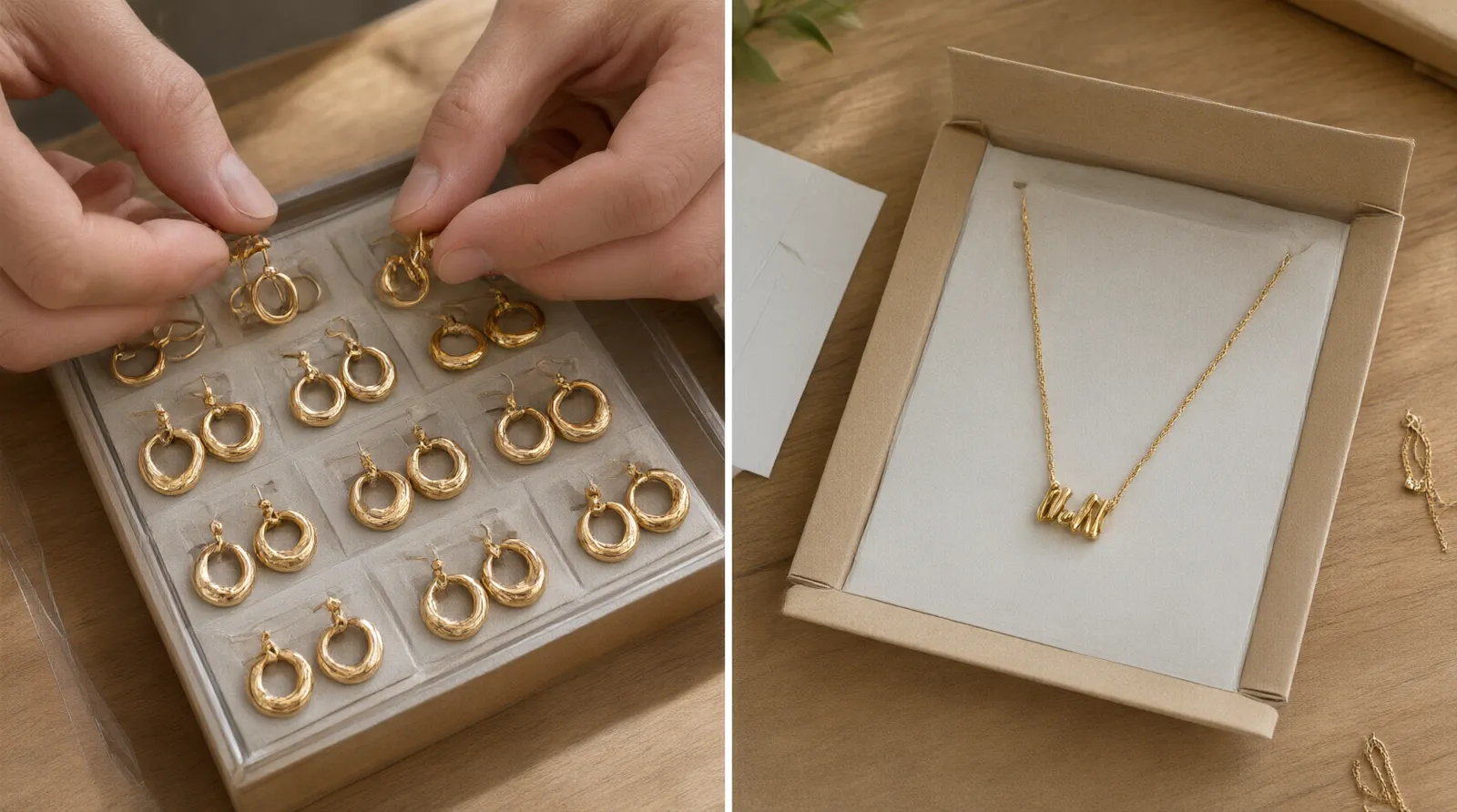
STRAND operates as a Hangzhou-based brand linking vetted Chinese workshops directly to overseas buyers. The standout strength here is the intersection of low minimums and high material flexibility. Buyers can order from a 114-style stock catalog—where 109 styles carry an MOQ of just 12 pcs/style—or commission full custom OEM runs. Materials span gold-plated and rhodium-plated copper, 925-style silver finishes, glass beads, natural stones, and faux pearls. Styles focus heavily on high-velocity categories: drop earrings, stud earrings, and necklace-and-earring sets featuring vintage, gradient crystal, two-tone glass bead, and rhinestone aesthetics.
For a procurement team, the operational strengths include trade-ready terms (EXW or FOB), flexible logistics (air, sea, express), and diverse payment rails (T/T bank transfer, Western Union, PayPal, L/C, Xtransfer). Because communication bottlenecks frequently delay cross-border sourcing, STRAND provides multilingual support in English, French, Arabic, Spanish, German, and Russian. Every shipment undergoes in-house QC inspection before leaving the facility, mitigating the defect risks inherent in overseas manufacturing. For a deeper look at how this fits into broader sourcing strategies, review our guide on Custom Jewelry: 6 Sources Buyers & DTC Brands Need in 2026.
Alternatives Overview
Alternatives encompass retail-facing personalization platforms such as Jewlr, GLDN, Made by Mary, and brick-and-mortar chains like Jared or Kendra Scott. These platforms are built for individual consumers or small-scale boutique owners purchasing single units. Their primary strength is immediate accessibility: a user visits a website, types a name or selects a birthstone like amethyst, garnet, peridot, or turquoise, and completes checkout in minutes.
Jewlr, for example, offers custom and personalized rings, necklaces, bracelets, and earrings, allowing users to filter a catalog of 637 products by categories including Best Sellers, Birthstone, and Engravable Source. They provide consumer-friendly safety nets, such as a 99-day return policy, free shipping, and buy-now-pay-later options Source. Pricing reflects retail margins; items like an 18K Gold Plated Silver Personalized Name Necklace start at $84, while gemstone rings featuring cubic zirconia and blue topaz or pink tourmaline range from $139 to $189 Source.
While these platforms occasionally offer a simulated "luxury" experience or diamond-accented designs, they do not accommodate B2B trade terms. You cannot request FOB shipping, negotiate bulk pricing tiers, alter the base metal alloy, or change the clasp mechanism across 500 units. They are retail storefronts, not manufacturing partners.
Feature-by-Feature Breakdown
Pricing and Trade Terms
Custom jewelry OEMs price based on raw material weight, plating thickness, labor complexity, and order volume. STRAND operates on EXW or FOB trade terms, meaning buyers control their freight forwarding and landed costs. Payments are structured for corporate accounting via T/T, L/C, or Xtransfer.
Alternatives use fixed retail pricing. A buyer purchasing 50 engravable interlocking double heart pendants in sterling silver from a site like Jewlr would pay the listed retail rate (around $104 per unit as of the time of the source Source), totaling over $5,000. An OEM producing a structurally similar custom run would cost a fraction of that per unit, preserving the margin required for wholesale distribution or profitable DTC retail.
Design Control and Material Flexibility
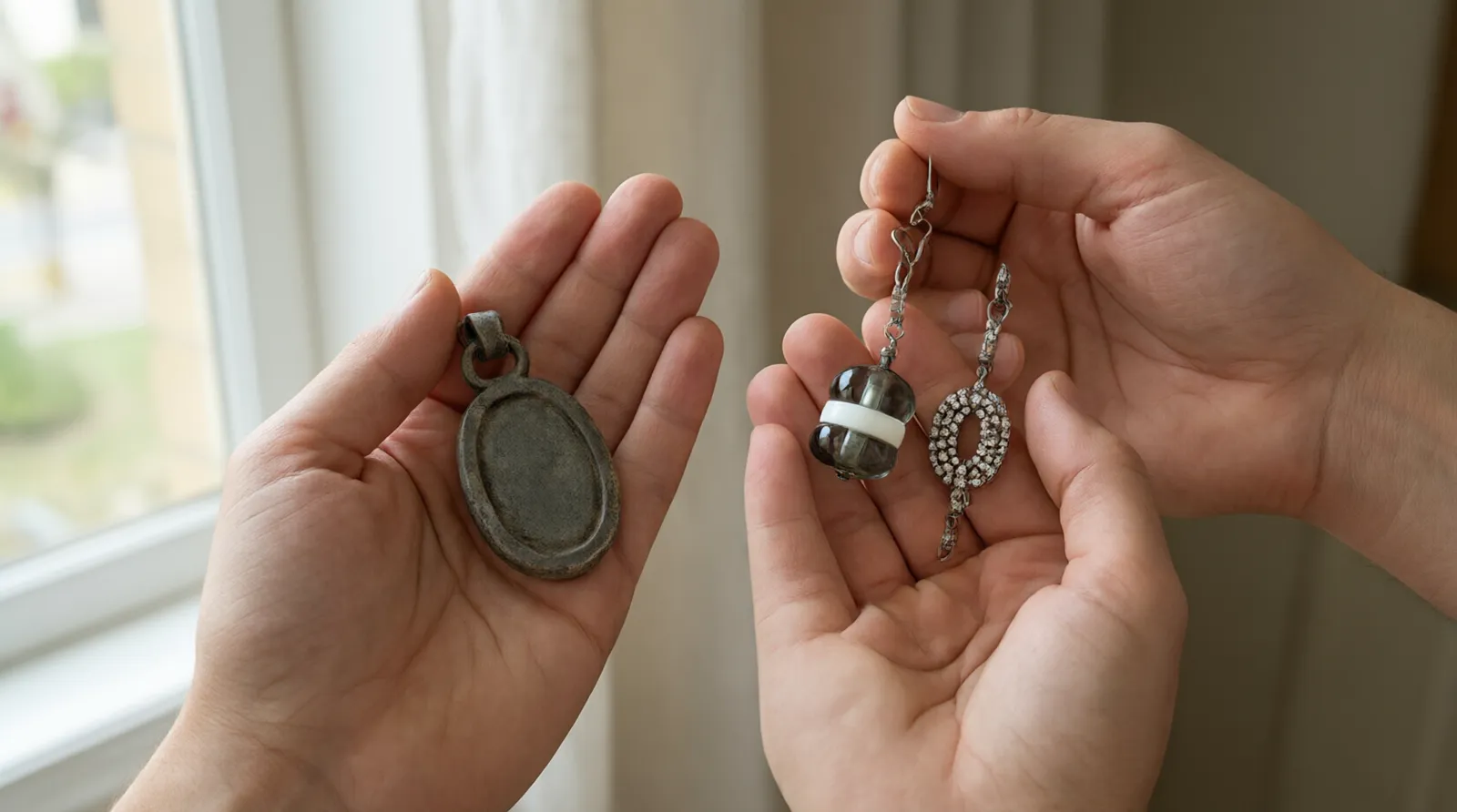
When sourcing custom jewelry, buyers dictate the specifications. If you need drop earrings utilizing two-tone glass beads with a rhodium-plated copper base instead of a gold-plated one, the OEM adjusts the production line. You can specify faux pearl sizes, request gradient crystal arrangements, or develop entirely new molds for unique silhouettes.
Alternatives restrict you to a digital configurator. You can change text, swap a birthstone (e.g., choosing turquoise over peridot), or select from preset chain lengths. You cannot change the underlying manufacturing process, base metal composition, or structural dimensions. If a platform does not offer the exact vintage aesthetic you require for your seasonal collection, you have no recourse.
Minimum Order Quantities (MOQ)
MOQ is the dividing line between commercial viability and hobbyist purchasing. STRAND sets an MOQ of 12 pcs/style on 109 of its 114 catalog designs, with select styles available from 1 pc for sampling purposes. This allows a DTC brand to test 10 different earring styles by ordering just 120 total units—a highly efficient way to validate market demand without tying up capital.
Alternatives have an effective MOQ of 1. While this sounds flexible, it lacks the batching efficiency required to stock physical stores or fulfill regional e-commerce orders profitably.
Quality Assurance and Compliance
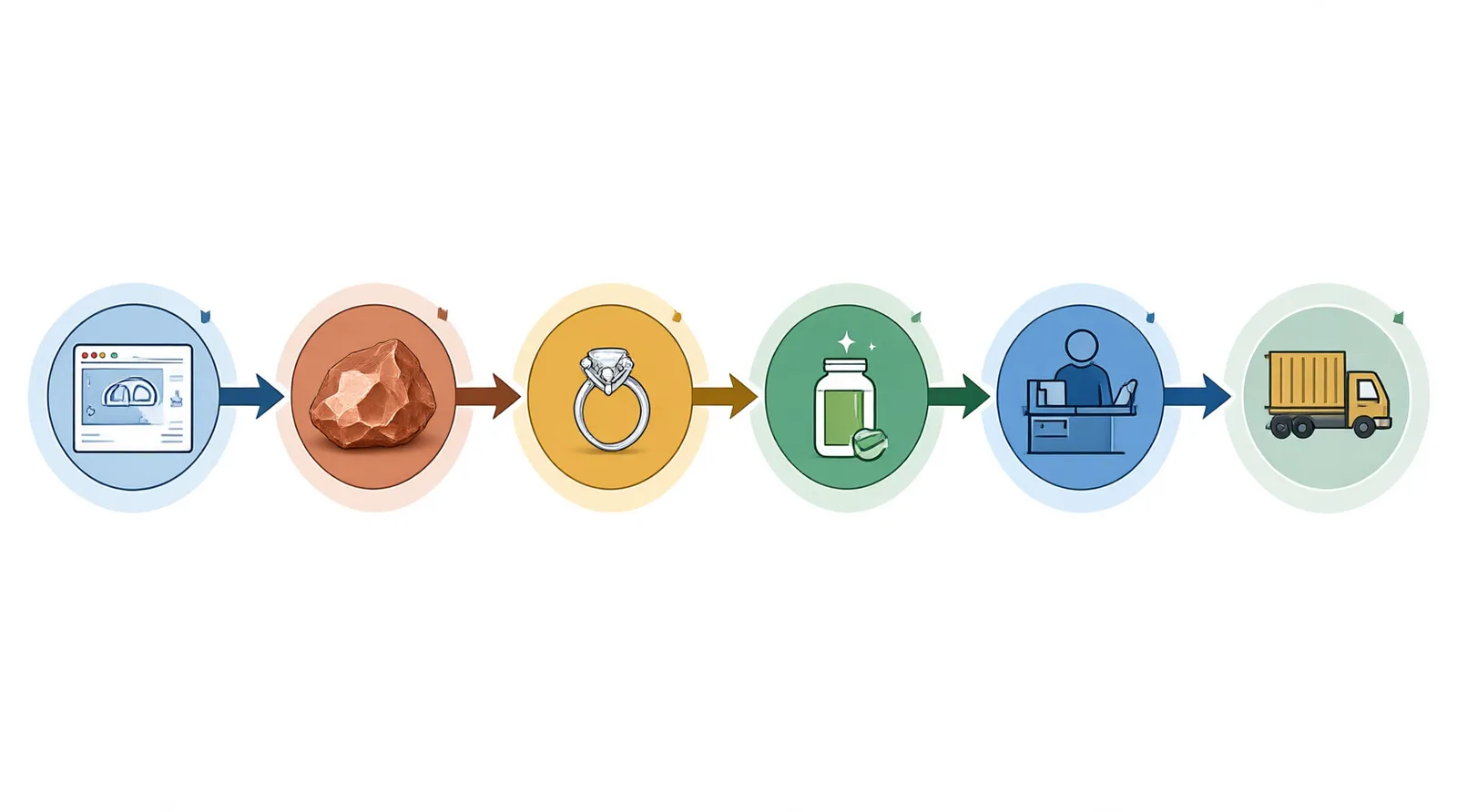
Commercial importers must ensure products meet destination regulations (e.g., REACH compliance in the EU, lead/nickel restrictions in the US). Custom jewelry manufacturers handle this at the production level. STRAND conducts in-house QC inspections before every shipment, catching plating inconsistencies or setting flaws before goods leave China.
Alternatives offer consumer warranties—Jewlr provides a one-year warranty on its products Source—and generous return windows. However, returning 50 defective units purchased at retail prices to a US-based warehouse destroys a B2B buyer's timeline and margin. Retail warranties protect individuals, not supply chains.
Logistics and Scalability
Scaling a jewelry brand requires synchronized logistics. Custom jewelry suppliers ship via air for urgent restocks or sea freight for high-volume, cost-efficient container loads. The entire process supports scaling from a 12-piece test order to a 10,000-piece seasonal rollout.
Alternatives ship via standard postal or courier services. Attempting to scale a business by manually placing hundreds of individual retail orders through a site like GLDN or Made by Mary creates administrative chaos, inconsistent delivery timelines, and zero leverage for negotiating better rates as your volume grows.
Support and Communication
Cross-border procurement demands clear communication across time zones and languages. STRAND’s multilingual sales teams (EN, FR, AR, ES, DE, RU) eliminate translation errors that frequently result in incorrect production runs.
Alternatives provide standard consumer support—live chat, email tickets, or call centers geared toward helping an individual track a package or process a return. They are not equipped to discuss production lead times, mold tooling costs, or freight consolidation with a procurement manager. For a detailed ranking of how different supplier models handle these operational factors, see 6 Custom Jewelry Sources Ranked: OEM Suppliers & Retail Benchmarks for 2026.
Pros and Cons
Custom Jewelry (OEM / STRAND)
Pros:
- Drastically lower unit costs through EXW/FOB trade pricing.
- Complete control over base metals (gold/rhodium-plated copper, 925-style silver finishes) and materials (glass beads, natural stone, faux pearls).
- Highly accessible commercial MOQs (12 pcs/style on 109 of 114 styles).
- Multilingual support (EN, FR, AR, ES, DE, RU) tailored for international procurement teams.
- In-house QC inspection guarantees consistency before export.
- Flexible logistics (air, sea, express) and B2B payment methods (T/T, L/C, Xtransfer).
Cons:
- Requires upfront planning, tech packs, or catalog selection rather than instant checkout.
- Production and transit lead times are longer than domestic retail shipping.
- Buyers must manage import duties and customs clearance based on their chosen trade terms.
Alternatives (Retail Platforms)
Pros:
- Instant purchasing with no MOQ requirements (buy 1 piece).
- User-friendly online configurators for basic personalization (names, dates).
- Consumer protections like extended return policies (e.g., 99 days) and warranties Source.
- Fast domestic shipping and easy BNPL checkout options.
Cons:
- Retail pricing eliminates viable resale margins.
- Zero control over manufacturing processes, base alloys, or structural design.
- No B2B trade terms, freight forwarding options, or bulk invoicing.
- Scaling requires placing repetitive, manual individual orders.
When to Choose Custom Jewelry
Choose custom jewelry if you operate a DTC e-commerce brand, manage a chain of physical stores, or act as a regional importer distributing to boutiques. If your business model relies on buying inventory at a wholesale cost and selling it at a markup, retail alternatives will bankrupt your margins. Understanding this B2B sourcing comparison helps clarify why direct manufacturing partnerships outperform retail channels for growing brands.
Specific scenarios where OEM sourcing is mandatory:
- Launching a Seasonal Collection: You need 500 units of drop earrings featuring a specific gradient crystal arrangement and gold-plated copper base to match your brand's aesthetic.
- Entering a New Market: You are expanding into the MENA region and require a supplier whose sales team communicates fluently in Arabic to ensure spec accuracy.
- Controlling Unit Economics: You need to negotiate FOB terms and ship via sea freight to keep landed costs low enough to compete with established fast-fashion jewelry retailers.
- Testing New SKUs Safely: You want to introduce 10 new necklace-and-earring sets to your store but only want to risk capital on 12 pieces per style to gauge customer response.
When to Choose Alternatives
Choose retail alternatives if you are an individual consumer buying a gift, or a micro-business executing a one-off promotional giveaway where budget is secondary to convenience.
Specific scenarios where retail platforms make sense:
- Single-Unit Gifting: You need one engraved necklace with a peridot birthstone delivered by Friday for a friend's birthday.
- Zero-Inventory Micro-Sellers: You run a side-hustle using a pure dropshipping model where you manually buy from a site like Jewlr only after a customer pays you, accepting minimal profit per sale in exchange for zero upfront inventory risk.
- Immediate Gratification: You lack the 4-to-8 week lead time required for manufacturing and ocean freight, and you need a piece immediately without navigating customs documentation.
Final Verdict
The decision between custom jewelry and retail alternatives is not a matter of preference; it is dictated by your business model. Retail platforms like Jewlr, GLDN, and Jared execute one task efficiently: selling personalized pieces to individual consumers at retail markups. They are fundamentally incompatible with commercial inventory sourcing.
If you are a buyer, importer, or DTC store owner, custom jewelry manufactured through an OEM partner is the only mathematically viable option. Direct sourcing provides the material control, pricing structure, and logistical framework required to build a profitable jewelry brand. STRAND bridges the gap between vetted Chinese workshops and international buyers by offering actionable commercial terms: 12-piece MOQs on the vast majority of a 114-style catalog, multilingual procurement support, and rigorous pre-shipment QC.
Stop paying retail prices for commercial inventory. Review the current 114-style stock catalog, determine which materials—whether rhodium-plated copper, natural stone, or faux pearls—align with your upcoming collection, and initiate the quoting process. Request a quote, get current MOQ and pricing details, or request a sample directly at https://strandjewelry.com.