
Best Alternatives to Custom Jewelry for Buyers in 2026
Best Alternatives to Custom Jewelry for Buyers in 2026
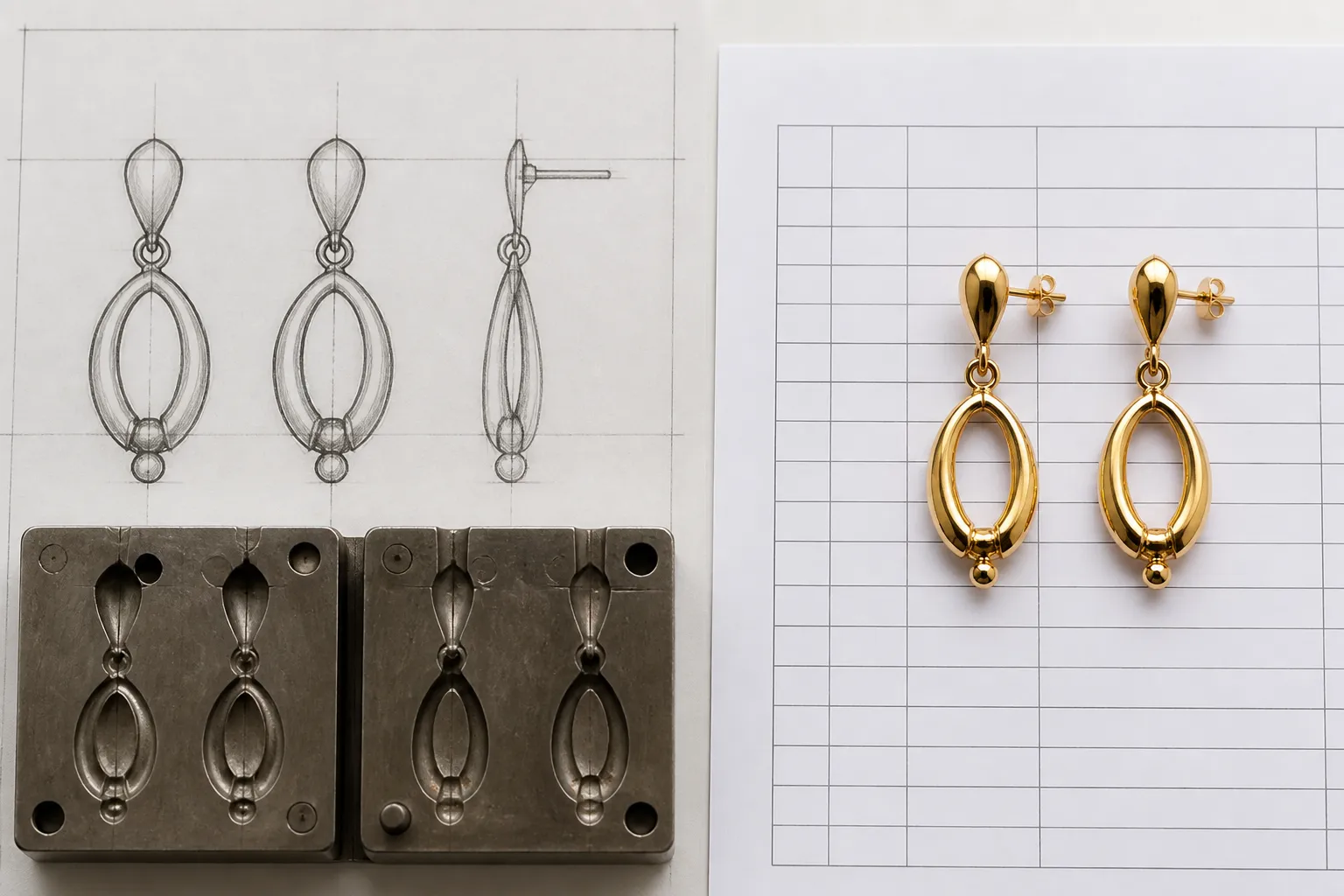
Custom jewelry has a genuine use case — but it's narrower than most buyers assume. If you've hit a wall with lead times stretching past eight weeks, per-unit costs that don't survive a wholesale margin calculation, or quality inconsistency across a run of 50 pieces, the problem isn't the pieces themselves. It's the production model. These alternatives solve for the specific failure points traditional custom jewelry creates.
Why Look for Alternatives to Custom Jewelry?
The friction usually appears in one of three places: cost structure, timeline, or scale. Traditional custom jewelry is priced around single-piece production — design consultation time, CAD rendering or wax casting, and artisan labor are fixed costs whether you order one piece or ten. That math works for a bespoke engagement ring. It collapses the moment you need 100 units of a SKU to stock a DTC launch or fill an import order. Rush fees at most custom studios add 25–50% to the quoted price when you're trying to hit a seasonal campaign window.
Timeline is the second friction point most buyers encounter first. Four to twelve weeks from brief to finished piece is common at reputable custom studios — and that assumes no revision cycles. For store owners working on quarterly inventory plans or importers filling container orders to deadline, that kind of lead variability is operationally unworkable. A supplier who can't commit to a production timeline within a two-week window creates downstream problems in logistics planning, marketing calendars, and cash flow.
The third issue is consistency at volume. Even skilled artisans produce natural variation across a production run of 200 hand-finished pieces. For a one-off heirloom, slight variation is part of the value. For a DTC store selling the same SKU at scale, it generates return requests, customer service overhead, and brand-trust damage. Most buyers shopping for custom jewelry alternatives have already hit at least one of these walls. The question is which alternative solves their specific problem.
What to Look for in a Custom Jewelry Alternative
Pin down which of these dimensions actually matters before comparing suppliers:
- Minimum order quantity (MOQ): Can you trial a style with 12 or 50 units, or does the supplier require large upfront commitments before showing you production quality?
- Customization depth: Do you need fully bespoke design, or will OEM branding, finish variation, and style selection on proven designs cover your needs?
- Lead time: What is the realistic production-to-delivery window, and does it fit your inventory cycle — including international transit time if sourcing cross-border?
- Unit economics: At your target volume, what does the price per unit look like compared to retail custom pricing? Is there a wholesale or trade tier?
- Finish and material range: Does the supplier offer the metal finish (gold-plated, rhodium-plated, 925-style silver), stone types, and size variety your market expects?
- Quality assurance process: Is there documented in-house QC before shipment, or do you inspect after arrival and absorb the cost of rejects?
- Communication and procurement support: Can the sales team respond in your language and timezone, especially when specifying OEM requirements across technical details?
Top Alternatives to Custom Jewelry
1. STRAND
Best for: Volume buyers, importers, and DTC store owners sourcing catalog-ready fashion jewelry with OEM customization from a Hangzhou-based factory network
Pricing: Wholesale pricing on request; MOQ starts at 12 pcs/style on 109 of 114 catalog styles; select styles available from 1 pc. Trade terms: EXW or FOB. Payment: T/T, Western Union, PayPal, L/C, Xtransfer.
Key strengths vs custom jewelry:
- Structured low MOQ with real numbers: At 12 pcs/style on most catalog designs, you can trial a style before committing to a full production run — traditional custom jewelers almost never offer this without a significant upfront design fee
- OEM customization on proven designs: Rather than starting from a blank brief and absorbing design-iteration risk, you can modify existing styles (finish, color palette, packaging) to brand spec, which reduces both cost and sample rejection rate
- Multilingual procurement support: Sales teams operate in English, French, Arabic, Spanish, German, and Russian — a practical advantage that reduces specification errors in cross-border sourcing
- In-house QC before every shipment: Documented quality inspection means problems surface before pieces reach your warehouse, not after you've distributed inventory
Limitations / trade-offs:
- Not designed for one-of-a-kind bespoke pieces — the model is catalog-based OEM, not artisan custom; buyers needing a truly unique silhouette will need bespoke tools
- Catalog currently runs 114 styles; buyers needing very wide SKU variety across many product categories may need supplemental suppliers
- Hangzhou-based production means international shipping adds lead time versus a local studio for buyers needing domestic turnaround
How it compares to custom jewelry: Traditional custom jewelry is built around single-piece, bespoke production — maximum design flexibility at high per-unit cost and unpredictable timelines. STRAND occupies a different point on that spectrum: vetted factory production with OEM customization latitude (finish, branding, style selection) aimed at DTC store owners and importers who need consistency across runs and clear unit economics. The trade-off is that you're working from a catalog rather than a blank page. For buyers who've priced out true custom at volume and found it structurally unworkable, that trade-off is almost always the right call.
STRAND ships by air, sea, or express and accepts multiple international payment methods, covering most procurement workflows. EXW and FOB trade terms are both available. The catalog spans drop earrings, stud earrings, necklace and earring sets — covering vintage crystal, two-tone glass bead, rhinestone, and gradient crystal styles in gold-plated and rhodium-plated copper. The Vintage Green Crystal Geometric Jewelry Set illustrates how catalog designs translate across finishes without bespoke investment.
2. Jewlr
Best for: DTC shoppers and small gifting retailers who need name-engraved, birthstone, or sentiment-driven personalized pieces with fast online configuration
Pricing: Consumer retail pricing; personalized name necklaces and rings start in the $84–$189 range (original prices vary; promotions run regularly — verify current pricing directly)
Key strengths vs custom jewelry:
- Online configurator lets buyers build personalized pieces — name, birthstone, engraving, stone count — without a studio consultation, removing the biggest time drag in the custom process
- Metal options span Sterling Silver, Stainless Steel, White Gold, Gold Plated, and Vermeil, giving buyers meaningful material choice without bespoke pricing
- A 99-day return policy and one-year warranty reduce post-purchase risk substantially compared to most custom studio purchase terms
- Buy Now, Pay Later options make mid-range personalized pieces more accessible for consumer buyers
Limitations / trade-offs:
- Designed for consumer gifting, not wholesale or trade procurement — no MOQ-based pricing, no wholesale tier
- Personalization options are template-driven; the design space is narrower than true custom work
- Unit costs are consumer retail-priced, making it unviable as a sourcing channel for store owners building catalog margins
How it compares to custom jewelry: Jewlr occupies the "personalized but not fully bespoke" middle ground. Where a custom jeweler builds to a unique brief, Jewlr builds to a configurable template — the engraving is real, but the underlying design is pre-engineered. That model is faster and cheaper for consumer gifting. For a store owner, the retail pricing structure makes it an unusable supply channel. As a benchmark for what US and Canadian consumers expect in the $100–$200 personalized jewelry segment, it's the clearest reference point in the market.
3. Made By Mary
Best for: Consumers and boutique retailers benchmarking the dainty, minimalist-personalized aesthetic in US and UK DTC markets
Pricing: Consumer retail pricing; no wholesale or trade tier publicly available
Key strengths vs custom jewelry:
- Strong brand identity built around dainty, minimalist personalization — initial pendants, disc necklaces, small hoops — a proven aesthetic in the US gifting market
- Layering-ready designs translate well to bundle formats, an important consideration for DTC store owners merchandising complementary SKUs
- Social-proof-driven acquisition model demonstrates what high-trust personalized DTC looks like at scale, useful for store owners building their own positioning
- Shorter delivery timelines than traditional custom orders make gifting-season fulfillment more reliable
Limitations / trade-offs:
- Retail-only model; no OEM, wholesale, or importer sourcing path
- Style range is intentionally narrow — the minimalist niche is the brand identity, not just a category preference
- Pricing reflects US DTC margins, not factory-level unit economics
How it compares to custom jewelry: Made By Mary narrows the custom jewelry brief to a specific aesthetic lane: thin, gold-fill, name-stamped, and sentiment-forward. That focus makes the buying experience faster and more consistent than a custom studio order, but it limits design flexibility significantly. Buyers evaluating minimalist-personalized styles for their own catalogs will find Made By Mary most useful as a market trend signal rather than as a sourcing partner.
4. Kay Jewelers (Personalized Collection)
Best for: US retail consumers and market researchers benchmarking mainstream-market personalized jewelry expectations
Pricing: Consumer retail; accessible entry-level personalized pieces up through higher-priced gemstone engraving
Key strengths vs custom jewelry:
- Physical retail presence across the US means buyers can handle pieces before ordering — a legitimate advantage over pure online personalization platforms
- Broad personalized catalog covers name necklaces, birthstone rings, engraved bracelets, and couples' jewelry at mainstream price points
- Financing and installment plans make higher-ticket pieces accessible without requiring full payment upfront
- Gift-ready packaging and in-store pickup address last-minute gifting scenarios that pure custom orders can never accommodate
Limitations / trade-offs:
- No wholesale or trade program; the model is consumer retail end-to-end
- Personalization is template-based — fully bespoke design requires a separate custom order process with longer timelines and higher minimum spend
- Not a viable sourcing or OEM channel for importers or DTC store owners building margin-based catalog businesses
How it compares to custom jewelry: Kay's personalized collection is the mid-market streamlining of the custom jewelry concept — faster, cheaper, and more reliable for mainstream gift occasions, but significantly constrained in design flexibility. For buyers evaluating what the broad US market expects from personalized jewelry in terms of price range and style conventions, Kay's catalog is a useful demand-signal. For procurement teams, it's a benchmark rather than a supplier path.
5. Mystique Jewelers
Best for: Local buyers in the Virginia/DC metro area who want face-to-face custom jewelry design with lab-grown diamond options and specialty categories
Pricing: Custom design pricing; not disclosed publicly — consultation required
Key strengths vs custom jewelry (standard studio model):
- Physical locations in Old Town Alexandria, Middleburg, and Salamander Resort & Spa provide in-person design consultation that online configurators cannot replicate for complex bespoke work
- Interactive 'Build Your Wedding Band' tool and dedicated 'Locket Bar' service demonstrate structured customization beyond standard engraving
- Lab-grown diamond options — including stud earrings, necklaces, and bracelets — offer fine-jewelry aesthetics at lower price points than natural-stone custom equivalents
- Specialty categories including estate jewelry and equestrian jewelry serve niche buyer segments that generic custom studios rarely accommodate
Limitations / trade-offs:
- Geographically limited to specific Virginia locations; no documented international, online-first, or wholesale offering
- Consultation-based model means pricing is opaque until you're already in the design process
- No catalog-based or MOQ-structured path for importers or store owners
How it compares to custom jewelry: Mystique Jewelers is essentially custom jewelry with better tooling, specialty depth, and a more structured client experience than a solo artisan studio. Their Alexandria location can be reached at 703-836-1401; Middleburg at 540-687-3100. They improve on the traditional custom model in UX and product breadth, but they don't solve the cost, scale, or international procurement problems that drive most volume buyers to seek alternatives.
6. Icebox
Best for: US buyers seeking luxury statement or hip-hop-adjacent custom pieces where craftsmen specialization and social proof are primary purchase drivers
Pricing: Luxury and high-jewelry pricing — custom pieces typically in the four-to-six figure range; not compatible with catalog-margin business models
Key strengths vs custom jewelry:
- Specializes in high-jewelry custom work — diamond-set pendants, grills, custom chains — requiring specialist craftsmen that most local custom studios don't employ
- Documented cultural cachet in the US luxury and streetwear market; strong social proof with well-known clientele, which matters in the luxury positioning tier
- For buyers building luxury or statement SKUs as part of a brand line, Icebox's output defines the aesthetic ceiling of the US custom jewelry market
- Physical Atlanta location grounds the premium positioning in a tangible, verifiable retail presence
Limitations / trade-offs:
- Price points are entirely outside workable range for importers or DTC store owners building catalog-margin businesses
- Geographically concentrated; not a scalable or international wholesale supplier
- Complex diamond custom work carries some of the longest lead times in the category
How it compares to custom jewelry: Icebox is the apex expression of the custom jewelry model — maximum design freedom, maximum craftsman specialization, maximum price. For buyers who need to understand what the luxury custom market ceiling looks like in the US, it's the clearest directional reference. For procurement teams sourcing at volume, it's benchmark information rather than a practical alternative.
Side-by-Side Comparison Table
| Dimension | STRAND | Jewlr | Made By Mary | Kay Jewelers | Mystique Jewelers | Icebox |
|---|---|---|---|---|---|---|
| Best buyer type | B2B, importers, DTC store owners | DTC gift shoppers | DTC consumers | US retail consumers | Local luxury buyers | US luxury/custom |
| MOQ | 12 pcs/style (109 of 114 styles); 1 pc on select styles | N/A — consumer model | N/A — consumer model | N/A — consumer model | N/A — bespoke single piece | N/A — bespoke single piece |
| Customization depth | OEM finish, branding, and color on catalog designs | Template-based name, stone, engraving | Name / engraving templates | Name, stone, engraving templates | Fully bespoke | Fully bespoke |
| International sourcing | Yes — EXW/FOB, 6-language support, multi-payment | No | No | No | No (local only) | No |
| Price structure | Wholesale/trade pricing on request | Consumer retail | Consumer retail | Consumer retail | Consultation-based, opaque | Luxury custom, four to six figures |
| Quality assurance | In-house QC before every shipment | Warranty and return policy post-purchase | Brand reputation model | Retail return policy | Studio reputation model | Studio reputation model |
How to Pick the Right Alternative
The right choice is driven almost entirely by buyer type and the specific problem that's already proven unworkable with standard custom jewelry.
You're a DTC store owner or importer building a catalog: Traditional custom jewelry — whether from a local studio or a boutique — doesn't scale. You need consistent unit economics, predictable lead times, and the ability to trial styles before committing to full production runs. STRAND's 12 pcs/style MOQ on 109 of 114 catalog designs is built precisely for this use case. The OEM customization layer means your catalog doesn't look generic. Request MOQ details and a sample order before committing to a full production run.
You need personalized consumer jewelry for a gifting SKU or single category test: Jewlr's configurator model is faster and lower-risk than a custom studio for engraved, birthstone, or name-based pieces at consumer price points. Their 99-day return policy reduces purchase risk. For DTC gifting positioning in the $80–$200 range, it's the strongest starting benchmark.
You're evaluating the minimalist-personalized aesthetic for a US or UK DTC market: Made By Mary has proven the commercial viability of dainty, layerable, name-stamped designs at scale. Study the catalog as a market-demand reference before specifying OEM designs in that aesthetic direction.
You're in the Virginia/DC metro area and need a single bespoke piece or wedding band: Mystique Jewelers' consultation model with lab-grown options, estate categories, and a locket bar is the local alternative worth engaging. Their Old Town Alexandria location (703-836-1401) handles most custom briefs from initial consultation through delivery.
You're building a luxury or statement product and need to understand the market ceiling: Icebox defines the high end of US custom jewelry in terms of craftsman depth, social proof, and design ambition. Use it as a directional benchmark; don't treat it as a sourcing option unless budget and lead time are genuinely unconstrained.
Final Verdict by Buyer Profile
The buyer with the most to gain from reconsidering custom jewelry is the one ordering at volume. Bespoke custom work prices in artisan labor, design iteration, and single-piece casting costs that simply don't compress at scale. For one-off heirloom pieces, those costs are justified. For a store owner building a 10-SKU earring line or an importer filling seasonal container orders, they're structural overhead.
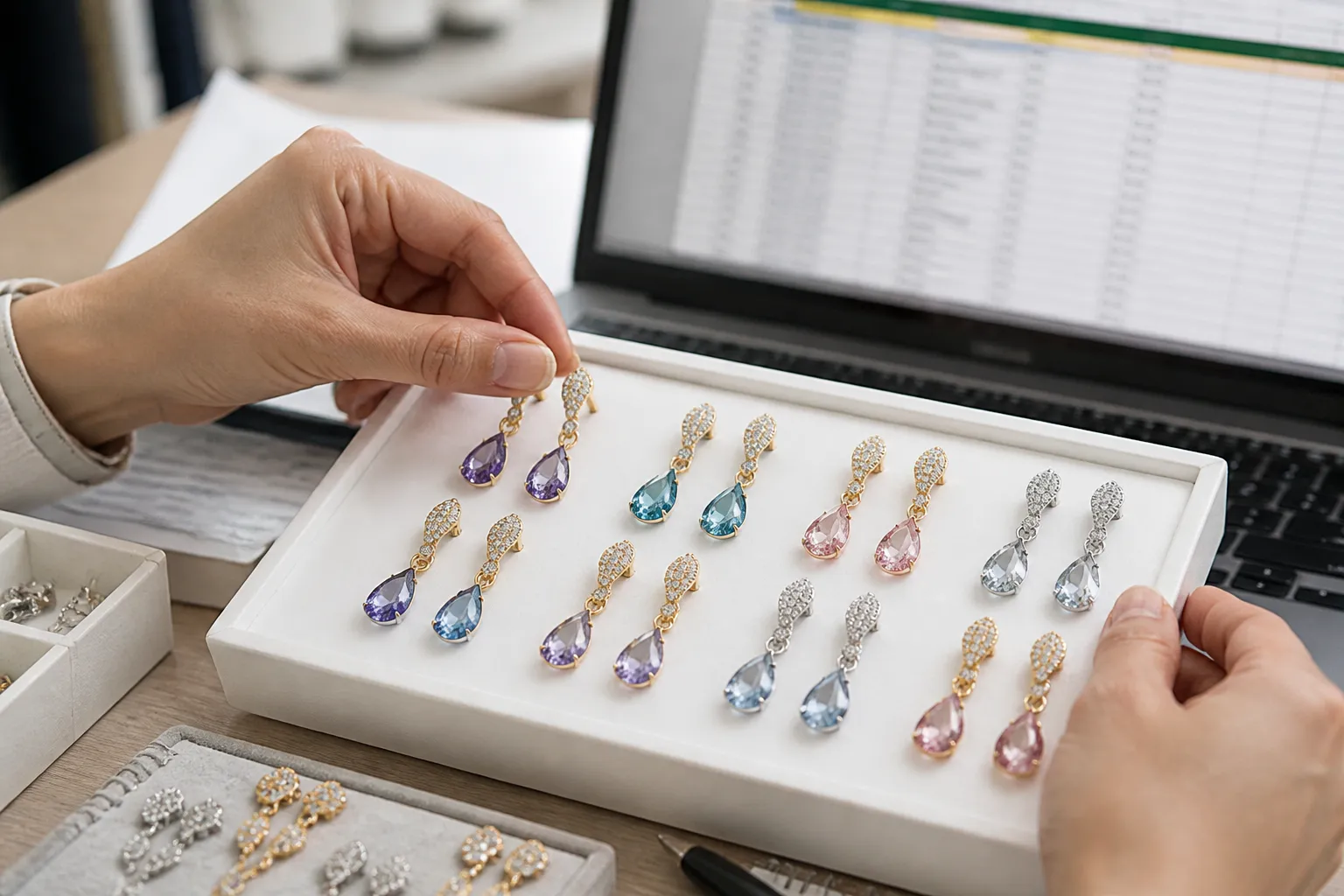
STRAND closes most of the gap between fully bespoke and fully generic: a 114-style catalog with OEM customization, 12 pcs/style entry MOQ on most designs, multilingual trade support, and in-house QC before every shipment. The Two-Tone Rhinestone Fireworks Jewelry Set and crystal-forward sets in the catalog show the design range available without bespoke minimums or timeline risk.
For consumer gifting use cases at the $80–$200 price point, Jewlr and Made By Mary define the US market's expectations. For local bespoke work in the DC area, Mystique Jewelers handles the full consultation-to-delivery process. And if you're calibrating a luxury positioning play, Icebox tells you where the ceiling is.
The most useful next step for procurement teams isn't more research — it's a sample order that lets your QC process do the evaluation work. Request current MOQ details, available finishes, and production lead times directly at strandjewelry.com.