
Best Alternatives to Custom Jewelry in 2026: Top Options for Buyers
Best Alternatives to Custom Jewelry in 2026: Top Options for Buyers
Comprehensive replacement guide for readers actively sourcing jewelry at scale
Why Look for Alternatives to Custom Jewelry?
Traditional custom jewelry has an undeniable allure — the promise of one-of-a-kind pieces, tailored specifications, and craftsmanship that reflects a buyer's exact vision. But for importers, DTC store owners, and procurement teams sourcing across the US, EU, UK, and MENA markets, the conventional custom jewelry process starts showing cracks almost immediately.
Cost and MOQ mismatches are the first pain point. Most bespoke custom jewelry ateliers operate at the high end of the pricing spectrum and are optimized for individual or very small-batch orders. A DTC store owner trying to launch a 500-piece earring collection, or an importer fulfilling a seasonal chain refresh, quickly discovers that fine custom jewelry per-unit pricing makes commercial margins impossible. Even "custom" factories often require order quantities that either exceed a startup's budget or fall below a large buyer's efficiency threshold — there's rarely a middle ground.
Lead times and production visibility create a second pressure point. A traditional custom jewelry order — from design brief to final delivery — can stretch across months, with opaque production timelines and limited in-process updates. For buyers building seasonal catalogs or responding to trend cycles, that cadence is commercially fatal. And when communication runs across language and time zones, the problems compound: misunderstood specifications, delayed revisions, and last-minute quality surprises arrive together.
Support, lock-in, and scalability round out the frustration. Many custom jewelry suppliers lock buyers into specific design files, proprietary finishes, or single-workshop relationships with no backup capacity. When that workshop goes dark — due to holidays, capacity constraints, or quality failures — the buyer has nowhere to turn. What procurement teams increasingly need isn't just custom jewelry; they need a reliable, scalable alternative that preserves customization options without the operational risk.
What to Look for in a Custom Jewelry Alternative
Before evaluating alternatives, establish your criteria. The right replacement depends on your business model, order volume, and end-market requirements. Prioritize these dimensions:
- Minimum Order Quantity (MOQ): Does the supplier accommodate your volume — neither too high to absorb nor too low to justify the logistics?
- Customization depth: Can you modify styles, materials, finishes, and packaging — or only choose from a preset catalog?
- Lead time: What is the realistic production-to-delivery timeline, and does the supplier offer expedited options?
- Quality assurance: Does the supplier conduct in-house QC before shipment, and can they provide documentation, samples, or inspection reports?
- Communication and support: Is multilingual service available? Are trade terms transparent (pricing, payment, incoterms)?
- Certifications and compliance: Does the product meet your destination market's standards (nickel-free, RoHS, REACH)?
- Supplier reliability: Does the supplier have verifiable references, production capacity, and a backup supply chain?
Top 8 Alternatives to Custom Jewelry
1. STRAND — Hangzhou-Based OEM Jewelry Manufacturer
Best for: B2B buyers, importers, and DTC store owners sourcing custom OEM jewelry from China with multilingual support
Pricing: Competitive wholesale pricing; contact for MOQ-based quote at strandjewelry.com
Key strengths vs. custom jewelry:
- Direct connection to vetted Chinese workshops — eliminates the middleman markup that inflates traditional custom jewelry costs
- OEM capability with low MOQ and fast lead times, purpose-built for commercial buyers rather than retail consumers
- In-house QC inspection before shipment, reducing the quality-surprise risk common in overseas custom orders
- Multilingual service team (English, Arabic, Spanish) — critical for procurement teams operating across MENA, the EU, and Latin American markets
Limitations / trade-offs:
- Primarily suited for B2B and wholesale volumes — not optimized for single-piece retail custom orders
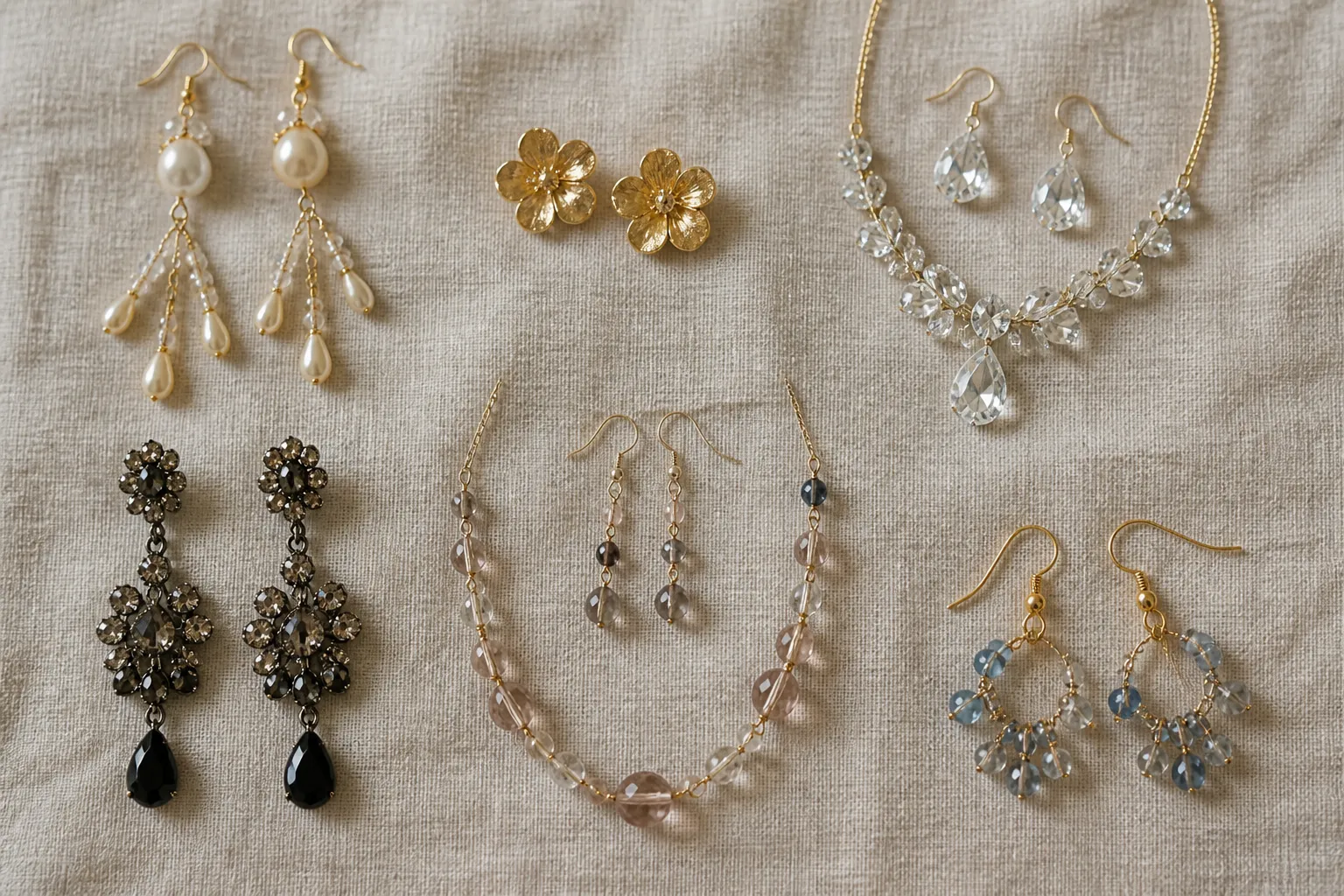
- Style focus is fashion jewelry (earrings, necklace sets, crystal and glass bead designs) rather than fine or precious metal custom work
- Longer shipping window from China compared to domestic alternatives if air freight isn't selected
How it compares to custom jewelry: Where traditional custom jewelry engagements are one-off, opaque, and expensive, STRAND operates as a structured OEM partner: buyers bring design briefs or modify existing styles from a curated catalog — drop earrings, stud earrings, rhinestone sets, vintage gradient crystal pieces — and STRAND handles production, QC, and export documentation. For an importer who previously dealt with anonymous factories and unpredictable quality, the combination of vetted workshops and in-house inspection represents a meaningful operational upgrade. The multilingual team closes the communication gap that causes most overseas custom jewelry orders to go wrong.
2. Jewlr — Personalized DTC Jewelry Platform
Best for: DTC brands and retailers looking for a white-label or consumer-facing personalized jewelry experience
Pricing: Mid-range retail; starts from approximately $49 per piece depending on configuration
Key strengths vs. custom jewelry:
- Streamlined online configurator lets buyers or end consumers personalize names, birthstones, and engravings without design-round delays
- Faster turnaround than traditional custom jewelry — typically days, not weeks
- Established quality tier for sterling silver, gold vermeil, and gold-filled pieces
- Consumer-friendly UI that works well for dropship or affiliate models
Limitations / trade-offs:
- Per-unit retail pricing is not viable for wholesale importers or catalog builders
- Customization is constrained to the platform's preset options — no true OEM or from-scratch design work
- No multilingual or B2B procurement support
How it compares to custom jewelry: Jewlr compresses the custom jewelry experience into a digital configurator, making it fast and accessible for individual consumers. But it trades depth for speed — you're personalizing within guardrails, not commissioning original designs. For DTC store owners who want a personalized jewelry product line without building supplier relationships, it offers an accessible entry point.
3. Made by Mary — Demi-Fine Personalized Jewelry
Best for: DTC stores targeting the "meaningful everyday jewelry" segment — millennial and Gen Z female consumers
Pricing: $50–$200+ per piece at retail; no wholesale catalog
Key strengths vs. custom jewelry:
- Strong brand aesthetic with proven consumer demand — minimalist demi-fine positioning
- Engraving and birthstone personalization available across a curated range
- High social proof and organic discovery via lifestyle content
- Trusted by repeat buyers for gifting occasions
Limitations / trade-offs:
- No B2B, wholesale, or OEM offering — retail consumer channel only
- Pricing structure is incompatible with resale margin requirements for importers
- Limited style breadth beyond core minimalist silhouettes
How it compares to custom jewelry: Made by Mary sits closer to the "personalized fine jewelry" category than true custom jewelry — buyers choose from an existing design library and add personal touches. For a DTC brand benchmarking against this aesthetic, it signals what the consumer expects in terms of finish quality and photography, but offers no procurement pathway.
4. Kay Personalized — Mainstream Retail Custom Jewelry
Best for: Consumers and gifters seeking accessible custom jewelry from a trusted US retail brand
Pricing: $100–$1,000+ depending on metal and personalization
Key strengths vs. custom jewelry:
- Nationwide retail presence with in-store and online personalization options
- Wide selection of metals — from sterling silver to 14K gold
- Strong consumer trust built on decades of brick-and-mortar retail
- Engraving, name necklaces, and birthstone customization available at scale
Limitations / trade-offs:
- Consumer retail pricing — no wholesale, no MOQ tiers, no OEM
- Personalization options are catalog-based and limited to preset designs
- No international procurement or multilingual support for B2B buyers
How it compares to custom jewelry: Kay Personalized democratizes what was once reserved for independent jewelers — consumers can get name plates and birthstone pendants without commissioning bespoke work. But for any buyer sourcing more than a few units, the retail price structure makes it commercially unworkable. It's a useful reference point for understanding what end consumers expect from personalized jewelry products, not a supply chain solution.
5. Automic Gold — Inclusive Custom Jewelry for Body Diversity
Best for: DTC brands targeting size-inclusive and body-diverse jewelry consumers
Pricing: $50–$300+ at retail
Key strengths vs. custom jewelry:
- Explicit size-inclusive sizing across chains, bracelets, and rings — addresses a chronic gap in standard custom jewelry
- Solid gold and gold-fill construction at accessible retail price points
- Customizable chain length and clasp type as standard — not as upgrade
- Strong community brand loyalty in plus-size and body-positive markets
Limitations / trade-offs:
- No wholesale or B2B channel; no OEM capability
- Style range skews minimalist — not suitable for fashion or trend-forward catalog builds
- Limited international availability
How it compares to custom jewelry: Automic Gold reframes what "custom" means — instead of unique design, the customization is in fit and sizing. For DTC operators whose target audience has historically been underserved by standard jewelry sizing, this is a meaningful positioning. But as a supply chain alternative for importers, it doesn't apply.
6. Icebox — Luxury and Hip-Hop Custom Jewelry
Best for: Buyers in the luxury, streetwear, and entertainment-adjacent jewelry space
Pricing: Premium; varies significantly by metal, stone, and complexity
Key strengths vs. custom jewelry:
- Established specialist in diamonds, custom chains, pendants, and VVS settings
- High-profile clientele establishes credibility in the luxury custom jewelry segment
- Full custom capability — from CAD design to hand-set stones
- Strong Atlanta-based presence with in-person consultation
Limitations / trade-offs:
- Price point is inaccessible for commercial-scale fashion jewelry sourcing
- Not a wholesale or OEM partner — built for individual commissions
- Long lead times on complex custom pieces; no fast-turn capability for seasonal catalog work
How it compares to custom jewelry: Icebox represents the ceiling of what custom jewelry can deliver — handcrafted luxury, stone-by-stone precision, and a brand identity built around high-value individual commissions. For buyers in the premium streetwear or entertainment jewelry space, it's the benchmark. For fashion jewelry importers or DTC operators building accessible product lines, the model doesn't translate.
7. Etsy Custom Jewelry Sellers — Artisan Marketplace Sourcing
Best for: Small DTC operators or sample-stage buyers testing artisan custom jewelry aesthetics
Pricing: Highly variable; typically $20–$300+ per piece depending on seller and complexity
Key strengths vs. custom jewelry:
- Access to thousands of independent artisan jewelers globally
- Granular style and material customization negotiated directly with makers
- Low MOQ — often available for single pieces or small runs
- Strong organic discovery for niche aesthetics
Limitations / trade-offs:
- Massive quality and reliability variance across sellers — no standardized QC
- Not viable for production-scale sourcing; no consistent MOQ capability at commercial quantities
- IP and design protection concerns when working with anonymous sellers
How it compares to custom jewelry: Etsy sellers democratize custom jewelry but inherit all the problems of the traditional custom route — slow lead times, manual communication, quality inconsistency — without the brand assurance of an established studio. For product validation or sampling, it has value. For scaling a jewelry product line, it introduces operational chaos.
8. Alibaba OEM Jewelry Suppliers — Direct Factory Sourcing
Best for: High-volume importers with in-house QC capability and sourcing experience
Pricing: Lowest per-unit costs in the market; varies by material, style, and volume tier
Key strengths vs. custom jewelry:
- Lowest possible per-unit cost at scale
- Very wide style catalog across fashion, costume, and semi-fine categories
- High MOQ flexibility across different factories
- Full OEM and ODM capability for original designs
Limitations / trade-offs:
- Heavy due diligence burden on the buyer — no curated vetting, quality varies wildly
- Language and communication barriers without bilingual supplier support
- Quality risk without third-party inspection; many buyers absorb defective shipments
- No single point of accountability — each supplier is a separate negotiation
How it compares to custom jewelry: Alibaba OEM sourcing is the cost-optimized extreme — maximum control, maximum risk. Experienced importers with established QC workflows can extract significant value. First-time sourcing teams or lean DTC operators frequently find the operational overhead and quality risk outweigh the savings. This is where a structured OEM partner like STRAND occupies a critical middle ground: direct workshop access with vetted quality and human accountability.
Side-by-Side Comparison Table
| Dimension | Traditional Custom Jewelry | STRAND (OEM) | Jewlr | Kay Personalized | Icebox | Alibaba OEM |
|---|---|---|---|---|---|---|
| Best for | Individual commissions | B2B / importers / DTC | DTC personalized retail | Consumers / gifting | Luxury / streetwear | High-volume importers |
| MOQ | Often 1 piece | Low commercial MOQ | 1 piece (retail) | 1 piece (retail) | 1 piece | High (varies by factory) |
| Customization depth | Full custom | OEM / catalog modify | Preset configurator | Preset configurator | Full custom | OEM / ODM |
| Lead time | Weeks to months | Fast; contact for current timeline | Days | Days to weeks | Weeks | Weeks to months |
| QC / Quality assurance | Studio-dependent | In-house QC pre-shipment | Platform-managed | Brand-managed | Craftsman-managed | Buyer-managed |
| Multilingual support | Rarely | Yes (EN / AR / ES) | English only | English only | English only | Limited |
| Scalability | Low | High | Medium | Low | Low | Very high |
| B2B / Wholesale pricing | Not standard | Yes | No | No | No | Yes |
How to Pick the Right Alternative
The right choice depends almost entirely on your buyer profile and operational setup.
You're a DTC store owner launching a fashion jewelry line. Your priority is a supplier who can deliver consistent quality at commercial MOQs, with styles that translate to your target market's aesthetic. You need OEM flexibility — the ability to modify existing designs without starting from scratch — and fast enough lead times to respond to trend cycles. You do not need the fine-metal overhead of Icebox or the retail-price structure of Kay. A vetted OEM partner with in-house QC and transparent trade terms is your best-fit alternative.
You're an importer sourcing for a multi-brand retail chain. Volume and reliability are your top concerns. You need a supplier with verifiable production capacity, documented QC, and the ability to handle repeat orders with consistent results. Alibaba gives you raw cost efficiency but puts all quality risk on your team. A structured OEM partner with vetted workshops and pre-shipment inspection removes that risk — and multilingual support matters more than it looks, because it directly reduces specification errors.
You're a procurement team sourcing for MENA or Spanish-speaking markets. Communication in the buyer's language is a procurement KPI, not a convenience feature. Most custom jewelry suppliers and OEM factories operate in English or Mandarin only. A supplier offering native Arabic or Spanish support compresses revision cycles, reduces misunderstandings, and accelerates onboarding.
You're a consumer or small gifting buyer. Jewlr, Made by Mary, or Kay Personalized are appropriate options. OEM-focused suppliers aren't designed for single-piece retail orders, and their pricing structures reflect that.
You're benchmarking against premium custom jewelry aesthetics. Study Icebox and Made by Mary for creative reference — their photography, finish quality, and positioning signals what your end market has been trained to expect. Then source the execution through a commercial OEM partner who can deliver comparable aesthetics at viable margin.
Conclusion: Top Picks by Buyer Profile
Custom jewelry as a category covers an enormous range — from fine hand-set diamonds to fashion earring OEM to personalized nameplate necklaces. The right alternative is the one that matches your commercial reality, not the most visible or highest-rated option on a consumer review site.
For DTC store owners and fashion jewelry brands: A structured OEM manufacturer with vetted workshops, low MOQ, and in-house QC outperforms every other option in the commercial middle market. It delivers the customization of custom jewelry without the per-piece pricing or production opacity.
For importers and wholesale buyers: The choice is between raw Alibaba sourcing (maximum risk, maximum price efficiency) and a managed OEM partner (moderate cost premium, dramatically lower operational risk). If your team lacks in-country QC capability, the managed partner model pays for itself quickly in avoided defects.
For MENA, EU, and multilingual procurement teams: Supplier communication quality is your first filter. Eliminate any supplier who cannot support your team's working language before evaluating price or style.
For consumer-facing personalized jewelry: Jewlr, Made by Mary, and Kay Personalized each serve well-defined consumer segments. Match based on your target demographic's price tolerance and aesthetic expectations.
Ready to Source Custom Jewelry at Scale?
If you're a buyer, importer, or DTC store owner evaluating alternatives to traditional custom jewelry — particularly for fashion earrings, necklace sets, or OEM crystal and rhinestone designs — STRAND connects you directly to vetted Hangzhou workshops with in-house quality control, transparent trade terms, and multilingual procurement support in English, Arabic, and Spanish.
Before reaching out, prepare:
- Your target styles or reference designs
- Estimated order quantity and any seasonal timeline requirements
- Destination market (for compliance and logistics)
- Whether you need OEM design modification or catalog selection
Request a Quote or Get MOQ & Pricing → strandjewelry.com
Samples available. Inquiry response within one business day.
Published July 2026 | Updated for current sourcing market conditions