
How to Source Apparel Accessories Wholesale: A Complete Guide
How to Source Apparel Accessories Wholesale: A Complete Guide
Sourcing apparel accessories wholesale cuts per-unit costs significantly and gives DTC stores, importers, and procurement teams the inventory depth to run promotions, meet seasonal demand, and scale without constant reordering. The challenge is finding vetted suppliers who can deliver consistent quality across every order — not just the first one.
This guide walks through what wholesale apparel accessories actually includes, how to evaluate suppliers before committing, and what procurement criteria separate a reliable partner from a costly mistake.
Quick definition (for buyers new to the category): Apparel accessories wholesale refers to the bulk purchase of fashion add-ons — jewellery, belts, scarves, hair accessories, handbags, and similar items — directly from manufacturers or distributors at tiered pricing below retail cost, typically subject to minimum order quantities (MOQs).
What Is Apparel Accessories Wholesale?
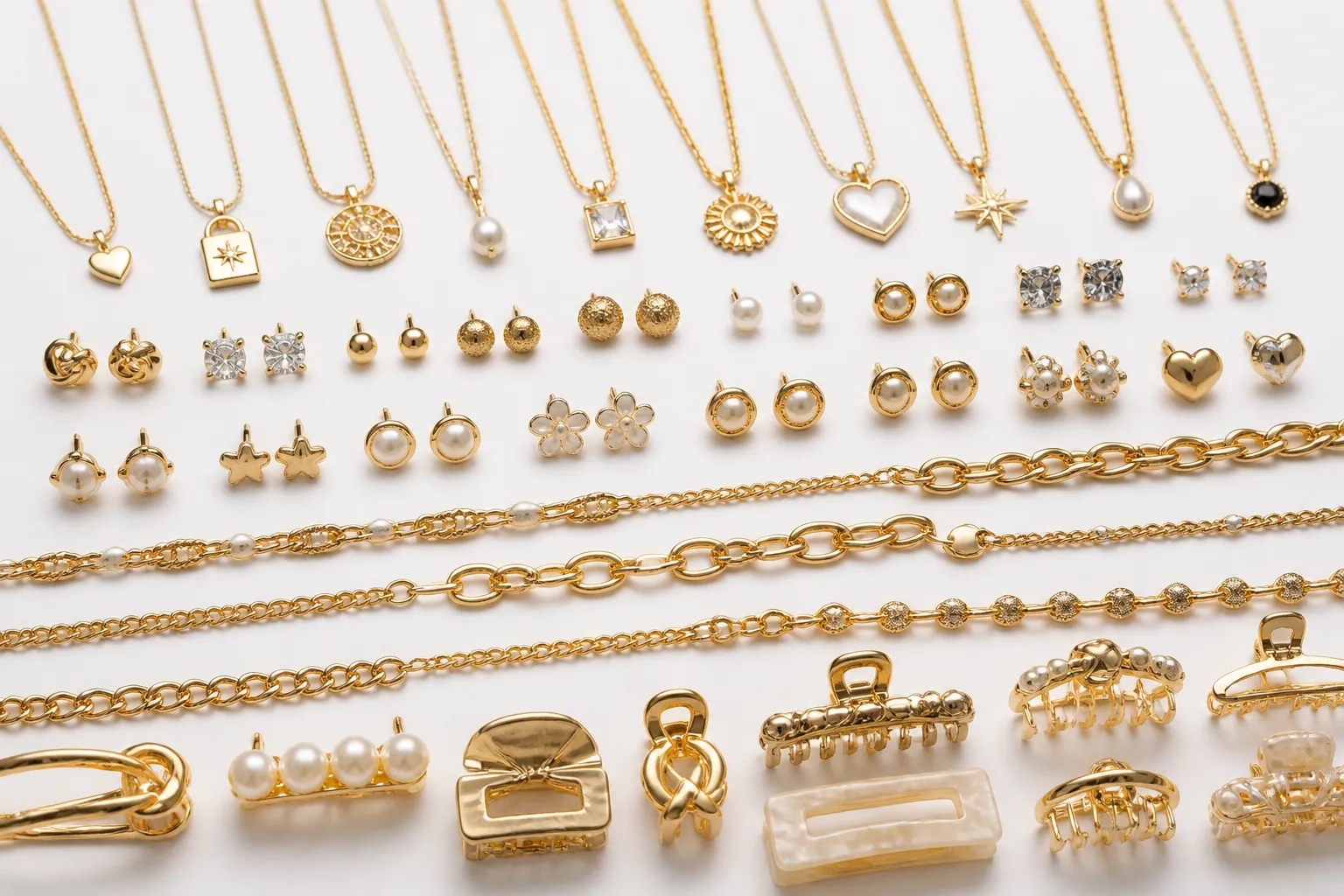
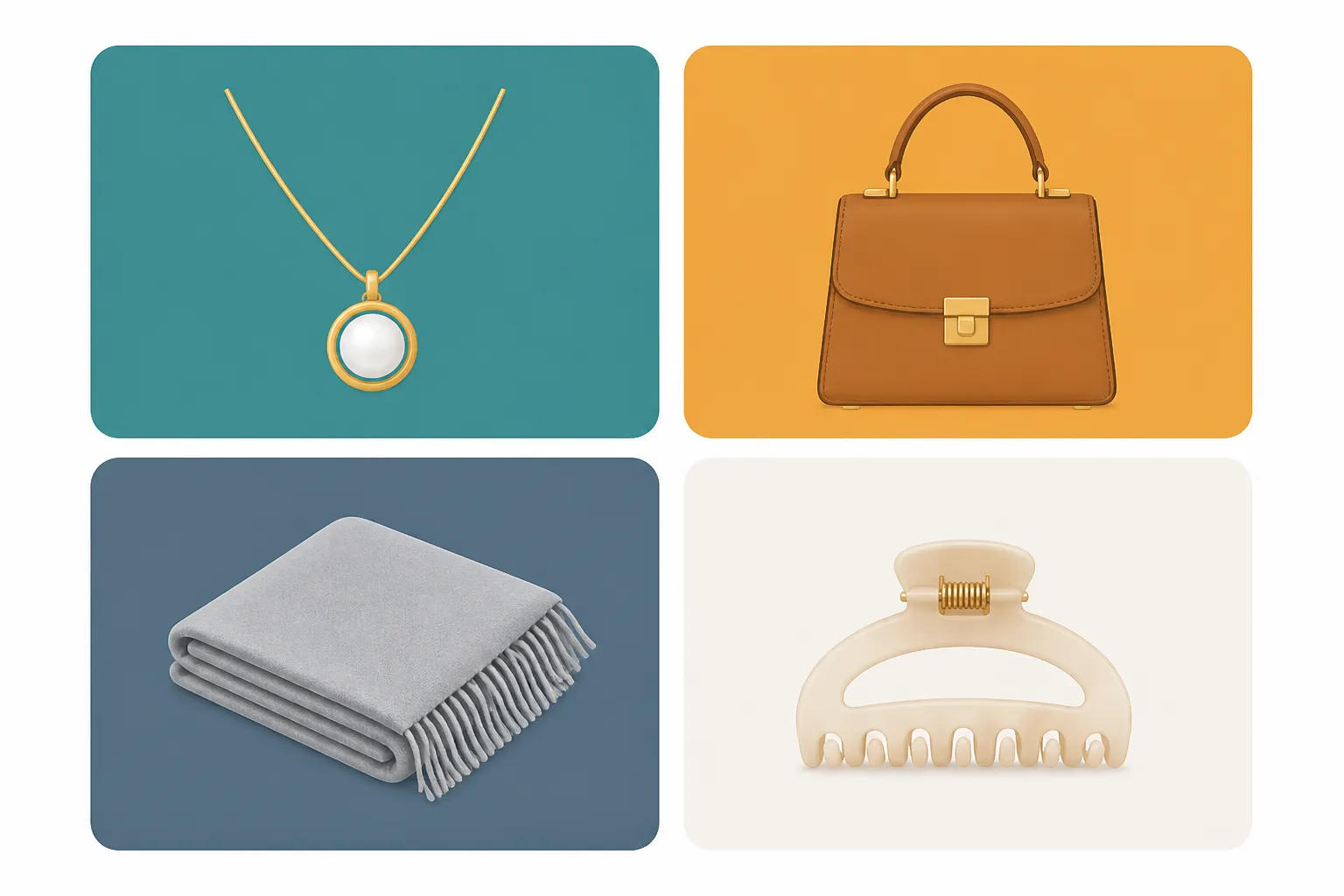
Apparel accessories wholesale covers any fashion complement — items worn with clothing rather than as standalone garments. The category spans jewellery (necklaces, earrings, bracelets, rings), leather goods (belts, wallets, small bags), textile accessories (scarves, headbands), and hair accessories (clips, pins, elastic sets).
The "wholesale" distinction matters: you're buying from a manufacturer, brand, or distributor at volume pricing, not from a retailer. This means:
- Tiered pricing: the more units per SKU, the lower the unit cost
- MOQ requirements: suppliers set a floor on how many pieces per style or total order value you must purchase
- Direct relationship: you deal with the source, which affects quality control, customization options, and lead times
For jewellery buyers specifically, wholesale sourcing often means engaging directly with manufacturers who control their own plating, stone setting, and finishing — giving you far more transparency over what you're actually selling to your customers.
If you're also evaluating jewellery-specific wholesale channels, our guide The Complete Buyer's Guide to Jewellery Accessories Wholesale covers that category in depth.
Why Wholesale Sourcing Changes Your Margins
Retail markup on accessories is high — but only if your input cost is controlled. Buying accessories one at a time from a middleman eats that margin quickly.
Wholesale purchasing lets you set a predictable cost-per-unit that holds across a season. That stability matters when you're building pricing for a DTC store or quoting an import contract. It also lets you negotiate exclusivity on specific designs, which protects your catalog from competitors sourcing identical pieces from the same manufacturer.
There's a practical ceiling, though. Wholesale requires upfront capital and storage capacity. You're committing to units before you've sold them. That's why evaluating supplier minimums carefully — and starting with a smaller pilot order if available — is standard practice for experienced buyers.
Types of Apparel Accessories Commonly Sourced Wholesale
Not every category of accessories behaves the same way in a wholesale context. Here's how the main segments differ:
Jewellery (Fine-Look and Fashion)
The highest-attention category. Buyers sourcing jewellery wholesale should understand the difference between:
- Brass-base with gold or silver plating: most common for fashion jewellery; ask about plating thickness (measured in microns) to understand durability
- Sterling silver (.925): more expensive input, longer lifespan, appeals to buyers targeting mid-tier or MENA markets where gold and silver carry cultural weight
- Stainless steel: tarnish-resistant, durable, growing category in minimalist styles
Stone settings range from cubic zirconia (CZ) to natural semi-precious stones. Always ask for material certificates when sourcing jewellery wholesale — a supplier who can't provide them is a risk.
Bags and Small Leather Goods
Hardware finish (gold vs. silver tone), stitching quality, and lining material are the differentiators. For wholesale, confirm whether the supplier offers branding options (embossed logos, custom tags) and what the associated MOQ uplift is.
Textile Accessories
Scarves, headbands, and fabric hair accessories have relatively low MOQs at most wholesalers. The variables are fabric weight, print registration (for patterned pieces), and colorfastness.
Hair Accessories
Clips, pins, and elastic sets are high-velocity, low-margin items. They're ideal for bundle offers and subscription boxes. Confirm metal gauge for clips (thicker gauge = longer lasting) and whether resin or enamel pieces are hand-finished or machine-cast.
How to Source Apparel Accessories Wholesale: Step-by-Step
Step 1: Define your category focus and volume expectations
Before contacting any supplier, know your SKU count, estimated units per style per season, and the price range you're selling into at retail. These numbers determine which tier of supplier makes sense for you.
Step 2: Identify supplier types
There are three main source types:
- Direct manufacturers: highest control, highest MOQs, most customization. Best for buyers with consistent, large-volume demand.
- Wholesale distributors: stock existing designs from multiple manufacturers, lower MOQs, less customization. Best for buyers who want assortment variety and faster turnaround.
- Sourcing agents / vetted platforms: middlemen with manufacturer relationships, useful for buyers new to a region or category.
Step 3: Request a product catalog and price sheet
Any serious wholesale supplier can provide a current catalog with wholesale unit pricing at different MOQ tiers. If a supplier won't share pricing without a signed contract, that's a flag.
Step 4: Order samples before committing
Sample orders are standard in this industry. You're evaluating: finish quality, weight and feel, plating consistency (look for evenness across multiple pieces, not just the one in the display photo), and packaging.
Step 5: Negotiate terms
For established buyers, terms to discuss include: payment schedule (deposit + balance on shipment is common), lead time guarantees, quality control inspection rights, and re-order minimums.
Step 6: Start with a pilot order
Even after sampling, run a controlled first order before scaling. This tests the supplier's production consistency, not just their sample quality.
Key Procurement Criteria to Evaluate
Experienced procurement teams assess wholesale suppliers on four dimensions before placing an order. Here's what to look for:
Price and MOQ Structure
Wholesale pricing should be clearly tiered. Ask for a price break schedule: what's the unit cost at 50 pieces? 200? 500? Also confirm whether the MOQ is per-SKU or per-order total — per-SKU minimums can lock you into deep inventory in single styles, while per-order minimums give more assortment flexibility.
Lead Time and Shipping Options
Manufacturing lead time (from order confirmation to goods ready) is separate from shipping transit time. For jewellery and accessories, manufacturing lead times typically range from a few weeks to over a month depending on order complexity and supplier production queue — always confirm the current timeline, not a quoted average.
Shipping options should cover at minimum air freight (faster, higher cost) and sea freight (slower, lower cost for large volumes). Ask whether the supplier handles export documentation or whether you'll need a freight forwarder.
Quality and Consistency
Quality is easier to assess with a checklist than a vague evaluation. For jewellery, ask:
- What is the base metal?
- What is the plating thickness in microns?
- Are pieces nickel-free (required in many markets, including the EU)?
- What's the defect tolerance per 100 units, and how are defects handled?
For accessories broadly, look for consistent finishing across a production run — not just the sample.
Returns and Defect Policy
Reputable wholesale suppliers offer a defect replacement policy. Understand the threshold: how many defective units per order triggers a replacement, and whether the replacement comes as credit or physical goods. Buyers targeting MENA markets should also confirm whether packaging and presentation meet local retail standards.
When Does Wholesale Make Sense for Your Business?
Wholesale makes sense when you have predictable demand, storage capacity, and the capital to commit upfront. Specifically:
- DTC stores: if you're running seasonal collections or consistent catalog items, wholesale buying lets you protect margin and availability
- Importers and distributors: wholesale is your entire model — the question is which supplier tier fits your downstream volume
- Pop-up retailers and market vendors: wholesale minimums are often achievable even at smaller scale; the key is choosing suppliers with lower per-SKU MOQs
- Corporate gifting and bulk orders: wholesale sourcing with customization options (engraving, branded packaging) can differentiate your offer
Wholesale doesn't make sense if your demand is highly unpredictable, your storage is limited, or you're testing a new product category. In those cases, a distributor with smaller minimums or a sample-first approach reduces risk.
Benefits of Buying Apparel Accessories Wholesale
Lower unit cost is the obvious benefit, but it's not the only one. Here's what experienced buyers value most:
Access to exclusives: direct supplier relationships often come with the option to request exclusive designs or colorways for a season — something retail purchasing never offers.
Consistent supply: wholesale relationships mean you're in the supplier's production queue. Re-orders are faster, and you're less likely to face the "out of stock" situations that kill conversion rates.
Customization options: many wholesale suppliers offer branded packaging, custom labeling, or minor design modifications (clasp type, chain length, colorway) at MOQ thresholds. This is how small brands build a catalog that doesn't look identical to their competitors'.
Better supplier accountability: when you're a wholesale buyer, you have more leverage to hold suppliers to quality standards, inspection rights, and replacement policies than you do as a retail customer.
Margin stability: with a fixed wholesale cost, your retail pricing holds even when demand spikes. You're not scrambling to re-source at higher prices mid-season.
What to Ask a Supplier Before Placing Your First Order
A checklist of questions that separate serious suppliers from risky ones:
- What are your current production lead times for [specific category]?
- What is your per-SKU and per-order minimum?
- Can you provide material certificates for metals and stones?
- What is your defect rate and replacement policy?
- Do you offer pre-shipment quality inspection?
- What shipping methods do you use, and do you handle export documentation?
- Can I see samples before committing to a full order?
- Are your jewellery pieces nickel-free / compliant with EU/US safety standards?
- What customization options are available and at what additional MOQ?
- What payment terms do you offer for established buyers?
If a supplier struggles to answer any of these clearly, treat that as information.
Avoiding Common Sourcing Mistakes
Ordering too deep on a single SKU: accessories trends move fast. Committing 500 units to one earring style before you've tested sell-through is a common mistake. Start with assortment breadth at lower per-SKU quantities, then re-order proven sellers.
Confusing sample quality with production quality: samples are often hand-finished and inspected before dispatch. Request a pre-shipment inspection or at minimum ask to see photos of production units from a recent order before your first large purchase.
Ignoring import compliance: jewellery destined for the EU must meet REACH regulations on restricted substances (nickel being the most relevant). US buyers should check CPSC requirements for certain metals. Ask for compliance documentation upfront.
Choosing suppliers on price alone: the cheapest wholesale unit cost can become the most expensive mistake if quality is inconsistent. Vetted suppliers like STRAND, who work directly with overseas buyers and provide full material transparency, exist precisely because buyers have learned this the hard way.
Make Your Next Wholesale Decision With Confidence
Wholesale apparel accessories buying rewards preparation. Know your volume, know your quality standards, and know your market — then find a supplier who can answer your procurement questions clearly and consistently, not just in the first conversation.
The buyers who build durable supplier relationships do three things: they start with a smaller pilot order to verify production quality, they negotiate terms that protect them on defects, and they re-order quickly when a style performs.
Ready to explore wholesale options for your store or import business? [Contact the supplier] to discuss current MOQs, lead times, and available catalog styles — bring your volume estimates and category focus so the conversation is productive from the first message.
For buyers also evaluating jewellery-specific wholesale channels, start with The Complete Buyer's Guide to Jewellery Accessories Wholesale — it covers material grades, pricing tiers, and certification requirements in detail.
Published by STRAND — crafted jewellery and accessories for overseas buyers, DTC stores, and procurement teams.
Frequently Asked Questions
What is apparel accessories wholesale?
Apparel accessories wholesale is the bulk purchasing of fashion accessories — such as belts, scarves, hats, jewelry, and hair accessories — directly from manufacturers or distributors at reduced per-unit prices for resale. Buyers typically include DTC store owners, importers, and retail procurement teams who source in volume to meet minimum order quantities (MOQ) and maximize margin. For vetted, crafted pieces with transparent materials and reliable lead times, STRAND offers curated wholesale collections suited to global buyers across diverse markets.
How to apparel accessories wholesale?
To wholesale apparel accessories effectively, start by identifying vetted manufacturers or distributors who can meet your MOQ requirements (typically 50–500 units per SKU) with consistent quality standards — request material specs, samples, and lead time commitments (usually 15–45 days) before placing bulk orders. Establish clear terms around packaging, labeling, and shipping options (sea freight for volume, air for urgent restocks) to protect margins across your catalog. STRAND recommends building supplier relationships around product transparency — knowing the alloy composition, plating thickness, or fabric weight of every accessory you carry is what separates a credible wholesale buyer from a commodity reseller.
Why is apparel accessories wholesale important?
Apparel accessories wholesale enables retailers and importers to source curated pieces — earrings, necklaces, bracelets, and hair accessories — at volume pricing, protecting margins while maintaining consistent inventory depth. For DTC stores and procurement teams, working with a vetted wholesale partner like STRAND reduces supplier risk and ensures material standards (sterling silver, 18K gold-filled, brass with PVD coating) are met across every order. With defined MOQs and reliable lead times, buyers can plan seasonal collections confidently rather than chasing fragmented spot purchases.
When should I use apparel accessories wholesale?
Use apparel accessories wholesale when you're stocking a DTC store, fulfilling importer orders, or supplying a retail chain and need consistent volume at structured pricing — typically when your order meets a minimum quantity threshold (MOQ) that makes per-unit costs viable for resale margins. It's the right channel when you require repeatable access to vetted product lines with predictable lead times, rather than one-off retail purchases. For procurement teams sourcing across multiple SKUs — scarves, belts, jewelry, or finishing accessories — wholesale consolidates supplier relationships and simplifies logistics.
What are the benefits of apparel accessories wholesale?
Apparel accessories wholesale allows DTC stores and importers to secure consistent, vetted inventory at scale — reducing per-unit cost while maintaining quality control across materials and finishes. Buying wholesale through a curated supplier like STRAND means predictable MOQs, reliable lead times, and access to accessories that meet diverse market standards, including gold-tone and modesty-forward options suited to MENA buyers. The model also simplifies procurement logistics, consolidating sourcing into fewer, trusted supplier relationships with clear shipping options and repeatability for restocking.