
How to Source Custom Jewelry from China: A B2B Buying Guide
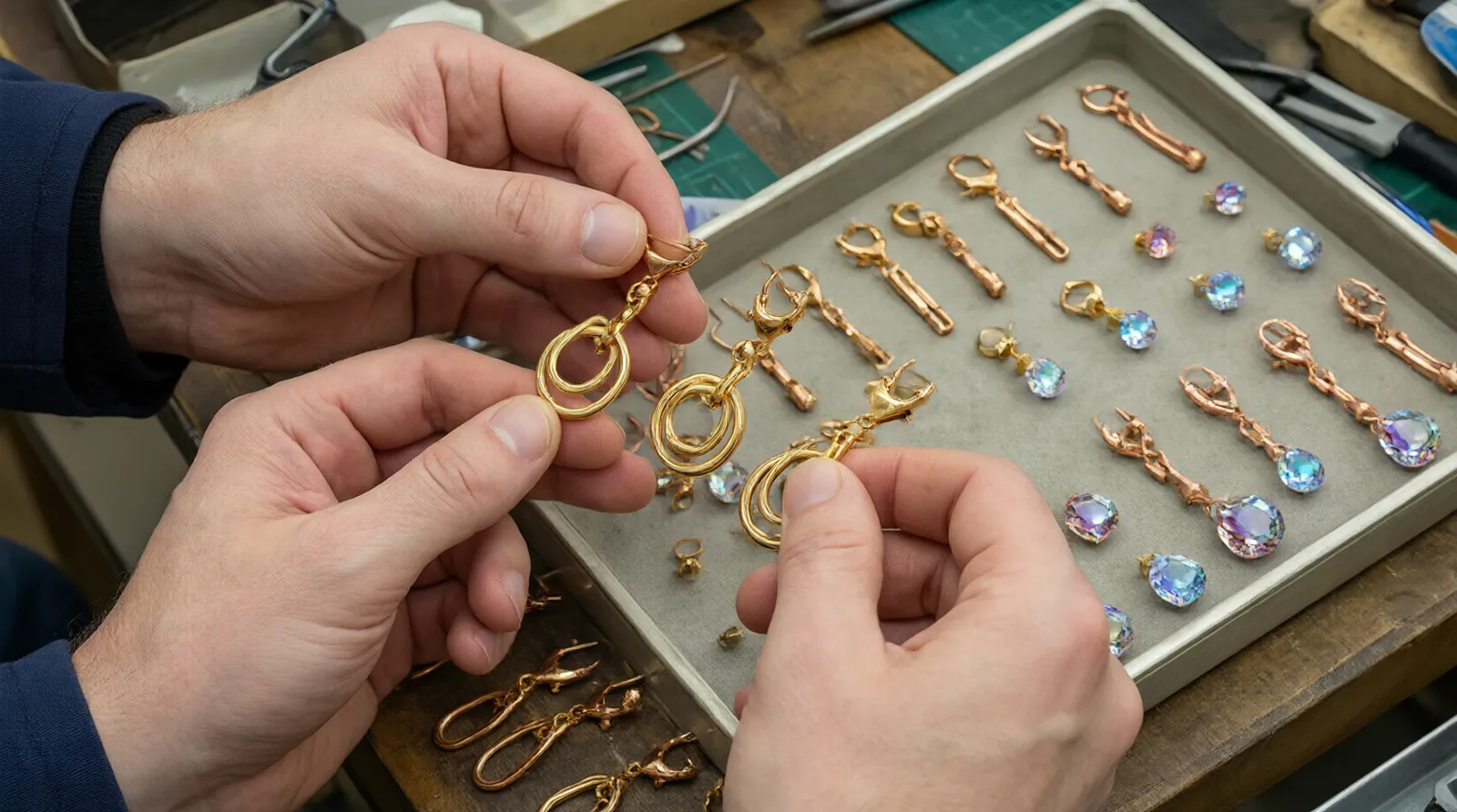
How to Source Custom Jewelry from China: A B2B Buying Guide
Custom jewelry sourcing for retail and DTC brands requires vetting suppliers on minimum order quantities (MOQs), plating durability, material compliance, and production lead times. Buyers importing fashion jewelry—whether drop earrings, stud earrings, or necklace-and-earring sets—must balance unit economics with the quality expectations of their target markets in the US, EU, UK, or MENA regions.
Who This Guide Is For
This guide is built for procurement managers, importers, and DTC store owners actively sourcing custom jewelry from Chinese manufacturers to stock physical stores or e-commerce platforms. You are likely evaluating OEM partners because your current supplier’s MOQs are too high for testing new styles, your lead times are unpredictable, or you need multilingual support across English, French, Arabic, Spanish, German, or Russian teams. The trigger is usually a seasonal collection refresh or a shift toward exclusive, branded designs that differentiate your catalog from mass-market competitors. If you are comparing suppliers like STRAND—a Hangzhou-based brand linking vetted Chinese workshops directly to overseas buyers—against local wholesalers or other overseas factories, this framework will help you make a definitive purchasing decision.
What Custom Jewelry Actually Does for B2B Buyers
For commercial buyers, custom jewelry manufacturing translates design concepts into scalable inventory without the capital risk of massive bulk orders. Unlike buying off-the-shelf wholesale lots where you compete on identical SKUs, custom OEM production allows you to dictate materials—such as gold-plated or rhodium-plated copper, glass beads, natural stone, or faux pearls—and control the exact aesthetic, whether that is vintage, gradient crystal, or two-tone styling. It bridges the gap between the accessible price points of fashion jewelry and the perceived value of fine jewelry. Retailers who previously relied on domestic distributors mimicking the aesthetics of luxury houses or mainstream chains like Jared stores can now source original designs directly. By working with a manufacturer offering an existing 114-style stock catalog alongside full custom capabilities, buyers can test market demand with minimal risk before committing to bespoke tooling. For a broader view of the supplier landscape, review our breakdown of 6 Custom Jewelry Sources Buyers & DTC Brands Need in 2026.
Key Decision Factors
Minimum Order Quantities (MOQs) and Inventory Risk
High MOQs trap capital in unproven designs. When evaluating a supplier, look at how they structure their thresholds for both stock and custom items. A strong partner offers flexibility. For example, STRAND sets its MOQ at 12 pcs/style on 109 of its 114 catalog designs, allowing buyers to test specific colorways or silhouettes without overcommitting. Select styles are even available from 1 pc, which is critical for sampling or ultra-niche DTC drops. "Good" looks like a tiered MOQ structure that aligns with your sales velocity rather than forcing you to buy a container-load just to access a factory's pricing.
Materials, Plating, and Compliance Standards
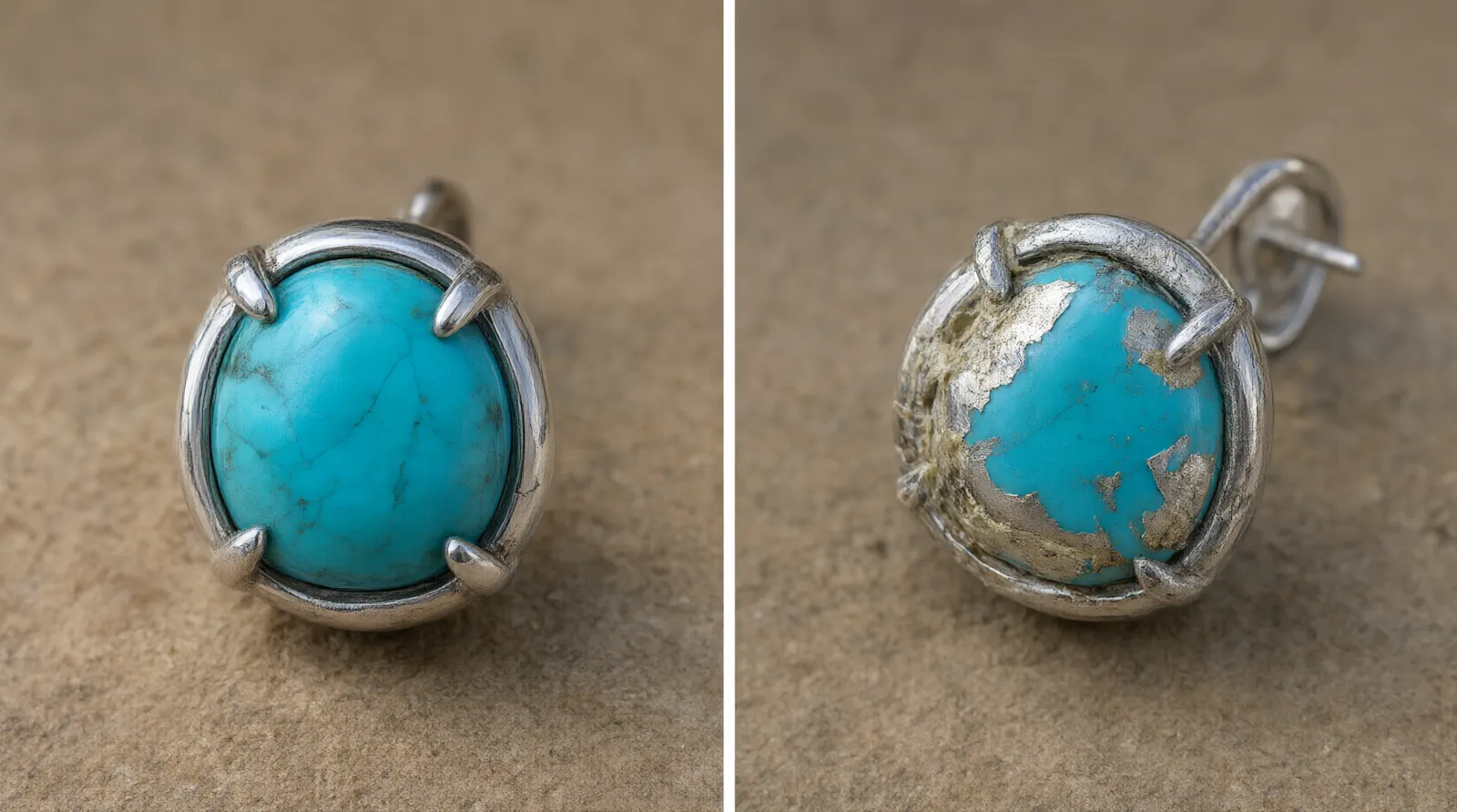
The base metal and plating thickness determine whether a piece tarnishes after one wear or lasts through a season. Evaluate whether the supplier works in gold-plated copper, rhodium-plated copper, or 925-style silver finishes. Ask about the micron thickness of the plating. Furthermore, verify compliance with regional regulations: REACH for the EU, nickel-free mandates for the UK, and CPSIA guidelines if selling children's accessories in the US. Suppliers integrating materials like amethyst-colored glass, garnet-toned crystals, peridot-hued stones, turquoise faux gems, or diamond-cut cubic zirconia must prove these elements meet safety standards for heavy metals. "Good" means the factory provides third-party lab test reports upon request, not just verbal assurances.
Pricing Models and Trade Terms
Unit cost is only half the equation; trade terms dictate your landed cost. Determine if the supplier quotes EXW (Ex Works) or FOB (Free on Board). EXW means you handle all logistics from the factory door, while FOB means the supplier covers transport to the port. Evaluate their payment flexibility. Reliable cross-border suppliers offer multiple rails, including T/T bank transfer, Western Union, PayPal, L/C, and Xtransfer. "Good" looks like transparent pricing where mold fees, sample costs, and unit prices are itemized separately, preventing hidden surcharges during production.
Production Lead Times and Shipping Logistics
A delayed shipment misses the holiday window. Pin down exact timelines for sampling versus bulk production. Assess their shipping infrastructure: do they offer air freight for urgent restocks, sea freight for high-volume margin protection, and express couriers for samples? A Hangzhou-based hub typically offers rapid access to major ports like Ningbo-Zhoushan or Shanghai. "Good" is a supplier that provides a binding production schedule upon deposit and communicates proactively if raw material delays occur, rather than going silent until the ship date passes.
Quality Assurance (QA) and Inspection Protocols
Defective clasps or uneven plating result in chargebacks and lost customers. Investigate the supplier's internal QC process. Do they inspect every batch, or rely on random sampling? STRAND, for instance, conducts in-house QC inspection before every shipment. Ask for their Acceptable Quality Limit (AQL) standards. "Good" looks like a documented inspection checklist covering weight, dimensions, plating adhesion, stone setting security, and packaging integrity, accompanied by pre-shipment photos or video calls.
Multilingual Support and Communication Infrastructure
Miscommunications in technical specs ruin production runs. If your procurement team operates across borders, language barriers are a direct financial risk. Verify that the supplier has dedicated account managers fluent in your operating languages. Factories offering native-level support in EN, FR, AR, ES, DE, and RU eliminate the friction of relying on machine translation for complex design files. "Good" means you receive tech packs, invoices, and troubleshooting support in your preferred language within standard business hours.
Design Capabilities and Catalog Depth
Suppliers fall into two categories: pure OEM factories requiring you to provide everything, and hybrid brands offering foundational catalogs you can modify. Evaluate their existing range. A supplier with a 114-style catalog featuring drop earrings, studs, and necklace + earring sets gives you immediate starting points. Check if they can execute specific aesthetics—vintage filigree, modern minimalist, or statement pieces comparable to what you might see from designers like Kendra Scott or the curated collections at Foundrae. "Good" is a partner who can take a rough mood board and return a precise CAD or physical prototype. To explore additional vendor options, consult our list of the best custom jewelry sources for buyers and importers.
Budget Tiers
Understanding where your purchasing volume places you helps set realistic expectations for pricing, customization depth, and service levels. Use this table to benchmark supplier proposals.
| Tier | Typical Profile | What You Get |
|---|---|---|
| Entry / Testing | DTC startups, boutique owners ordering 1–50 pcs total. | Access to stock catalog (e.g., 12 pcs/style MOQ on select designs). Standard materials like gold-plated copper or glass beads. Basic packaging. Payment via PayPal or Xtransfer. Air or express shipping. |
| Mid-Market / Scaling | Growing e-commerce brands, regional retail chains ordering 100–1,000+ pcs. | Minor customizations to stock styles (color swaps, logo tags). Dedicated multilingual account manager. In-house QC reporting. FOB or EXW terms. Sea or air freight options. T/T or L/C payments. |
| Enterprise / Full OEM | Large importers, established private-label brands ordering 5,000+ pcs. | Fully bespoke designs, custom molds, proprietary plating formulations (e.g., specific micron thicknesses). Priority production scheduling. Comprehensive compliance documentation (REACH, etc.). Dedicated logistics management. |
Note: Exact unit prices fluctuate based on raw material costs (copper, brass, crystal). Request a formal quote based on your specific tech pack. To see how different vendors stack up across these tiers, read our analysis of 6 Custom Jewelry Sources Ranked: OEM Suppliers & Retail Benchmarks for 2026.
Red Flags to Avoid
Walk away from negotiations if you encounter any of the following warning signs:
- Refusal to provide material composition data: If a supplier cannot specify whether a piece is copper, brass, or alloy, or refuses to confirm nickel/cadmium content, you risk customs seizures and consumer safety liabilities.
- Vague or shifting MOQs: A supplier who agrees to 50 pieces but later demands 500 before production starts is managing cash flow poorly or acting as a middleman, not a factory.
- No pre-production sample policy: Never authorize bulk production without signing off on a physical prototype. Photos are insufficient for verifying weight, clasp tension, or plating texture.
- Demanding 100% upfront payment via untraceable methods: Standard practice involves a deposit (often 30-50%) with the balance paid before or upon shipment. Demanding full wire transfers to personal accounts is a severe fraud indicator.
- Lack of verifiable address or factory audit trail: Cross-border fashion jewelry relies heavily on specific manufacturing hubs. If the supplier claims to be in Hangzhou or Yiwu but cannot facilitate a video tour or third-party factory audit, verify their legitimacy elsewhere.
- Inability to match basic aesthetic benchmarks: If you provide reference images of clean, high-fashion styles—similar to the precision expected from luxury houses or designers like Scott— and their initial samples look crude or use cheap plastic instead of quality glass beads, their craftsmanship will not scale.
Buying Process Checklist
Follow this sequence to move from research to confirmed purchase order efficiently:
- Define requirements: Lock in your target SKU count, materials (e.g., gold-plated copper, natural stone), budget per unit, and required delivery date.
- Shortlist vendors: Identify 3–5 suppliers offering the necessary trade terms (EXW/FOB) and language support (EN, FR, AR, ES, DE, RU). For a detailed walkthrough of this evaluation phase, refer to our custom jewelry sourcing guide.
- Request initial quotes & catalogs: Ask for their current stock list (like a 114-style catalog) and pricing for 12 pcs/style versus larger volumes.
- Order samples: Purchase 1–5 physical samples to evaluate plating quality, weight, and hardware functionality firsthand.
- Evaluate QA processes: Ask the supplier to walk you through their in-house inspection protocol before they ship anything.
- Negotiate terms: Finalize payment methods (T/T, Western Union, PayPal, L/C, Xtransfer), shipping modes (air, sea, express), and Incoterms.
- Issue trial PO: Place a small initial order (e.g., hitting the 12 pcs/style MOQ) to test production accuracy and communication speed.
- Inspect and approve: Review the pre-shipment QC report or conduct a video inspection before authorizing final dispatch.
- Scale successful lines: Reorder proven sellers and introduce custom OEM variations based on initial sales data.
Questions to Ask Vendors
Copy this list into your vendor outreach emails to ensure you gather the exact data needed for procurement decisions:
- What is your exact MOQ for stock designs versus fully custom OEM pieces?
- Can you provide third-party lab test results confirming compliance with EU REACH and US nickel-free standards?
- What base metals do you use, and what is the micron thickness of your gold and rhodium plating?
- Do you offer 925-style silver finishes, and how do they compare in durability to your plated copper options?
- What are your standard lead times for sampling versus bulk production?
- Which Incoterms do you support (EXW, FOB), and what are your preferred shipping methods for orders under 50 kg versus pallet shipments?
- What payment methods do you accept (T/T, PayPal, L/C, Xtransfer, Western Union)?
- Do you have dedicated sales representatives fluent in [insert your required language, e.g., Arabic, French, Spanish]?
- What is your defect rate threshold, and how do you handle replacements or credits for items that fail your in-house QC?
- Can you manufacture specific styles using natural stone, glass beads, or faux pearls based on our provided tech packs?
- How many active styles are currently in your ready-to-ship catalog?
- Will you sign an NDA before we share our proprietary custom designs for quoting?
Recommended Next Steps
Sourcing custom jewelry requires moving past generic directories and engaging directly with manufacturers who understand cross-border retail logistics. Stop guessing on landed costs and start requesting concrete quotes based on your exact material and volume specifications. If you are sourcing drop earrings, stud earrings, or necklace sets in gold-plated copper, rhodium, or glass beads, map your requirements against a supplier that offers verifiable low MOQs and multilingual procurement support.
Review your current inventory gaps, prepare your reference designs, and reach out to a vetted manufacturer to get exact numbers. Contact STRAND directly to request a sample, get current MOQ and pricing details, or discuss your custom OEM project with a representative in your preferred language. Visit https://strandjewelry.com to access the full 114-style catalog and initiate your inquiry today.