
Custom Jewelry vs. Alternatives: Which Sourcing Path Wins for Your Brand?
Custom Jewelry vs. Alternatives: Which Sourcing Path Wins for Your Brand?
TL;DR / Quick Verdict
Custom OEM jewelry gives importers and DTC store owners branded differentiation, flexible material specifications, and direct factory pricing — the right choice when you're building a recognizable product line that competitors can't copy. Stock catalog wholesale and retail personalized platforms make more sense when you need speed, minimal design commitment, or want to test market demand before locking in a production run. If you're sourcing at volume for a sustained brand, custom wins on margin and identity; if you need a low-risk first order, catalog stock is the faster path.
At-a-Glance Comparison Table
| Dimension | Custom OEM Jewelry | Stock Catalog Wholesale | Retail Personalized Brands (Jewlr, Kay) |
|---|---|---|---|
| MOQ | Varies by supplier; typically higher for custom runs | Low (e.g., 12 pcs/style at STRAND) | 1 unit — consumer retail |
| Unit Pricing | Factory-direct; lowest cost at scale | Mid-range wholesale | Full retail markup |
| Customization | Full: branding, material, finish, stone, dimensions | Design locked; color/metal variants only | Limited engraving or birthstone swaps |
| Lead Time | 4–8 weeks typical | Days to 1–2 weeks | Ships within days |
| Branding | Your brand, your packaging | Supplier brand unless white-labeled | Supplier brand only |
| QC | In-house inspection + spec-controlled | Varies by supplier | Consumer warranty-backed |
| Payment Options | T/T, PayPal, L/C, Xtransfer (STRAND) | Varies | Credit card, BNPL |
| Best For | Established brands scaling a differentiated line | New entrants, sample testing, fast restocks | End consumers — not for B2B resale |
Custom Jewelry Overview
Custom OEM jewelry means commissioning pieces manufactured to your exact specifications — your silhouette, your finish, your branding on the tag and packaging. For buyers, importers, and DTC operators building a differentiated product line, this path controls both cost and brand identity at the same time.
The working model: you submit a design brief or reference sample, agree on materials (gold-plated copper, rhodium-plated copper, 925-style silver finishes), confirm the stone or bead type (rhinestone, natural stone, glass bead, faux pearl), and the manufacturer produces to spec. You own the aesthetic. Competitors can't walk into a catalog and pull the same piece.
STRAND, a Hangzhou-based cross-border jewelry brand, shows how this model operates at the B2B level. Their OEM offering covers gold-plated and rhodium-plated copper pieces alongside glass bead, natural stone, and faux pearl designs. Multilingual sales support in English, French, Arabic, Spanish, German, and Russian is a concrete operational asset when procurement teams span multiple regions and the sourcing chain involves several handoffs. In-house QC runs before every shipment — an important distinction from suppliers who delegate inspection entirely to freight forwarders.
For buyers deciding whether custom is worth the commitment, the core question is straightforward: how much of your brand identity lives in the product design? If the answer is "a lot," custom OEM is the logical choice.
Alternatives Overview
The alternatives to custom OEM fall into two distinct categories: stock catalog wholesale and retail personalized jewelry platforms. They solve different problems, and conflating them is a sourcing mistake.
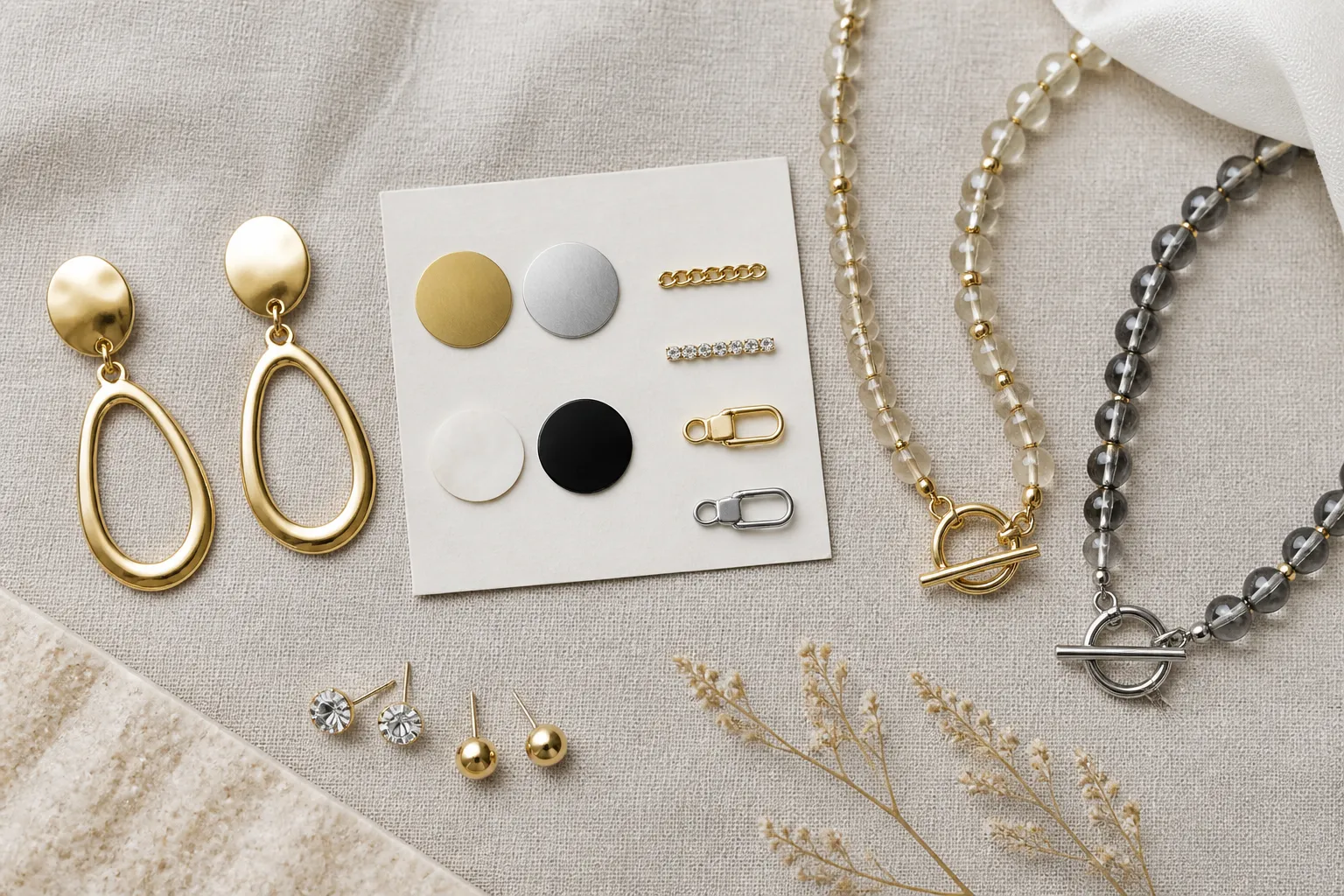
Stock catalog wholesale means selecting pre-designed pieces from a supplier's existing range without altering the silhouette. STRAND's 114-style stock catalog illustrates the realistic scope of what's available: drop earrings, stud earrings, and necklace-and-earring sets in vintage, gradient crystal, two-tone glass bead, and rhinestone styles. The MOQ on 109 of 114 catalog styles sits at 12 pieces per style; select styles are available from a single piece. For a buyer testing market response in a new territory before committing to custom production, this is the faster, lower-capital path.
Retail personalized jewelry platforms like Jewlr and Kay Jewelers serve end consumers directly. Jewlr's offering spans engraving and birthstone customization across rings, necklaces, bracelets, and earrings — with metals including Sterling Silver, Stainless Steel, White Gold, Gold Plated, and Vermeil. Kay brings an online ring configurator and in-store custom design appointments, with center stone shapes from Princess to Heart, including lab-grown diamond options. Neither is structured for wholesale — they're built for individual gifting and consumer decision-making.
That distinction matters for B2B buyers. Retail personalized platforms tell you what end consumers expect and what price they'll pay. They don't replace a supply chain, and they're not a sourcing channel.
Feature-by-Feature Breakdown
Pricing and Minimum Order Quantities
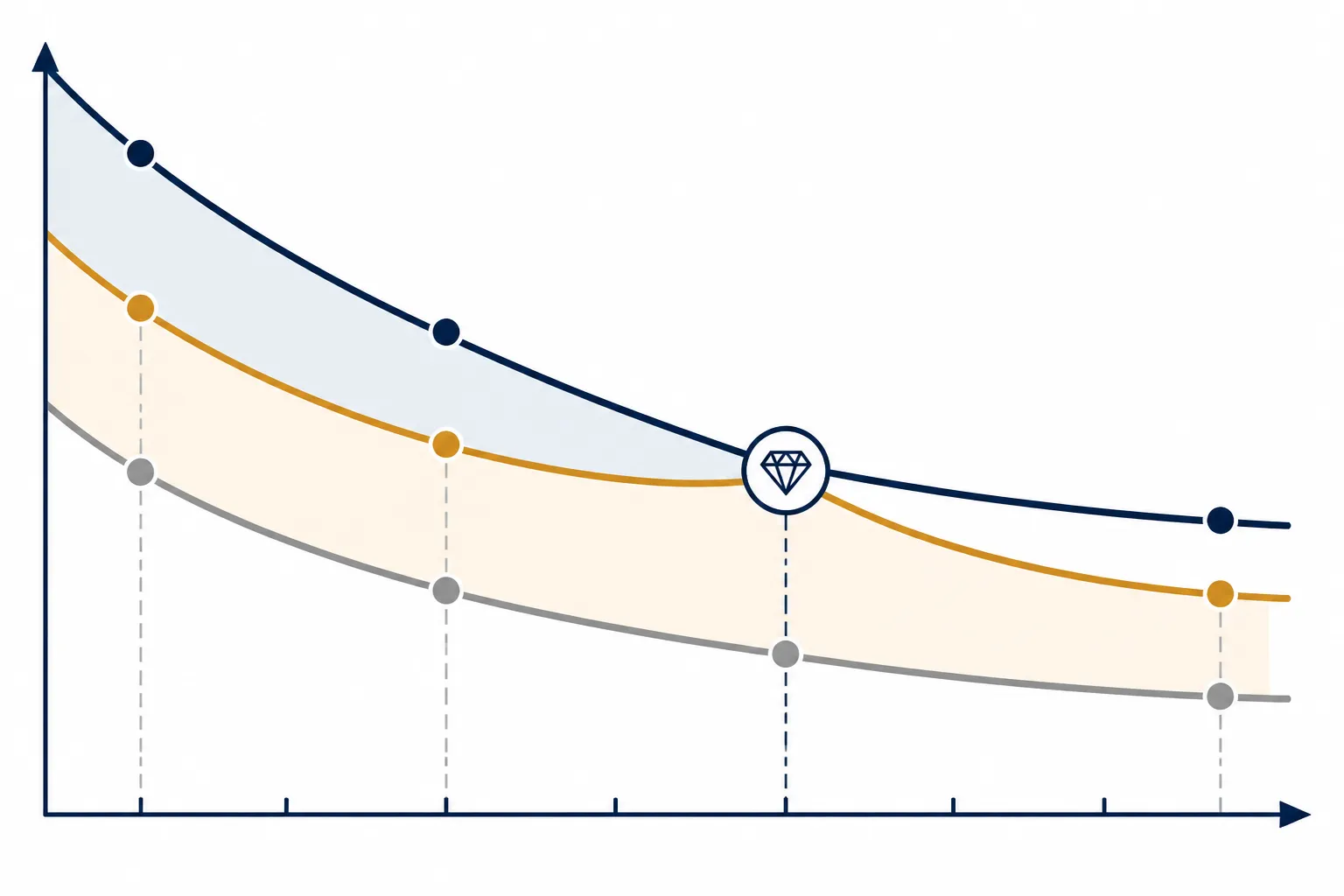
Custom OEM pricing is factory-direct, which means unit cost drops significantly at volume — but the floor is a full production run, and tooling costs apply to new designs. When requesting quotes, buyers should ask suppliers to separate tooling cost (one-time) from per-unit cost at target volumes. That breakdown changes the economics significantly across different order sizes.
Stock catalog wholesale keeps pricing accessible with lower commitment. STRAND's 12-piece-per-style MOQ on most catalog designs lets a buyer test multiple aesthetics without overcommitting capital. With select styles available from a single piece, sampling before a larger commitment becomes a realistic first step.
Retail personalized platforms operate on consumer margins. As of July 2026, Jewlr's personalized name necklaces were listed from $84, reduced from $158 — a useful benchmark for what your end market might pay, but not a number that translates to a sourcing price.
Design Flexibility and Customization Depth
Custom OEM gives you the broadest specification control. Material selection (base metal, plating type, finish), stone type (natural, synthetic, glass, faux pearl), dimensions, and packaging are all negotiable at the manufacturing level. If your brand requires a specific gold tone or a bead-and-metal combination that doesn't exist in any catalog, custom is the only route.
Stock catalog wholesale is constrained to what already exists. Within that constraint, there's real range — STRAND's catalog spans vintage crystal, gradient glass bead, two-tone, and rhinestone styles across multiple earring and necklace categories. For buyers whose target market aligns with these aesthetics, catalog stock is fast and practical.
Retail personalized platforms offer a middle layer: name engraving, birthstone swaps, metal color selection. Jewlr lists stone shape options including Round, Heart, Princess, Oval, Baguette, Pear, Marquise, and Cushion. Kay lets buyers configure engagement ring center stones across nine shapes. These are meaningful consumer choices within a fixed product — not true custom design.
Lead Times and Production Capacity
Custom OEM carries the longest lead time. A full production run — from approved sample to shipped goods — typically spans several weeks depending on complexity and factory schedule. Buyers planning seasonal collections or launch windows need to build this into their calendar. The payoff is that production capacity at a factory level scales in ways no retail platform can match.
Stock catalog orders from an established supplier ship dramatically faster. In-stock designs can clear a warehouse in days. STRAND ships by air, sea, or express depending on the buyer's urgency and cost tolerance, on EXW or FOB trade terms.
Retail platforms like Jewlr offer free shipping on personalized orders, and Kay runs standard retail fulfillment timelines. Both are designed around gifting timelines, not commercial replenishment cycles.
Quality Assurance and Compliance
Custom OEM puts QC responsibility squarely on the supplier-buyer relationship. Reputable manufacturers run in-house inspection before shipment — STRAND does this as a stated process. Buyers sourcing at scale should confirm whether the supplier's QC covers plating thickness consistency, stone setting security, and packaging integrity, and whether third-party inspection is available on request for larger orders.
For catalog stock, QC is embedded in the existing product line. Designs that have already run production are less likely to carry first-batch defects. The risk over time is supplier material substitution without notice — if you don't own a spec, you have nothing to enforce against.
Retail personalized platforms back products with formal consumer structures. Jewlr's one-year warranty and 99-day return policy are designed for end buyers. Kay's in-store design service carries the retailer's own service guarantees. These consumer protections aren't transferable to a reseller context.
Support and Communication
Procurement rarely goes smoothly in a single language, especially across international sourcing chains. A French importer working with an English-only supplier accumulates specification errors that are expensive to correct after production has started.
STRAND's multilingual sales capability — English, French, Arabic, Spanish, German, and Russian — is a concrete operational advantage. It reduces the friction in specification reviews, sample feedback, and order amendments when those conversations need to happen in the buyer's working language.
Retail personalized platforms are built for English-speaking consumer service. Jewlr's and Kay's service models are oriented toward individual purchase support and appointment scheduling — not bulk order coordination or B2B spec reviews.
Scalability
Custom OEM scales in both directions: up to high-volume production runs, and down to small-batch branded orders. The constraint is tooling cost amortized across units — higher volume drives lower per-unit cost. A supplier relationship that grows with your brand is a different asset than a catalog you share with competitors.
Stock catalog wholesale scales fast on the upside (more units, same design) but hits a ceiling on differentiation. If competitors source from the same catalog, the product isn't distinctive.
Retail platforms don't scale for B2B at all. They're built for terminal-consumer transactions.
Pros and Cons
Custom OEM Jewelry
Pros:
- Full design and material control — your brief, your output, your brand identity
- Factory-direct pricing that improves substantially at volume
- Branding ownership from the product itself through to packaging
- Scalable production capacity that can grow with your business
- In-house QC processes (from suppliers like STRAND) reduce shipment surprises
- Flexible trade terms (EXW, FOB) and diverse payment options including T/T, L/C, PayPal, and Xtransfer
Cons:
- Longer lead time — production runs require forward planning ahead of seasonal windows
- Higher minimum order quantities than stock catalog for most custom designs
- Tooling or sample costs apply to new designs
- Specification errors are expensive to correct once production begins — brief quality matters
Stock Catalog Wholesale
Pros:
- Fast turnaround — existing designs are production-ready immediately
- Low MOQ (12 pcs/style or as low as 1 pc for select designs at STRAND)
- Lower upfront commitment makes market testing capital-efficient
- No tooling or design development cost
Cons:
- Limited differentiation — competitors can source identical pieces from the same catalog
- No branding at the product level unless white-labeling is offered
- Material or finish changes are typically not possible
Retail Personalized Platforms (Jewlr, Kay, etc.)
Pros:
- Consumer-ready product with established warranty and returns infrastructure
- Useful benchmark for understanding end-consumer price expectations
- Wide stone and metal options tell you what shoppers respond to
Cons:
- Not a B2B sourcing channel — full retail pricing makes resale margin unworkable
- Not structured for commercial restocking or SKU-level volume
- No white-labeling or brand ownership possible
When to Choose Custom Jewelry
You're building a brand, not filling inventory. If your DTC store or retail line requires a distinctive aesthetic that competitors can't replicate off a shared catalog, custom OEM is the only path that delivers it. Catalog sourcing gives you product; custom sourcing gives you a product line with a defensible identity.
You've already validated demand and you're scaling. Once a catalog test order or initial market entry has confirmed what your customers respond to, custom production becomes the right lever for margin improvement and brand consistency. Volume justifies the tooling investment.
Your customers care about provenance and quality storytelling. Buyers in the US, EU, and MENA increasingly want to know what their jewelry is made of and where it comes from. Custom OEM lets you specify exactly: copper base, gold-plated or rhodium-plated finish, rhinestone or natural stone or glass bead, with your packaging and documentation. That's a story you can tell at retail — and one that separates you from generic competitors.
Your procurement team operates across multiple languages. A sourcing team working across French, Arabic, Spanish, or German markets benefits from a supplier who communicates in those languages. Specification mismatches that happen in translation are expensive to fix after production.
When to Choose Alternatives
You're entering a new market and need to test quickly. Stock catalog orders with low MOQs are the right tool for validation. Ordering across a selection of styles — at 12 pieces per style or fewer — tells you what your customers respond to before you commit capital to a custom run.
Your timeline doesn't allow for production lead time. If a seasonal window opens in a few weeks, stock catalog is the only realistic option. Custom OEM requires enough runway to develop, sample, revise, and produce.
You need consumer pricing benchmarks. Retail platforms like Jewlr and Kay are useful competitive intelligence, not sourcing channels. Knowing that a personalized name necklace retails from $84 (as of July 2026, per Jewlr's published pricing) informs your own retail price positioning — even if your product arrives through an entirely different sourcing route.
Your order economics favor variety over depth. If you need 15 different styles at low quantities each, catalog sourcing with per-style MOQs is more capital-efficient than custom production, which rewards volume on fewer SKUs.
Final Verdict
For established brands, scaling DTC operators, and importers with defined aesthetics and repeatable demand, custom OEM jewelry is the stronger long-term sourcing strategy. It controls margin, product identity, and quality specification in ways stock catalog never can.
For buyers in test-and-learn mode, or those managing a broad SKU spread at low initial volumes, catalog wholesale with low per-style MOQs is the practical starting point. A supplier who offers both custom OEM and catalog stock under one roof — with multilingual support and flexible trade terms — eliminates the overhead of switching suppliers when you're ready to scale.
Retail personalized platforms like Jewlr and Kay serve end consumers well. Track them as consumer price references. Don't try to build a supply chain through them.
Before committing to any sourcing path, request current MOQ tiers, production lead times, material specifications, and QC documentation from your shortlisted suppliers. These are the four questions that separate a supplier who can execute from one who can only pitch.
Request a Quote or Get MOQ & Pricing from STRAND →
Pricing figures and promotional data cited from third-party retail sites reflect information published as of July 2026 and may change. Verify current terms directly with each supplier before making sourcing decisions.