
Wholesale Jewelry and Sourcing: The Ultimate Buyer's Guide
Wholesale Jewelry and Sourcing: The Ultimate Buyer's Guide
Wholesale jewelry sourcing forms the foundation of a profitable retail operation. Buying wholesale means purchasing finished pieces directly from manufacturers or verified distributors at volume-based pricing, bypassing retail markups to secure inventory for resale. For overseas buyers—whether you run a direct-to-consumer boutique, manage procurement for an import house, or curate collections for regional markets—understanding this process determines your margins, product quality, and supply chain reliability.
The global jewelry market demands precision. Buyers evaluating supplier partnerships must look beyond unit cost. Materials, dimensions, minimum order quantities (MOQ), production lead times, and shipping logistics dictate whether a partnership succeeds or stalls. A piece that looks perfect in a catalog but arrives with inconsistent plating or delayed by six weeks disrupts entire seasonal launches. This guide breaks down exactly how to evaluate, source, and secure crafted jewelry at wholesale terms, ensuring every shipment aligns with your brand's standards.
What Is Wholesale Jewelry and How Does It Work?
Wholesale jewelry refers to finished adornments—rings, necklaces, bracelets, earrings—sold in bulk directly from the manufacturer or authorized distributor to retailers, importers, or large-scale buyers. Unlike retail transactions, wholesale pricing reflects the cost of materials, labor, and a manufacturer's margin, omitting the multipliers applied by storefronts or e-commerce platforms.
Commercial sourcing involves an entire ecosystem of processes. This includes verifying material compositions (such as 925 sterling silver, 14k solid gold, or brass with specific micron plating), confirming exact dimensions (like a 1.2mm chain width or a 15mm pendant drop), and negotiating MOQs. For STRAND, the focus remains on vetted, crafted pieces rather than disposable bulk goods. Every item is evaluated for structural integrity and finish longevity before it enters a wholesale catalog. If your procurement strategy also extends to complementary categories, our cosmetic jewelry wholesale guide outlines how beauty-adjacent adornments follow similar sourcing principles.
The mechanics work through tiered pricing structures. A buyer ordering 50 units of a specific vermeil necklace will pay a different per-unit rate than a buyer ordering 500 units. However, reputable suppliers balance volume requirements with quality control. Asking a manufacturer to produce 10,000 units overnight often compromises the finishing process—specifically, the electroplating bath time required to achieve a durable 2.5-micron gold layer versus a thin flash plating that tarnishes within weeks.
For a deeper dive into evaluating these tiers and understanding buyer protections, check out our guide on The Smart Buyer's Guide to Jewellery in Wholesale. That resource outlines how procurement teams should structure their initial evaluations before committing to large purchase orders.
Why Strategic Sourcing Matters for Retailers
Retailers who treat jewelry sourcing as an afterthought frequently face margin compression and high return rates. Securing reliable suppliers and building structured relationships protects both profitability and brand reputation. When a DTC store imports a collection, the landed cost—the price of the goods plus freight, insurance, and customs duties—must leave enough room for retail markup while remaining competitive.
Consider a boutique targeting the MENA (Middle East and North Africa) market. Cultural preferences heavily influence design choices; buyers in this region often seek substantial gold tones, modest yet elegant silhouettes, and intricate geometric or calligraphy-inspired motifs. If a retailer sources generic, thinly plated fast-fashion items instead of crafted pieces suited to these expectations, the inventory will stagnate. Conversely, partnering with a supplier like STRAND that understands these cultural nuances ensures the curated selection resonates with the end consumer.
Strategic sourcing also mitigates supply chain risks. Relying on a single unverified vendor leaves importers vulnerable to sudden price hikes, material substitutions without notice, or factory closures. By establishing relationships with vetted wholesale partners, procurement teams create redundancy and leverage. You can request material certifications—such as nickel-free compliance or recycled silver documentation—ensuring your inventory meets international safety standards and your customers' ethical expectations.

How to Source Wholesale Jewelry and Evaluate Suppliers
Selecting the right manufacturing partner requires a systematic approach. Buyers cannot rely solely on digital catalogs or trade show handshakes. The evaluation must be concrete, focusing on verifiable metrics rather than marketing promises. While How to Buy Wholesale on Jewelry: The Complete Sourcing Guide covers broader sourcing strategies, the following steps detail the specific criteria procurement teams use to vet suppliers for crafted, high-quality inventory.
Verifying Materials and Craftsmanship
The first step is demanding transparency regarding base metals and finishes. A supplier offering "gold jewelry" at wholesale must specify whether the pieces are solid 14k/18k gold, gold-filled, gold vermeil (sterling silver base with heavy gold plating), or gold-plated brass. Dimensions matter equally. If you are ordering hoop earrings, confirm the inner diameter (e.g., 20mm vs. 25mm) and the gauge of the wire (e.g., 2mm thickness). Vague descriptions lead to mismatched expectations upon delivery.
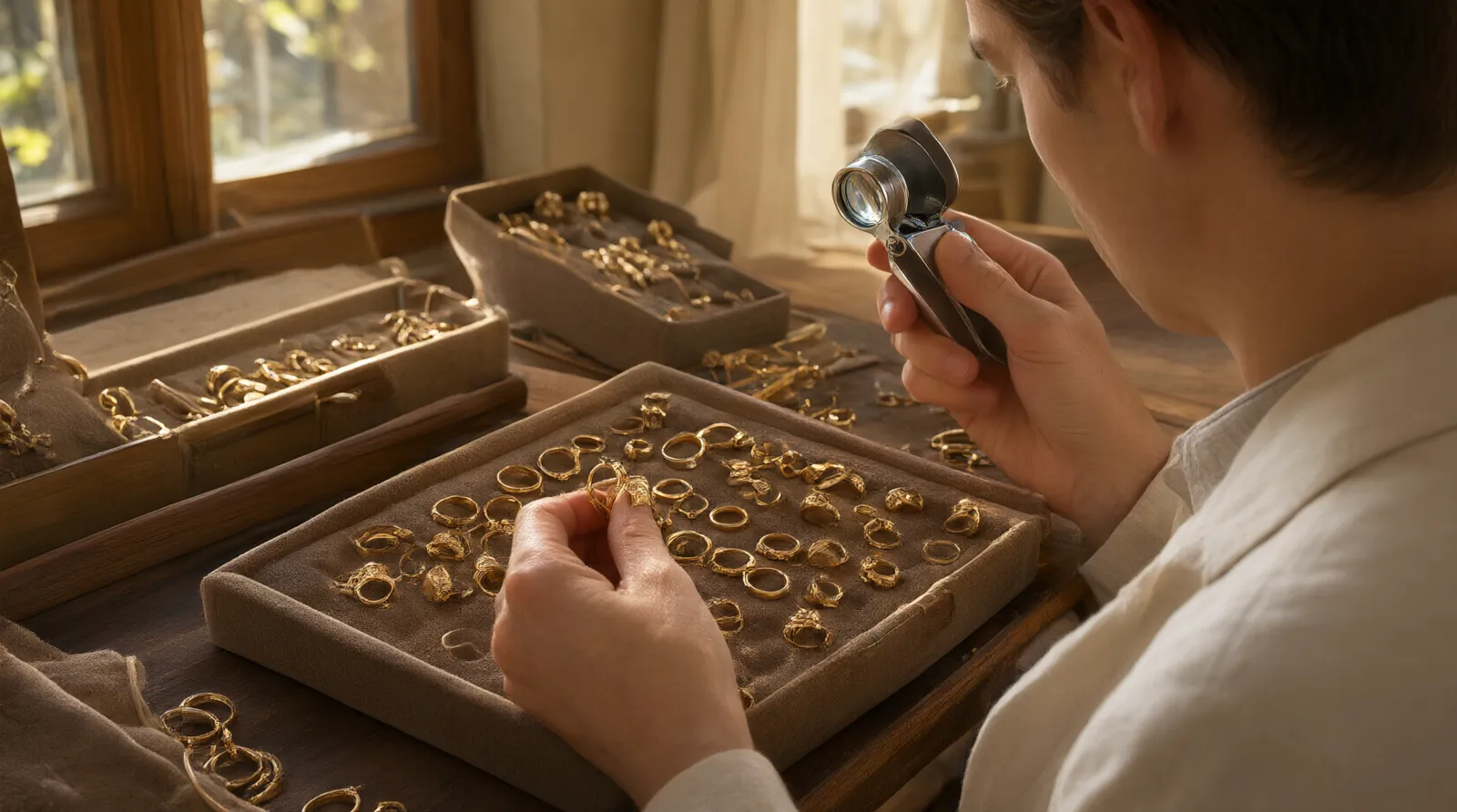
Request physical samples before placing a bulk order. Examine the clasp mechanisms—are lobster clasps soldered securely? Do spring rings function smoothly? Check the plating edges around stone settings for pooling or uneven coverage. STRAND prioritizes this verification phase, ensuring every sampled piece reflects the final production standard.
Understanding MOQ and Lead Times
Minimum Order Quantities vary drastically based on the manufacturing method. Cast pieces might have an MOQ of 50 units per style, while hand-assembled or custom-engraved items may require higher thresholds to justify the setup costs. Always ask for the MOQ per SKU versus the MOQ per total order. Some suppliers allow mixed-style orders as long as the total unit count meets their threshold.
Lead time is the duration between order confirmation and factory dispatch. Standard production for crafted jewelry typically spans several weeks, depending on complexity and current factory capacity. Rush orders often incur surcharges or force compromises in the polishing and plating stages. Procurement teams must map these lead times backward from their intended launch dates, factoring in transit time.
Assessing Shipping Options and Logistics
Overseas buyers must clarify shipping terms using Incoterms (International Commercial Terms). Determine if the quoted price is EXW (Ex Works—you handle all shipping from the factory door), FOB (Free on Board—supplier handles transport to the port), or DDP (Delivered Duty Paid—supplier handles everything to your door). Air freight offers speed for smaller, high-value shipments, while sea freight reduces per-unit costs for larger, heavier volumes. Always confirm packaging standards; individual polybags prevent scratching during transit, which is critical for polished metal surfaces. For teams expanding their sourcing scope beyond finished goods, reviewing wholesale jewelry craft supplies can help streamline component-level procurement alongside finished inventory.
When Should You Use Bulk Purchasing?
Knowing when to transition from small-batch buying to bulk purchasing depends on your business stage and sales velocity. New DTC brands testing a market might start with lower quantities to validate designs. However, once a specific style—say, a textured 18k gold-plated signet ring—consistently sells out, shifting to wholesale terms becomes necessary to maintain stock and improve margins.
Seasonal planning dictates timing. Retailers preparing for major gifting periods, such as Ramadan and Eid in MENA markets or Q4 holidays globally, must place wholesale orders months in advance. If a factory's lead time is four weeks and ocean freight takes another three to five weeks, an order placed in September barely arrives for late November launches. Importers use historical sales data to forecast volume needs, preventing both stockouts and dead inventory.
Wholesale purchasing is also the correct strategy when expanding into new distribution channels. If a successful online brand secures placement in physical boutiques, the volume requirement jumps immediately. Fulfilling 20 retail locations requires centralized sourcing rather than piecemeal production. At this stage, consistency across batches becomes paramount; the color tone of a brass-and-gold necklace shipped in January must perfectly match the batch shipped in March.
For buyers managing these transitions, How to Buy Jewellery Wholesale: The Smart Buyer's Complete Guide provides frameworks for scaling order sizes without sacrificing the artisanal quality that defines your brand.
The Benefits of Vetted Partnerships
Establishing long-term partnerships with vetted suppliers yields compounding advantages. The most immediate benefit is margin expansion. By removing intermediaries, retailers capture the difference between manufacturing cost and retail price, allowing for competitive consumer pricing or reinvestment into marketing and brand development.
Consistency is the second major advantage. When you work with a dedicated supplier like STRAND, the alloy mixtures, plating baths, and finishing techniques remain standardized. A customer who buys a vermeil chain today expects the replacement link purchased a year later to match flawlessly. Spot-buying from random vendors destroys this continuity.
Risk reduction forms the third pillar. Established wholesale agreements often include clear terms regarding defect rates and replacements. If a shipment arrives with a percentage of damaged goods due to transit or manufacturing faults, a documented agreement dictates how the supplier resolves the issue—whether through credit notes, replacements in the next shipment, or refunds. This security allows procurement teams to operate confidently across international borders.
Finally, access to exclusive designs separates serious retailers from commodity sellers. Top-tier wholesale partners develop proprietary molds and techniques. By maintaining a strong purchasing history, buyers gain early access to new collections or the ability to commission slight modifications—such as adjusting a chain length from 16 inches to 18 inches to suit regional styling preferences—without bearing the full cost of custom tooling.
Key Evaluation Criteria Before Placing Your Order
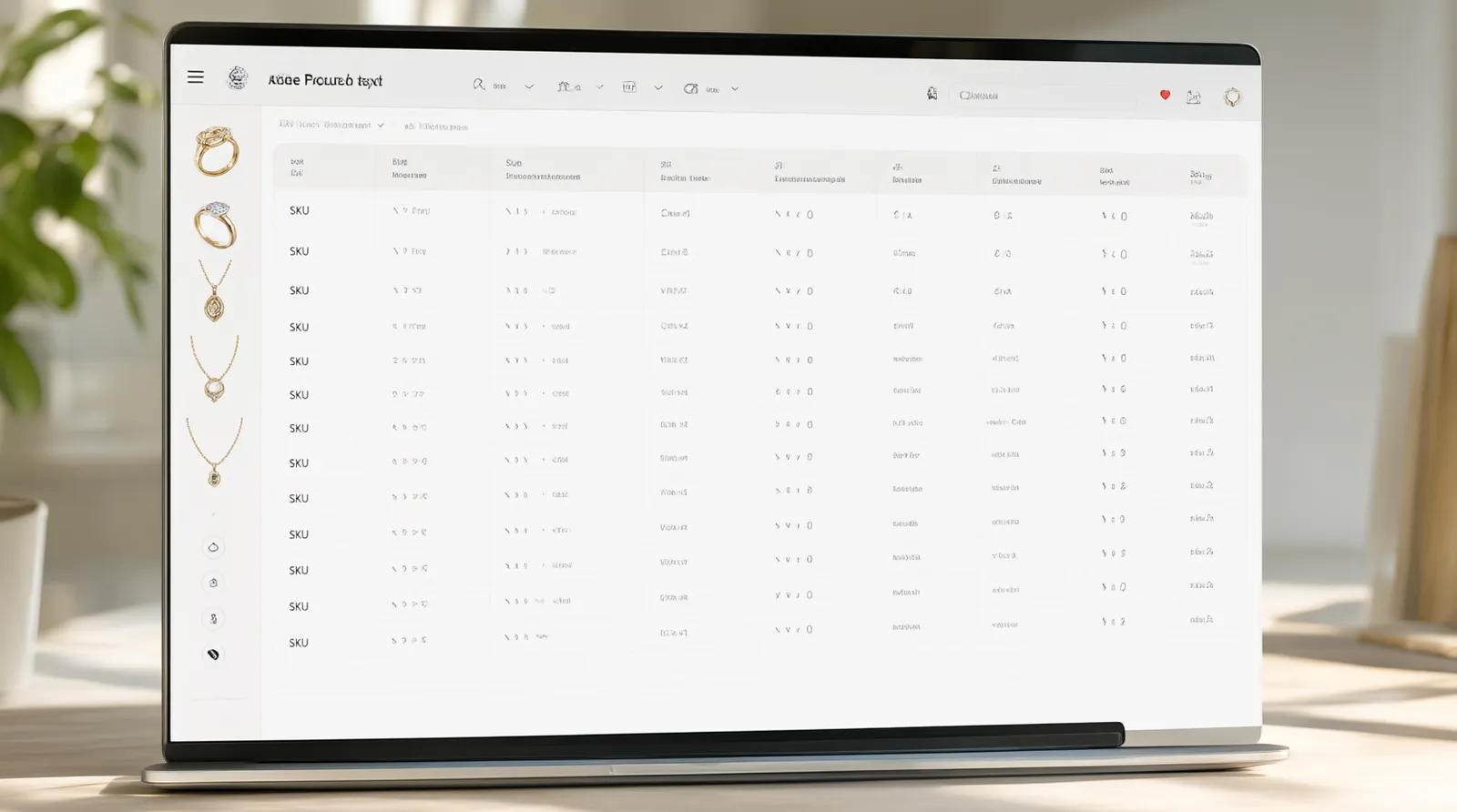
Before finalizing any wholesale jewelry purchase, procurement teams must systematically evaluate four core dimensions. Skipping these checks often results in costly logistical errors or subpar inventory.
Price and Availability: Confirm the exact unit price based on your order volume. Ask about raw material price locks—if the cost of silver or gold fluctuates during your production window, does the supplier honor the original quote? Verify real-time availability of components, especially for designs requiring specific gemstone cuts or specialized clasps.
Shipping and Lead Time: Request a written timeline detailing sampling duration, mass production days, quality control inspection, and estimated dispatch date. Clarify who manages customs documentation. For international shipments, missing paperwork (like commercial invoices detailing exact material compositions) can cause weeks of delays at border control.
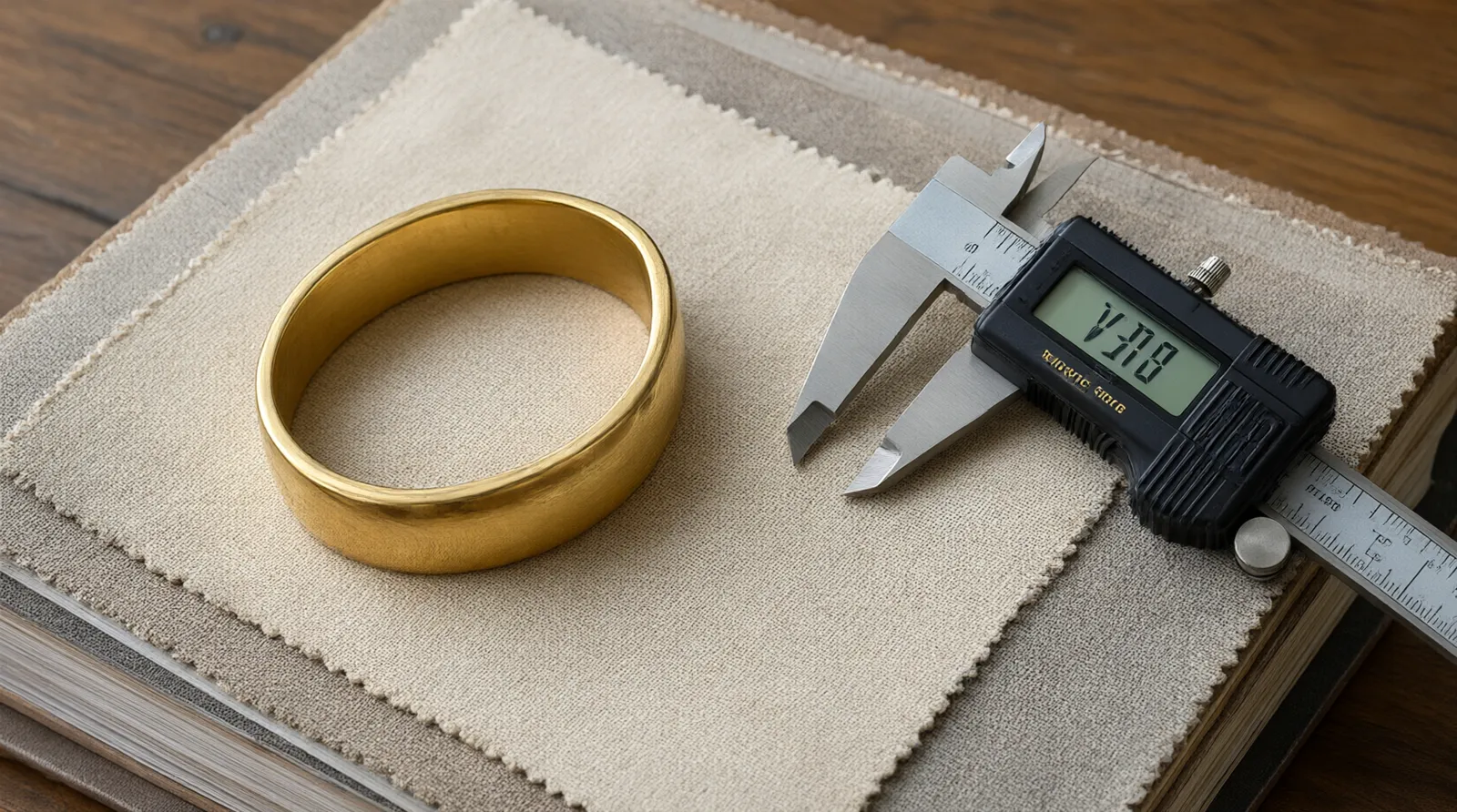
Quality and Warranty: Define acceptable tolerance levels. For example, if a pendant is specified as 20mm, what is the allowable variance? Discuss plating warranties—reputable suppliers guarantee their micron thickness against premature fading under normal wear conditions. Understand the protocol for reporting defects upon receiving the goods.
Returns and Resolutions: Wholesale transactions rarely support simple "return for refund" policies like consumer retail. Instead, negotiate resolution frameworks. Will defective units be replaced in the subsequent order? Is there a threshold (e.g., defects exceeding 2% of total volume) that triggers a formal review? Having these parameters agreed upon before payment clears ambiguity.
Common Pitfalls in Wholesale Jewelry Sourcing
Even experienced buyers encounter obstacles when managing international supply chains. Recognizing these pitfalls prevents capital loss and operational headaches.
The most frequent error is prioritizing the lowest unit price over total landed cost. A supplier might offer a significantly cheaper per-unit rate, but if they require expensive air freight due to missed production deadlines, or if the defect rate forces you to discard a portion of the inventory, the actual cost exceeds that of a premium supplier.
Another common issue involves communication gaps regarding specifications. Assuming a supplier understands "heavy gold plating" without specifying microns leads to disappointment. Always communicate in exact measurements, standardized material grades, and reference Pantone colors or physical samples for enamel or gemstone hues.
Ignoring cultural context limits market penetration. As mentioned earlier, importing delicate, ultra-minimalist silver pieces into a market that traditionally favors bold, warm-toned gold aesthetics results in poor sell-through rates. Buyers must research their end consumers deeply and communicate those specific aesthetic requirements to their wholesale partners. STRAND works closely with buyers to ensure collections align with target demographic expectations, avoiding the trap of one-size-fits-all inventory. For retailers broadening their offerings to include complementary styles, exploring jewellery accessories wholesale options can help round out a cohesive product lineup.
Next Steps for Securing Your Inventory
Building a resilient supply chain requires diligence, precise communication, and partnerships rooted in craftsmanship rather than mere volume. By focusing on concrete material specifications, realistic lead times, and transparent logistics, overseas buyers protect their margins and deliver exceptional products to their customers. Whether you are outfitting a DTC storefront or managing imports for a regional distributor, treating your supplier relationship as a strategic asset changes the trajectory of your business.
Your immediate next step is to audit your current inventory gaps and define the exact specifications—materials, dimensions, and target price points—you need for your upcoming season. Once your requirements are documented, reach out directly to verify current availability, request physical samples, and discuss production timelines tailored to your launch schedule.
[Contact the supplier] to request current terms, view available crafted collections, and initiate your next wholesale order with STRAND.
Frequently Asked Questions
What is wholesale jewelry and?
Wholesale jewelry refers to the B2B procurement of crafted, vetted pieces—such as 18k gold-plated brass or sterling silver rings and pendants—sourced directly for DTC stores, importers, and professional buying teams. STRAND supports this with transparent specifications including exact dimensions, minimum order quantities starting at 50 units, and 3–4 week production lead times. Orders are fulfilled via insured air freight or sea shipping, with curated gold-tone collections available to align with MENA market preferences.
How to wholesale jewelry and?
To wholesale jewelry with STRAND, procurement teams and DTC stores can access our vetted collections crafted in 18k gold vermeil over sterling silver or solid brass, featuring precise millimeter dimensions detailed on every spec sheet. Our standard MOQ is 50 units per SKU with a 3–4 week lead time for production, ensuring each piece meets our crafted standards rather than bulk manufacturing. We offer secure global shipping via DHL Express or air freight, including culturally considered packaging and modesty-appropriate gold-tone selections tailored for MENA importers.
Why is wholesale jewelry and important?
Wholesale jewelry and STRAND’s vetted sourcing model are essential for DTC stores, importers, and procurement teams seeking crafted 18k gold-tone, 925 sterling silver, and natural gemstone pieces with MOQs starting at just 50 units. This approach ensures reliable 3–4 week production lead times and flexible shipping via DHL Express or sea freight, providing the consistency required for international retail planning. For MENA buyers specifically, STRAND prioritizes culturally appropriate designs—such as modest layering lengths (18"–24") and rich gold finishes—that meet regional standards without compromising on artisanal quality.
When should I use wholesale jewelry and?
Use STRAND wholesale jewelry and sourcing partnerships when you need vetted, crafted pieces—such as 18k gold-plated brass or 925 sterling silver collections with precise dimensions—for your DTC store or import portfolio. STRAND supports procurement teams with clear MOQs starting at 50 units, 3–4 week production lead times, and reliable shipping options including air freight or sea cargo to global markets. For MENA buyers specifically, STRAND offers culturally considered designs featuring modest silhouettes and rich gold tones suited to regional preferences.
What are the benefits of wholesale jewelry and?
Partnering with STRAND for wholesale jewelry and curated collections gives DTC stores, importers, and procurement teams direct access to vetted, crafted pieces in 18k gold-plated brass and sterling silver, with dimensions detailed per SKU. Our standard MOQ begins at 50 units per style, lead times run 3–4 weeks for production, and we offer DHL Express or sea freight shipping tailored to your region. For MENA buyers, STRAND provides thoughtfully designed options featuring modest silhouettes and rich gold tones that align with regional preferences without compromising on artisanal quality.