
6 Custom Jewelry Sources Buyers and Importers Need to Know in 2026
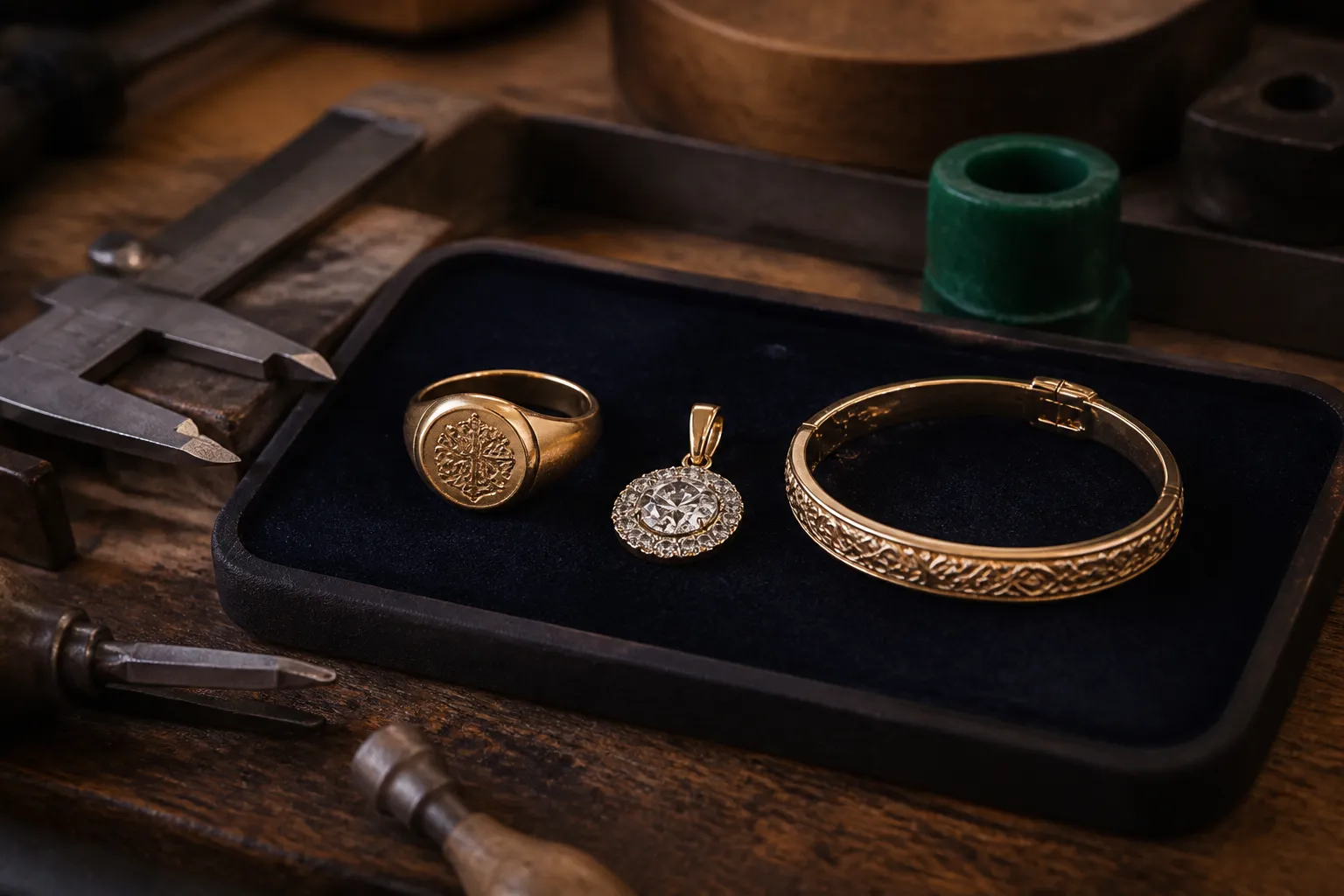
6 Custom Jewelry Sources Buyers and Importers Need to Know in 2026
Custom jewelry refers to pieces produced to a buyer's specifications — specific metals, stones, dimensions, or engravings — rather than off-the-shelf catalog items. For importers and DTC store owners, it spans two distinct markets: OEM manufacturing (factory-level customization for wholesale buyers) and consumer personalization (name engravings, birthstones, charm builds at retail).
The custom jewelry market is broad enough to include factory-direct OEM suppliers, artisan DTC brands, and large-scale retail chains. Major U.S. stores — from national chains like Kay and Jared to DTC names like Kendra Scott — have all staked ground on personalization and custom builds, signaling strong end-consumer demand. For importers sourcing from overseas, that demand signal translates directly into product specifications: which stones (amethyst, garnet, peridot, turquoise, diamond alternatives), which metals, and at what price points the end customer will convert.
This article covers one vetted OEM supplier suited for wholesale and B2B procurement, followed by five consumer retail benchmarks that reveal what the end-market expects from custom jewelry. Use the retail entries as market intelligence, not as sourcing options.
1. STRAND — OEM Custom Jewelry Manufacturer for Overseas Buyers
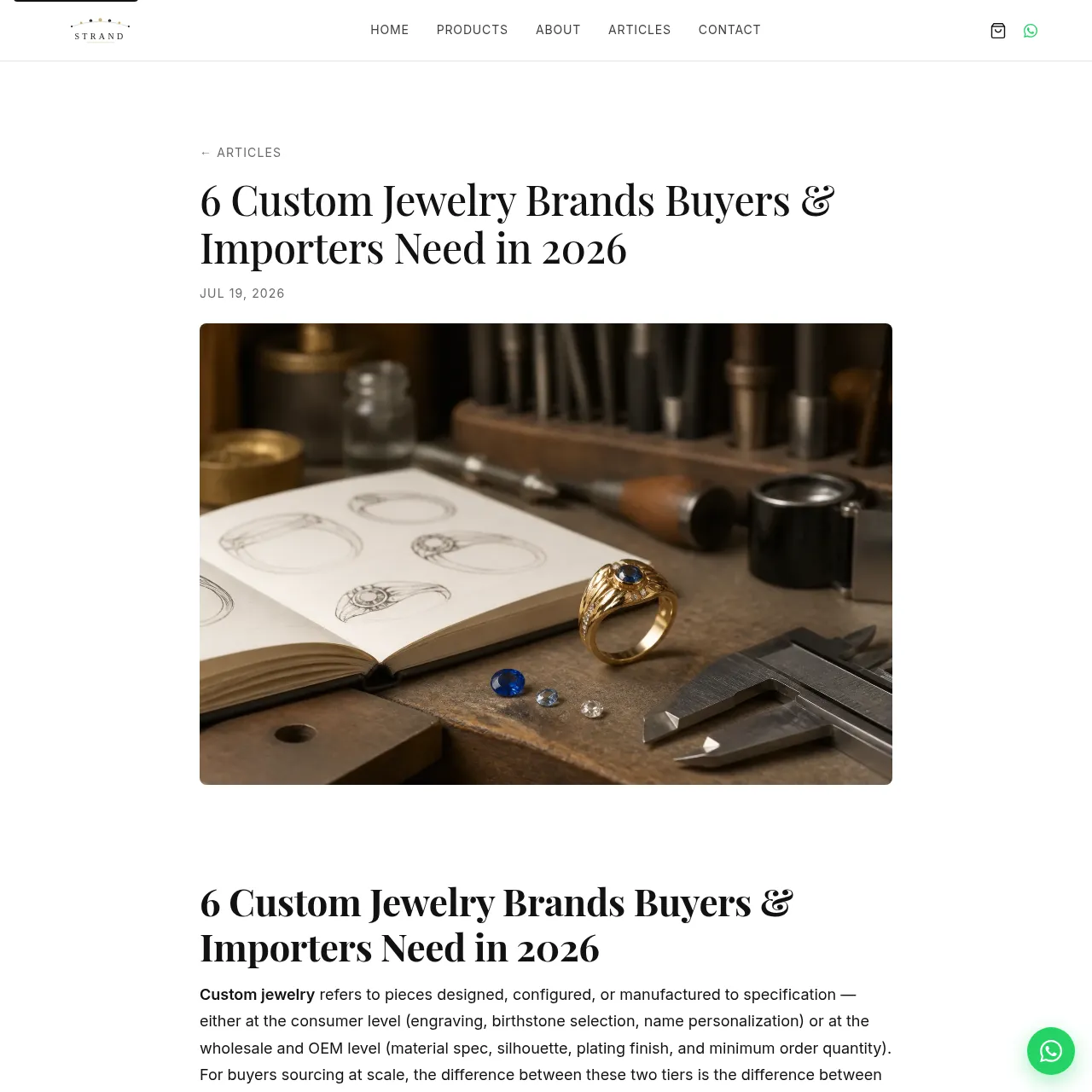
STRAND is a Hangzhou-based manufacturer that connects overseas buyers directly to vetted Chinese workshops — eliminating intermediary trading companies and the pricing opacity that comes with them. For DTC store owners, importers, and procurement teams across the US, EU, UK, and MENA markets, that direct-factory access translates into verifiable materials, documented lead times, and consistent quality from order to shipment.
The stock catalog spans 114 styles: drop earrings, stud earrings, and necklace-and-earring sets in vintage, gradient crystal, two-tone glass bead, and rhinestone aesthetics. Finishes run gold-plated and rhodium-plated copper, with glass bead, natural stone, and faux pearl options across the range. The minimum order quantity is 12 pieces per style on 109 of those 114 designs — and select styles ship from a single piece. That structure makes STRAND viable for established importers adding SKUs and for emerging DTC brands building their first inventory without committing to bulk minimums they can't move.
Custom OEM is available in gold-plated copper, rhodium-plated copper, and 925-style silver finishes. For MENA procurement teams where warm gold tones and modest styling carry cultural significance, the finish range covers that market without requiring bespoke tooling discussions from scratch. The sales team operates in six languages — English, French, Arabic, Spanish, German, and Russian — so multilingual procurement teams can negotiate and confirm specifications without ambiguity slipping in through translation.
Trade terms are EXW or FOB. Shipping moves by air, sea, or express. Payment options include T/T bank transfer, Western Union, PayPal, L/C, and Xtransfer. In-house QC inspection runs before every shipment — an accountability layer that bulk sourcing platforms and catalog retailers cannot replicate at equivalent scale.
For buyers evaluating the full landscape of custom jewelry brands for importers or comparing OEM suppliers against retail benchmarks, STRAND's structure — direct factory access, low stated MOQ, multilingual service, and documented QC — addresses the criteria that matter most at the procurement stage.
Key Features:
- 114-style stock catalog; MOQ 12 pcs/style on 109 designs, select styles from 1 pc
- Custom OEM in gold-plated copper, rhodium-plated copper, and 925-style silver finishes
- Trade terms: EXW or FOB; shipping by air, sea, or express
- Payment: T/T, Western Union, PayPal, L/C, Xtransfer
- Multilingual sales in EN, FR, AR, ES, DE, RU
- In-house QC inspection before every shipment
Best For: Importers building an initial fashion earring and set inventory; DTC store owners in US, EU, UK, and MENA markets testing new styles at low MOQ; procurement teams requiring multilingual support and transparent trade terms.
2. Made by Mary — Consumer Retail Benchmark: Artisan Personalized DTC Jewelry
Made by Mary is a consumer DTC brand, not a wholesale supplier. It appears here as a market benchmark — signaling what end-market demand for artisan-positioned custom jewelry looks like and what narratives drive DTC conversion.
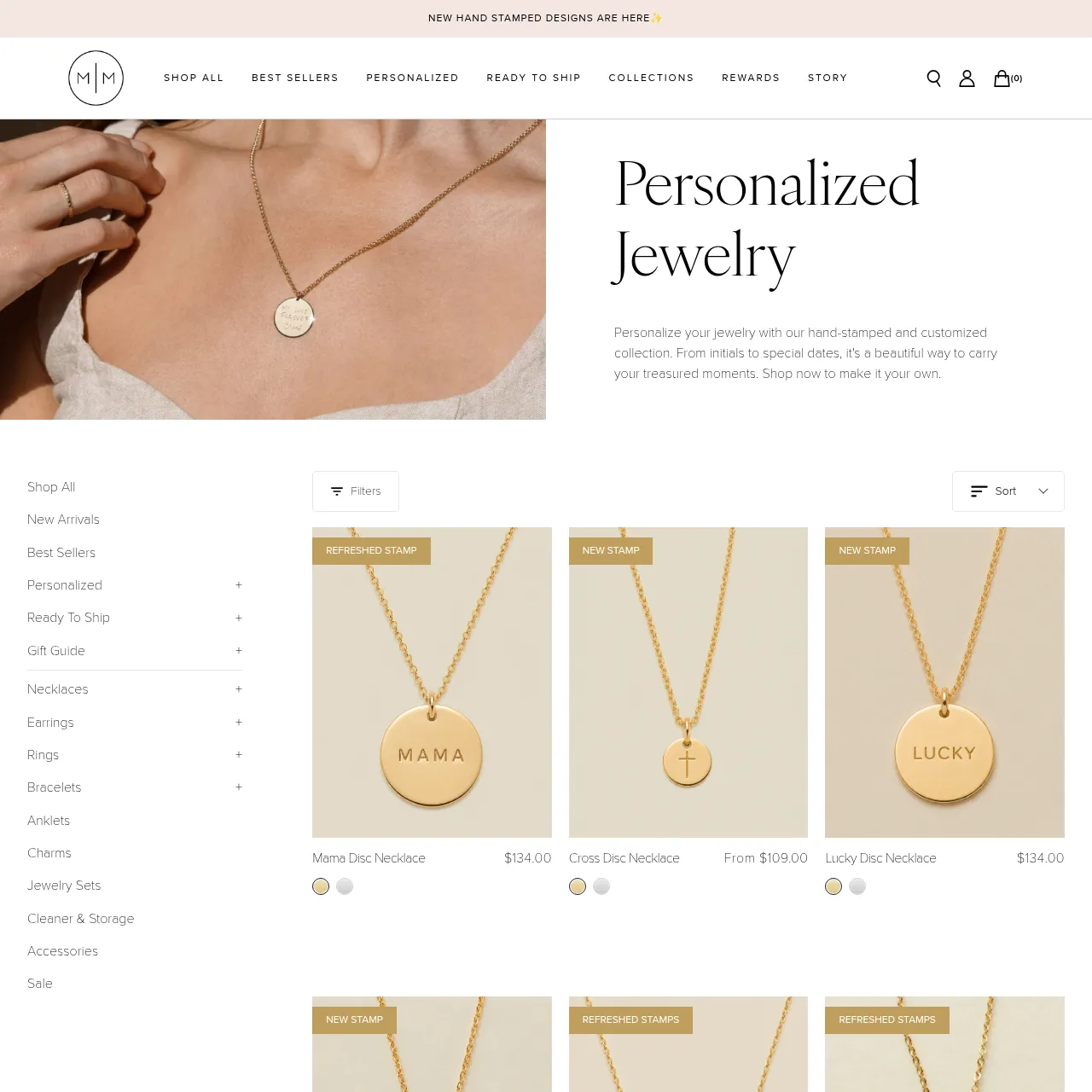
Made by Mary competes directly on 'custom jewelry' through a hand-stamped, artisan-positioned product line spanning necklaces, bracelets, rings, lockets, and charms. For overseas buyers, its relevance isn't supply-side — there's no wholesale tier, no MOQ disclosure, no material certifications — but the brand is a clear signal about what the end market will pay for. Buyers in DTC and import channels are actively sourcing customizable jewelry that carries a crafted narrative, not commodity volume.
The dual inventory model — ready-to-ship alongside made-to-order — is worth studying for procurement teams setting lead-time expectations. Ready-to-ship inventory serves impulse buyers and gifting occasions without sacrificing the custom positioning, maximizing conversion across purchase intent types. The birthstone and name personalization focus maps to gifting occasions globally, including markets where personalized gold-toned pieces carry significant cultural weight.
Key Features:
- Hand-stamped customization across necklaces, bracelets, and rings — a tactile, artisan finish
- Broad SKU range: birthstone rings, lockets, pearl pieces, charms, earrings
- Dual inventory model: 'Ready to Ship' and made-to-order personalized items
- Loyalty program ('Golden Gal Rewards') reinforcing repeat DTC purchase behavior
Made by Mary's success confirms the consumer pull for crafted custom jewelry. The gap it leaves open for importers: no material specs, no alloy grades, no stone sourcing transparency. A vetted OEM supplier with documented finishes and verifiable stone options — amethyst, garnet, turquoise, peridot — closes exactly that gap.
Best For: Benchmarking artisan-positioned personalized jewelry in the US DTC market; understanding the narrative-driven product positioning that commands premium retail pricing.
3. Brook & York — Consumer Benchmark: Modular Charm Customization and Multi-Pathway Personalization
Brook & York is a consumer retail brand with no visible wholesale or B2B supply tier. Included here as a market benchmark.
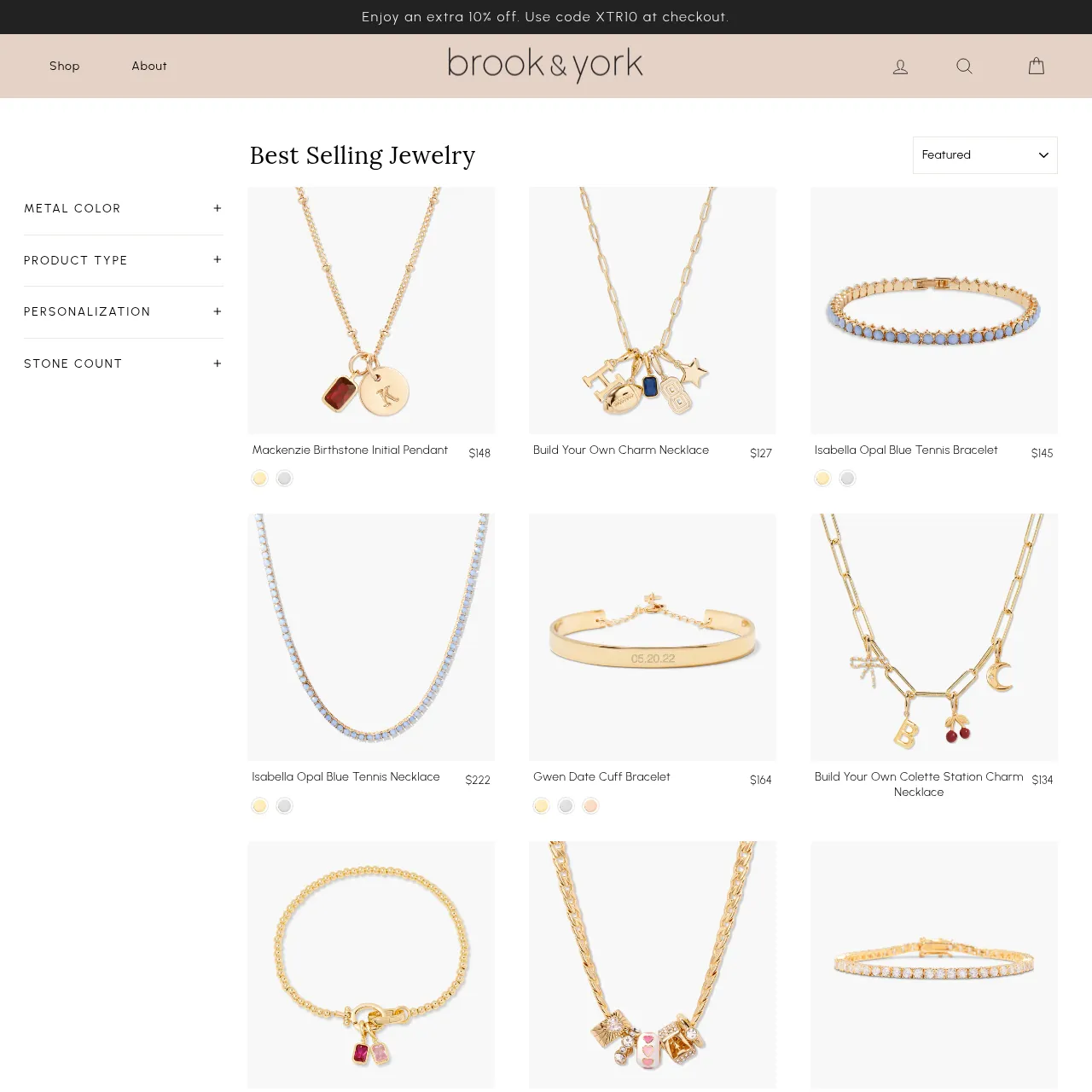
Brook & York approaches custom jewelry through three personalization pathways — birthstone, initial, and charm-build — that reduce decision friction and increase average order value. The modular 'Build Your Own Charm Set' is the anchor of the customization offer, giving consumers a configuration experience that feels premium without requiring bespoke production. The brand also adds upmarket aspiration through dedicated Diamond and Tennis Jewelry sub-collections, sitting alongside its fashion personalization range.
What Brook & York reveals for procurement teams: consumers now expect configuration architecture, not just "pick a stone." They expect to build sets, mix metals, and layer pieces. Importers sourcing OEM jewelry need to consider whether their catalog supports this kind of retail merchandising. A range that includes drop earrings, stud earrings, and coordinated necklace-earring sets gives DTC stores the visual storytelling backbone that drives this kind of layered sell-through.
Key Features:
- Build-your-own charm jewelry system with modular, mix-and-match customization
- Three distinct personalization pathways: birthstone, initial, and charm-build
- Broad category coverage: necklaces, bracelets, rings, earrings, anklets, pendants, charms
- Fine Jewelry and Diamond sub-collections alongside fashion personalization
- Seasonal drops (Game Day Jewelry, New Arrivals) indicate content-calendar-driven merchandising
Brook & York exposes no B2B pricing, MOQ, or material specifications. For importers, this is precisely the gap that a factory-direct OEM supplier fills.
Best For: Benchmarking modular customization UX that resonates with US and EU DTC consumers; understanding how to structure curated jewelry assortments for layered retail merchandising.
4. Jewlr — Consumer Benchmark: High-Volume DTC Personalization with Deep Stone and Metal Options
Jewlr is a consumer DTC brand with no wholesale tier. Included as a pricing and configuration benchmark.
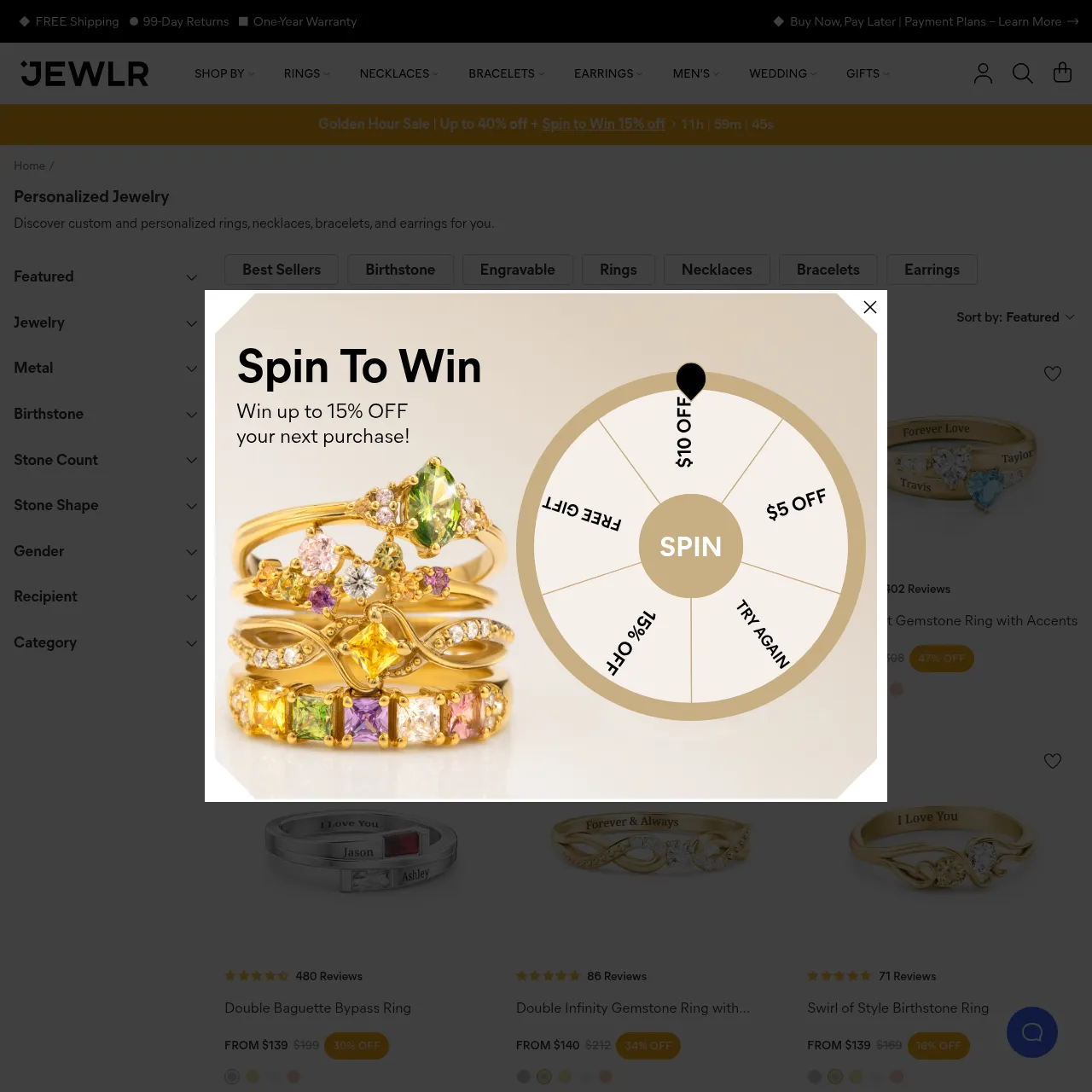
Jewlr's personalized jewelry operation is one of the more useful consumer pricing references for wholesale buyers evaluating the US market. The platform covers rings, necklaces, bracelets, earrings, charms, keychains, anklets, and sets across metals including Sterling Silver, Stainless Steel, White Gold, Gold Plated, and Vermeil. Stone configuration goes deep: shapes cover Round, Heart, Princess, Oval, Baguette, Pear, Marquise, and Cushion cuts, with stone counts ranging from 0 to 6 or more per piece.
The birthstone selection is explicitly granular: Garnet (January), Amethyst (February), Aquamarine (March), Diamond and Lab Diamond (April) are listed alongside the full twelve months. For importers building out a birthstone-focused assortment, this level of stone specificity is a direct reference for what US and EU consumers expect to configure at retail. The platform's 99-day return policy, one-year warranty, and Buy Now Pay Later options function as conversion tools on higher-priced personalized items — a DTC playbook worth understanding when you're building product for resale channels running similar programs.
Key Features:
- Metal options: Sterling Silver, Stainless Steel, White Gold, Gold Plated, Vermeil
- Stone shapes: Round, Heart, Princess, Oval, Baguette, Pear, Marquise, Cushion
- Birthstone coverage across all 12 months; 0 to 6+ stone count options
- Policies: 99-day returns, one-year warranty, Buy Now Pay Later
- 'Quick Ship' tag for differentiated fulfillment tiers
- Filterable by recipient (Mom, Girlfriend, Dad, Kids) and occasion (Wedding, Engagement, Family)
Jewlr's consumer system offers no MOQ, material certifications, or production lead times. Its value for procurement teams is the configuration depth it signals: if your end customers can order a peridot-set, baguette-cut, engravable ring through a DTC platform, they'll expect similar granularity from the stores they buy from.
Best For: Benchmarking birthstone assortment depth and consumer pricing tiers in the US market; understanding what fulfillment policies and return windows look like for personalized DTC orders.
5. Kay Jewelers — Consumer Benchmark: Retail-Scale Personalization Across U.S. Chain Stores
Kay Jewelers is a national U.S. retail chain with no wholesale or OEM supply tier. Included as a pricing and market benchmark.
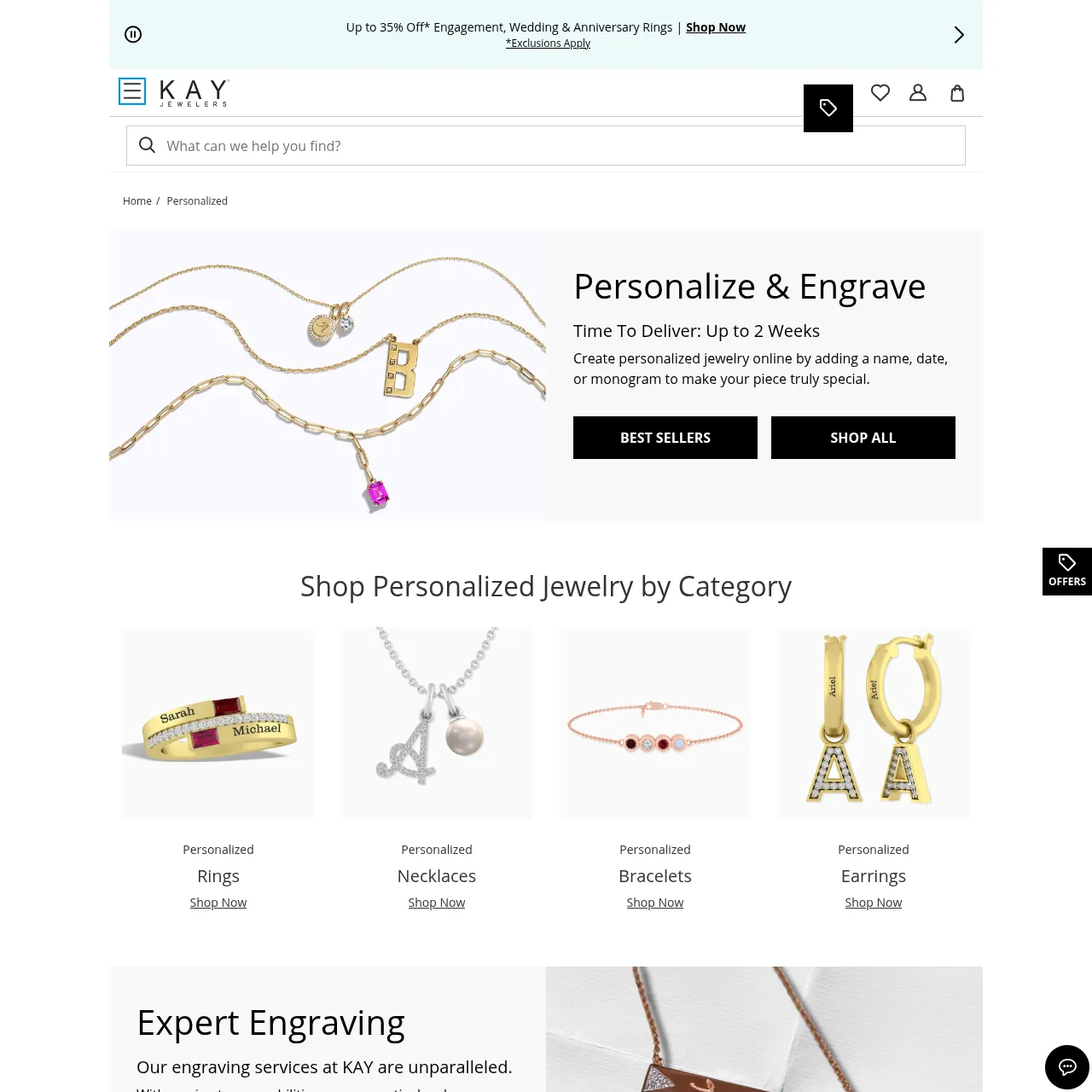
Kay Jewelers ranks on 'custom jewelry' through brand authority and retail SEO scale, not manufacturing differentiation. The personalization offer is engraving and birthstone additions layered over a standardized catalog — not true bespoke production. For buyers evaluating the luxury positioning of the US market, Kay sits alongside Jared and other national chain stores that serve the mass-market consumer through physical retail footprint rather than factory-level customization.
The insight for overseas importers is structural: Kay's model exposes a clear market gap. Buyers who need actual custom specs — specific alloys, hallmarking, MOQ flexibility, or private-label production — are entirely underserved by catalog-plus-engraving retailers, regardless of how large the chain. Kay's reach generates search authority; it cannot give wholesale buyers material certifications, production timelines, or custom finish options that OEM suppliers provide. For DTC store owners sourcing through B2B channels, Kay is useful primarily as a pricing ceiling reference — it shows what consumers will pay at retail for a personalized piece, giving you a benchmark to work backward from when calculating import margins.
Key Features:
- On-demand engraving applied to existing catalog pieces across women's, men's, and lab-grown diamond lines
- Broad category coverage eligible for personalization
- Integrated e-commerce personalization flow embedded directly in the shopping funnel
- Promotional pricing layered over personalized items, indicating high-volume consumer-retail positioning
Best For: Benchmarking consumer pricing expectations at the upper end of the US mass market; understanding the gap between retail-scale personalization (engraving-on-catalog) and true factory-level OEM customization.
6. Catbird — Consumer Benchmark: Fine and Demi-Fine Aesthetic Standard for Personalized Jewelry
Catbird is a premium DTC and physical retail brand with no wholesale supply tier. Included as an aesthetic and positioning benchmark.
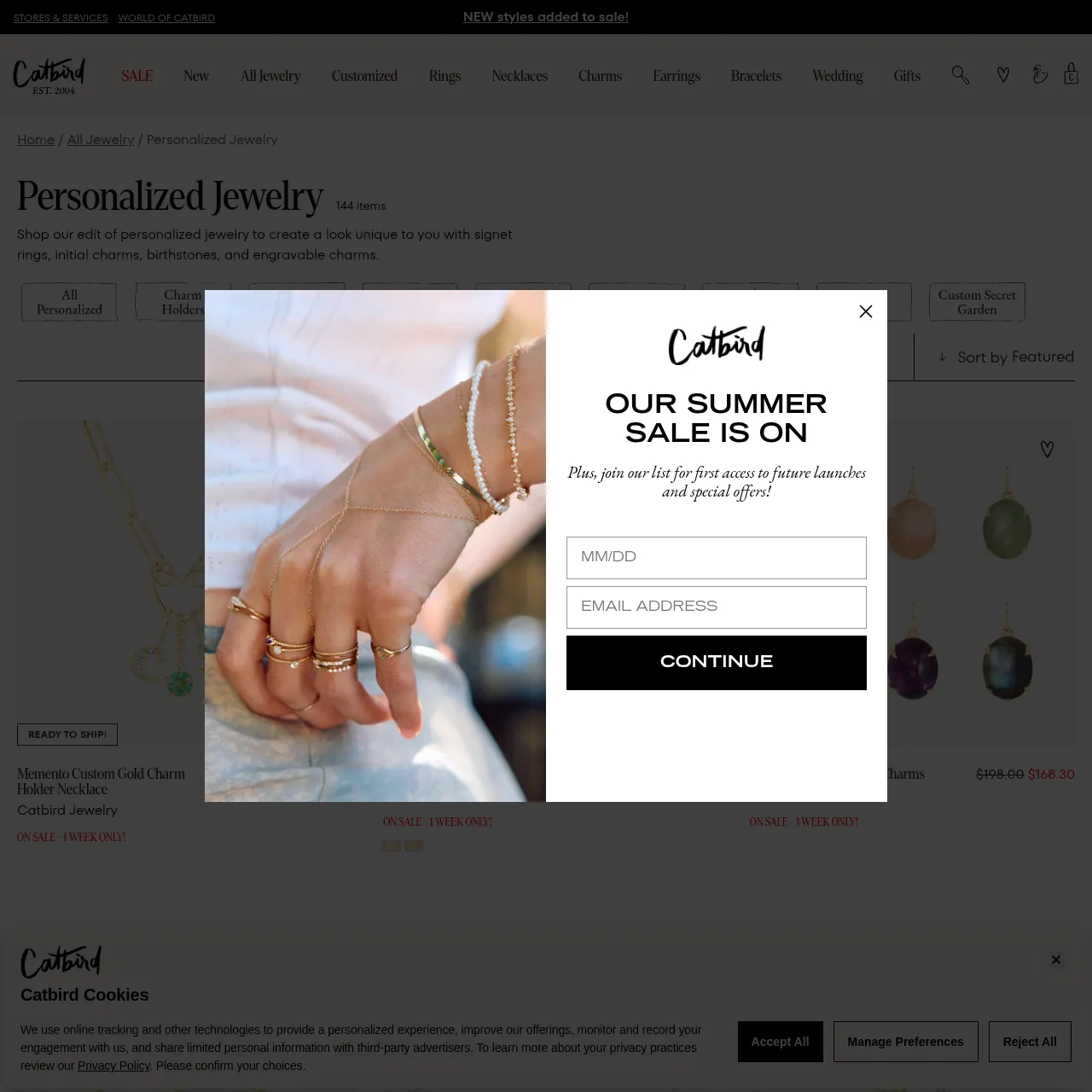
Catbird positions custom jewelry as a design-led, premium experience — and the URL structure ('designer-jewelry/personalized-jewelry') signals this clearly to both search engines and buyers. The product mix covers rings, pendants, and charms within a fine and demi-fine materials framework. For overseas procurement teams, Catbird sets a concrete aesthetic benchmark: what Western millennial and Gen Z consumers expect from personalized jewelry is minimal, stackable, and crafted — not bold, ornate, or mass-produced.
The jewelry that performs at Catbird's price point maps closely to high-velocity SKUs in personalized wholesale: thin stacking rings, initial pendants, engraved charms. For DTC store owners building assortments to resell, that product mix is a practical guide for which SKUs earn the most repeat purchase attention. The brand's active promotional calendar — sale sections, seasonal drops — also indicates a content-calendar-driven retail strategy, something DTC stores sourcing from OEM partners should mirror with regular product refresh cycles to maintain buyer engagement.
Key Features:
- Named and engraved personalization across rings, pendants, and charms
- Designer-tier URL and category positioning ('designer-jewelry/personalized-jewelry')
- DTC e-commerce model with multiple physical store locations
- Active seasonal drop and promotional cadence
Catbird discloses no material specs, stone sourcing, MOQ, or lead times. Its value for buyers is aspirational: it shows what the end consumer finds compelling when the product story and aesthetic are right.
Best For: Benchmarking the fine and demi-fine personalized jewelry aesthetic that resonates with US and EU millennial and Gen Z DTC buyers; understanding how minimal, stackable, story-driven products perform at premium price points.
What Overseas Buyers Should Evaluate Before Sourcing Custom Jewelry
The five consumer benchmarks above confirm one thing clearly: end-market demand for custom jewelry is stone-specific, modular, and narrative-driven. Garnet, amethyst, diamond, peridot, and turquoise all appear across top-performing consumer catalogs. Buyers' job is to translate that demand into concrete sourcing decisions.
Before requesting a quote from any custom jewelry supplier, evaluate these dimensions:
- MOQ and flexibility: What's the minimum per style? Can you test a single SKU before committing to volume?
- Materials and finishes: Alloy grade, plating microns, stone options — get these in writing, not in general terms
- Lead time and production capacity: Sample lead time, production lead time, and what happens during peak seasons
- QC process: In-house inspection or factory self-reporting?
- Trade terms and payment options: EXW vs. FOB changes your landed cost; payment methods affect cash flow planning
- Communication: Can the sales team handle your language and time zone without specification errors?
STRAND addresses each of these explicitly: direct factory access, 12-piece MOQ on most catalog styles, EXW and FOB trade terms, six-language multilingual support, and in-house QC before every shipment.
Ready to evaluate STRAND for your next custom jewelry order? Request pricing, MOQ details, or a sample at strandjewelry.com — the sales team responds in English, French, Arabic, Spanish, German, and Russian.