
How to Vet Wholesale Jewelry Distributors That Actually Deliver
How to Vet Wholesale Jewelry Distributors That Actually Deliver
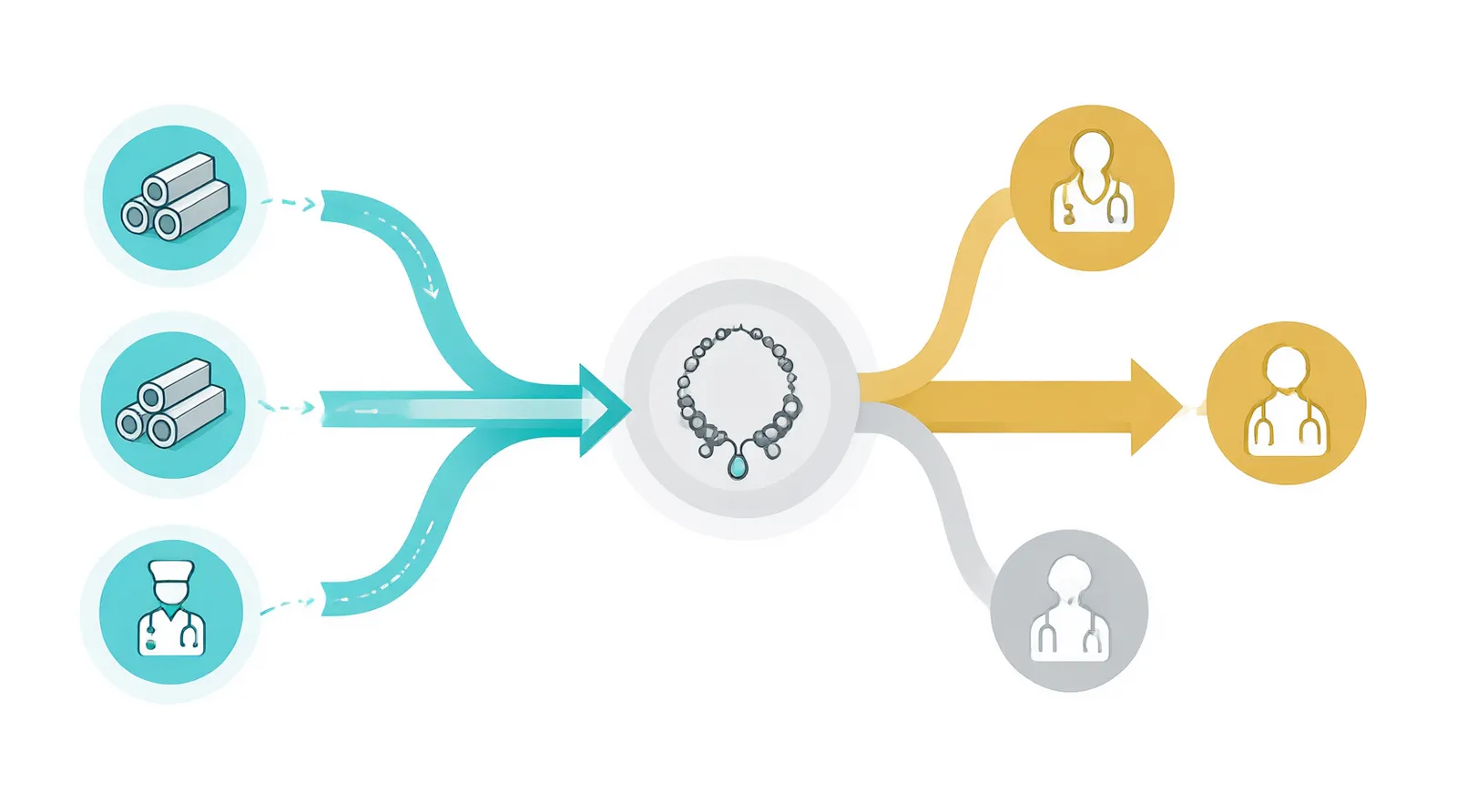
Wholesale jewelry distributors are specialized B2B intermediaries that source, verify, and supply bulk quantities of crafted jewelry—ranging from gold-tone brass pieces to sterling silver collections—to retailers, importers, and direct-to-consumer (DTC) brands at tiered pricing. They bridge the gap between manufacturing floors and retail storefronts by managing logistics, quality control, and minimum order requirements.
For overseas buyers, procurement teams, and independent DTC store owners, finding reliable wholesale jewelry distributors is rarely about chasing the lowest price per gram. It is about securing consistent access to vetted materials, predictable lead times, and craftsmanship that aligns with your brand's positioning. A distributor handling 18k gold-plated brass earrings for a Middle Eastern market operates under entirely different quality expectations than one moving unverified fast-fashion accessories. Understanding how these supply chains function determines whether your inventory arrives on time, matches your approved samples, and satisfies your end customers.
If you are evaluating suppliers for an upcoming season or expanding into new regional markets, knowing exactly what to ask—and what red flags to avoid—protects your margins and your reputation. For foundational buying strategies before reaching out to suppliers, review The Smart Buyer's Guide to Jewellery in Wholesale to understand baseline evaluation criteria.
What Are Wholesale Jewelry Distributors?
A wholesale jewelry distributor is not simply a middleman who marks up prices. They are operational hubs that aggregate inventory from multiple artisans or factories, subject those goods to quality verification, and fulfill bulk orders for retail businesses. Unlike manufacturers who focus exclusively on production, distributors manage the complexities of international trade, including export documentation, customs compliance, and multi-tier packaging.
The Role They Play in the Supply Chain
Distributors stabilize the supply chain by absorbing the risks associated with raw material fluctuations and production delays. When a retailer orders 500 units of 14k gold-plated pendants, the distributor ensures the plating thickness meets specific micron standards—often ranging from 0.5 to 3 microns depending on the piece's intended wear—before it ever leaves the warehouse.
For example, a boutique in Dubai sourcing modest, culturally appropriate gold-tone jewelry relies on their distributor to guarantee that every batch of hammered brass cuffs maintains the exact color saturation and weight as the initial sample. If the distributor fails at this verification step, the retailer faces returns, lost trust, and wasted freight costs. STRAND operates within this framework by focusing on crafted, vetted collections rather than high-volume, low-consideration bulk goods, ensuring that every piece distributed meets strict aesthetic and structural standards.
Distributors vs. Manufacturers vs. Wholesalers
Buyers frequently confuse these three entities. A manufacturer owns the tooling and produces the raw item. A wholesaler buys finished goods in large quantities and resells them. A wholesale jewelry distributor combines elements of both but adds critical layers: they curate assortments, perform incoming quality inspections, handle international logistics, and often provide marketing assets or localized compliance data (such as nickel-free certifications required in certain European markets). Selecting the right partner requires understanding these distinctions; our guide on how to choose a jewelry wholesale vendor breaks down these operational differences further to help you identify the best fit for your business model.
Why Partnering With Verified Distributors Matters
Working with unvetted sources exposes procurement teams to inconsistent alloy mixtures, inaccurate stone settings, and delayed shipments. Verified wholesale jewelry distributors act as a firewall against these liabilities.
Protecting Brand Reputation Through Quality Control
When a DTC brand promises its customers hypoallergenic sterling silver, a single batch contaminated with high-nickel alloys can trigger widespread skin reactions and devastating reviews. Established distributors implement incoming inspection protocols. They use X-ray fluorescence (XRF) analyzers to verify metal composition before items are packed for international transit. This level of scrutiny is non-negotiable for brands building long-term customer loyalty.
Cultural and Regional Market Alignment
Sourcing for specific regions requires more than just translating a product description. In MENA (Middle East and North Africa) markets, buyers heavily favor rich gold tones, intricate geometric patterns, and designs that align with local modesty standards. A competent distributor understands these nuances. They know that a delicate, minimalist rose-gold chain popular in Scandinavia may underperform in Riyadh compared to a substantial, 18k gold-plated statement piece. Distributors with regional expertise guide buyers toward assortments that actually convert in their target demographics, preventing costly dead stock.
Predictable Logistics and Customs Navigation
International freight involves commercial invoices, certificates of origin, and harmonized system (HS) codes. A distributor experienced in overseas fulfillment handles this administrative burden. If you are importing 2,000 units of mixed brass and silver jewelry into the United States, the distributor ensures the HS codes accurately reflect the base metals to prevent customs holds. Delays at port can cost thousands in storage fees; professional distribution networks minimize this risk through precise documentation. Mastering these logistics is a core component of effective wholesale jewelry sourcing, which directly impacts your landed costs and delivery timelines.
How to Evaluate Wholesale Jewelry Distributors
Selecting the right partner requires a systematic approach. Buyers should evaluate distributors across four concrete dimensions before signing purchase orders or transferring deposits.
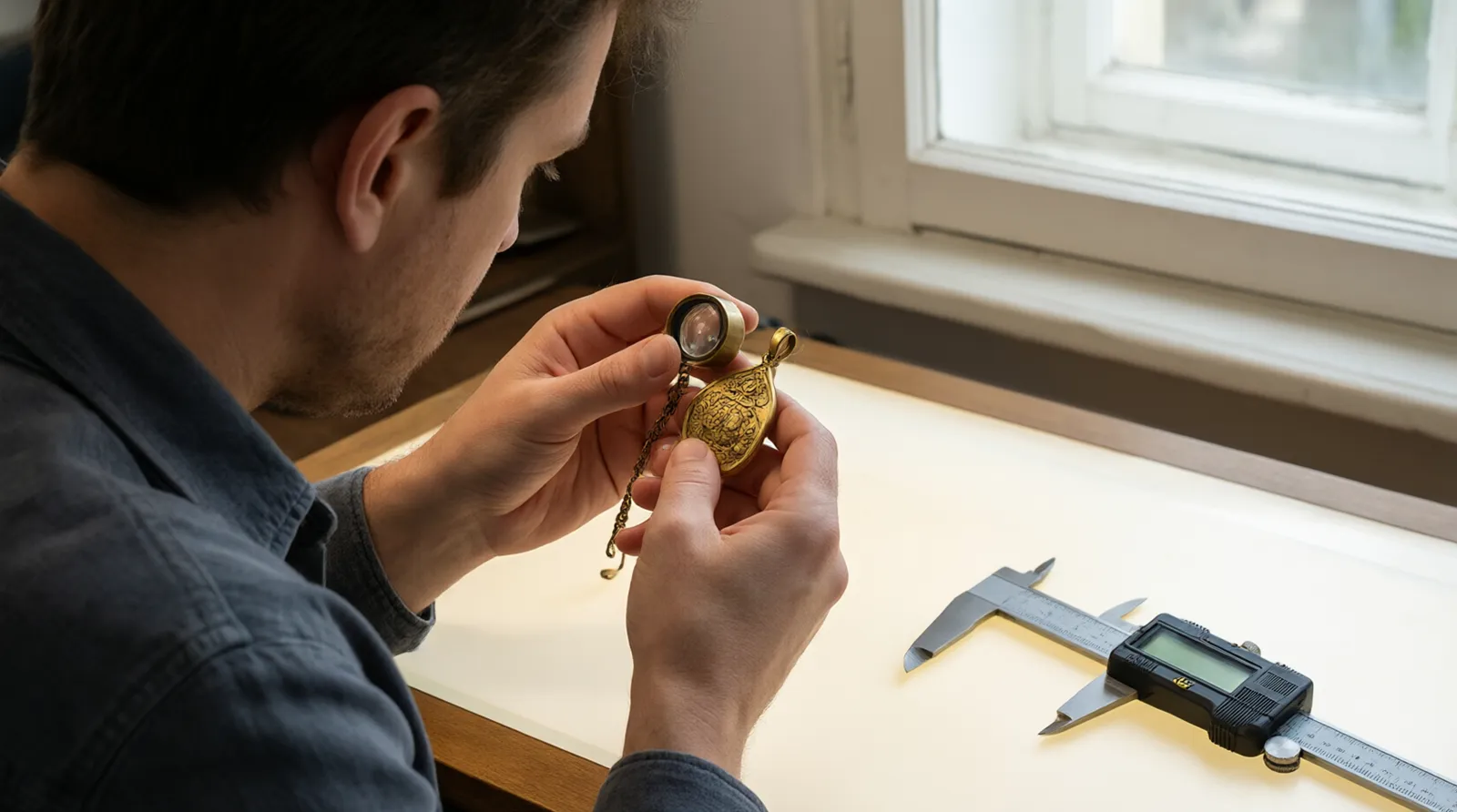
1. Materials and Craftsmanship Verification
Request detailed specifications for every category you intend to buy. Do not accept vague terms like "high-quality gold." Ask specifically:
- Base Metal: Is it solid brass, copper, or stainless steel?
- Plating Thickness: Measured in microns. A standard fashion piece might have 0.1 to 0.3 microns, while crafted, durable pieces require 1 to 3 microns of 14k or 18k gold plating.
- Stone Setting: Are cubic zirconia stones glued or prong-set? Prong-setting indicates higher craftsmanship and longevity.
- Finishing: Is there an e-coating or anti-tarnish layer applied over the plating?
Distributors confident in their inventory will provide these specs without hesitation. For a deeper breakdown of how to assess material grades and supplier claims, consult Jewellery Wholesale Supplies: The Smart Buyer's Guide, which outlines specific questions buyers should ask regarding finishes and base metals.
2. Minimum Order Quantities (MOQ) and Tiered Pricing
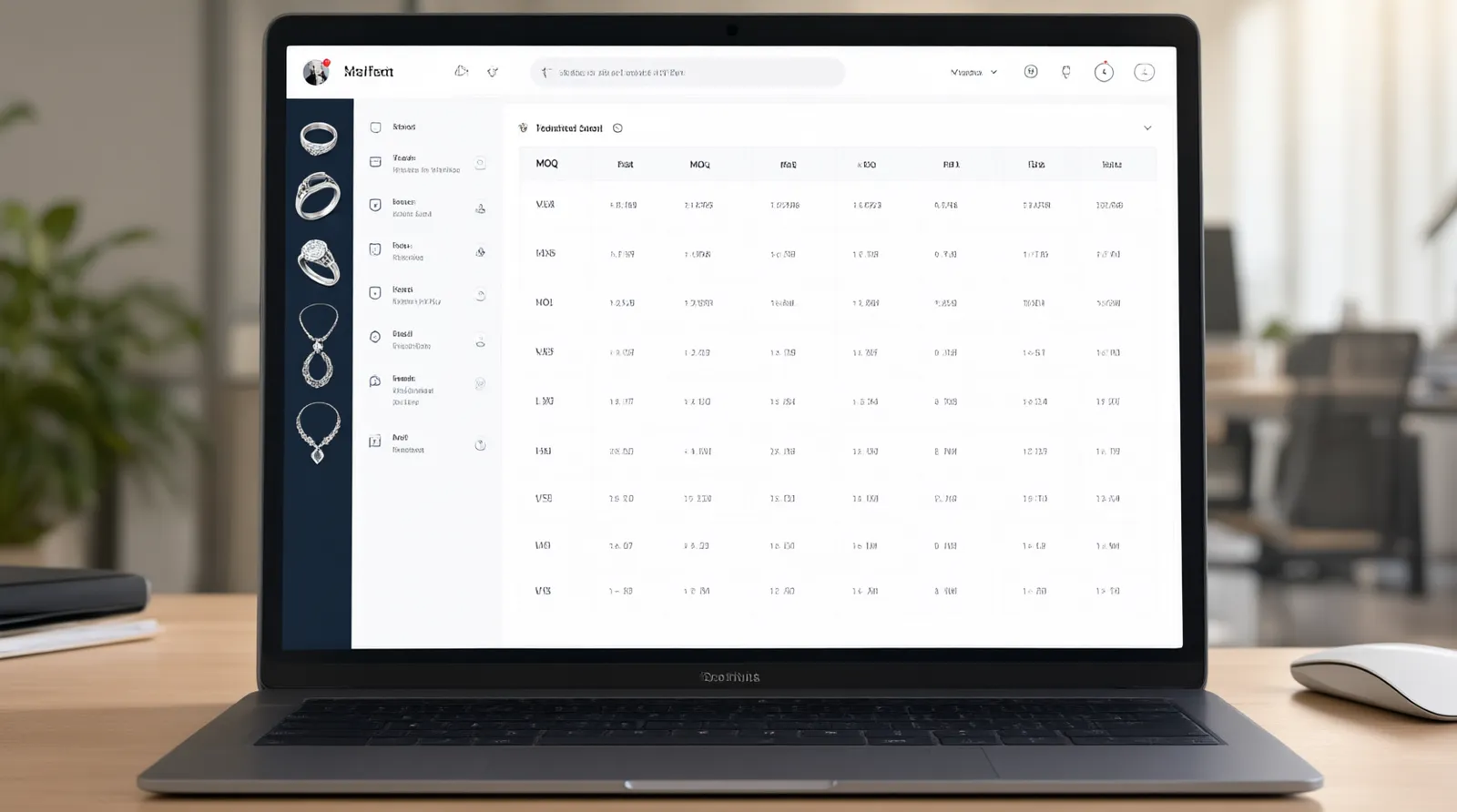
MOQs dictate your cash flow. Some distributors require a flat minimum spend (e.g., $5,000 per order), while others set unit minimums per SKU (e.g., 50 units per earring style). Evaluate how the distributor structures their tiers. A common model offers incremental discounts as volume increases—for instance, a lower per-unit cost when ordering 500 pieces versus 100 pieces. However, ensure the MOQ aligns with your actual sales velocity. Over-ordering to hit a discount tier results in warehousing costs that erase your margin gains. STRAND provides clear MOQ parameters tailored to curated collections, allowing buyers to plan inventory without being forced into excessive bulk. Always request current terms directly from the supplier, as pricing structures shift based on raw material markets.
3. Lead Times and Production Schedules
"Fast shipping" means nothing if the production phase takes weeks. Break down the timeline into two phases:
- Production/Sampling Lead Time: How long from deposit payment to finished goods? Custom designs or specific plating requests typically require longer lead times than purchasing existing in-stock inventory.
- Transit Time: Depends entirely on the shipping method chosen (see below).
Always build a buffer into your planning. If a distributor quotes a 15-day production lead time, plan for 20 days to account for quality inspections and packing.
4. Shipping Options and Freight Forwarding
Reliable wholesale jewelry distributors offer multiple shipping modalities based on urgency and budget:
- Air Express (DHL, FedEx, UPS): Best for sampling, urgent restocks, or high-value, low-weight shipments. Transit usually takes 3 to 7 business days globally.
- Air Freight: More economical than express for medium-sized orders (e.g., 50–100 kg), delivered airport-to-airport. Requires your own customs broker at the destination.
- Sea Freight: The most cost-effective method for large, heavy orders (e.g., over 200 kg or full pallets), though transit times range from 20 to 45 days depending on the origin and destination ports.
Ask the distributor if they ship DDP (Delivered Duty Paid) or DAP (Delivered at Place). DDP means the distributor handles all import taxes and customs clearance, delivering straight to your door. DAP means you are responsible for clearing customs upon arrival.
When Should You Use Wholesale Jewelry Distributors?
Timing your engagement with a distributor dictates your success. Buyers typically reach out during three specific operational phases.
Pre-Launch Inventory Building
If you are launching a new DTC brand or opening a physical boutique, you need a complete assortment ready for day one. Engaging a distributor 60 to 90 days before launch allows sufficient time for sampling, approving prototypes, finalizing bulk production, and completing international transit. Rushing this phase forces compromises on quality or reliance on expensive air express shipping.
Seasonal Restocking and Trend Adaptation
Retail cycles demand fresh inventory. If your analytics show a surge in demand for gold-tone hoop earrings ahead of the holiday season, you must place orders months in advance. Distributors with agile supply chains allow buyers to inject trending styles into their catalogs without waiting for annual buying cycles.
Scaling Beyond Local Suppliers
Many businesses start by buying from domestic wholesalers. As volume grows, domestic markups compress margins. Transitioning to international wholesale jewelry distributors—particularly those specializing in crafted, vetted goods—allows scaling brands to maintain competitive retail pricing while improving product quality.
The Benefits of Working With Specialized Distributors
Partnering with the right distributor yields compounding advantages that extend far beyond unit economics.
Access to Curated, Vetted Collections
Generalist bulk suppliers often mix high-quality items with poorly constructed filler products. Specialized distributors curate their catalogs. Every piece undergoes visual and structural inspection. This saves procurement teams hundreds of hours they would otherwise spend sorting through defective goods or negotiating returns for substandard items.
Streamlined Procurement Workflows
Managing relationships with ten different factories is administratively exhausting. A distributor consolidates this. You issue one purchase order, make one wire transfer, and track one shipment, even if the order contains rings, necklaces, and bracelets produced on different lines. This consolidation drastically reduces accounting errors and logistical friction.
Risk Mitigation Through Returns and Warranty Policies
Before placing a bulk order, clarify the distributor's policy on defects. What percentage of defect rate is considered acceptable in the industry? (Often, a 1% to 3% tolerance is standard for handcrafted goods). How are replacements handled? Reputable distributors offer credit notes or direct replacements for verified manufacturing flaws, protecting the buyer's bottom line.
Red Flags to Avoid During Verification
Not all distributors operate with integrity. Procurement teams must actively look for warning signs during the vetting process.
Vague Material Descriptions
If a supplier lists items simply as "gold jewelry" without specifying whether it is solid, filled, or plated—and fails to provide the karat or micron thickness—walk away. Transparency regarding base metals (e.g., confirming brass versus zinc alloy) is the bare minimum for professional wholesale jewelry distributors. Zinc alloys are lighter and cheaper but prone to breaking and causing skin irritation, whereas brass offers durability and a better foundation for high-quality plating.
Unwillingness to Provide Samples
Never authorize a bulk production run based solely on digital photographs. Request physical samples of the exact styles you intend to order. Test the clasp mechanisms, check the plating edges for uneven coverage, and weigh the pieces. A distributor who refuses to send samples, or charges exorbitant fees for them without deducting the cost from future bulk orders, is hiding poor craftsmanship.
Lack of Business Verification
Perform basic due diligence. Request their business registration documents. Check if they have verifiable physical addresses for their offices or warehouses. Use third-party platforms or trade assurance programs that hold funds in escrow until goods are received and inspected. Distributors operating successfully in international markets will be accustomed to these verification requests and respond promptly.
Actionable Steps for Overseas Buyers
Transitioning from research to procurement requires a structured approach. Follow these steps to initiate contact with confidence.
- Define Your Specifications: Write down your exact requirements for base metals, plating thickness, stone types, and dimensions (e.g., pendant drop length in millimeters).
- Request a Catalog and Price List: Ask the distributor for their current catalog filtered by your specific criteria (e.g., "Show me only 18k gold-plated brass items suitable for the MENA market").
- Order Samples: Select 3 to 5 representative SKUs. Pay the sampling fee and shipping. Evaluate the physical items against your spec sheet.
- Negotiate Terms: Once samples are approved, discuss MOQ, per-unit pricing, production lead time, and shipping method (Air Express vs. Sea Freight). Confirm warranty and defect policies in writing.
- Start with a Trial Order: Before committing to your maximum budget, place a smaller trial order to test the distributor's adherence to timelines, packing quality, and communication responsiveness.
Sourcing crafted jewelry internationally demands precision, patience, and a refusal to compromise on material integrity. By rigorously evaluating wholesale jewelry distributors across materials, logistics, and verification protocols, procurement teams secure supply chains that support sustainable brand growth rather than short-term, risky transactions. Review your current vendor list against the criteria outlined above. Identify gaps in their material transparency or shipping flexibility, and begin requesting quotes from vetted alternatives today. To explore curated, high-integrity collections built for discerning global retailers, [Contact the supplier] to request current catalogs, discuss specific MOQ parameters, and get a quote for your next seasonal assortment.
Frequently Asked Questions
What is wholesale jewelry distributors?
Wholesale jewelry distributors like STRAND supply vetted, crafted pieces—such as 18k gold-plated brass and 925 sterling silver rings (sizes 5–10) or 45cm necklaces—to DTC stores, importers, and procurement teams globally. STRAND maintains a minimum order quantity (MOQ) of 50 units per SKU with a standard production lead time of 15–20 business days before dispatch. Finished orders ship via DHL Express for urgent deliveries or consolidated air/sea freight for larger volumes, including curated modest collections in rich gold tones specifically suited for MENA markets.
How to wholesale jewelry distributors?
To work with STRAND as your wholesale jewelry distributor, submit a B2B inquiry specifying your required materials (e.g., 18k gold-tone brass, sterling silver), dimensions, and target market—such as modesty-appropriate, gold-tone collections for MENA buyers. Our standard MOQ is 50 vetted, crafted pieces per SKU with a 3–4 week production lead time, ensuring quality over bulk volume. We ship globally via DHL Express or air freight to DTC stores, importers, and procurement teams, providing full tracking and export documentation.
Why is wholesale jewelry distributors important?
Wholesale jewelry distributors like STRAND are essential for DTC stores, importers, and procurement teams because they provide vetted, crafted collections—such as 18k gold-tone vermeil, 925 sterling silver, and natural gemstones—with precise specifications (e.g., 16–18" chain lengths, 8mm stone dimensions) rather than bulk fast fashion. STRAND ensures reliable global supply chains with clear MOQs starting at 50 units, 3–4 week production lead times, and secure shipping options via DHL Express or insured sea freight to meet international retail demands. This is especially valuable for MENA markets, where STRAND carefully curates culturally appropriate designs featuring modest silhouettes and rich gold tones that resonate with regional preferences.
When should I use wholesale jewelry distributors?
Use wholesale jewelry distributors like STRAND when your DTC store or procurement team needs vetted, crafted pieces—such as 18k gold-tone brass or 925 sterling silver—in defined dimensions with MOQs starting at 50 units. STRAND is ideal for importers requiring reliable 3–4 week production lead times and flexible shipping options (air freight or sea consolidation) to meet seasonal inventory plans. For MENA buyers specifically, STRAND curates modest, culturally considered designs in rich gold tones that align with regional preferences without compromising on artisanal quality.
What are the benefits of wholesale jewelry distributors?
Working with STRAND as your wholesale jewelry distributor ensures access to vetted, crafted pieces—such as 18k gold-plated 925 sterling silver rings or 45cm vermeil chains—with clear MOQs starting at 50 units and reliable lead times of 14–21 days. We support DTC stores, importers, and procurement teams globally via insured DHL or sea freight options tailored to your volume. For MENA buyers, our curated collections emphasize modesty-appropriate designs and rich gold tones that honor regional preferences while maintaining exceptional material integrity.