
How to Source the Perfect Stainless Steel Bangle Bracelet
How to Source the Perfect Stainless Steel Bangle Bracelet
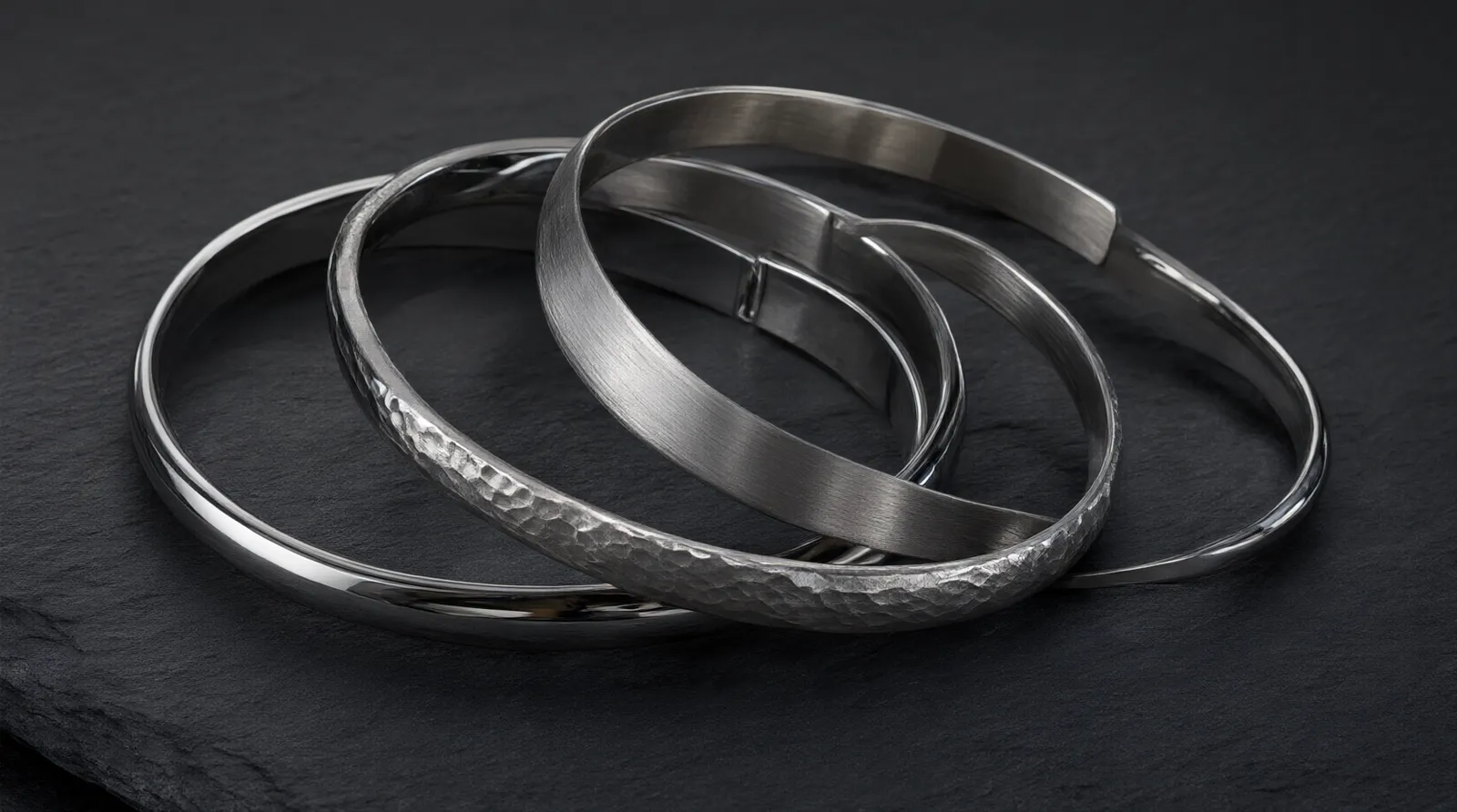
A stainless steel bangle bracelet is a rigid, circular wrist ornament crafted from corrosion-resistant steel alloy, designed for daily wear without tarnishing or degrading. For procurement teams and direct-to-consumer retailers, this category represents one of the highest-margin, lowest-return segments in modern jewelry sourcing due to its structural durability and broad demographic appeal.
Sourcing the right piece requires understanding more than just aesthetics. Buyers evaluating inventory for DTC storefronts or import catalogs must weigh metallurgical composition, surface finishing techniques, dimensional tolerances, and supplier reliability. A poorly specified order leads to high return rates; a precisely vetted one builds brand loyalty. STRAND approaches this category with an emphasis on crafted, vetted production rather than bulk commodity manufacturing, ensuring every piece meets strict quality thresholds before shipping.
Whether you are building a core collection for a regional boutique or expanding an importer's catalog across multiple markets, understanding the mechanics behind these pieces separates successful purchasing decisions from costly mistakes. This guide breaks down exactly what buyers need to evaluate before reaching out to a supplier.
What Exactly Is a Stainless Steel Bangle Bracelet?
At its core, a stainless steel bangle bracelet differs from a chain or cuff bracelet through its rigid, continuous circular geometry. Unlike flexible links that drape over the wrist, a bangle maintains its shape, sliding over the hand to rest at the narrowest part of the wrist.
The material itself is typically 316L surgical-grade stainless steel. This specific alloy contains molybdenum, which drastically increases resistance to pitting and corrosion compared to standard 304 steel. For jewelry buyers, specifying 316L is non-negotiable if the target market includes regions with high humidity or if the end consumer wears the piece daily without removal. The "L" denotes low carbon content, preventing carbide precipitation during welding or shaping, which ensures the structural integrity of the bracelet remains intact over years of use. If you are also curating assortments for female demographics, our guide on stainless steel bracelet for women covers sizing and style preferences in greater depth.
Material Composition and Sizing Standards
Bangles do not have clasps. Because of this, sizing relies entirely on inner diameter measurements. Standard women's sizes typically range from 60mm to 70mm in inner diameter, while men's or unisex designs often start at 75mm. Procurement teams should request exact millimeter specifications from suppliers rather than relying on generic "small, medium, large" designations, as a 2mm variance can render a rigid bangle unwearable for the intended customer base.
Thickness also dictates both weight and perceived value. A 2mm wire-thickness bangle reads as delicate and minimalist, whereas a 6mm to 8mm width carries substantial visual weight. When comparing product lines, consider how STRAND balances these dimensions to achieve a crafted feel—heavy enough to convey quality, but calibrated so it doesn't fatigue the wearer's wrist during all-day use.
How to Evaluate and Source the Right Piece
Procuring jewelry for retail or import is not about browsing a catalog; it is a systematic verification process. Buyers must establish clear criteria before initiating contact with a manufacturer or distributor.
Defining Your Specifications
Start by locking down the physical parameters. Determine the required inner diameter range, the preferred cross-sectional shape (round wire, flat band, oval, or square), and the surface finish. Mirror polishing requires extensive buffing stages, while PVD (Physical Vapor Deposition) coating allows for gold or rose-gold tones without using solid precious metals.
For buyers targeting Middle Eastern and North African (MENA) markets, cultural preferences heavily influence specification choices. Gold tones are traditionally favored, making 18k gold PVD-plated options highly relevant. Furthermore, modesty in adornment often means consumers prefer pieces that are elegant and structurally sound without being excessively loud or overly embellished. A clean, well-proportioned bangle in a warm gold tone frequently outperforms highly ornate designs in these demographics.
Verification and Quality Control
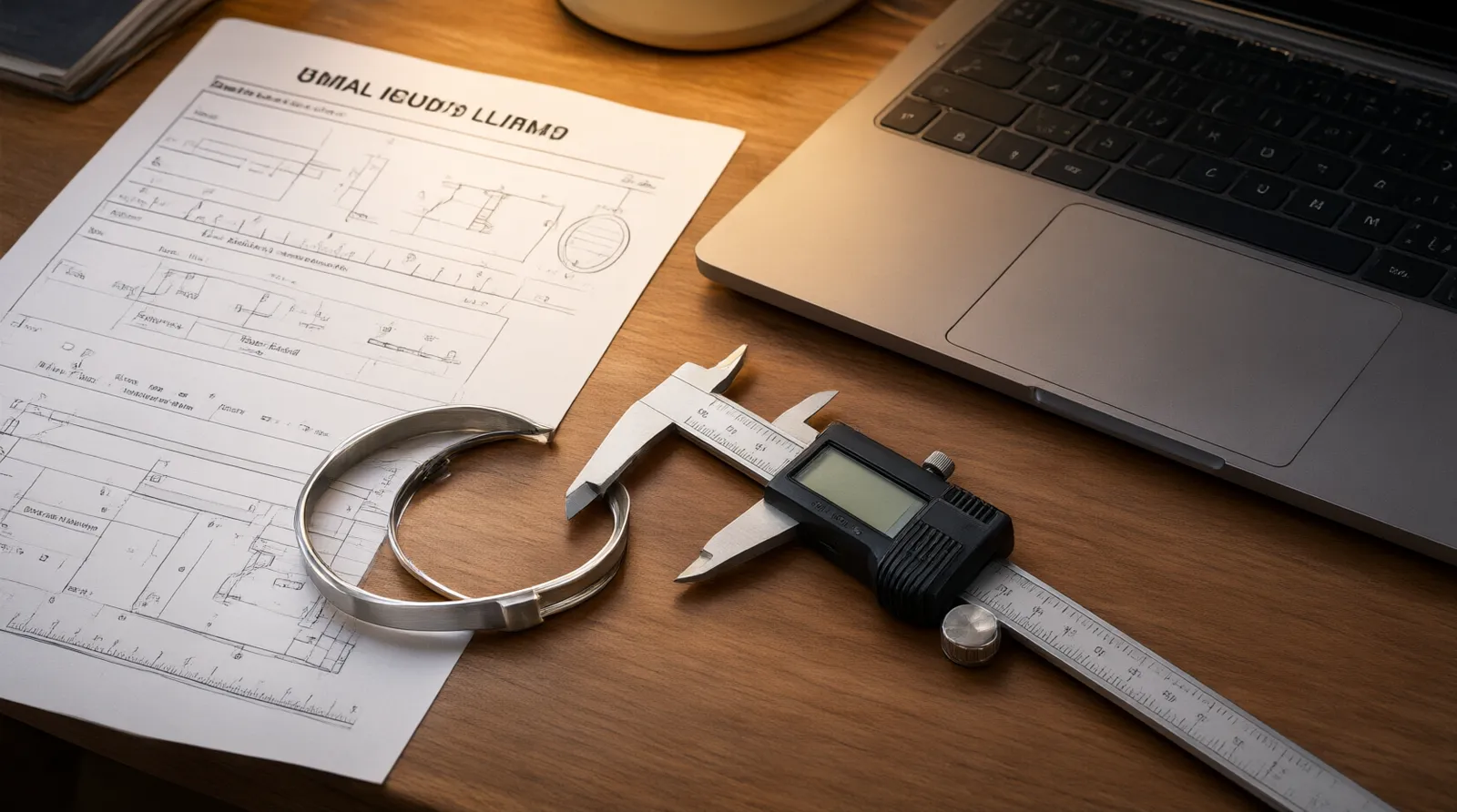
Before approving a production run, request pre-production samples. Verification involves checking the sample against your spec sheet for dimensional accuracy, weight consistency, and finish quality. Look closely at the seam if the bangle is formed from a bent rod rather than cast or stamped from a solid ring. Any visible gap, rough edge, or discoloration at the joint indicates poor manufacturing execution.
Security in the supply chain also matters. Confirm that the supplier provides material certification verifying the 316L grade. Reputable manufacturers will readily supply mill test certificates. Waiting for these documents before placing a deposit protects your capital and ensures the final shipment matches the approved sample. Understanding broader stainless steel jewelry supplies helps procurement teams verify certifications and raw materials consistently across different product categories.
Why This Category Matters for Jewelry Retailers
Inventory planning requires focusing on items that generate consistent revenue with minimal operational friction. A stainless steel bangle bracelet fits this profile precisely because of its material properties and market positioning.
Durability Meets Consumer Demand
Consumers increasingly expect their everyday jewelry to withstand water, sweat, cosmetics, and friction without degrading. Traditional brass or copper-alloy fashion jewelry tarnishes quickly, leading to customer complaints and return requests. Steel eliminates this failure point. It does not oxidize under normal environmental conditions, meaning the retailer rarely has to process returns based on material degradation.
This durability allows DTC brands to position these items as permanent wardrobe staples rather than disposable seasonal accessories. STRAND operates on this principle, treating each piece as a crafted object meant to endure, which elevates the brand's perceived value far above fast-fashion competitors.
Margin Potential and Inventory Stability
Because the raw material cost of 316L steel is significantly lower than sterling silver or solid gold, the gross margin potential is substantial. Retailers can price these items accessibly while maintaining healthy markups. Additionally, unlike trend-dependent items featuring specific gemstones or enamel colors, a plain or minimally textured steel bangle has a long shelf life. It does not become visually obsolete after a single season, reducing the risk of dead stock.
Buyers looking to diversify beyond minimalist steel might also explore complementary statement pieces to round out a collection. For a deeper dive into structured link designs, check out our guide on Vintage Gemstone Cuban Chain Bracelet-Orange — STRAND (СТРЭНД). Pairing a rigid bangle with a heavier chain bracelet creates a layered look that drives higher average order values when merchandised together.
When Should You Use This Type of Bracelet?
Understanding the use-case scenarios helps procurement teams decide how many units to allocate to specific collections and how to brief marketing departments on product positioning.
Daily Wear and Active Lifestyles
The primary use case is uninterrupted daily wear. End consumers who work in healthcare, hospitality, or manual professions often cannot wear porous materials or pieces with fragile clasps. A solid, hinge-less bangle made from steel survives constant hand washing, exposure to sanitizers, and physical impact. If your target demographic includes active professionals, this is the foundational item to stock.
Layering and Stacking
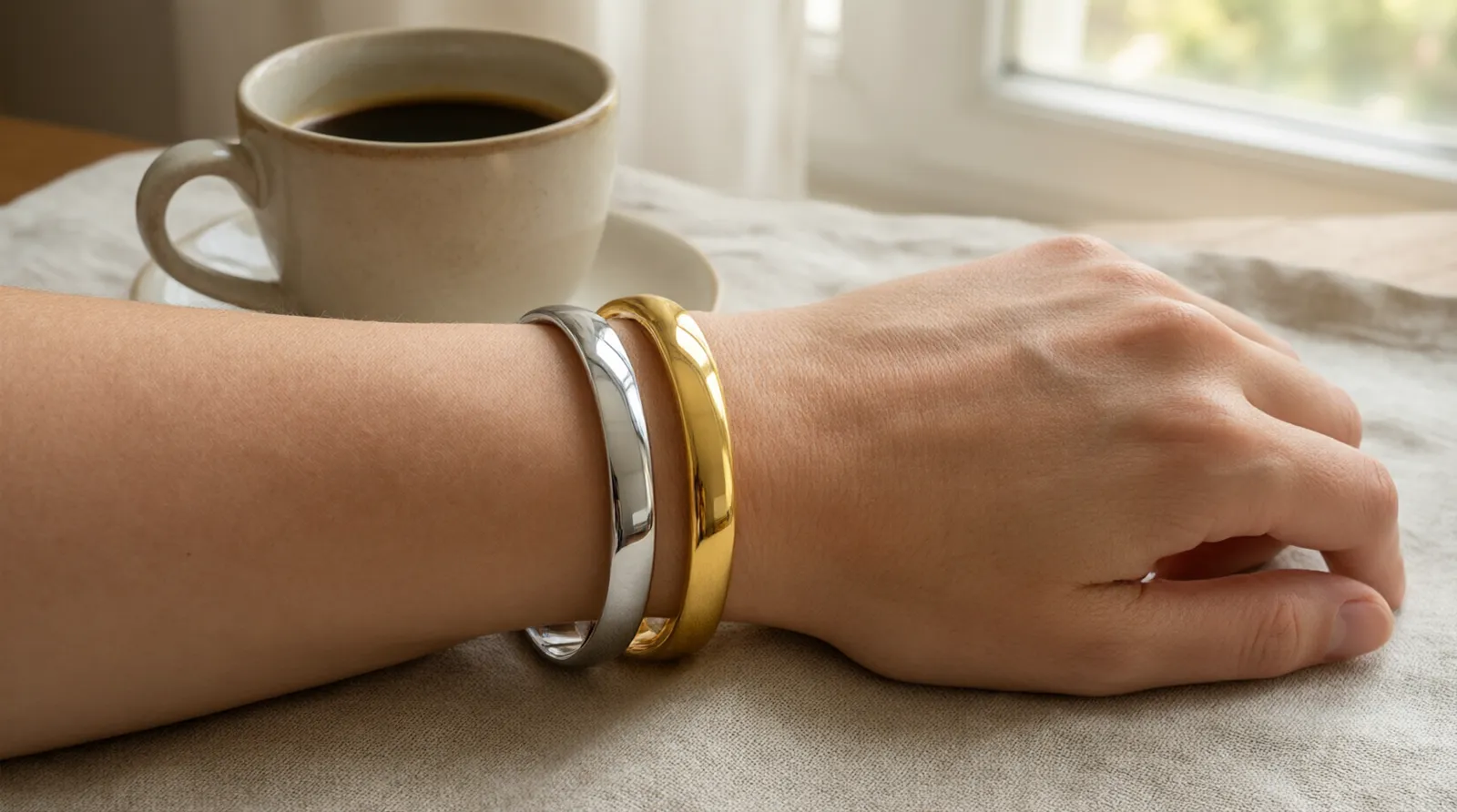
Retail styling heavily favors stacking multiple thin bangles alongside watches or wider cuffs. When sourcing for this trend, ensure the edges of the bangle are perfectly smoothed. If a buyer stacks three bracelets and the edges are sharp or poorly finished, they will scratch against each other and the wearer's skin. Specify tumble-polishing or hand-finishing protocols with your supplier to guarantee stackability.
Gifting and Cultural Occasions
Rigid bracelets carry a sense of permanence that makes them ideal for gifting. In many cultures, presenting a circular, unbroken band symbolizes continuity and commitment. For MENA buyers specifically, offering sets of gold-toned bangles aligns perfectly with gifting traditions during weddings, Eid, and other significant celebrations. While steel serves as the durable foundation, incorporating glass or stone accents can broaden the appeal for special occasions. While a stainless steel bangle bracelet focuses on structural minimalism, you might also be interested in the Turquoise & Pearl Glass Jewelry Set (Necklace & Bracelet) — STRAND (ستراند) which covers coordinated multi-piece sets ideal for occasion-based retail strategies.
The Core Benefits for Procurement Teams
Evaluating a product category requires looking past the end consumer's experience and analyzing the logistical and financial advantages for the buyer.
Low Maintenance and High Customer Satisfaction
From a post-purchase support perspective, steel is exceptionally forgiving. Retailers do not need to include specialized cleaning cloths, anti-tarnish bags, or complex care instructions with the shipment. This reduces packaging costs and simplifies the unboxing experience. Customers respond positively to items that require zero maintenance, directly translating to higher repeat purchase rates and stronger reviews.
Hypoallergenic Properties
316L surgical steel is widely recognized as hypoallergenic. It contains negligible amounts of nickel release compared to cheaper base metals. For importers dealing with strict consumer safety regulations in the EU or North America, sourcing certified 316L mitigates compliance risks related to skin irritation claims. Always request documentation proving the nickel-release rate falls within acceptable regulatory limits (such as the EU REACH regulation standards) before finalizing an order.
Supply Chain Predictability
Steel is a globally traded commodity with stable pricing mechanisms. Unlike precious metals subject to extreme daily volatility, the raw material cost for a bangle remains relatively predictable. This stability allows procurement teams to forecast budgets accurately across multiple quarters without worrying that a sudden spike in commodity prices will erase their margins. Once you have secured reliable bangle inventory, exploring complementary categories like a stainless steel ring can help build a cohesive, high-margin collection for your store.
Procurement Criteria: What to Ask Before Ordering
Reaching out to a supplier like STRAND requires a structured inquiry. Vague requests yield vague quotes. To secure accurate pricing, lead times, and terms, prepare the following evaluation dimensions before initiating contact.
Minimum Order Quantities (MOQ)
Determine the supplier's MOQ per SKU and per size. A common approach for crafted jewelry houses is to set MOQs based on total unit volume across a style, allowing size breakdowns within that minimum. If you require five different inner diameters, clarify whether the MOQ applies to the total batch or individually to each size. Smaller DTC stores may need to negotiate tiered pricing if their initial order falls below standard wholesale thresholds.
Lead Time and Production Scheduling
Ask explicitly for two timelines: sampling lead time and bulk production lead time. Sampling typically takes less time, but custom tooling for unique bangle profiles (such as a specific hammered texture or engraved pattern) can extend this phase. Bulk production depends heavily on current factory capacity. Request a confirmed dispatch date rather than a vague estimate, and build buffer time into your own launch schedule to account for transit delays.
Shipping Options and Logistics
Clarify whether the quoted price is EXW (Ex Works), FOB (Free on Board), or DDP (Delivered Duty Paid). For overseas buyers, DDP simplifies the process as the supplier handles customs clearance and import duties, but it usually carries a higher upfront cost. Alternatively, FOB gives the buyer control over freight forwarding, which can reduce costs if you already have established logistics partners. Discuss air freight versus sea freight; air is faster but significantly more expensive, suitable for urgent restocks, while sea freight is optimal for large, planned inventory drops.
Quality Assurance, Warranty, and Returns
Establish the protocol for defective units. Does the supplier offer a replacement guarantee for items that fail quality inspection upon arrival? Define what constitutes a defect—is a minor surface scratch acceptable, or must the finish be flawless? Vetted suppliers will outline their quality control checkpoints, such as inline inspections during polishing and final random sampling before packing. Understanding the warranty terms protects your investment and ensures you are not left holding unsellable inventory.
Moving Forward With Your Order
Selecting the right inventory defines your brand's reputation. A stainless steel bangle bracelet offers the rare combination of structural resilience, aesthetic versatility, and favorable unit economics that modern retailers require. By specifying 316L materials, defining exact dimensional tolerances, and aligning surface finishes with your target market's cultural preferences, you transform a basic accessory into a high-performing retail asset.
To expand your knowledge on integrating varied textures into your catalog, read our article on Vintage Gemstone Cuban Chain Bracelet-Orange — STRAND (СТРЭНД). Understanding how different bracelet architectures complement each other will strengthen your overall merchandising strategy.
Review your current inventory gaps, finalize your size and finish specifications, and prepare your inquiry checklist. [Contact the supplier] to request current pricing, confirm minimum order quantities, and secure your production lead time today.
Frequently Asked Questions
What is stainless steel bangle bracelet?
A stainless steel bangle bracelet from STRAND is a rigid, circular wristpiece crafted from corrosion-resistant 316L stainless steel, available in polished silver or PVD-coated gold tones suitable for MENA market preferences. Standard dimensions range from 60–70mm inner diameter with a 3–6mm width, offered at an MOQ of 100 pieces per SKU with a 25-day production lead time. Finished orders ship via DHL Express or air freight to ensure vetted, reliable delivery for DTC stores and procurement teams.
How to stainless steel bangle bracelet?
STRAND crafts stainless steel bangle bracelets from vetted 316L surgical-grade steel, available in 60–70mm inner diameters with PVD gold-tone plating that aligns well with MENA market preferences for modest, enduring finishes. Minimum order quantities start at 300 units per SKU with a production lead time of 25–30 days. We ship globally via DHL Express or FOB sea freight to accommodate both DTC stores and larger importers.
Why is stainless steel bangle bracelet important?
Stainless steel bangle bracelets are essential for procurement teams because 316L surgical-grade stainless steel delivers superior tarnish resistance and structural integrity, ensuring lasting quality for DTC retail assortments. STRAND crafts these bangles in versatile dimensions—typically 65mm inner diameter with 3–6mm widths—and offers refined gold-tone PVD plating to align with modesty-conscious styling preferences in MENA markets. With MOQs starting at 300 units per SKU, production lead times of 25–35 days, and flexible shipping via DHL Express or FOB sea freight, STRAND provides vetted, enduring pieces built for serious importers.
When should I use stainless steel bangle bracelet?
STRAND stainless steel bangle bracelets (316L surgical-grade, 2–6mm widths) are ideal for procurement teams sourcing durable, hypoallergenic everyday pieces with MOQs starting at 100 units and a 3–4 week production lead time. For MENA buyers, STRAND offers premium 18k gold PVD-plated finishes that provide culturally preferred gold tones while maintaining the metal's integrity during sea or air freight shipping. These vetted, crafted bangles suit DTC retailers seeking long-lasting inventory rather than disposable trends.
What are the benefits of stainless steel bangle bracelet?
STRAND stainless steel bangle bracelets are crafted from hypoallergenic, tarnish-resistant 316L stainless steel, ensuring long-term durability and consistent finish for DTC retail and import portfolios. Available in polished silver or PVD gold tones—ideal for MENA markets favoring modest, enduring gold-hued jewelry—these bangles typically feature a 65mm inner diameter with MOQs starting at 100 units and lead times of 25–30 days. STRAND supports flexible shipping via DHL Express or sea freight to meet procurement timelines reliably.