
Custom Jewelry vs. Stock: The Ultimate Sourcing Comparison
Custom Jewelry vs. Stock: The Ultimate Sourcing Comparison
Custom jewelry sourcing allows importers and direct-to-consumer (DTC) store owners to commission specific designs, materials, and plating finishes directly from manufacturers, typically requiring a defined minimum order quantity (MOQ). The primary alternatives include buying wholesale stock catalogs from established suppliers or purchasing finished pieces through retail and boutique channels. Choosing between custom jewelry and stock depends entirely on your required volume, target market positioning, and whether you need proprietary designs or immediate inventory.
TL;DR / Quick Verdict
If you are a DTC brand owner, importer, or buyer in the US, EU, UK, or MENA regions looking to build a proprietary line of fashion jewelry—such as gold-plated drop earrings or rhodium-plated necklace sets—custom jewelry manufacturing is the correct path. If you are a small retailer needing fewer than 12 units per style with zero lead time, buying from a supplier’s existing stock catalog or local retail stores is the practical alternative.
At-a-Glance Comparison Table
| Dimension | Custom Jewelry (OEM Manufacturing) | Alternatives (Stock Catalogs / Retail Sourcing) |
|---|---|---|
| Pricing Model | Unit cost scales with volume; quoted via EXW or FOB trade terms. | Fixed wholesale price per unit or marked-up retail price. |
| Minimum Order Quantity | Varies by supplier. Some manufacturers offer custom OEM alongside extensive stock catalogs where most styles carry low MOQs (e.g., 12 pcs/style), with select styles available from 1 pc. | Retail: 1 piece. Wholesale stock: Typically higher MOQs or mixed-batch requirements. |
| Design Control | Full control over base metals (copper, 925-style silver finishes), stones (glass beads, natural stone, faux pearls), and styles (vintage, gradient crystal, two-tone). | Limited to existing designs. No ability to alter dimensions, plating, or stone choices. |
| Lead Time | Requires sampling, approval, and production time before shipping via air, sea, or express. | Immediate availability for retail; short dispatch times for wholesale stock. |
| Quality Assurance | In-house QC inspection before every shipment is standard practice for vetted manufacturers. | Relies on the retailer’s or wholesaler’s general return policy; limited pre-shipment inspection access. |
| Payment Terms | B2B focused: T/T bank transfer, Western Union, PayPal, L/C. | Consumer/Small business: Credit cards, standard checkout gateways. |
| Target Buyer | Importers, DTC brands, procurement teams scaling a private label. | Individual consumers, small boutiques testing a single style. |
Custom Jewelry Overview
Custom jewelry in a B2B context refers to the original equipment manufacturing (OEM) of fashion jewelry tailored to a buyer's exact specifications. This is built for importers, DTC store owners, and procurement teams who need to differentiate their product lines in competitive markets across the US, EU, UK, and MENA regions.
The standout strength of custom jewelry is material and design specificity. Buyers can dictate the use of gold-plated or rhodium-plated copper, 925-style silver finishes, and specific embellishments like amethyst, garnet, peridot, turquoise, or diamond simulants. Established OEM suppliers link vetted workshops directly to overseas buyers, offering custom manufacturing services backed by sales support designed to remove communication barriers that frequently delay cross-border procurement.
Custom jewelry also provides strict quality control. Rather than relying on third-party inspections after the fact, established suppliers conduct in-house QC inspections before every shipment leaves the factory floor. For a deeper look at how to evaluate these manufacturing partners, review our guide on Custom Jewelry: 6 Sources Buyers & DTC Brands Need in 2026.
Alternatives Overview
Alternatives to custom jewelry encompass two main categories: wholesale stock catalogs and retail/boutique purchasing. These routes are built for small-scale retailers, pop-up shop owners, or individual consumers who prioritize speed and low initial commitment over brand exclusivity.
Wholesale stock catalogs offer pre-designed items ready for immediate dispatch. A typical supplier might offer an extensive stock catalog featuring drop earrings, stud earrings, and necklace-and-earring sets. Most styles in such catalogs generally carry a low MOQ (often around 12 pcs/style, though this fluctuates seasonally), while select styles can be ordered in smaller quantities. This allows a buyer to test vintage, gradient crystal, or two-tone glass bead styles without funding a full production run.
Retail sourcing involves buying finished goods from established storefronts or online boutiques. Operations like M. Flynn, which has been sister-owned since 2009, offer custom jewelry services including engagement rings, complete with a documented custom process, portfolio pages, and appointment booking systems (Source). Similarly, large retail chains like Jared, Kendra Scott, or luxury department stores provide immediate access to finished pieces. However, these alternatives do not offer the bulk pricing, proprietary branding, or supply chain control required by scaling DTC businesses.
Feature-by-Feature Breakdown
Pricing and Trade Terms
Custom jewelry operates on B2B trade terms, typically EXW (Ex Works) or FOB (Free on Board). Buyers pay for the manufacturing cost, and shipping is arranged separately via air, sea, or express couriers depending on urgency and volume. Payment structures accommodate international trade, utilizing T/T bank transfers, Letters of Credit (L/C), Western Union, or PayPal.
Alternatives handle pricing differently. Retail stores charge consumer-facing prices that include heavy markups to cover storefront overhead. Wholesale stock catalogs may offer tiered pricing based on volume, but the per-unit cost remains higher than a dedicated custom OEM run because the designs are not exclusive and the manufacturing batch was predetermined. Understanding these differences is critical when evaluating custom jewelry vs. alternatives for your procurement strategy.
Design Flexibility and Material Selection
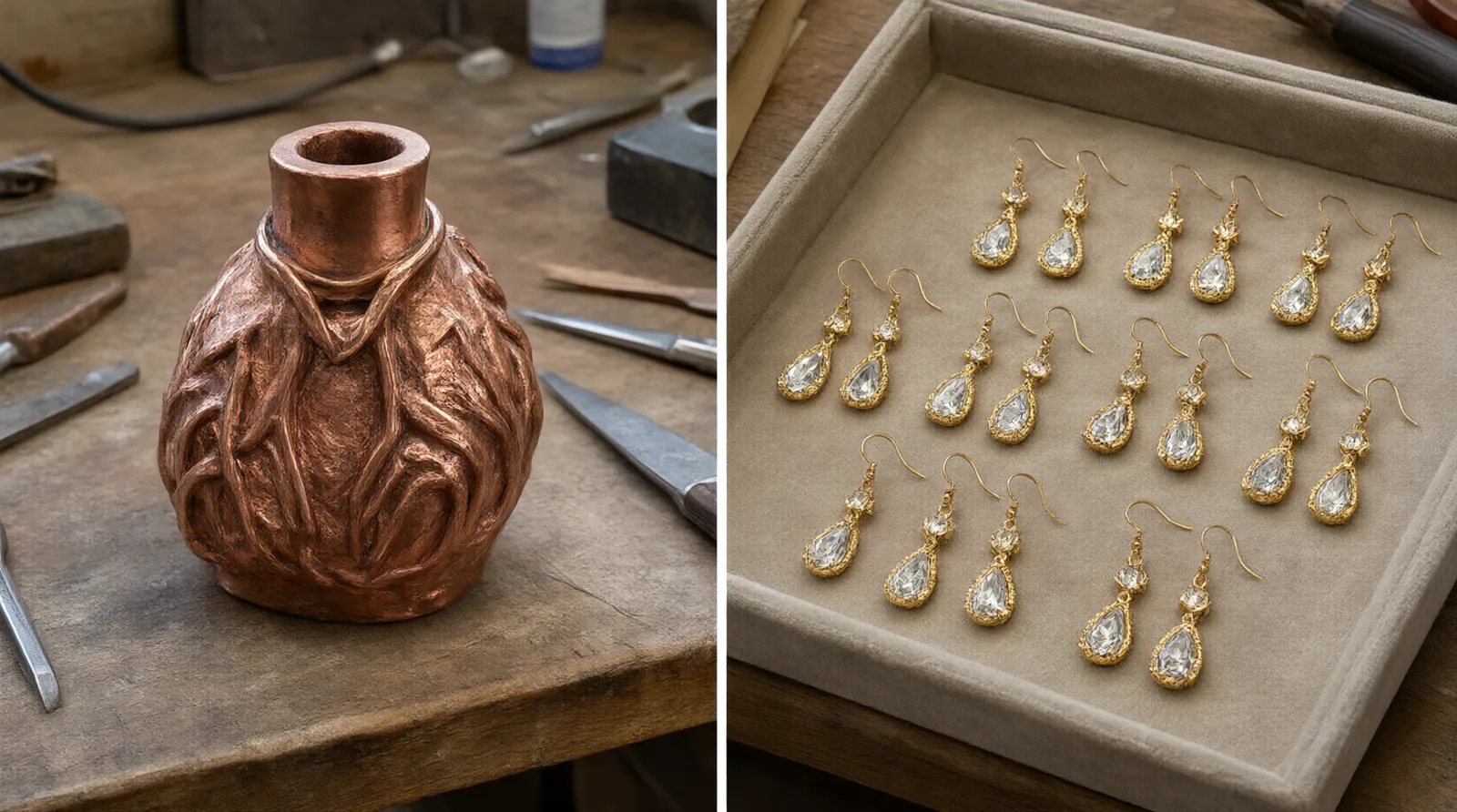
When sourcing custom jewelry, buyers control the entire specification sheet. You can request rhinestone-studded drop earrings in a specific millimeter drop length, or a necklace set utilizing natural stone paired with faux pearls. Materials range from base metals like copper to specialized 925-style silver finishes.
Alternatives restrict you to what currently exists. If a stock catalog features a two-tone glass bead earring in gold plating, you cannot request that same design in rhodium plating without triggering a custom OEM order. Retail stores like Kendra Scott offer personalization programs, but these are limited to selecting from pre-cast charms and chains, not engineering new silhouettes.
Minimum Order Quantities (MOQ)
MOQ is the most critical dividing line between custom jewelry and alternatives. True custom OEM runs require higher MOQs to justify tooling and setup costs, though exact numbers vary by manufacturer and complexity.
For buyers who want a middle ground, hybrid suppliers bridge this gap. Many manufacturers provide extensive stock catalogs where the majority of styles carry a low MOQ (typically around 12 pcs/style, subject to change based on current inventory), with select styles available in even smaller quantities. This allows buyers to purchase low-volume stock while simultaneously developing larger custom OEM orders. Retail alternatives naturally have an MOQ of one, but lack wholesale viability.
Lead Time and Logistics
Custom jewelry requires a longer timeline. The process moves from design confirmation to sampling, sample approval, mass production, and finally, pre-shipment QC inspection. Buyers must factor in transit times for air freight, ocean freight, or express shipping.
Alternatives win on speed. Purchasing from a stock catalog means the inventory already exists in the warehouse. Buying from retail stores or boutiques means the item is physically on the shelf. If a DTC brand needs inventory for a flash sale launching in five days, stock catalogs or retail arbitrage are the only viable options.
Quality Assurance and Compliance
Custom jewelry suppliers manage quality internally. Vetted workshops perform in-house QC inspections before every shipment, ensuring plating thickness, stone setting security, and finish consistency match the approved sample. For buyers importing into the EU or US, working directly with manufacturers allows you to request specific compliance documentation regarding nickel-free or lead-free standards.
Alternatives shift the quality burden. When buying from retail stores or third-party boutiques, you rely on their overarching return policies. While high-end boutiques document their processes—for example, M. Flynn provides an 'About Custom' page and a 'Jewel School' page detailing their craftsmanship (Source)—you still lack the ability to inspect the goods on the factory floor before they ship.
Multilingual Support and Communication
Cross-border custom jewelry procurement demands clear communication. Suppliers catering to international buyers often employ multilingual sales teams capable of supporting procurement across various languages, reducing the risk of specification errors during the sampling phase.
Alternatives generally operate in the language of their domestic market. Retail stores in the US or UK communicate exclusively in English. Sourcing from localized retail environments limits the ability of international procurement teams to negotiate complex technical specifications. For more context on evaluating international suppliers, see our ranking of 6 Custom Jewelry Sources Ranked: OEM Suppliers & Retail Benchmarks for 2026.
Pros and Cons
Custom Jewelry
Pros:
- Complete control over design, dimensions, and materials (e.g., specifying exact shades of turquoise or amethyst).
- Lower per-unit costs at scale due to direct-from-workshop pricing.
- Proprietary designs prevent competitors from selling identical products.
- Direct access to B2B trade terms (EXW, FOB) and flexible payment methods (T/T, L/C).
- In-house QC inspections guarantee consistency before goods leave the origin country.
- Multilingual support streamlines communication for global procurement teams.
Cons:
- Longer lead times due to sampling and production cycles.
- Higher upfront financial commitment compared to buying single retail pieces.
- Requires detailed technical knowledge to specify plating microns, base metals, and stone settings accurately.
Alternatives (Stock Catalogs & Retail)
Pros:
- Immediate availability; no production wait times.
- Extremely low entry barrier (select stock styles available in very small quantities, or retail purchases of a single item).
- No need for technical design skills or CAD approvals.
- Easy to test consumer demand before committing to larger orders.
Cons:
- Zero exclusivity; other stores can buy the exact same stock designs.
- Higher per-unit costs, especially when purchasing through retail markups.
- Inability to alter materials, such as switching a gold-plated finish to rhodium.
- Limited or non-existent B2B payment terms and trade conditions.
When to Choose Custom Jewelry
Choose custom jewelry if you are a DTC brand owner or importer building a recognizable identity. If your marketing strategy relies on unique aesthetics—like signature vintage styles or specific gradient crystal arrangements—you cannot achieve this through off-the-shelf retail purchases.
This route is also mandatory when scaling volume. If your data shows strong demand for two-tone glass bead earrings, ordering 500 units via custom OEM will yield a drastically lower per-unit cost than buying them in batches of 12 from a stock catalog. Furthermore, if your procurement team operates across multiple regions (e.g., coordinating between a headquarters in London and distribution in Dubai), utilizing a supplier with multilingual support and structured trade terms (FOB/EXW) ensures logistical accuracy.
Finally, choose custom jewelry if material compliance is non-negotiable. If your target market requires specific hypoallergenic standards or precise gold-plating thicknesses, direct manufacturing oversight is the only way to verify those specifications before the inventory ships.
When to Choose Alternatives
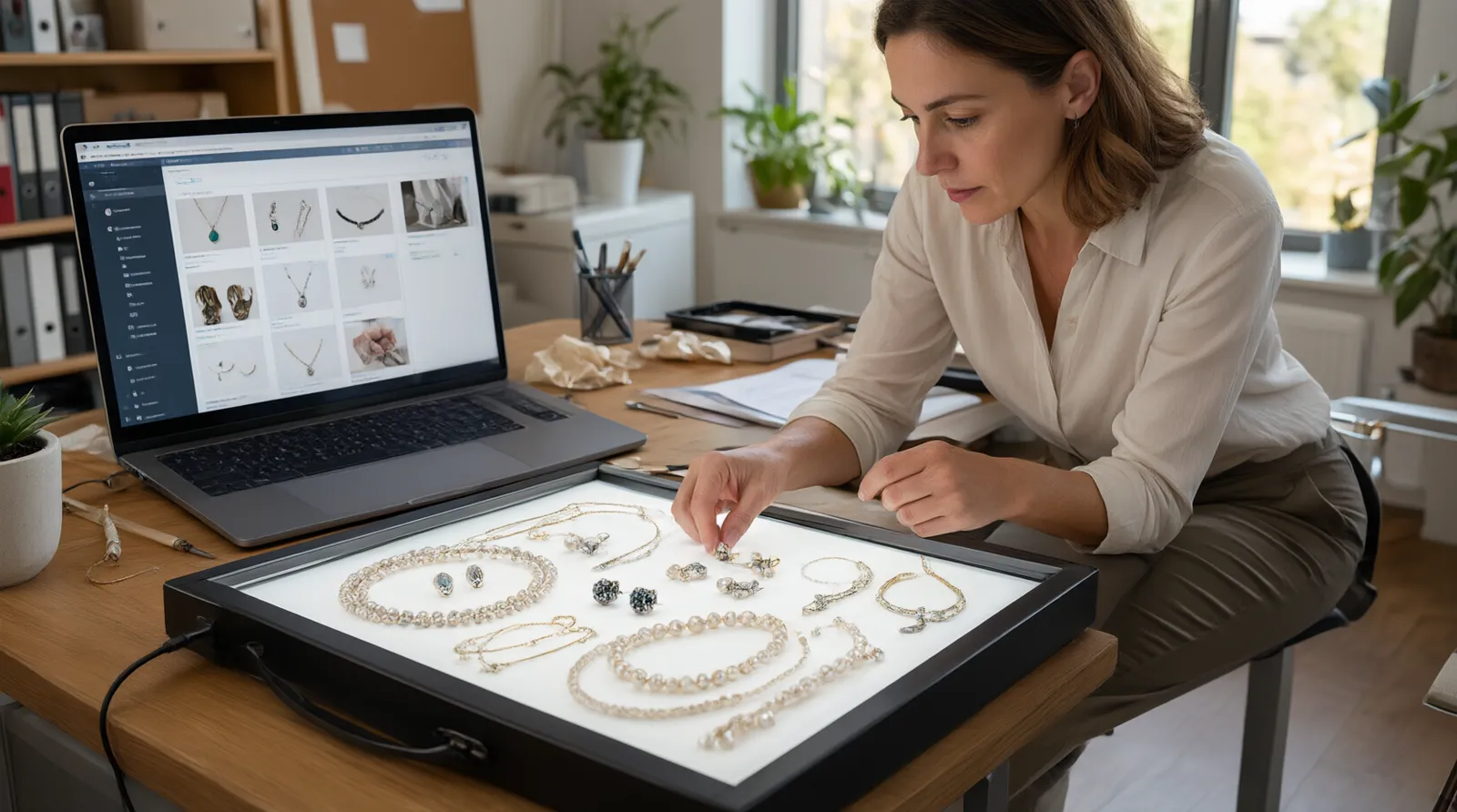
Choose alternatives if you are testing a new market or opening a temporary pop-up shop. If you need 20 pairs of rhinestone stud earrings by Friday, a stock catalog with a low MOQ or a local wholesale distributor is your only option. Custom manufacturing timelines will not accommodate urgent, low-volume needs.
Alternatives are also appropriate for independent stylists or small boutiques that curate rather than manufacture. If your business model involves selecting beautiful, finished pieces from established designers or luxury stores to sell to a niche clientele, you do not need OEM infrastructure.
Additionally, if you lack the capital to fund a production run and the logistics network to handle international freight, buying from domestic stock catalogs eliminates the complexities of customs, L/C payments, and ocean freight coordination.
Final Verdict
The decision between custom jewelry and its alternatives is dictated by your business model's stage and scale. Custom jewelry is the definitive choice for importers, DTC brands, and scaling retailers who require proprietary designs, controlled material specifications, and favorable B2B unit economics. Alternatives—specifically low-MOQ stock catalogs and retail sourcing—serve as tactical tools for rapid testing, immediate inventory needs, or micro-scale curation.
For brands operating in the US, EU, UK, or MENA regions, the optimal strategy often involves both. Use low-MOQ stock catalogs (like those offering minimums around 12 pcs/style) to validate consumer demand for specific silhouettes, such as drop earrings or necklace sets. Once a style proves profitable, transition that design into a custom OEM production run to secure exclusivity and improve margins.
Evaluate your current inventory gaps, calculate your target landed cost per unit, and determine your acceptable lead time. Once those parameters are set, reach out to a vetted manufacturer to request current pricing and production schedules. To get MOQ details, request samples, or discuss custom OEM specifications for your next collection, visit STRAND to submit an inquiry directly to the sourcing team.