
Custom Jewelry vs. Wholesale: The Ultimate Sourcing Comparison
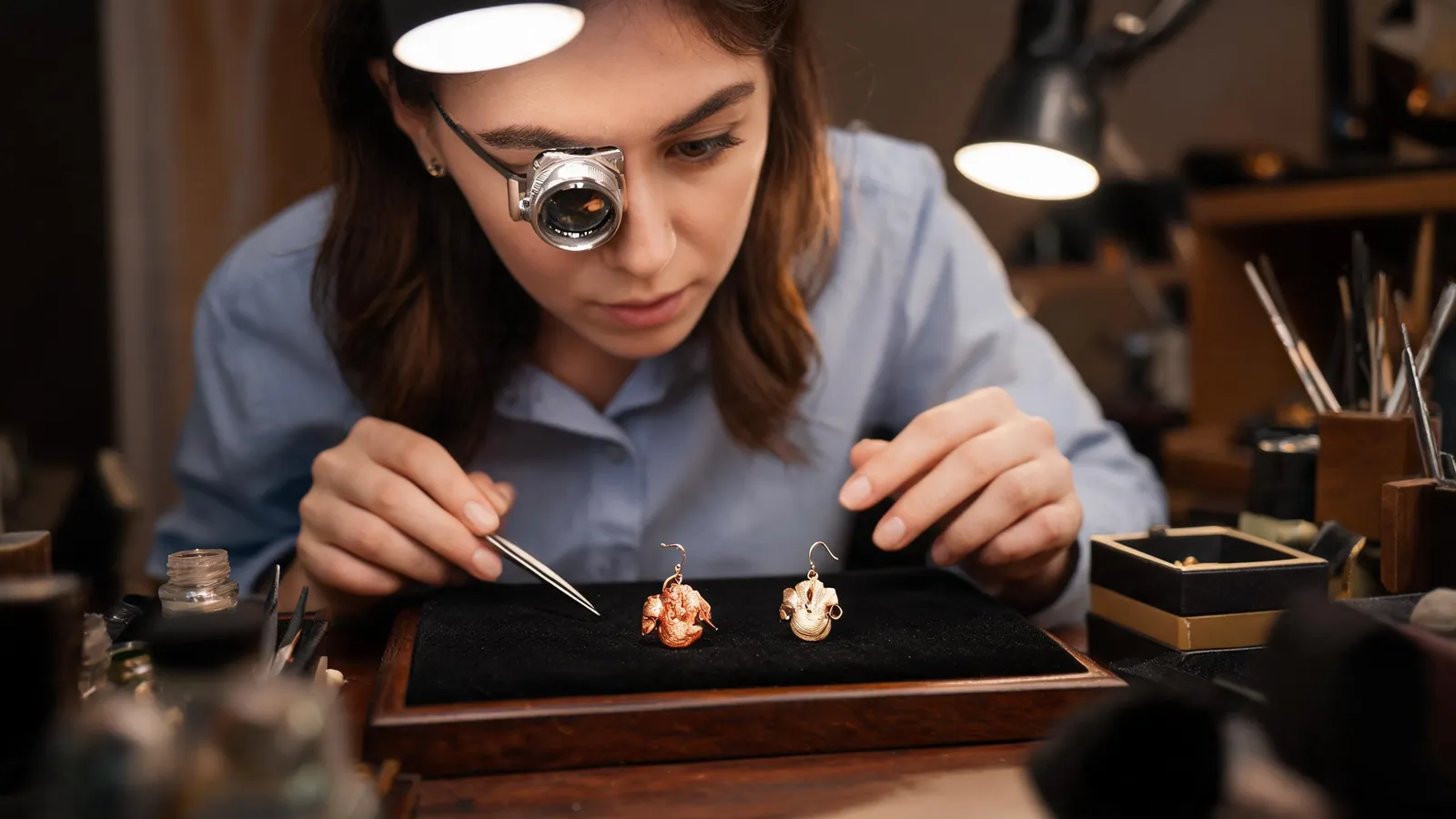
Custom Jewelry vs. Wholesale: The Ultimate Sourcing Comparison
Custom jewelry sourced directly from OEM manufacturers gives importers and DTC store owners control over design, material specifications, and per-unit margins, while alternatives—such as buying wholesale stock from retail brands or local distributors—offer immediate availability at the cost of exclusivity and pricing flexibility. For a US or EU buyer importing fashion jewelry, choosing custom jewelry means working with suppliers who can produce gold-plated copper drop earrings or rhinestone necklace sets to exact specifications, whereas alternatives typically involve purchasing pre-designed catalog pieces from established names like Kendra Scott or Jared stores. The right choice depends entirely on your order volume, margin targets, and how quickly you need inventory on shelves.
TL;DR / Quick Verdict
Choose custom jewelry if you are a DTC brand owner, importer, or multilingual procurement team sourcing chains, earrings, or necklace sets from China and need exclusive designs, controlled unit economics, and MOQs that scale with your business (for example, STRAND offers 12 pcs/style on 109 of its 114 catalog styles). Choose alternatives—such as off-the-shelf wholesale from established retail brands or domestic distributors—if you need zero lead time, require single-unit purchases without sampling, or are testing a market before committing to a production run.
At-a-Glance Comparison Table
| Dimension | Custom Jewelry (OEM/Direct Sourcing) | Alternatives (Retail Wholesale / Domestic Distributors) |
|---|---|---|
| Pricing Model | EXW or FOB; negotiated per unit based on materials and volume. | Fixed wholesale tiers; often marked up by intermediaries. |
| MOQ Requirements | Low thresholds available (e.g., 12 pcs/style on most designs; select styles from 1 pc). | Varies widely; some require bulk case packs, others allow single units at high premiums. |
| Design Exclusivity | Full control; bespoke tooling for vintage, gradient crystal, two-tone glass bead, or rhinestone styles. | None; selling the same designs available to competitors. |
| Materials Available | Gold-plated/rhodium-plated copper, 925-style silver finishes, glass beads, natural stone, faux pearls. | Limited to the brand's standard catalog (e.g., amethyst, garnet, peridot, turquoise, or diamond simulants). |
| Lead Time | Sampling + production required; shipped via air, sea, or express. | Immediate dispatch from local warehouses or existing stores. |
| Payment Terms | T/T bank transfer, Western Union, PayPal, L/C, Xtransfer. | Credit card, net-30 (if qualified), or platform-specific checkout. |
| Support & Communication | Multilingual sales teams (EN, FR, AR, ES, DE, RU); direct workshop links. | Standard customer service; limited language support outside major markets. |
| Quality Assurance | In-house QC inspection before every shipment. | Relies on the brand's standard retail quality checks. |
Custom Jewelry Overview
Custom jewelry in a B2B context refers to fashion and semi-fine pieces designed, prototyped, and manufactured specifically for a buyer’s brand or retail line. This model is built for importers, DTC store owners in the US, EU, UK, and MENA regions, and procurement teams sourcing directly from manufacturing hubs like Hangzhou, China. Instead of buying what already exists, buyers dictate the metalwork, plating thickness, stone selection, and packaging.
The standout strength of this model is the bridge it builds between vetted workshops and overseas buyers. Companies like STRAND operate exactly in this space, linking Chinese manufacturing capacity directly to international storefronts. A buyer isn't just getting a product; they are securing a supply chain. For instance, a DTC brand wanting a specific luxury aesthetic can request drop earrings or stud earrings crafted in gold-plated copper with faux pearl accents, matching them perfectly with necklace + earring sets.
Crucially, custom does not always mean massive factory minimums. Suppliers catering to modern DTC brands have lowered barriers significantly. STRAND’s 114-style stock catalog allows buyers to start with an MOQ of 12 pcs/style on 109 designs, with select styles available from just 1 pc. When true OEM customization is required, these suppliers handle everything from vintage styling to gradient crystal arrangements, backed by in-house QC inspections prior to shipping. For teams evaluating their broader sourcing strategy, our guide on Custom Jewelry: 6 Sources Buyers & DTC Brands Need in 2026 breaks down how direct-to-workshop models compare across the industry. Understanding the nuances of custom jewelry vs. wholesale is essential when deciding which procurement path best aligns with your growth targets.
Alternatives Overview
Alternatives to custom OEM sourcing encompass ready-made wholesale programs from established retail brands, domestic distributors, and marketplace aggregators. These options serve buyers who prioritize speed, brand recognition, or low initial capital outlay over exclusivity.
Brands like Kendra Scott or retailers such as Jared stores offer wholesale or partnership programs where boutiques can purchase pre-designed collections. Similarly, designers like Scott Wilson or legacy luxury houses provide established catalogs featuring standard gemstone assortments—think amethyst, garnet, peridot, turquoise, or diamond-accented pieces. These alternatives are built for brick-and-mortar boutiques, pop-up shops, or online sellers who want recognizable names on their tags without managing a manufacturing relationship.
The primary strength here is immediacy. There is no prototyping phase, no tooling cost, and no waiting for sea freight. You buy what is in the warehouse. However, the trade-off is rigid pricing structures, lack of design differentiation, and reliance on the supplier's chosen materials. If a competitor buys from the same distributor, you are selling identical products. Furthermore, payment terms are usually restricted to standard credit processing or platform-specific methods, lacking the flexible trade finance options (like L/C or Xtransfer) found in cross-border OEM agreements. For a deeper look at how these models stack up operationally, explore our B2B sourcing comparison covering both pathways.
Feature-by-Feature Breakdown
Pricing and Trade Terms
Custom jewelry pricing operates on manufacturing logic. Buyers negotiate based on raw material costs, labor, and order volume. Suppliers like STRAND offer clear trade terms—EXW (Ex Works) or FOB (Free On Board)—giving importers control over their preferred freight forwarder and shipping method (air, sea, or express). Payment infrastructure is built for international trade, accepting T/T bank transfers, Western Union, PayPal, L/C, and Xtransfer. This flexibility protects cash flow for scaling businesses.
Alternatives rely on fixed wholesale price lists. While easier to calculate upfront, margins are inherently compressed because the distributor has already taken their cut. Payment is typically handled via credit card or basic invoicing, which lacks the financial instruments required for large-scale cross-border procurement.
Design Control and Material Specifications
When sourcing custom jewelry, the buyer controls the blueprint. You specify whether a necklace + earring set uses rhodium-plated copper or a 925-style silver finish. You choose between natural stone, glass beads, or faux pearls. If your target market demands a specific vintage look or a two-tone glass bead arrangement, the workshop executes it. This level of granularity allows DTC brands to build distinct visual identities.
Alternatives restrict you to the brand's existing design language. You might get beautiful pieces featuring peridot or garnet, but you cannot alter the setting, change the clasp mechanism, or adjust the plating base. Your catalog is identical to every other retailer authorized to sell that brand.
Minimum Order Quantities (MOQ) and Scale
Historically, custom manufacturing required thousands of units. Today, agile OEM suppliers have restructured their operations for modern commerce. STRAND’s model demonstrates this shift: an MOQ of 12 pcs/style on the vast majority of their 114-style catalog makes custom-tier sourcing accessible to independent DTC stores. Select styles dropping to a 1 pc MOQ allow for micro-testing before larger commitments.
Alternatives vary wildly. Some domestic wholesalers demand case-pack quantities (e.g., 50+ units per SKU), while others allow single-piece purchases but at near-retail prices, destroying wholesale margin viability.

Quality Assurance and Compliance
Direct OEM relationships put the buyer closer to the quality control process. Suppliers operating internationally must adhere to destination market regulations (such as REACH compliance in the EU or lead/nickel restrictions in the US). STRAND mandates in-house QC inspection before every shipment leaves the facility, catching plating inconsistencies or stone-setting flaws before they reach customs.
With alternatives, quality assurance is outsourced to the brand. While established luxury or mid-market brands maintain strict standards, you have no visibility into the inspection process. If a batch of turquoise-colored glass beads arrives with chipped edges, resolving it requires navigating retail return policies rather than direct manufacturer accountability.
Logistics and Support Infrastructure
Cross-border custom jewelry sourcing requires logistical coordination. OEM suppliers manage the handoff from factory floor to port or airport. Equally important is communication. Procurement teams are rarely monolingual; having sales support available in EN, FR, AR, ES, DE, and RU eliminates translation errors regarding technical specs like plating microns or alloy compositions.
Alternatives sourced domestically bypass international logistics entirely. However, support is generally limited to standard business hours in the distributor's time zone and rarely accommodates the multilingual needs of global buying teams operating in MENA or European markets.
Catalog Depth and Trend Responsiveness
Custom OEM suppliers constantly update their capabilities. A workshop producing rhinestone styles today can pivot to gradient crystal designs next month based on buyer requests. The 114-style baseline catalog acts as a starting point, not a ceiling.
Alternatives are bound by seasonal collection drops. If a trend shifts suddenly toward heavy gold-plated copper chains over delicate silver finishes, retail brands may take months to adapt their production lines, leaving boutique buyers stuck with outdated inventory. For a deeper analysis of how different supplier types handle catalog agility, we ranked various models in our breakdown of 6 Custom Jewelry Sources Ranked: OEM Suppliers & Retail Benchmarks for 2026.
Pros and Cons
Custom Jewelry
Pros:
- Complete design exclusivity and brand differentiation.
- Direct control over materials (gold-plated/rhodium-plated copper, natural stone, glass beads, faux pearls).
- Favorable unit economics at scale due to EXW/FOB pricing.
- Flexible, accessible MOQs (e.g., 12 pcs/style on most designs).
- Multilingual procurement support (EN, FR, AR, ES, DE, RU).
- International trade payment options (T/T, L/C, Xtransfer).
- Dedicated in-house QC inspection prior to dispatch.
Cons:
- Requires lead time for sampling and production.
- Demands active management of shipping logistics (air, sea, express).
- Higher initial effort to establish technical specifications compared to clicking "buy" on a wholesale portal.
Alternatives (Retail Wholesale / Distributors)
Pros:
- Immediate inventory availability; zero production lead time.
- Leverages existing brand recognition (e.g., buying known names).
- No need to manage international freight forwarding or customs documentation.
- Simplified purchasing process for small, one-off restocks.
Cons:
- Zero design exclusivity; competitors can source the exact same items.
- Compressed profit margins due to intermediary markups.
- Rigid material and style options limited to the brand's current catalog.
- Lack of flexible trade finance options.
- Vulnerability to supply chain disruptions affecting the parent brand's stock.
When to Choose Custom Jewelry
Opt for custom jewelry if you are building a DTC brand that relies on a unique visual identity. If your marketing strategy hinges on offering specific aesthetics—like vintage-inspired drop earrings or two-tone glass bead necklace sets—that customers cannot find in department stores, OEM sourcing is mandatory.
This route is also the correct financial decision when your order volumes justify direct manufacturing. Even with an MOQ as low as 12 pcs/style, the per-unit cost savings achieved through EXW or FOB terms compound significantly over a fiscal year compared to paying domestic wholesale markups. Finally, if your procurement team spans multiple regions—requiring communication in Arabic for MENA distribution, French for EU markets, or Spanish for LATAM expansion—working with a supplier offering dedicated multilingual sales teams prevents costly specification errors.
When to Choose Alternatives
Alternatives make sense for fast-fashion boutiques or pop-up retailers who need to fill display cases immediately and cannot wait for a production cycle. If you are testing a new geographic market and do not yet have the sales data to forecast demand accurately, buying pre-made wholesale lots minimizes your financial risk.
Additionally, if your customer base actively seeks out specific branded names or traditional fine jewelry staples—such as pieces heavily marketed around diamond simulants or specific birthstones like amethyst and garnet from recognized labels—stocking those established alternatives may drive foot traffic that an unknown custom brand cannot yet achieve.
Final Verdict
For purchase-ready buyers, importers, and DTC store owners focused on margin growth and brand equity, custom jewelry sourced directly from capable OEM manufacturers outperforms retail alternatives. The ability to dictate materials—from rhodium-plated copper bases to faux pearl accents—while utilizing flexible trade terms and accessible MOQs (like 12 pcs/style) transforms jewelry from a commodity into a proprietary asset. Alternatives serve a purpose for rapid, low-risk testing, but they cap your profitability and guarantee you share shelf space with identical products.
If your goal is to secure exclusive designs with verified quality control and cross-border logistical support, your next step is to audit your current catalog gaps and request specific production parameters. Reach out to STRAND’s multilingual team to evaluate your requirements against their 114-style catalog or initiate an OEM brief. Request a Quote, Get MOQ & Pricing, or Request a Sample directly at strandjewelry.com to begin structuring your next production run.