
Custom Jewelry vs. Wholesale: The Ultimate Sourcing Comparison
Custom Jewelry vs. Wholesale: The Ultimate Sourcing Comparison
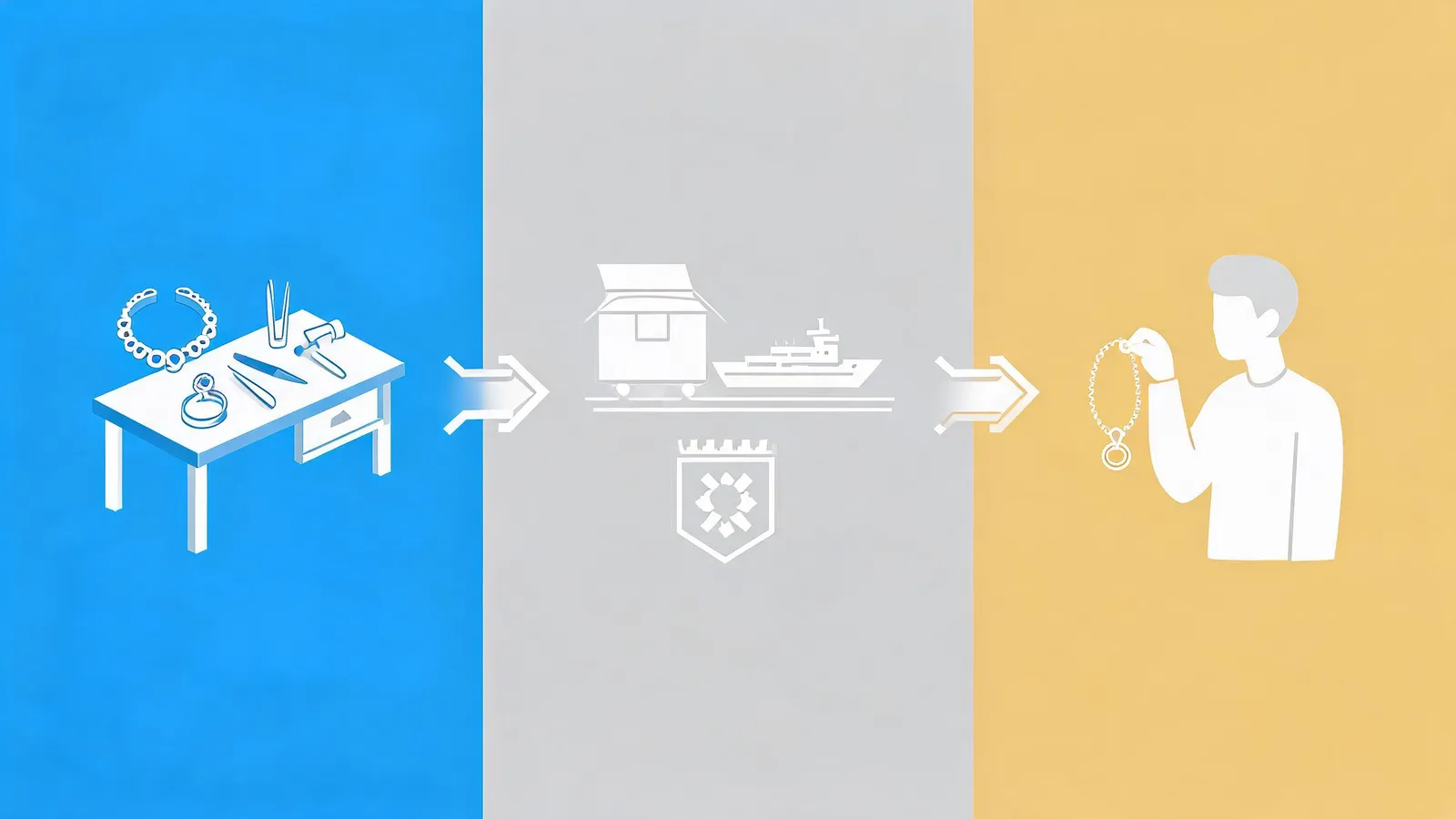
Custom jewelry sourcing gives importers and direct-to-consumer (DTC) brands control over materials, plating, and design specifications, typically starting at 12 pieces per style through specialized OEM workshops. The primary alternatives—buying wholesale stock from large distributors or retail-sourcing from established brand stores—offer immediate availability but sacrifice margin potential, exclusivity, and material customization. For buyers in the US, EU, UK, and MENA regions, the choice depends entirely on whether your priority is speed to market or long-term brand differentiation.
TL;DR / Quick Verdict
If you are a DTC store owner or importer building a proprietary line with specific finishes like gold-plated copper or natural stones, custom jewelry through an OEM partner is the correct path. If you need immediate inventory without design input, wholesale stock catalogs or existing retail collections serve as faster alternatives. Buyers who want both should look for suppliers offering low minimum order quantities (MOQs) on stock designs alongside dedicated OEM production lines.
At-a-Glance Comparison Table
| Dimension | Custom Jewelry (OEM) | Wholesale Stock Catalogs | Retail / Brand Sourcing |
|---|---|---|---|
| Pricing Model | Factory-direct (EXW or FOB terms) | Tiered bulk pricing | Fixed retail/wholesale markup |
| Minimum Order Quantity | Varies by supplier (e.g., STRAND offers 12 pcs/style on 109 of 114 catalog styles, select styles from 1 pc) | Typically 50–500+ units per SKU | 1 unit (retail) or high case-packs |
| Design Control | Full control over base metal, plating, stone selection | None; choose from existing designs | None; buy finished branded goods |
| Material Options | Gold/rhodium-plated copper, 925-style silver finishes, glass beads, faux pearls, natural stone | Standardized alloys and synthetic stones | Pre-selected luxury or fashion materials |
| Lead Time | Sampling + production time required | Immediate dispatch if in stock | Immediate purchase |
| Payment Terms | T/T bank transfer, Western Union, PayPal, L/C, Xtransfer | Credit card, net-30 (for approved accounts) | Credit card, store financing |
| Target Buyer | DTC brands, importers, regional distributors | Boutiques, fast-fashion retailers | Individual consumers, small boutiques |
| Shipping | Air, sea, or express freight | Standard parcel or pallet freight | Parcel post |
Custom Jewelry Overview
Custom jewelry refers to pieces manufactured to a buyer's exact specifications, covering everything from base metals to final plating and stone setting. It is built for importers, DTC store owners, and procurement teams who need exclusive product lines that cannot be found in competing stores.
The standout strength of this model is material and design flexibility. A buyer can specify vintage or gradient crystal styles, request two-tone glass bead drop earrings, or mandate rhodium-plated copper bases instead of standard brass. Suppliers specializing in cross-border fashion jewelry, such as STRAND, link vetted Chinese workshops directly to overseas buyers. This eliminates intermediary markups. STRAND operates with multilingual sales support in English, French, Arabic, Spanish, German, and Russian, removing communication friction for procurement teams across different time zones. They also conduct in-house QC inspections before every shipment, addressing the quality consistency risk inherent in overseas manufacturing. For a broader look at how these supply chains operate, see our breakdown of Custom Jewelry: 6 Sources Buyers & DTC Brands Need in 2026.
Alternatives Overview
The alternatives to commissioning custom jewelry fall into two main categories: purchasing pre-designed wholesale stock from large-scale distributors, or sourcing directly from established retail brands. These models are built for boutique owners, pop-up shops, or buyers who lack the lead time required for bespoke manufacturing. For a deeper dive into how these models stack up operationally, read our B2B sourcing comparison.
Wholesale stock catalogs offer speed. You browse existing designs—such as standard stud earrings or basic necklace sets—and place an order for immediate fulfillment. However, you are buying the same designs available to thousands of other retailers. Retail sourcing involves buying finished goods from established names. While mainstream mall jewelers like jared offer accessible fine jewelry, and designer brands like kendra scott dominate the mid-tier fashion space, neither provides the white-label flexibility a DTC brand requires. Buying from these stores means paying retail or near-retail prices, which compresses your resale margins. You are also restricted to their chosen materials, whether that is a specific cut of amethyst or a standardized gold vermeil finish.
Feature-by-Feature Breakdown
Pricing and Trade Terms
Custom jewelry pricing operates on factory-direct models. Buyers negotiate based on material costs, labor, and order volume. Trade terms are typically EXW (Ex Works) or FOB (Free on Board), meaning the buyer assumes responsibility for freight once the goods leave the factory floor or port. Payment structures are diverse to accommodate international trade: T/T bank transfers, Western Union, PayPal, L/C (Letters of Credit), and platforms like Xtransfer. This flexibility is critical for importers managing cash flow across borders.
Alternatives rely on fixed pricing. Wholesale distributors use tiered pricing where discounts only trigger at high volume thresholds. Retail sourcing locks you into MSRP or a standard wholesale discount (often 50% off retail), leaving little room for negotiation. If you are comparing OEM benchmarks against retail pricing, our guide on 6 Custom Jewelry Sources Ranked: OEM Suppliers & Retail Benchmarks for 2026 details how these cost structures impact final margins.
Design and Material Flexibility
This is where custom jewelry creates its primary value. Buyers dictate the specifications. You can source drop earrings featuring garnet or peridot, transition to turquoise accents for a summer collection, or request faux pearl necklace and earring sets. Base materials can be specified as copper with precise micron counts for gold or rhodium plating, or upgraded to 925-style silver finishes. Even niche requests, like incorporating diamond simulants or specific vintage glass bead cuts, are handled during the sampling phase.
Alternatives offer zero flexibility. If a wholesaler’s current catalog features amethyst studs in sterling silver, you cannot request them in gold-plated copper to hit a lower price point. You must accept the design as it exists. Established retail brands guard their designs strictly, making it impossible to alter their signature aesthetics for your own storefront.
Minimum Order Quantities (MOQ)
High MOQs historically kept small DTC brands out of custom manufacturing. Specialized suppliers have disrupted this. STRAND, for example, sets its MOQ at 12 pieces per style on most designs—specifically 109 of their 114-style stock catalog—with select styles available from just 1 piece. This allows buyers to test custom or semi-custom designs without committing capital to hundreds of units per SKU.
Wholesale alternatives often demand higher commitments to secure favorable pricing, sometimes requiring 50 to 100 units per style. Retail sourcing has no MOQ, but the per-unit cost makes scaling a business financially unviable. Understanding how wholesale stock minimums compare across different supplier tiers can help you plan your initial order sizes more effectively.
Quality Assurance and Compliance
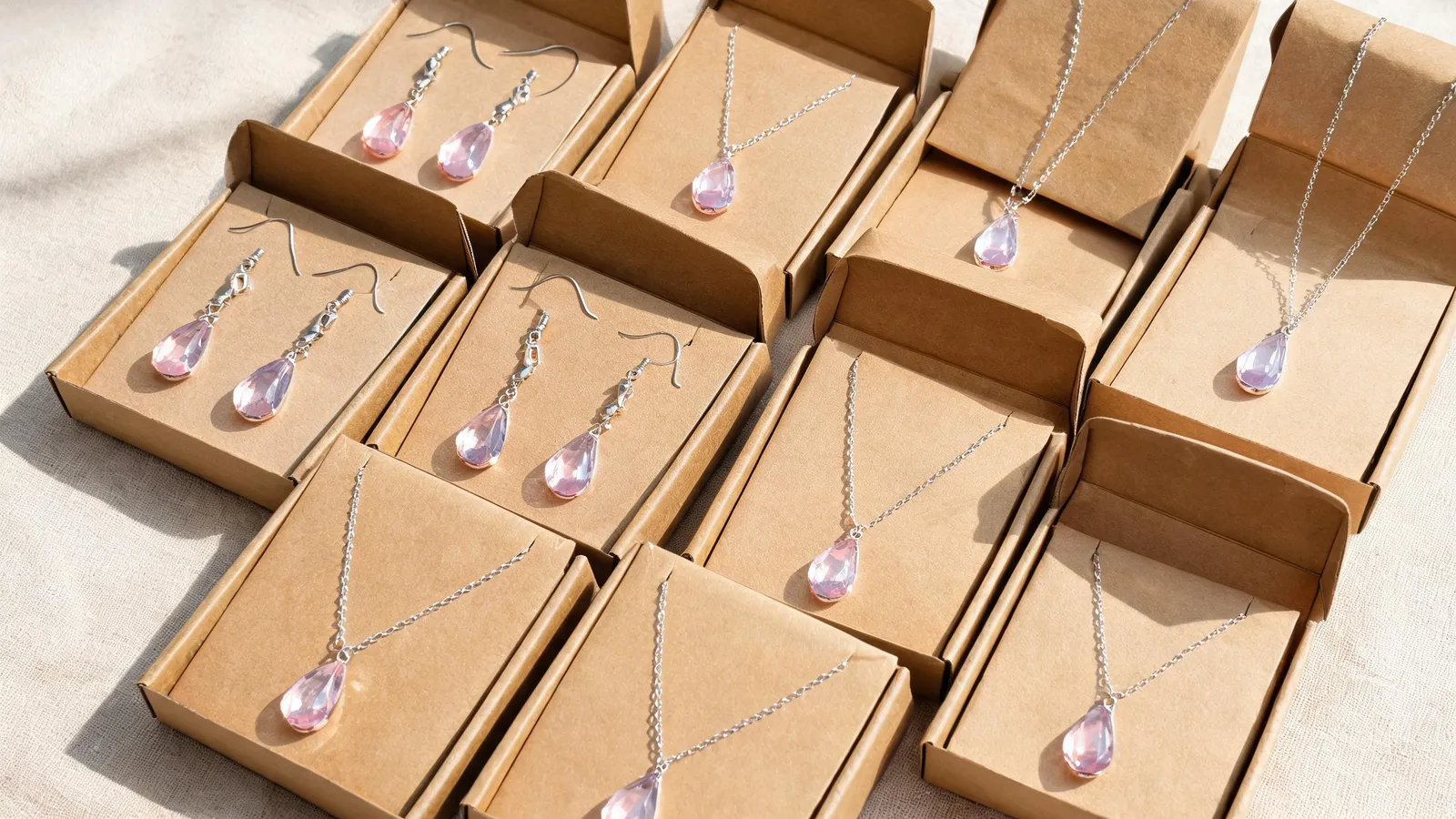
When sourcing custom jewelry internationally, quality assurance relies on the manufacturer's internal processes. Reputable OEM partners perform in-house QC inspections before every shipment leaves the facility. This catches plating inconsistencies, loose stone settings, or clasp failures before they reach the destination country. Buyers should always verify what specific compliance testing (e.g., REACH for the EU, California Proposition 65 for the US) the workshop conducts regarding heavy metals like lead or cadmium in base alloys.
Alternatives shift the QA burden differently. Wholesale stock from established distributors usually comes with baseline quality guarantees, though return processes for international shipments can be cumbersome. Buying from domestic retail stores provides easy returns, but again, at a premium price point unsuited for commercial resale.
Logistics and Shipping
Custom jewelry manufacturers ship globally via air, sea, or express courier, depending on the buyer's urgency and budget. Sea freight reduces per-unit costs for large orders, while express shipping handles urgent sample approvals or small-batch launches. Because the relationship is direct-to-buyer, logistics are tailored to the importer's preferred freight forwarder.
Wholesale alternatives may limit shipping options to their contracted carriers. Retail purchases are almost exclusively shipped via standard parcel services, which lack the commercial documentation required for smooth customs clearance on B2B imports.
Multilingual Support and Communication
Cross-border procurement fails when communication breaks down. Custom jewelry suppliers targeting global markets employ multilingual sales teams. Having support available in English, French, Arabic, Spanish, German, and Russian ensures that technical specifications—like the difference between a prong setting and a bezel setting for a specific stone—are translated accurately, preventing costly manufacturing errors.
Alternatives sourced domestically remove the language barrier but introduce the margin barrier. International wholesalers may only offer support in English or Mandarin, forcing buyers in the MENA or EU regions to rely on third-party translation tools that struggle with industry-specific terminology.
Pros and Cons
Custom Jewelry
Pros:
- Complete control over base metals, plating types, and gemstone selections.
- Direct-from-factory pricing using EXW or FOB terms maximizes resale margins.
- Low MOQs (e.g., 12 pcs/style) allow for agile inventory testing.
- Dedicated in-house QC prevents defective batches from shipping.
- Multilingual support streamlines complex international procurement.
Cons:
- Requires lead time for sampling, approval, and production.
- Demands clear technical specifications from the buyer.
- Import duties and freight logistics must be managed by the buyer.
Alternatives (Wholesale Stock & Retail Sourcing)
Pros:
- Immediate availability for rapid inventory replenishment.
- No need to provide design files or material specifications.
- Simpler purchasing process (add to cart, checkout).
- Easy local returns when buying from domestic retail stores.
Cons:
- Zero exclusivity; competitors can sell the exact same items.
- Significantly lower profit margins due to middleman markups.
- Inability to adjust materials (e.g., swapping a synthetic stone for natural turquoise).
- High MOQs on wholesale tiers or prohibitive per-unit costs at retail.
When to Choose Custom Jewelry
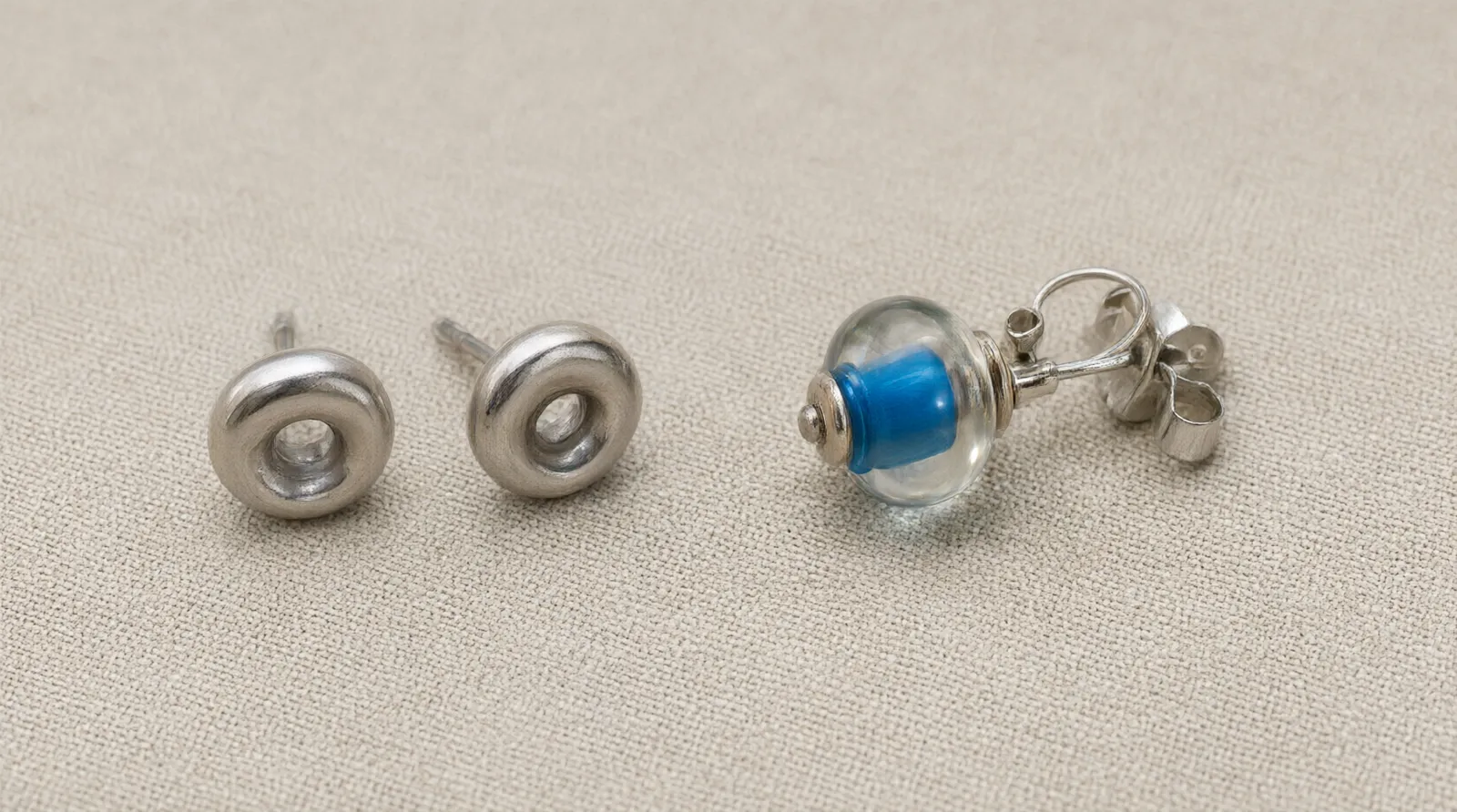
Choose custom jewelry if you are launching a DTC brand that requires a unique visual identity. If your target market expects specific aesthetics—such as vintage-inspired gold-plated copper pieces or rhinestone-heavy evening wear—you cannot achieve this through generic wholesale channels.
It is also the right choice if you operate in diverse markets like the US, EU, UK, or MENA and need a supplier capable of communicating in your team's native languages (EN, FR, AR, ES, DE, RU) while handling varied payment methods like L/C or Xtransfer. Finally, if your business model relies on testing multiple SKUs with minimal financial risk, suppliers offering 12-piece MOQs on extensive catalogs allow you to validate market demand before scaling production.
When to Choose Alternatives
Choose wholesale stock or retail sourcing if you run a multi-brand boutique where exclusivity is not your primary selling point. If you need to fill display cases immediately for an upcoming event or holiday rush and cannot wait for a production cycle, pre-made stock is your only viable option.
Retail sourcing from established brands makes sense if you are an individual consumer buying a single piece of luxury jewelry, or a very small boutique looking to carry recognized name brands alongside your own inventory to build trust with new customers. If you do not have the internal expertise to write technical design briefs specifying plating thickness or alloy composition, buying finished goods removes that operational requirement.
Final Verdict
For purchase-ready B2B buyers, importers, and DTC store owners, custom jewelry delivers superior unit economics and brand defensibility compared to off-the-shelf alternatives. The ability to dictate materials—choosing exactly how a peridot is set or what micron thickness of rhodium plating is applied—translates directly into a product that competitors cannot replicate. While alternatives offer speed, they cap your profit margins and force you into a crowded market of identical goods.
The deciding factor is your supplier's infrastructure. A custom jewelry partner must prove they can handle low MOQs without inflating prices, communicate flawlessly across languages, and guarantee quality before goods leave the factory. Evaluate your current inventory gaps. If you are losing margin to wholesale markups or failing to differentiate from competitors, the shift to OEM manufacturing is necessary. Request a sample, review the 114-style catalog parameters, and submit your material specifications to STRAND's procurement team to get current MOQ and pricing data for your next collection.