
Custom Jewelry vs. Wholesale Stock: A B2B Sourcing Comparison
Custom Jewelry vs. Wholesale Stock: A B2B Sourcing Comparison
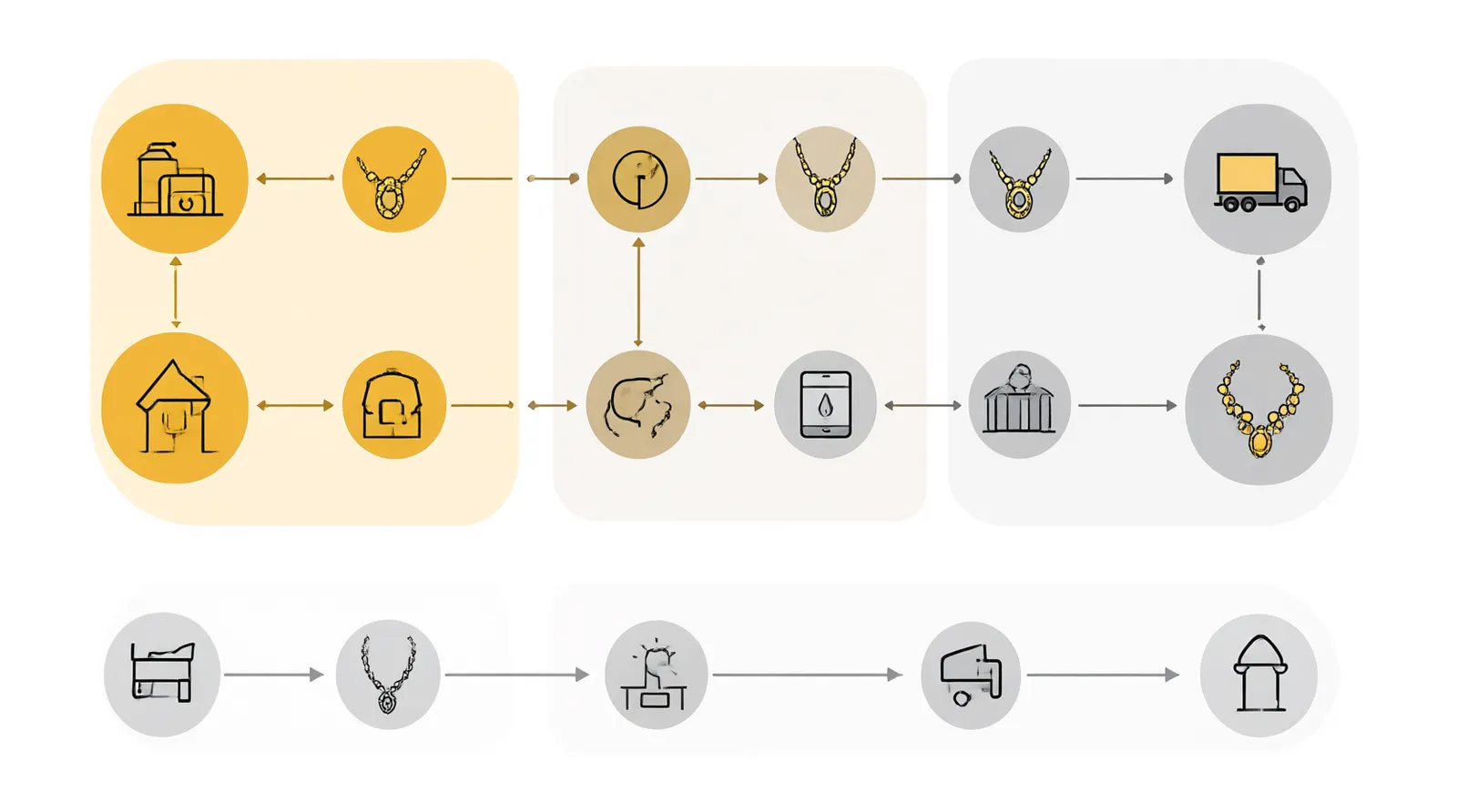
Custom jewelry sourced directly from OEM manufacturers offers DTC brands and importers control over design, plating specifications, and unit economics at scale. Alternatives—ranging from retail bench jewelers to wholesale stock catalogs—provide speed and zero-design effort but limit margin potential and brand differentiation. For procurement teams in the US, EU, UK, and MENA sourcing fashion jewelry from China, direct custom OEM is the standard path for building a proprietary collection, while alternatives serve immediate restocking or one-off bridal needs.
TL;DR / Quick Verdict
If you are a DTC store owner, importer, or multilingual procurement team needing branded drop earrings, necklace sets, or stud earrings with specific gold-plated or rhodium-plated copper finishes, direct custom jewelry manufacturing is your primary route. If you need a single bespoke engagement ring for an end consumer, or require immediate shelf-stock without waiting on production lead times, retail alternatives and ready-made wholesale catalogs are the practical choice.
At-a-Glance Comparison Table
| Dimension | Custom Jewelry (Direct OEM) | Alternatives (Retail Bench / Wholesale Stock) |
|---|---|---|
| Primary Buyer | DTC brands, importers, B2B buyers | End consumers, local boutiques, bridal clients |
| Pricing Structure | EXW or FOB; scales down with volume | Fixed retail markup or flat wholesale tier |
| MOQ | Low minimums per style on most designs, with select styles available from 1 pc | 1 piece (retail) or case-packs (wholesale) |
| Materials | Gold/rhodium-plated copper, glass beads, natural stone, faux pearls, 925-style silver finishes | Varies widely; often limited to supplier's current inventory |
| Design Control | Full specification control (vintage, gradient crystal, two-tone) | None to minimal (pick from existing options) |
| Payment Terms | T/T bank transfer, Western Union, PayPal, L/C, Xtransfer | Credit card, financing (e.g., Jared), upfront retail payment |
| Shipping | Air, sea, or express freight | In-store pickup or standard parcel |
| Support | Multilingual sales teams (EN, FR, AR, ES, DE, RU) | Localized retail staff or standard wholesale reps |
| Quality Assurance | In-house QC inspection before every shipment | Relies on brand reputation or buyer-beware wholesale |
Custom Jewelry Overview
Custom jewelry in a B2B context refers to pieces manufactured to a buyer’s exact specifications—metal base, plating micron count, stone type, and hardware—by a dedicated factory or vetted workshop network. It is built for importers, DTC store owners, and procurement teams who need to differentiate their product lines from mass-market competitors while controlling landed costs.
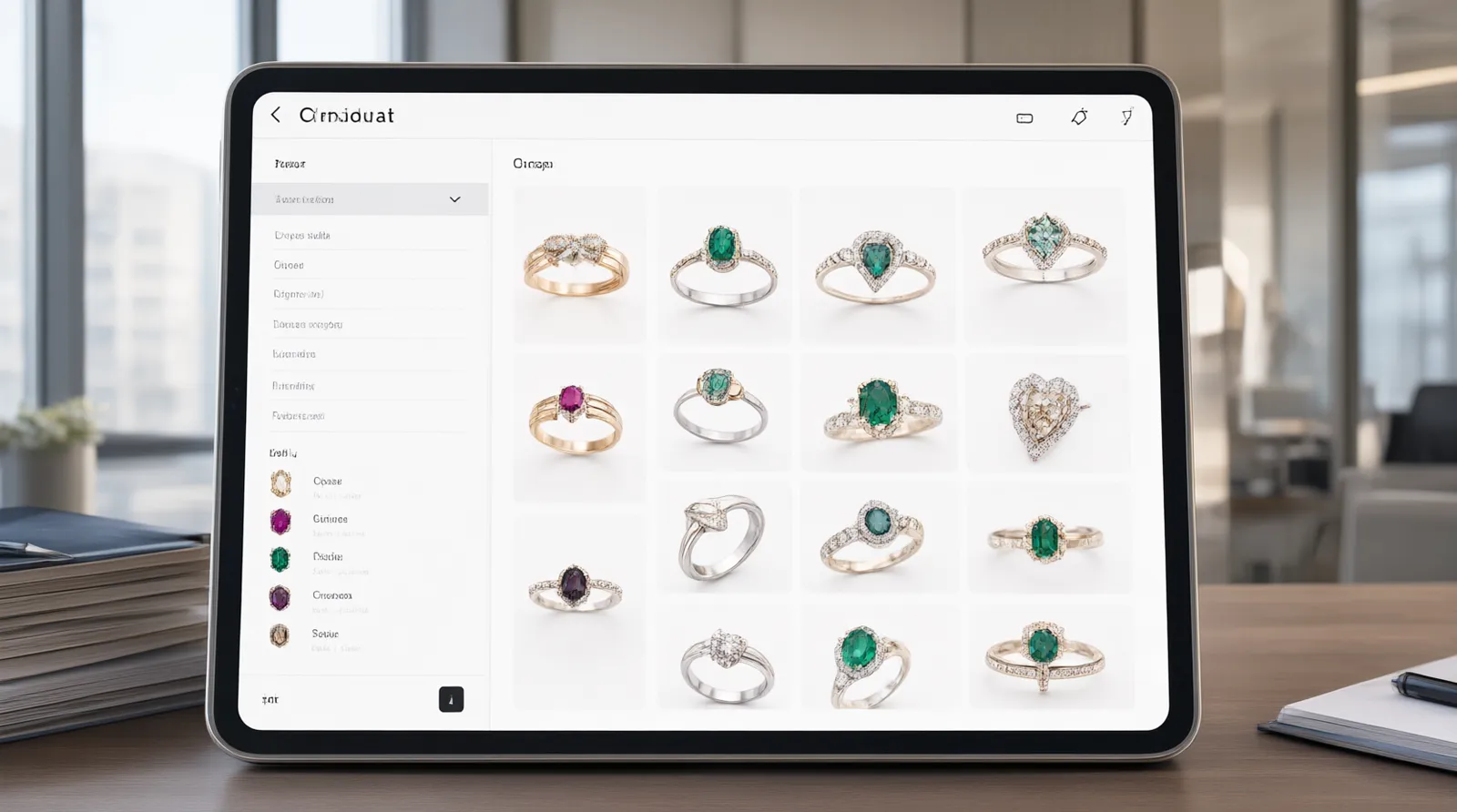
The standout strength of this model is the balance between exclusivity and accessibility. Historically, custom manufacturing required massive minimums. Today, suppliers like STRAND link vetted Chinese workshops directly to overseas buyers, offering a stock catalog that serves as a baseline for modification. With low MOQs set per style on the vast majority of their designs, and select styles available from just 1 piece, smaller DTC brands can test market demand for specific aesthetics—like gradient crystal drop earrings or two-tone glass bead necklaces—without committing to thousands of units. The operational backbone includes flexible trade terms (EXW or FOB), multiple freight options (air, sea, express), and diverse payment methods including T/T, L/C, and Xtransfer, which is critical for cross-border transactions across the US, EU, UK, and MENA regions.
For buyers evaluating how to structure their vendor list, understanding the difference between a pure manufacturer and a hybrid supplier is vital. We break down these vendor categories further in our guide to Custom Jewelry: 6 Sources Buyers & DTC Brands Need in 2026.
Alternatives Overview
Alternatives to direct custom OEM encompass two main categories: retail bench jewelers (and luxury chains) and off-the-shelf wholesale distributors. These are built for end-consumers seeking one-off sentimental pieces, or boutique owners who lack the time or infrastructure to manage international production cycles.
Retail alternatives prioritize the buying experience over unit economics. Brands like Kendra Scott offer personalized engraving or charm-building stations, providing a semi-custom feel without actual manufacturing changes. High-end chains like Jared focus heavily on the bridal and diamond markets, offering financing plans and in-store consultations. For true bespoke work, independent studios like M. Flynn—which has been sister-owned since 2009 and provides dedicated custom engagement rings alongside educational resources like their 'Jewel School' (Source)—cater to clients willing to book appointments for one-of-a-kind pieces. The strength here is zero supply-chain management for the buyer; the weakness is high per-unit cost and zero scalability for a commercial brand trying to build a seasonal collection.
Wholesale stock alternatives allow stores to buy pre-made bulk lots. While faster than custom production, buyers are restricted to whatever stones (amethyst, garnet, peridot, turquoise) and metal finishes the distributor currently holds, resulting in identical inventory across competing stores. Understanding how wholesale stock alternatives fit into a broader procurement strategy helps buyers avoid margin erosion.
Feature-by-Feature Breakdown
Pricing and Trade Terms
Custom jewelry pricing operates on manufacturing logic. Buyers negotiate based on material weight, plating processes, and order volume. Suppliers offering EXW (Ex Works) or FOB (Free on Board) terms give importers control over their own freight forwarding, allowing them to consolidate shipments and optimize landed costs. Payment flexibility is broad, typically supporting T/T bank transfers, Western Union, PayPal, L/C (Letters of Credit for larger security), and platforms like Xtransfer.
Alternatives operate on retail or fixed wholesale margins. A luxury retailer selling a diamond or amethyst pendant prices it to cover storefront overhead, sales commissions, and brand marketing. You cannot negotiate EXW terms at a retail counter. Even wholesale stock distributors usually enforce rigid price tiers that leave little room for margin improvement unless you are buying full shipping containers.
Design Flexibility and Materials
Direct custom OEM allows precise specification of materials. A DTC brand targeting the European market might request rhodium-plated copper bases for durability, paired with faux pearls and vintage-inspired settings. If the target is the MENA region, the same brand might pivot to heavy gold-plated copper with intricate geometric motifs. Buyers can specify exact stone types—whether natural stone, glass beads, or synthetic crystals—and dictate the style of drop earrings, stud earrings, or matching necklace and earring sets.
Alternatives restrict you to existing catalogs. Retailers like Kendra Scott or local stores carry what their corporate buyers selected months ago. If you want a specific turquoise hue or a 925-style silver finish that isn't in their current rotation, you cannot get it. Independent bespoke jewelers can source specific gems like garnet or peridot, but they do so one piece at a time, not in production runs of 500.
Minimum Order Quantities (MOQ) and Scalability
Scalability is where custom jewelry separates itself from retail alternatives. Factories are built to run production lines. However, MOQs have historically been a barrier for emerging DTC brands. Suppliers addressing this gap now offer tiered access. Maintaining a broad stock catalog where the vast majority of styles are accessible at a low MOQ per style allows buyers to launch a diverse line—mixing rhinestone studs with gradient crystal drops—without tying up capital in dead stock. Select styles dropping to a 1-piece MOQ enable sampling before committing to larger runs.
Alternatives have no MOQ if bought at retail, but scaling a business using retail channels destroys margins. Buying wholesale stock lowers the per-unit cost but rarely offers the design exclusivity needed to build a defensible brand. When evaluating custom jewelry versus retail models, MOQ flexibility remains one of the most significant differentiators for growing DTC operations.
Quality Assurance and Compliance
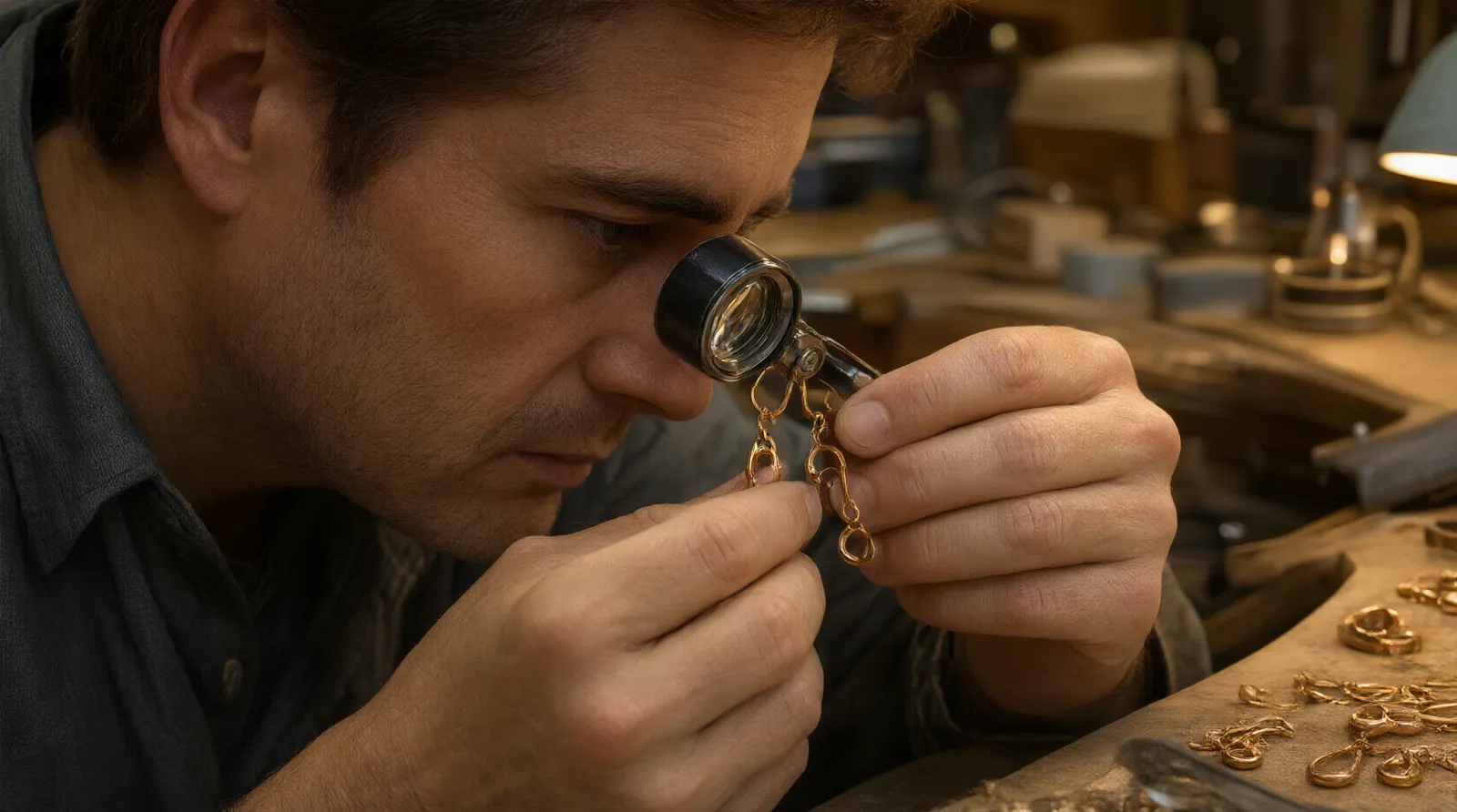
Cross-border procurement requires strict quality control. Direct custom jewelry suppliers mitigate risk through in-house QC inspections executed before every shipment leaves the facility. This ensures plating thickness, stone setting security, and clasp functionality meet the agreed-upon specifications. For multilingual procurement teams managing vendors remotely, this internal checkpoint is non-negotiable.
Retail alternatives handle QA internally before the product hits the display case. The end consumer relies entirely on the brand's reputation. If a wholesale alternative lacks rigorous pre-shipment inspection, the buyer assumes all liability for defective goods once they arrive in their destination country. When benchmarking suppliers for reliability, reviewing their specific inspection protocols is a necessary step, as detailed in our ranking of 6 Custom Jewelry Sources Ranked: OEM Suppliers & Retail Benchmarks for 2026.
Support and Communication
Managing a supply chain across time zones demands clear communication. Custom jewelry manufacturers catering to international B2B buyers employ multilingual sales teams. Support spanning English, French, Arabic, Spanish, German, and Russian eliminates translation errors regarding technical specs—such as the difference between a specific micron thickness of gold plating versus a 925-style silver finish.
Alternatives offer localized support. A retail store in London or Dubai provides face-to-face service in the local language, but this support ends at the point of sale. They cannot assist a buyer trying to coordinate ocean freight logistics or troubleshoot a delayed customs clearance.
Lead Times and Logistics
Custom manufacturing requires lead time. From finalizing CAD designs or approving physical samples to raw material sourcing and production, buyers must plan weeks or months ahead. Shipping by air, sea, or express courier adds variable transit times depending on the destination (US, EU, UK, or MENA).
Alternatives win on speed. Walking into a store or ordering from a domestic wholesale warehouse means receiving the product within days. For a boutique that unexpectedly sold out of stud earrings right before a holiday weekend, retail or domestic wholesale alternatives are the only viable solution.
Pros and Cons
Custom Jewelry (Direct OEM)
Pros:
- Total control over design, materials (glass beads, natural stone, faux pearls), and plating.
- Highly competitive unit economics at scale via EXW/FOB terms.
- Low entry barriers for testing (e.g., low MOQ per style on most catalog designs).
- Dedicated in-house QC inspection prior to international shipping.
- Multilingual support tailored for global procurement teams.
- Flexible payment structures (T/T, L/C, PayPal, Xtransfer, Western Union).
Cons:
- Requires longer planning horizons due to production and freight lead times.
- Demands more active supply chain management from the buyer.
- Not suitable for single, one-off consumer purchases.
Alternatives (Retail / Wholesale Stock)
Pros:
- Immediate availability; zero production wait time.
- No supply chain or freight logistics to manage.
- Ideal for single-item purchases (e.g., a bespoke engagement ring from a studio like M. Flynn, which allows customers to book dedicated appointments for custom jewelry (Source)).
- Easy returns handled through standard retail policies.
Cons:
- Significantly higher per-unit costs due to retail markups.
- Zero design exclusivity; competitors can buy the exact same wholesale stock.
- Limited material choices restricted to current inventory.
- Lack of cross-border trade term flexibility (no EXW/FOB options).
When to Choose Custom Jewelry
Opt for direct custom jewelry manufacturing if you are launching or expanding a DTC brand and need exclusive designs that competitors cannot replicate. If your procurement team requires specific aesthetic profiles—such as vintage rhinestone styles, two-tone glass bead sets, or gradient crystal drop earrings—custom OEM allows you to dictate those exact parameters in gold-plated or rhodium-plated copper.
This is also the correct path if you are importing into the US, EU, UK, or MENA regions and need to control landed costs through EXW or FOB terms, utilizing sea or air freight to maximize margin. If your business model relies on testing multiple styles rapidly without overcommitting capital, suppliers offering low MOQs on the vast majority of their catalog provide the agility required to iterate on seasonal collections safely.
When to Choose Alternatives
Choose retail or wholesale alternatives if you are an individual consumer purchasing a sentimental item, such as a diamond solitaire or a custom engagement ring. Studios operating like M. Flynn—sister-owned since 2009—are structured specifically to guide individual clients through this personal process (Source).
For B2B buyers, alternatives make sense only when facing an immediate inventory crisis where a two-week production lead time would result in lost revenue. If you operate a small boutique and simply need generic stud earrings or basic necklace sets to fill empty display space by tomorrow, domestic wholesale stock is the pragmatic, albeit less profitable, choice.
Final Verdict
The decision between custom jewelry and its alternatives hinges entirely on your role in the supply chain and your margin requirements. For individual consumers seeking a single luxury piece, retail bench jewelers and specialized studios provide the necessary hand-holding and instant gratification.
For buyers, importers, and DTC store owners, direct custom jewelry manufacturing is the only model that supports sustainable growth, brand protection, and healthy margins. Relying on wholesale stock alternatives forces you to compete solely on price with identical products. By partnering with a direct-to-factory supplier like STRAND, you gain access to a baseline stock catalog, the ability to execute custom OEM modifications in specific metals and stones, and the logistical framework—multilingual support, varied payment gateways, and pre-shipment QC—required to move inventory efficiently from Hangzhou to your target markets.
To determine if your current volume qualifies for custom production runs, review the catalog specifications and request current MOQ and pricing terms directly at strandjewelry.com.