
Custom Jewelry vs. Wholesale Stock: A B2B Sourcing Comparison
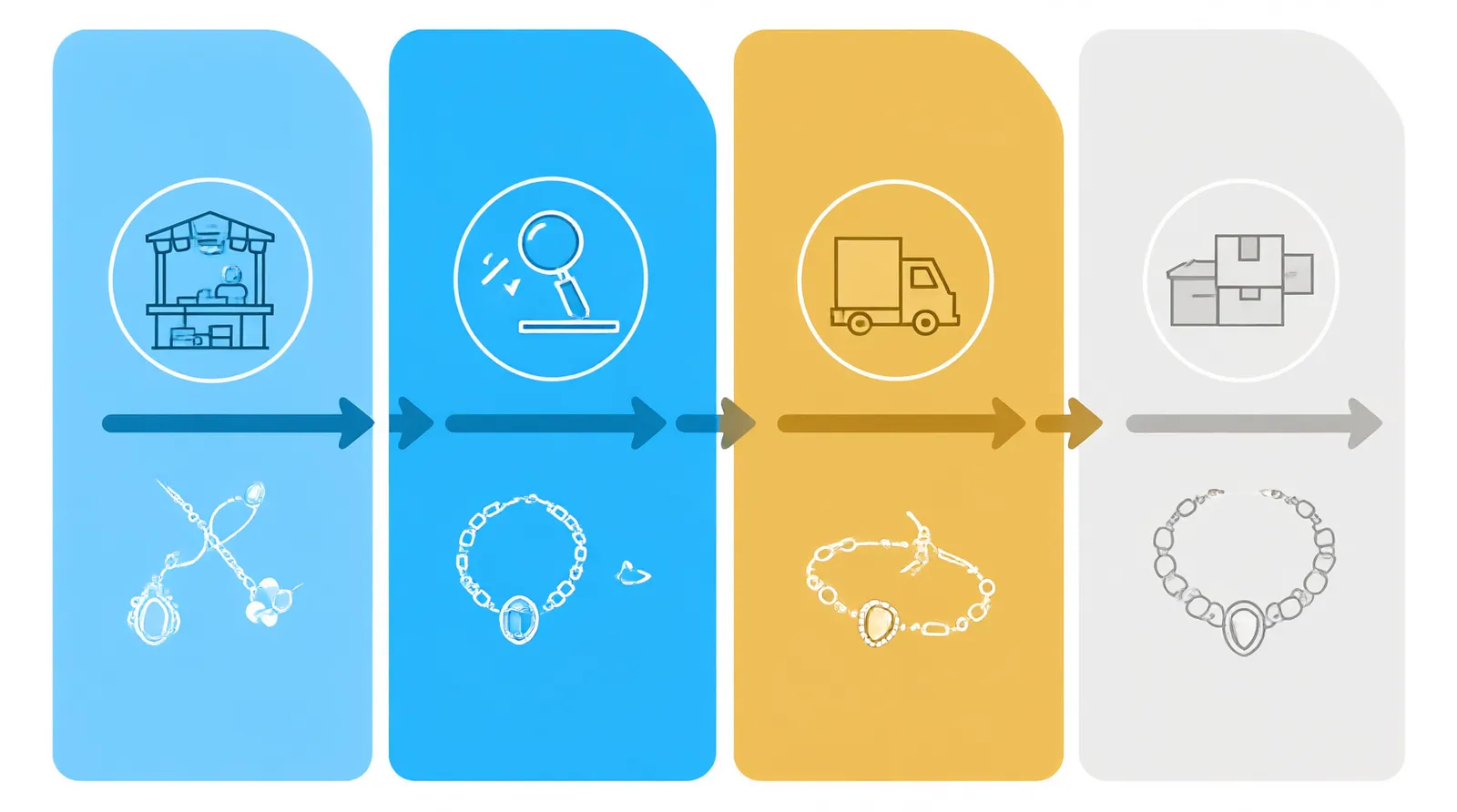
Custom Jewelry vs. Wholesale Stock: A B2B Sourcing Comparison
Custom jewelry sourcing gives DTC brands and importers direct control over design specifications, material selection, and unit economics, while off-the-shelf alternatives from retail chains or standard wholesalers offer immediate availability at the cost of differentiation. For buyers scaling a fashion jewelry line across the US, EU, UK, or MENA markets, partnering with an OEM manufacturer provides low minimum order quantities on most catalog designs, whereas traditional retail alternatives require purchasing finished goods at marked-up prices with zero proprietary branding potential.
TL;DR / Quick Verdict
If you are a DTC store owner, importer, or procurement manager building a branded fashion jewelry line, custom jewelry through a direct-to-manufacturer partner is the only viable path to margin control and product exclusivity. If you need unbranded, immediate stock for a one-off event or a small physical boutique testing the waters without brand identity requirements, ready-made alternatives from wholesale distributors or retail stores will suffice. Buyers prioritizing scalable OEM production should bypass retail intermediaries entirely.
At-a-Glance Comparison Table
| Dimension | Custom Jewelry (OEM/Direct) | Alternatives (Retail/Wholesale Stock) |
|---|---|---|
| Pricing Model | Direct factory pricing (e.g., EXW or FOB) | Fixed retail or wholesale markup |
| MOQ Requirements | Low minimums per style on most catalog items; select styles available in single units (subject to change) | Varies; often sold by pre-packed assortments |
| Product Range | Drop/stud earrings, necklace + earring sets, vintage/gradient crystal/two-tone glass bead/rhinestone styles | Limited to existing seasonal inventory |
| Materials | Gold-plated/rhodium-plated copper, 925-style silver finishes, glass beads, natural stone, faux pearls | Standardized base metals and synthetic stones |
| Lead Time | Production time required post-sampling | Immediate dispatch if in stock |
| Quality Control | In-house QC inspection before every shipment | Buyer assumes risk upon purchase |
| Support & Language | Multilingual sales teams supporting international buyers | Typically single-language local support |
| Payment Terms | T/T bank transfer, Western Union, PayPal, L/C, and other cross-border platforms | Credit card, net-30 (for established wholesale accounts) |
| Shipping Options | Air, sea, or express freight | Standard parcel or pallet freight |
Custom Jewelry Overview
Custom jewelry in a B2B context refers to original equipment manufacturing (OEM) where overseas buyers dictate or co-develop the design, materials, and finishing of fashion jewelry before bulk production. This model is built for DTC store owners, regional importers, and multilingual procurement teams who need to source chains, earrings, and matching sets from China without navigating fragmented supplier networks independently.
STRAND operates as a Hangzhou-based brand linking vetted Chinese workshops directly to overseas buyers. The standout strength here is the balance between customization and accessible entry points. Rather than forcing buyers into massive container loads, the operational model supports low MOQs per style across the vast majority of their stock catalog (as of the time of writing), with select styles available in single units. This allows a buyer in London or Dubai to test gradient crystal drop earrings or two-tone glass bead necklace sets without tying up excessive working capital. Because inventory counts and minimum thresholds fluctuate based on production cycles, buyers should verify current availability directly with the supplier.
The core catalog spans vintage, gradient crystal, two-tone glass bead, and rhinestone styles executed in gold-plated and rhodium-plated copper, alongside natural stone and faux pearl options. For buyers requiring specific market adaptations, custom OEM services extend to 925-style silver finishes and tailored material substitutions. Because cross-border procurement involves complex communication, STRAND provides multilingual sales support, removing the language barrier that frequently stalls production timelines for MENA and EU buyers. Trade terms are clearly defined, with logistics routed via air, sea, or express depending on urgency.
For a deeper breakdown of how direct sourcing compares across different global suppliers, review our guide on Custom Jewelry: 6 Sources Buyers & DTC Brands Need in 2026.
Alternatives Overview
Alternatives to direct custom jewelry sourcing encompass ready-made inventory purchased from domestic wholesale distributors, large-scale retail chains, and boutique jewelers who sell finished goods rather than offering manufacturing partnerships. These channels are built for local brick-and-mortar stores, pop-up shop operators, or corporate gift buyers who prioritize speed and convenience over brand exclusivity.
Retail-focused alternatives range from mass-market mall chains like Jared or Kay Jewelers—which primarily target the consumer bridal and fine jewelry market—to contemporary fashion brands like Kendra Scott, which offer distinct aesthetic identities but do not provide white-label manufacturing for third-party DTC stores. Buying from these stores means purchasing someone else's intellectual property at a retail or near-retail price point.
Boutique custom jewelers represent another alternative. For example, M. Flynn, a sister-owned business operating since 2009, offers dedicated custom jewelry services including custom engagement rings, a portfolio review process, and appointment-based consultations. While this level of bespoke service is excellent for individual consumers seeking luxury fine jewelry, it does not serve the commercial needs of an importer looking to scale 500 units of rhodium-plated copper stud earrings for a European e-commerce launch. Boutique alternatives generally lack the high-volume production capacity, flexible trade terms, and international freight infrastructure required for cross-border B2B commerce.
Feature-by-Feature Breakdown
Pricing and Trade Terms
Custom jewelry sourced directly from manufacturers operates on trade terms such as EXW (Ex Works) or FOB (Free on Board). This structure separates the cost of the goods from the cost of international logistics, giving the buyer complete control over freight forwarding margins. Payment flexibility is a critical procurement factor; direct OEM partners typically accept T/T bank transfers, Western Union, PayPal, L/C (Letters of Credit), and specialized cross-border payment platforms, accommodating the diverse financial regulations of US, EU, and MENA markets.
Alternatives operate on fixed pricing. Retail stores charge MSRP. Wholesale distributors apply a standard markup (often keystone or higher) to cover their domestic warehousing and handling costs. You cannot negotiate FOB terms with a domestic wholesaler holding pre-finished inventory, meaning your landed cost per unit is permanently inflated compared to direct sourcing.
Design Control and Material Specifications
When commissioning custom jewelry, buyers specify exact parameters. If your DTC brand focuses on natural stones, you can request specific cuts of amethyst, garnet, peridot, or turquoise set in gold-plated copper bases. You control the plating thickness, the clasp mechanism on necklace and earring sets, and the exact color grading of rhinestones or glass beads. STRAND’s custom OEM capabilities allow buyers to iterate on these specs before committing to bulk production.
Alternatives restrict you to what is currently on the shelf. If a wholesaler’s current season relies heavily on faux pearls and lacks the vintage crystal styles your audience demands, you have no mechanism to alter their production schedule. You are forced to either compromise your brand aesthetic or hunt for secondary suppliers, fragmenting your supply chain.
Minimum Order Quantities (MOQ) and Scalability
Scalability hinges on MOQs. High-end factories often demand thousands of units per SKU, locking out emerging brands. Conversely, direct-to-buyer models bridge this gap. STRAND’s catalog allows ordering low minimum quantities per style across most of its designs (as of the time of writing), with select styles available in single units. Because catalogs update and thresholds shift with production runs, treat these figures as a snapshot rather than a permanent guarantee. This tiered approach lets a buyer order a mixed carton of drop earrings and stud earrings to test market response before scaling to full container loads via sea freight.
Retail alternatives have no true MOQ, but they also offer no volume discounts. Buying 500 units from a chain store yields the same per-unit cost as buying five. Wholesale distributors may offer tiered pricing, but their baseline costs already include middleman margins, making them uncompetitive for scaling DTC operations.
Quality Assurance and Compliance
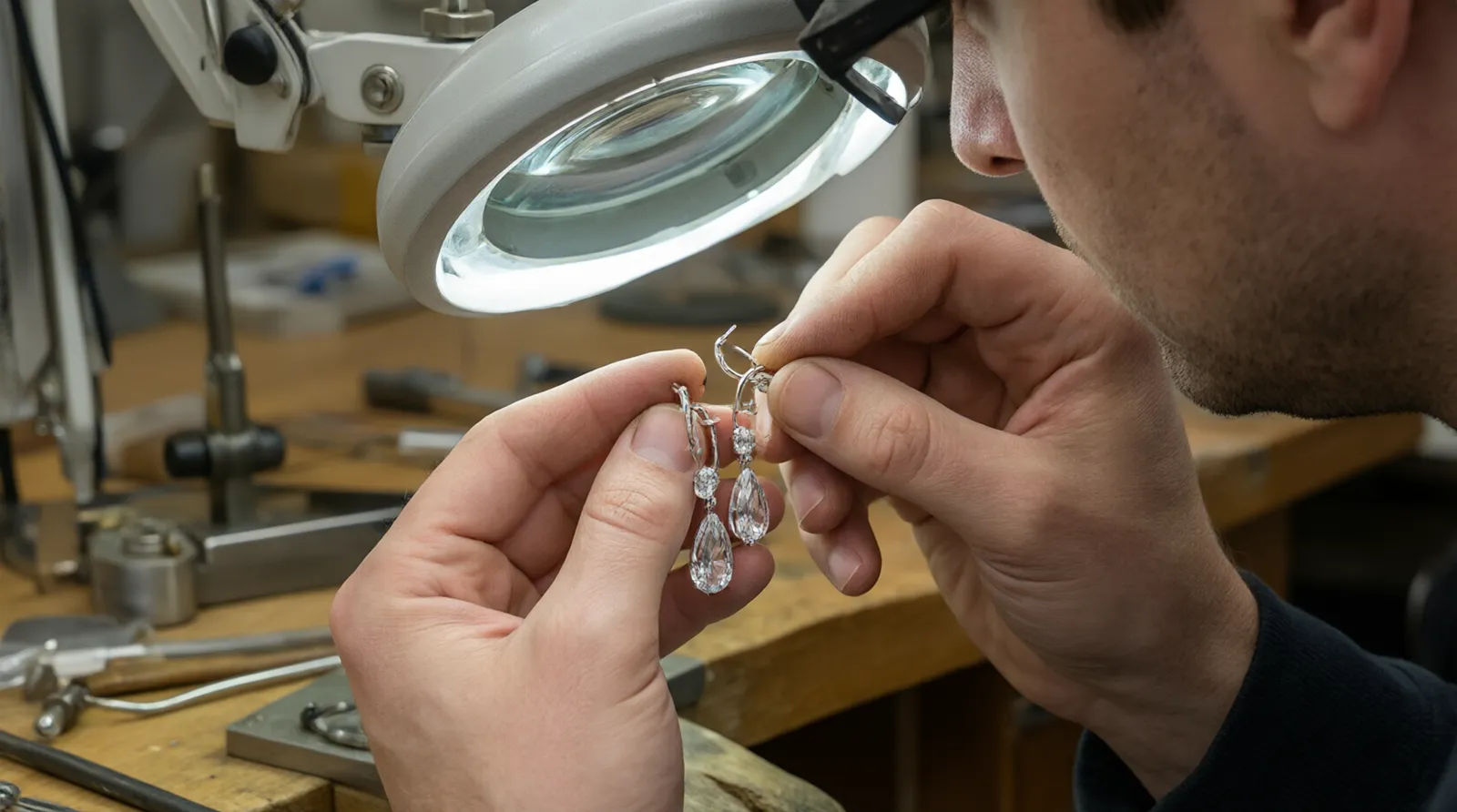
Direct custom jewelry manufacturing places quality control within the buyer's contractual leverage. STRAND conducts in-house QC inspections before every shipment leaves the facility. For buyers importing into the EU or US, ensuring compliance with REACH or Proposition 65 regulations regarding heavy metals in copper alloys or plating solutions is easier when dealing directly with the factory floor rather than a third-party distributor.
Alternatives shift the liability. When you buy finished goods from a domestic retailer or wholesaler, you trust their prior vetting. If a batch of imported fashion jewelry fails a customs check due to non-compliant plating, the financial loss falls on the importer of record.
Logistics and Shipping Infrastructure
Cross-border custom jewelry requires coordinated logistics. Direct manufacturers ship via air freight for urgent restocks, sea freight for high-volume cost efficiency, or express couriers for sampling. Managing these routes requires a supplier experienced in export documentation.
Alternatives simplify shipping because the goods are already domestic. However, this convenience masks the fact that the product has already undergone international shipping once—costs that were baked into the wholesale price you paid.
Support and Communication
Procurement teams operating across time zones and languages face friction when communicating technical design changes. Custom jewelry partners catering to international B2B buyers mitigate this through multilingual sales teams. Offering support across multiple major languages ensures that buyers in regions like Riyadh or Berlin receive precise technical feedback without translation errors corrupting design files.
Alternatives usually offer localized, single-language customer service designed for consumer queries, not B2B procurement negotiations. Attempting to discuss micron-thickness variations in gold plating with a retail store associate is fundamentally misaligned with commercial sourcing needs. To see how different supplier tiers handle these operational differences, read our analysis of 6 Custom Jewelry Sources Ranked: OEM Suppliers & Retail Benchmarks for 2026.
Pros and Cons
Custom Jewelry (Direct OEM)
Pros:
- Total control over design, materials (e.g., specific natural stones, plating types), and packaging.
- Highly competitive unit economics via direct factory trade terms.
- Low barrier to entry with minimal MOQs for most designs.
- Dedicated multilingual B2B support for international procurement teams.
- Pre-shipment in-house QC reduces defect rates upon arrival.
- Flexible payment methods including L/C and secure cross-border transaction platforms.
Cons:
- Requires lead time for sampling, production, and international transit.
- Demands active involvement in spec development and logistics planning.
- Not suitable for buyers needing inventory on the same day.
Alternatives (Retail/Wholesale)
Pros:
- Immediate availability for domestic buyers.
- Zero design or specification effort required.
- No international freight management or customs clearance responsibilities.
- Easy returns handled through standard consumer or wholesale policies.
Cons:
- Significantly higher per-unit costs due to middleman markups.
- Zero product exclusivity; competitors can buy the exact same inventory.
- Inability to customize materials, such as swapping standard glass beads for specific faux pearl grades.
- Lack of volume-based pricing leverage.
- Customer support geared toward retail, not commercial supply chain management.
When to Choose Custom Jewelry
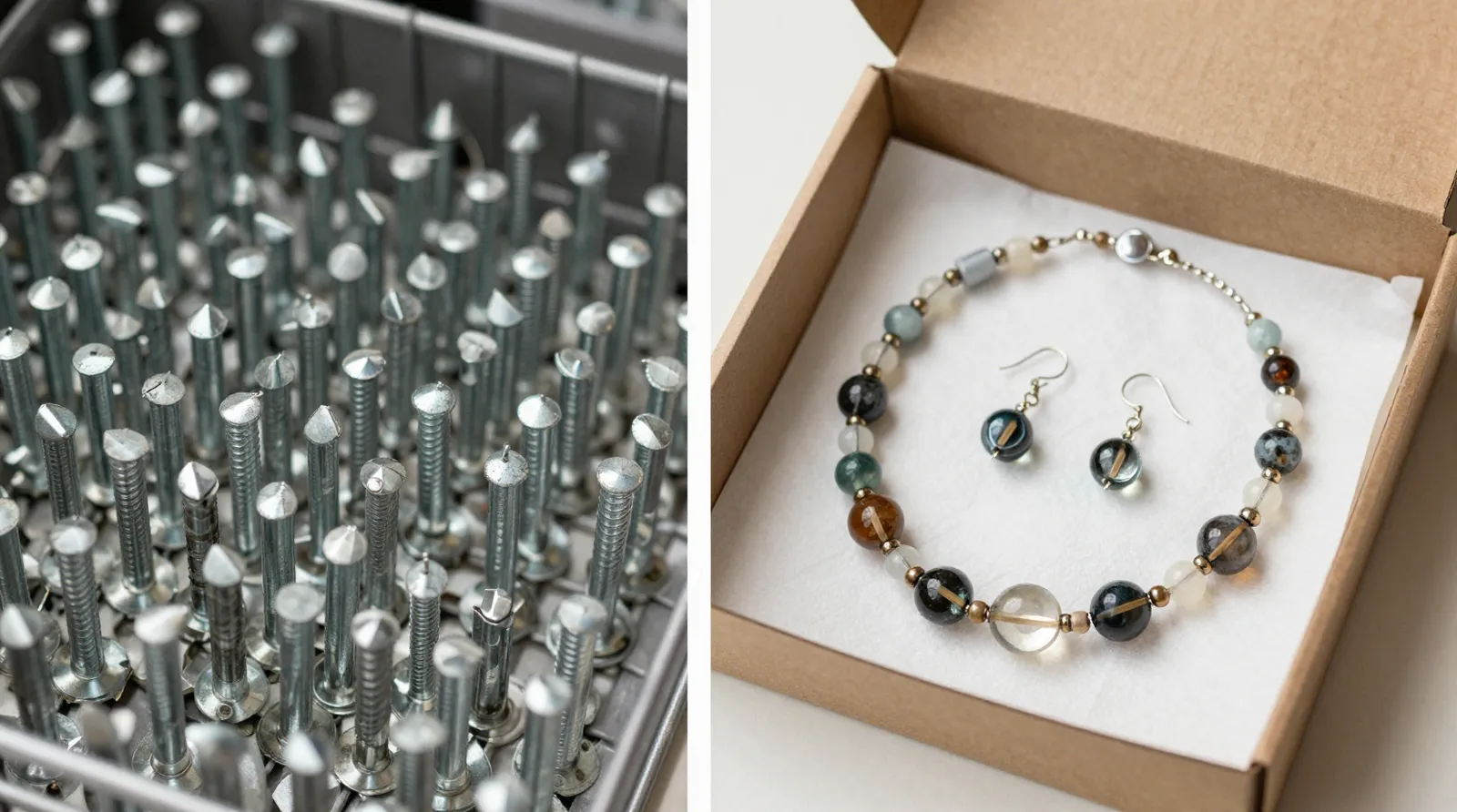
Choose custom jewelry if you operate a DTC e-commerce brand, a regional distribution network, or a multi-location retail chain that relies on proprietary designs to maintain pricing power. If your business model depends on selling gold-plated copper drop earrings or vintage rhinestone sets that cannot be found on competitor websites, direct OEM sourcing is mandatory.
This route is also necessary for procurement teams managing cross-border compliance. If you require documented proof of material composition for EU import standards, working directly with a manufacturer who performs in-house QC inspections guarantees traceability. Furthermore, if your buying team communicates primarily in languages other than English, partnering with a supplier offering native-language sales support prevents costly specification errors during the sampling phase. Finally, if you need to manage cash flow tightly, the ability to order small batches per style allows you to test new SKUs—like a new peridot or turquoise colorway—without committing to bulk inventory upfront.
When to Choose Alternatives
Choose alternatives if you are a local boutique owner filling gaps in your display cases for an upcoming weekend sale and cannot wait for international shipping times. If your business sells unbranded accessories as secondary impulse purchases rather than core brand offerings, buying pre-finished wholesale stock eliminates the administrative burden of design approvals.
Alternatives also make sense for one-off corporate gifting where brand consistency across multiple shipments is irrelevant, or for individual consumers seeking a bespoke fine jewelry piece—such as a diamond engagement ring—from a specialized local artisan. If you do not need to scale production, negotiate FOB terms, or protect intellectual property, the premium paid for domestic convenience is justified.
Final Verdict
The decision between custom jewelry and ready-made alternatives comes down to whether you are building a brand or simply stocking a shelf. For B2B buyers, importers, and DTC store owners targeting the US, EU, UK, and MENA markets, custom jewelry sourced directly from vetted OEM manufacturers delivers the unit economics, exclusivity, and material control required to compete. Retail alternatives and domestic wholesalers serve immediate, low-volume needs but structurally prevent margin optimization and brand differentiation.
If your procurement strategy requires balancing low MOQs with access to a broad catalog of vintage, gradient crystal, and natural stone designs, direct manufacturing is the logical choice. Evaluate your current supplier against the criteria outlined above—specifically trade terms, multilingual support, and pre-shipment QC protocols.
To review exact specifications, request current pricing on gold-plated or rhodium-plated copper collections, or initiate a sample order for your next product line, Request a Quote and Get MOQ & Pricing details directly from STRAND.