
Custom Jewelry vs. Wholesale: A B2B Sourcing Comparison
Custom Jewelry vs. Wholesale: A B2B Sourcing Comparison
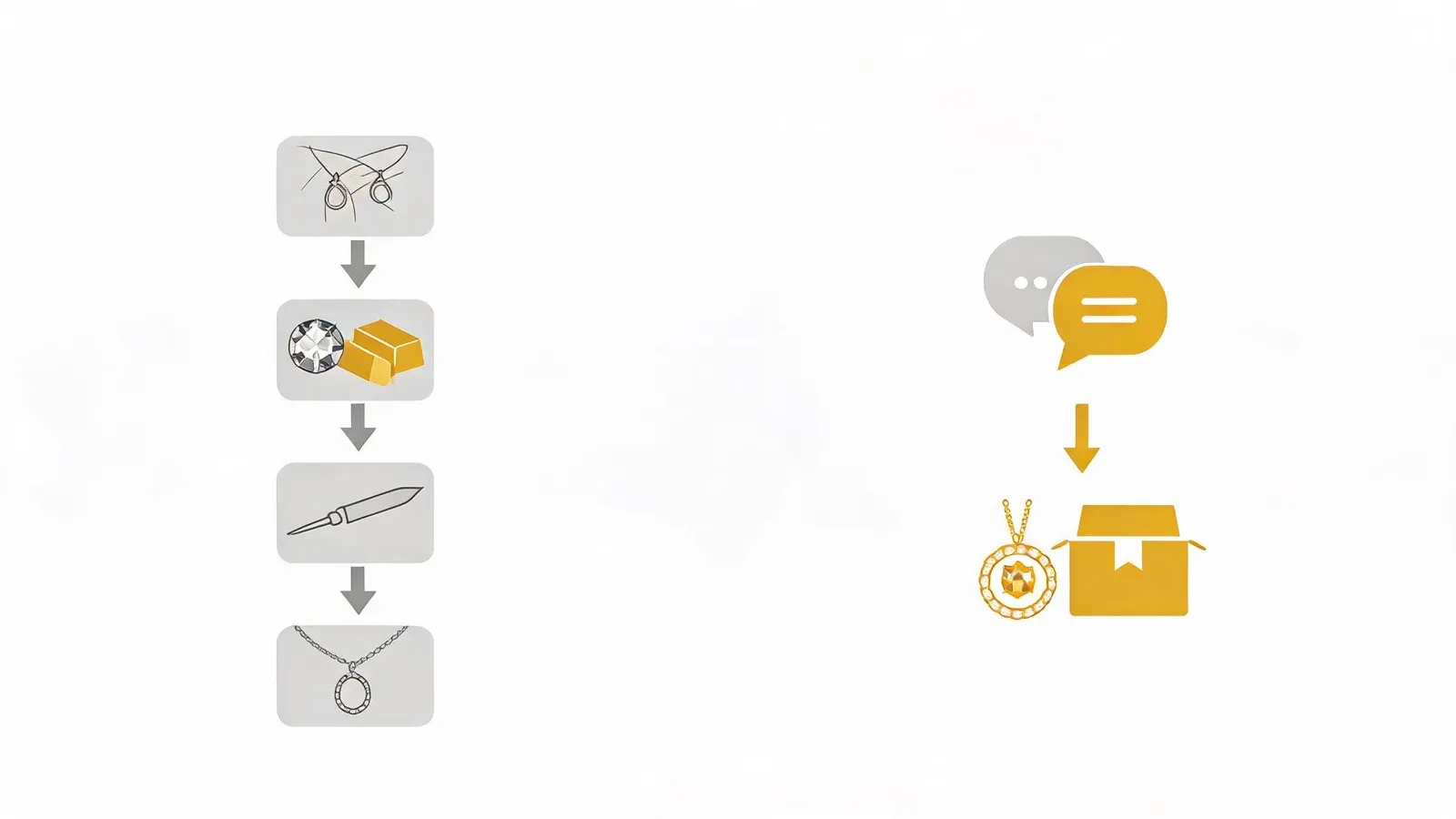
Custom jewelry sourced directly from OEM manufacturers offers DTC brands and importers lower per-unit costs, proprietary designs, and flexible minimum order quantities (MOQs) starting as low as 12 pieces per style. The primary alternatives—buying wholesale branded inventory, sourcing off-the-shelf stock catalogs, or using domestic retail custom programs—trade that margin control for faster turnaround times and zero design effort. Choosing between them depends entirely on your target market, available lead time, and whether you need to differentiate your product line from competitors selling identical stock. For a deeper look at how these models stack up operationally, explore our full B2B sourcing comparison.
TL;DR / Quick Verdict
Buyers building a distinct brand identity or scaling a DTC store should choose custom jewelry manufacturing to secure exclusive designs, control material specifications, and protect profit margins. Retailers who need immediate shelf-ready inventory without waiting for production cycles are better served by purchasing pre-made stock catalogs or established wholesale alternatives. If your procurement team requires multilingual support and direct factory access with MOQs of 12 pcs/style, an OEM supplier like STRAND bridges the gap between bespoke manufacturing and accessible entry volumes.
At-a-Glance Comparison Table
| Dimension | Custom Jewelry (OEM Manufacturing) | Alternatives (Wholesale Stock / Branded / Retail Custom) |
|---|---|---|
| Pricing Structure | Factory-direct unit cost; EXW or FOB trade terms. Higher initial sampling cost, lower long-term unit price. | Fixed wholesale tiers or retail markup. No tooling costs, but higher per-unit price at scale. |
| Minimum Order Quantity | Flexible. Example: STRAND offers 12 pcs/style on 109 of 114 catalog styles, select styles from 1 pc. | Varies wildly. Domestic retail custom often requires 1 pc; wholesale distributors may require 50-100+ pcs. |
| Design Exclusivity | 100% proprietary. You own the CAD/mold. | Zero exclusivity. Competitors can buy the exact same SKU. |
| Material Control | Full specification control (e.g., gold-plated/rhodium-plated copper, 925-style silver finishes, natural stone). | Limited to what the distributor or brand currently produces. |
| Lead Time | Sampling + production required (typically weeks). | Immediate dispatch if buying existing stock. |
| Support & Communication | Direct factory liaison. Multilingual sales teams (EN, FR, AR, ES, DE, RU). | Distributor customer service or retail store associates. |
| Quality Assurance | In-house QC inspection before every shipment. | Relies on distributor's grading or brand's standard output. |
| Payment Terms | T/T bank transfer, Western Union, PayPal, L/C, Xtransfer. | Credit card, net-30 (for approved wholesale accounts), or retail financing. |
Custom Jewelry Overview
Custom jewelry in a B2B context refers to pieces designed, prototyped, and manufactured to a buyer’s exact specifications through an Original Equipment Manufacturer (OEM). This model is built for DTC store owners, importers, and procurement teams in the US, EU, UK, and MENA regions who source chains, earrings, and sets directly from Chinese workshops.
The standout strength of this approach is total material and aesthetic control. Buyers dictate the base metals, plating thicknesses, and stone selections. For example, Hangzhou-based brand STRAND links vetted workshops directly to overseas buyers, offering custom OEM in gold-plated and rhodium-plated copper, 925-style silver finishes, glass beads, natural stones, and faux pearls. Instead of competing on price for generic items, buyers create proprietary SKUs. A brand targeting the luxury segment can specify gradient crystal drop earrings or two-tone glass bead necklace-and-earring sets that no other retailer carries.
Custom manufacturing also solves the MOQ problem that historically kept small-to-mid-sized brands out of the factory-direct space. While traditional factories demanded thousands of units, modern cross-border fashion jewelry suppliers offer realistic numbers. STRAND maintains a 114-style stock catalog where 109 styles carry an MOQ of just 12 pcs/style, serving as a baseline that can be modified into a fully custom OEM run. For procurement teams evaluating their options, understanding how these direct-source models compare across the industry is critical; we break down the top suppliers in our guide to Custom Jewelry: 6 Sources Buyers & DTC Brands Need in 2026.
Alternatives Overview
The alternatives to custom OEM jewelry fall into three main categories: wholesale stock catalogs, branded wholesale distribution, and retail-level custom programs. These options are built for boutique owners, fast-fashion retailers, and buyers who prioritize speed-to-market over product exclusivity.
Wholesale stock catalogs involve buying pre-manufactured designs in bulk. You get immediate availability, but you share those designs with every other buyer who ordered from the same page. Branded wholesale means buying established names to resell. Programs associated with large retailers like Jared stores or designers like Kendra Scott and Scott Kay offer recognizable names that drive foot traffic, but they enforce strict MAP (Minimum Advertised Price) policies and offer zero room for product differentiation.
Retail custom programs allow individual consumers or small boutiques to alter basic parameters (like ring size or selecting a center stone) within a rigid, pre-existing framework. While convenient for a one-off purchase, retail custom lacks the scalability, trade terms (EXW/FOB), and shipping logistics (air, sea, express) required by serious importers. When benchmarking these retail and wholesale routes against direct manufacturing, our analysis of 6 Custom Jewelry Sources Ranked: OEM Suppliers & Retail Benchmarks for 2026 provides a detailed evaluation framework for procurement teams. Understanding exactly how wholesale stock compares to these other alternatives helps clarify which route aligns with your operational capacity.
Feature-by-Feature Breakdown
Pricing and Trade Terms
Custom jewelry operates on factory-direct pricing. Buyers negotiate based on raw material costs, labor, and order volume, utilizing EXW (Ex Works) or FOB (Free on Board) trade terms. Payment infrastructure for cross-border OEM is built for international business, supporting T/T bank transfers, Letters of Credit (L/C), Western Union, PayPal, and platforms like Xtransfer.
Alternatives usually operate on fixed wholesale price lists. Buying branded inventory means paying for the brand's marketing overhead. Retail custom programs charge consumer-facing prices with heavy markups. While alternatives avoid the upfront cost of creating a new mold, the per-unit cost remains permanently higher, compressing your margin as you scale.
Design and Material Specification
With custom OEM, you define the exact vintage, gradient crystal, or rhinestone styles you want. You select specific natural stones—requesting amethyst, garnet, peridot, or turquoise cuts tailored to your seasonal collection. You determine whether a piece uses diamond-cut facets on glass beads or genuine stone settings.
Alternatives restrict you to the manufacturer's current capabilities. If a wholesale distributor only stocks synthetic cubic zirconia, you cannot upgrade to natural garnet without changing suppliers entirely. Branded inventory locks you into the designer's signature aesthetic, preventing you from adapting to hyper-local trends in the MENA or EU markets.
Minimum Order Quantities (MOQ)
Historically, custom meant massive volume commitments. Today, agile OEM suppliers have restructured production lines to accommodate smaller DTC brands. As noted, STRAND allows buyers to test custom variations with an MOQ of 12 pcs/style on most designs, and even offers select styles from 1 pc for sampling purposes.
Alternative wholesale distributors often enforce tiered MOQs (e.g., $500 minimum order or 50 units per SKU) to justify their warehousing costs. Retail custom has an MOQ of one, but at a price point that makes commercial resale mathematically unviable.
Quality Assurance and Compliance
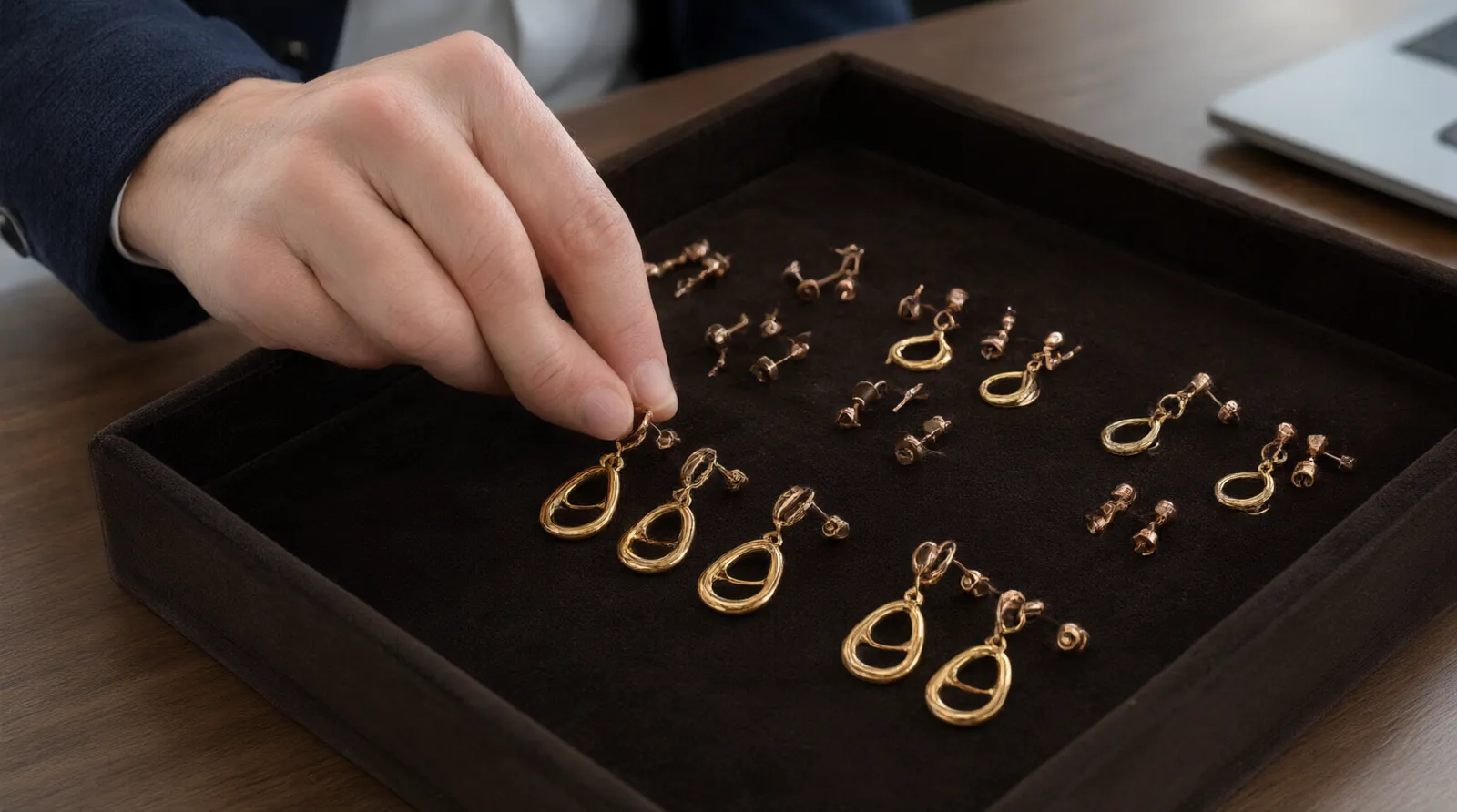
Custom jewelry buyers contractually mandate quality standards. Reputable OEM partners execute in-house QC inspections before every shipment leaves the facility. Because you specify the materials, you also control compliance—ensuring nickel-free plating for EU REACH regulations or specific lead-content limits for the US market.
When buying alternative wholesale stock, you rely on the distributor's internal grading. If a batch of rhodium-plated earrings has inconsistent plating thickness, discovering it after the goods arrive in your warehouse results in costly returns. Branded alternatives carry the brand's quality promise, but you have no authority to audit their factory floor.
Logistics and Shipping
Direct-from-factory custom orders give the buyer control over freight. You choose air freight for urgent restocks, sea freight for high-volume margin protection, or express couriers for sample delivery.
Alternatives limit your logistical choices. Wholesale distributors ship via their contracted carriers, often passing inflated domestic shipping rates onto the buyer. Retail custom programs rarely offer commercial freight forwarding, making them unsuitable for importers moving palletized goods.
Support and Communication
Cross-border custom jewelry requires precise communication to avoid expensive tooling errors. Suppliers catering to global buyers provide multilingual sales support. STRAND, for instance, services procurement teams in English, French, Arabic, Spanish, German, and Russian, eliminating the translation gaps that cause spec errors.
Alternative domestic wholesalers communicate in the local language and operate in similar time zones, which is convenient. However, their support teams are typically order-takers, not technical liaisons capable of advising on how altering a copper base affects the weight of a statement earring.
Pros and Cons
Custom Jewelry (OEM)
Pros:
- Total design exclusivity protects brand identity.
- Lower per-unit costs at scale maximize retail margins.
- Complete control over materials (e.g., specifying natural stone vs. faux pearl).
- Flexible, modern MOQs (as low as 12 pcs/style) reduce inventory risk.
- Direct control over international freight and trade terms (EXW/FOB).
- Multilingual support tailored to global procurement teams.
Cons:
- Requires upfront time for CAD review, sampling, and production.
- Demands clear technical specifications from the buyer.
- Cross-border payment processing requires familiarity with T/T or L/C.
Alternatives (Wholesale Stock / Branded / Retail)
Pros:
- Immediate availability; no production lead time.
- Zero design or engineering effort required from the buyer.
- Familiar domestic purchasing processes (credit cards, net-30).
- Established brand recognition (if buying branded wholesale).
Cons:
- No product exclusivity; competitors sell the identical SKU.
- Higher per-unit costs due to middleman markups.
- Inability to alter materials, sizes, or plating types.
- Strict MAP pricing limits your ability to run promotions.
When to Choose Custom Jewelry
Choose custom OEM manufacturing when your business model relies on product differentiation. If you are a DTC brand launching a new collection featuring vintage-inspired drop earrings or two-tone glass bead necklace-and-earring sets, you cannot afford to sell the same items found on competitor websites.
This route is also mandatory when targeting specific regional aesthetics. A buyer importing into the MENA region might require heavier gold-plated copper pieces with specific turquoise or amethyst arrangements that European wholesale catalogs do not carry. Finally, if your financial modeling requires a specific landed cost to maintain a luxury-tier margin while pricing competitively, negotiating directly with a factory via EXW or FOB terms is the only mathematical path forward.
When to Choose Alternatives
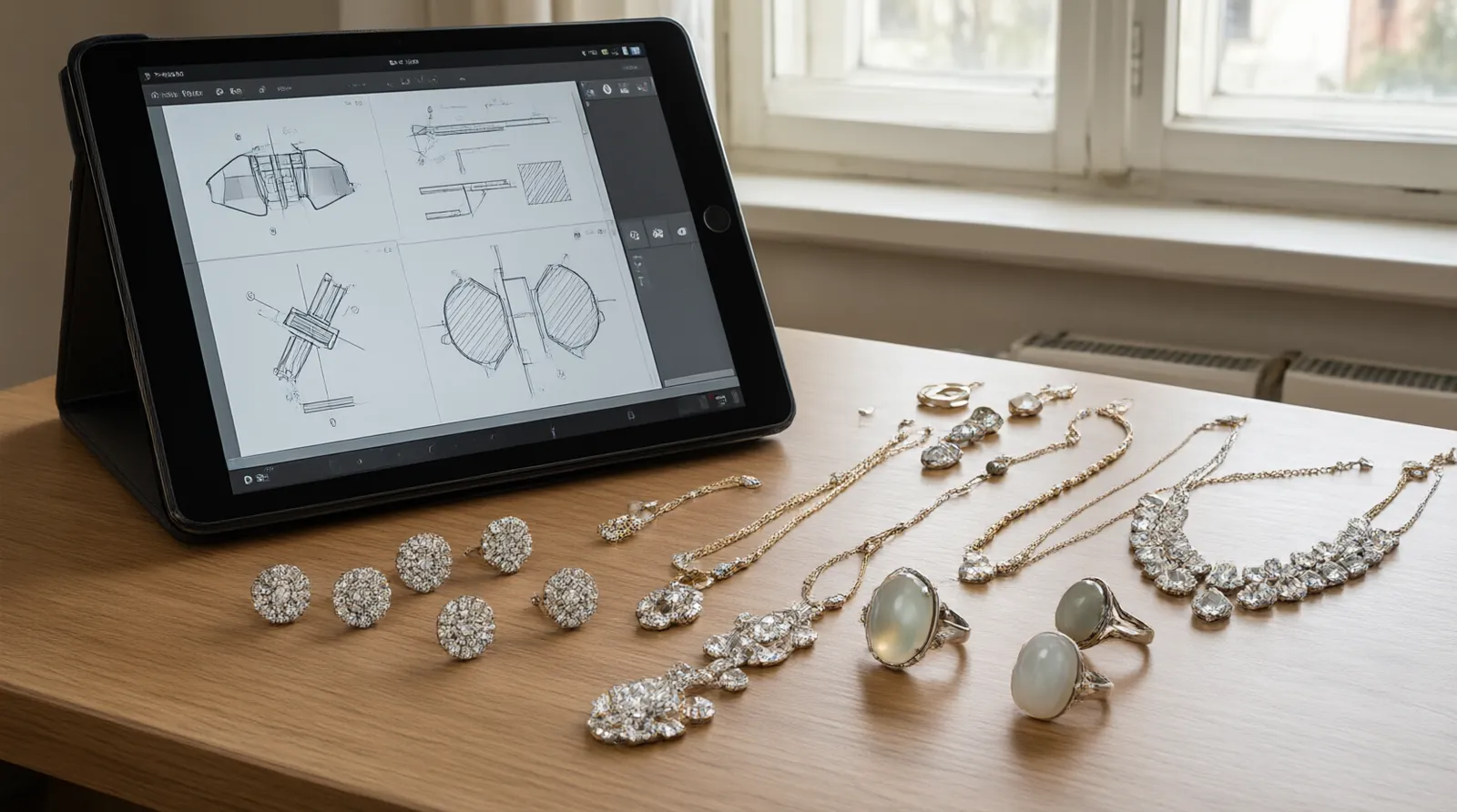
Choose alternatives when speed is your primary constraint and brand exclusivity is secondary. If you are a multi-brand boutique owner filling empty display cases ahead of a holiday rush, ordering existing wholesale stock guarantees delivery within days rather than weeks.
Alternatives also make sense for businesses testing a new demographic without committing capital to tooling. Buying a small run of established branded jewelry allows you to gauge customer interest in a specific style (e.g., peridot stud earrings) before investing in a custom OEM run. Additionally, if your operation lacks the bandwidth to manage international freight forwarding, customs clearance, and foreign exchange payments, domestic wholesale distributors handle those complexities on your behalf.
Final Verdict
For purchase-ready B2B buyers, importers, and DTC store owners, custom jewelry manufacturing yields superior long-term ROI compared to wholesale alternatives. The ability to dictate material specs—from rhodium-plated copper bases to natural garnet accents—combined with modern, accessible MOQs of 12 pcs/style removes the historical barriers to factory-direct sourcing. Alternatives serve a purpose for rapid, short-term inventory replenishment, but they cap your margins and leave your brand vulnerable to commoditization.
If your goal is to build a defensible product line with controlled costs, your next step is to evaluate actual production capabilities against your specific design requirements. Review the supplier's stock catalog as a baseline for their craftsmanship, verify their QC inspection protocols, and confirm their payment and shipping terms align with your procurement workflow. Request a quote, ask for current MOQ parameters, and initiate a sample run directly at strandjewelry.com.