
Custom Jewelry vs. Alternatives: The B2B Sourcing Guide
Custom Jewelry vs. Alternatives: The B2B Sourcing Guide
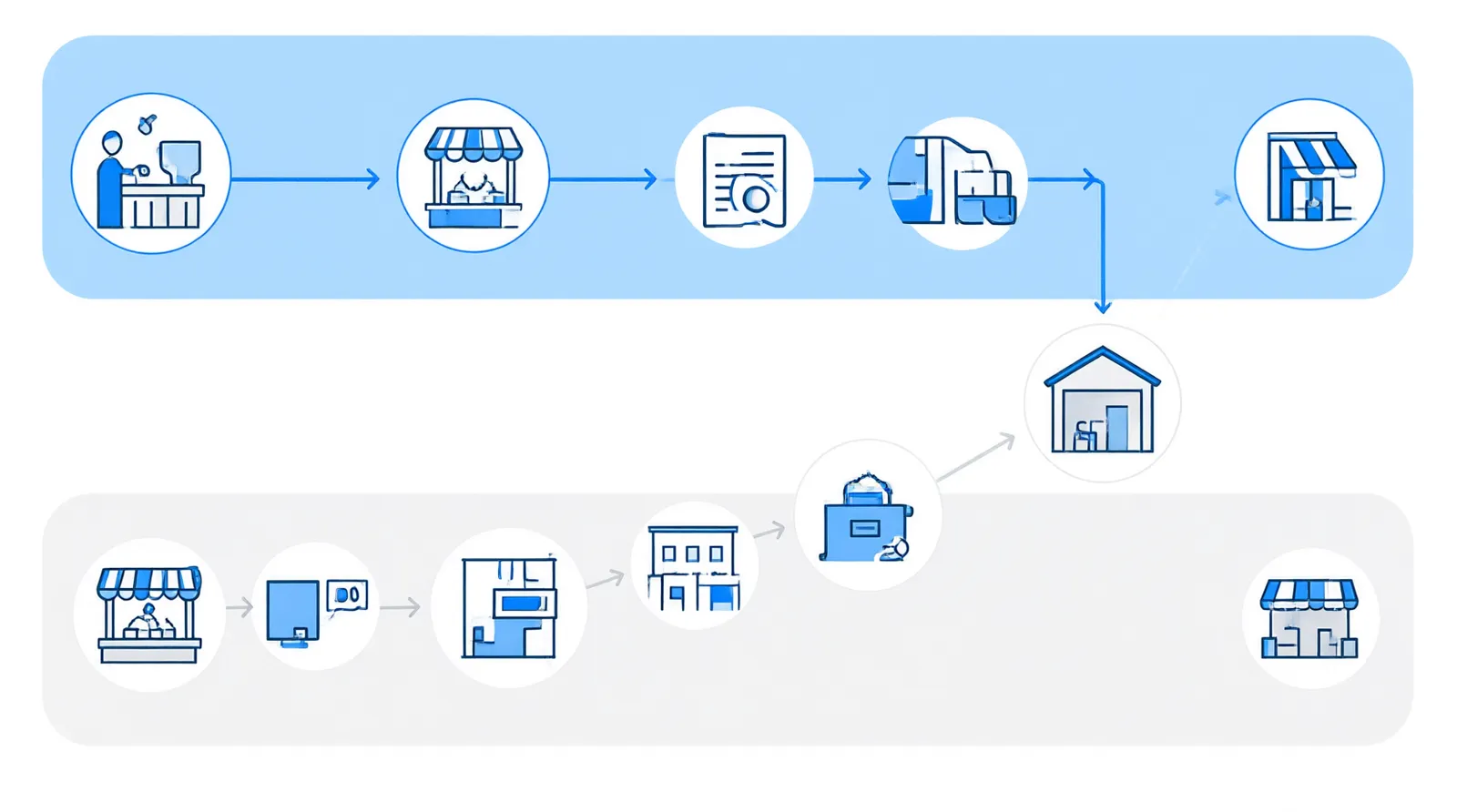
Custom jewelry sourced directly from OEM manufacturers gives importers and DTC store owners control over design, materials, and unit economics, typically starting at MOQs as low as 12 pieces per style. The primary alternatives—wholesale marketplaces, branded retail distribution, and domestic bench jewelers—trade that control for speed, zero-design effort, or localized service. Choosing between custom jewelry and these alternatives depends entirely on your margin targets, order volume, and how much supply chain oversight your procurement team requires. For a broader look at how these sourcing channels stack up against each other, explore our B2B buyer's guide to evaluate the trade-offs in detail.
TL;DR / Quick Verdict
If you are a DTC brand owner, importer, or buyer in the US, EU, UK, or MENA regions looking to build proprietary collections with specific material requirements (like gold-plated copper or natural stones), direct-to-manufacturer custom jewelry is the correct path. If you need immediate inventory replenishment without design input, or if you are sourcing a single luxury piece for personal use, wholesale platforms or retail stores are better fits. For cross-border fashion jewelry businesses scaling their margins, partnering with an OEM supplier eliminates the middleman markup inherent in alternative sourcing channels.
At-a-Glance Comparison Table
| Dimension | Custom Jewelry (Direct OEM) | Wholesale Marketplaces | Retail Stores (e.g., Jared, Kendra Scott) | Domestic Bench Jewelers |
|---|---|---|---|---|
| Pricing Structure | EXW or FOB; factory-direct unit cost | Bulk tiered pricing with distributor markup | Fixed retail MSRP | High hourly labor + material cost |
| MOQ Requirements | Low (e.g., 12 pcs/style on most stock designs, select styles from 1 pc) | Varies widely; often 50–100+ units | N/A (Retail purchase) | 1 piece |
| Design Control | Full specification (plating, stones, dimensions) | None (Buy existing catalog) | None | Full, but limited by local tooling |
| Material Options | Copper, glass beads, natural stone, faux pearls, 925-style finishes | Standardized alloys | Brand-specific proprietary mixes | Precious metals primarily |
| Lead Time | Production time + international shipping (air/sea/express) | Immediate to 2 weeks | Immediate | 4–8 weeks typical |
| Support & Language | Multilingual sales teams (EN, FR, AR, ES, DE, RU) | Platform support (mostly EN) | Local store staff | Local artisan |
| Quality Assurance | In-house QC inspection before every shipment | Relies on platform dispute resolution | Store return policies | Direct visual inspection |
| Best For | Importers, DTC brands, regional distributors | Fast-fashion retailers, pop-up shops | End consumers, gift buyers | High-end bespoke consumer pieces |
Custom Jewelry Overview
Custom jewelry in a B2B context refers to fashion and semi-fine pieces manufactured to a buyer's exact specifications by an overseas OEM partner. This model is built for importers, DTC store owners, and multilingual procurement teams who need to differentiate their product lines while maintaining strict control over unit economics. Rather than buying pre-designed goods through layers of distributors, buyers work directly with workshops—such as Hangzhou-based STRAND—to produce vintage, gradient crystal, two-tone glass bead, or rhinestone styles.
The standout strength of this model is the intersection of flexibility and scale. Buyers can specify base metals like gold-plated or rhodium-plated copper, integrate natural stones such as amethyst, garnet, peridot, or turquoise, and dictate finishing details down to 925-style silver appearances. Because the manufacturer controls the entire process, trade terms remain transparent (EXW or FOB), payment methods accommodate international business needs (T/T bank transfer, Western Union, PayPal, L/C, Xtransfer), and production scales precisely to demand. For a detailed breakdown of how to evaluate these manufacturers, our guide on Custom Jewelry: 6 Sources Buyers & DTC Brands Need in 2026 outlines the specific criteria procurement teams should use during vendor selection.
Alternatives Overview
Alternatives to direct custom jewelry manufacturing encompass three main categories: wholesale B2B marketplaces, established retail chains, and domestic artisans. These channels serve buyers who prioritize immediate availability, require zero design involvement, or are purchasing outside of a commercial resale context. Understanding how wholesale stock compares to custom manufacturing helps clarify when these alternative channels make financial sense for your business.
Wholesale platforms aggregate thousands of suppliers but often lack stringent quality control, leaving buyers to manage disputes after receiving inconsistent batches. Retail stores—including large chains like Jared or fashion-focused brands like Kendra Scott—sell finished goods at fixed prices. While excellent for end consumers seeking a diamond engagement ring or a ready-to-wear necklace, they offer no margin potential for resellers and zero customization. Domestic bench jewelers provide high-touch custom work, but their overhead makes them financially unviable for producing drop earrings or necklace sets in commercial quantities. These alternatives function best when speed or single-unit purchases outweigh the need for brand differentiation and margin optimization.
Feature-by-Feature Breakdown
Pricing and Trade Terms
Custom jewelry manufacturers operate on factory-direct pricing models. By utilizing EXW (Ex Works) or FOB (Free on Board) trade terms, buyers know exactly what portion of their budget goes toward production versus logistics. Shipping options—air, sea, or express—are selected based on the buyer's timeline and volume. Payment infrastructure is built for cross-border trade, supporting T/T bank transfers, L/C (Letters of Credit) for larger orders, and digital solutions like Xtransfer or PayPal for smaller initial runs.
Alternatives handle pricing very differently. Wholesale marketplaces usually embed distributor margins into the listed price, obscuring the true manufacturing cost. Retail stores operate on fixed MSRPs designed to cover storefront overhead, marketing, and corporate margins. Attempting to source commercial inventory from retail locations destroys any chance of profitable resale.
Minimum Order Quantity (MOQ) and Scalability
A common misconception is that custom manufacturing requires massive volume. Direct OEM partners have optimized their workflows to support growing DTC brands. For example, STRAND offers an MOQ of 12 pcs/style on 109 of its 114-style stock catalog, with select styles available from just 1 piece. This allows buyers to test new designs—like a new faux pearl stud earring or a rhinestone drop earring—in specific regional markets without committing to thousands of units upfront.
Wholesale alternatives frequently enforce rigid, higher MOQs to justify their distribution model. Conversely, domestic jewelers have an MOQ of one, but scaling that single piece into a 500-unit collection would take months and cost exponentially more per unit.
Materials and Design Specifications
Direct custom jewelry sourcing grants total authority over materials. Buyers can request specific base metals (gold-plated copper, rhodium-plated copper), incorporate natural stones (amethyst, garnet, peridot, turquoise), or utilize glass beads and faux pearls to achieve a specific luxury aesthetic at a fashion-jewelry price point. The ability to request 925-style silver finishes on non-silver bases is a specific advantage for brands targeting the mid-market segment.
Alternatives restrict you to what is already produced. If a wholesale marketplace supplier only stocks zinc alloy with synthetic stones, you cannot force a change to copper and natural turquoise without shifting to a custom arrangement. Retail brands protect their proprietary designs fiercely; you cannot walk into a store and ask them to alter a necklace set's plating for your boutique.
Quality Assurance and Compliance
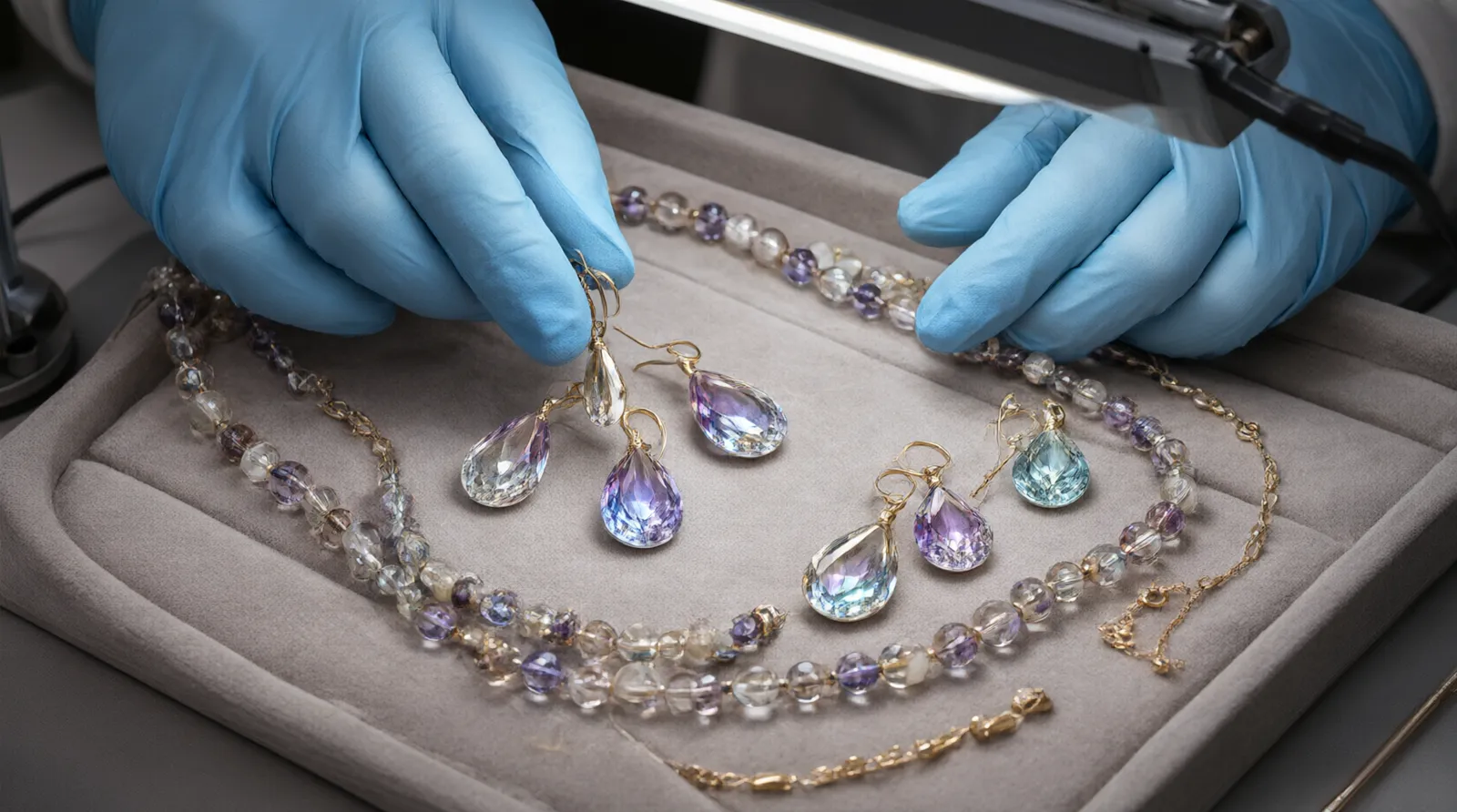
Cross-border sourcing requires rigorous quality control. Reputable custom jewelry manufacturers conduct in-house QC inspections before every shipment leaves the facility. This ensures that the gold plating thickness matches the spec sheet, the earring posts are securely soldered, and the natural stones are free of unexpected fractures.
When using wholesale alternatives or marketplaces, quality assurance is largely reactive. Buyers often discover defects only after the inventory arrives, leading to lengthy refund disputes. Retail stores guarantee quality through their return policies, but again, this framework is designed for individual consumers, not commercial importers managing pallets of inventory.
Support and Communication
Procurement teams operating across the US, EU, UK, and MENA regions require communication that transcends basic English. Direct custom jewelry suppliers catering to cross-border trade employ multilingual sales teams fluent in EN, FR, AR, ES, DE, and RU. This eliminates translation errors regarding technical specs—like the difference between a specific microns-thick rhodium plate and a standard flash plating.
Alternative channels rarely offer this level of dedicated, multilingual account management. Marketplace chat functions are often automated or handled by third-party agents unfamiliar with jewelry manufacturing terminology.
Lead Times and Logistics
Custom jewelry requires production lead time plus transit time. However, buyers control the logistics variables. Choosing air freight for a time-sensitive launch of a new vintage-style collection versus sea freight for a bulk restock of staple stud earrings allows for precise inventory planning.
Alternatives like wholesale platforms may offer faster shipping because the goods are pre-made and sitting in regional warehouses. Retail purchases are immediate. The trade-off is that you are buying generic, widely available stock that lacks exclusivity.
Pros and Cons
Custom Jewelry (Direct OEM)
Pros:
- Complete control over design, materials, and plating specifications.
- Factory-direct pricing via EXW or FOB terms maximizes profit margins.
- Flexible MOQs (e.g., 12 pcs/style) allow for low-risk market testing.
- Dedicated multilingual support (EN, FR, AR, ES, DE, RU) streamlines procurement.
- Mandatory in-house QC inspections prior to dispatch reduce defect rates.
- Multiple payment avenues suited for international B2B transactions (T/T, L/C, Xtransfer).
Cons:
- Requires upfront design decisions and specification gathering.
- Production and international shipping introduce longer lead times compared to local stock.
- Demands a baseline understanding of cross-border trade terms (FOB vs. EXW).
Alternatives (Wholesale, Retail, Domestic)
Pros:
- Immediate availability; no production wait times.
- Zero design effort required; products are ready to sell or wear.
- No need to manage international shipping logistics or customs documentation.
- Simple purchasing processes (add to cart, checkout).
Cons:
- Significantly higher per-unit costs due to middleman markups or retail pricing.
- No exclusivity; competitors can source the exact same designs.
- Limited or no ability to alter materials, sizes, or finishes.
- Lack of dedicated B2B account management or multilingual support.
- Quality consistency varies wildly on open marketplaces.
When to Choose Custom Jewelry
Choose direct custom jewelry manufacturing if you are a DTC brand owner launching a signature collection. For instance, if your upcoming fall line relies on a specific gradient crystal drop earring paired with a matching necklace set, only an OEM partner can execute that exact vision at scale.
This route is also mandatory for importers serving diverse geographic markets. If your distribution network spans the UK and the MENA region, having a supplier with multilingual sales teams (including Arabic and French) and flexible trade terms ensures smoother operations. Furthermore, if your business model relies on healthy margins, bypassing wholesale distributors to buy directly at EXW or FOB prices is the only mathematical path to sustainable profitability in fashion jewelry. For a deeper evaluation of which manufacturers align with specific business models, review our ranking of 6 Custom Jewelry Sources Ranked: OEM Suppliers & Retail Benchmarks for 2026.

When to Choose Alternatives
Opt for wholesale marketplaces if you run a fast-fashion pop-up shop that requires immediate, trend-chasing inventory and you do not care about long-term brand exclusivity. If you need 500 generic gold-tone hoop earrings delivered domestically by Friday, pre-stocked wholesale warehouses are the practical choice.
Retail stores like Jared or Kendra Scott are the correct avenue for end-consumer purchases. If you are buying a single luxury item—perhaps a diamond anniversary band or a specific designer piece—for personal use, retail provides the immediate gratification, warranty, and physical try-on experience that B2B sourcing does not. Finally, use domestic bench jewelers if you need a one-off repair or a highly specialized, single-piece heirloom redesign where shipping internationally for one item makes no logistical sense.
Final Verdict
For commercial buyers, importers, and DTC store owners, custom jewelry sourced directly from vetted OEM manufacturers outperforms alternatives in every metric that drives business growth: margin, exclusivity, quality control, and scalability. Alternatives exist solely to solve for speed or single-unit consumer convenience, neither of which builds a sustainable cross-border jewelry brand. Relying on wholesale marketplaces or retail arbitrage caps your profitability and leaves your product line vulnerable to identical competitor offerings.
If your procurement strategy requires specific material executions—whether that means natural turquoise set in rhodium-plated copper or faux pearl clusters on gold-plated bases—and you need those pieces delivered to the US, EU, UK, or MENA with verified quality checks, direct manufacturing is the standard. Review your current supplier list against the MOQ and trade term benchmarks outlined above. To get exact pricing, request current lead times, or secure samples for your next collection, initiate a direct inquiry at https://strandjewelry.com to connect with a multilingual sourcing specialist.