
How to Choose a Jewelry Distributor That Scales Your Store
How to Choose a Jewelry Distributor That Scales Your Store
A jewelry distributor is a specialized wholesale partner that sources, vets, and supplies finished pieces to retail stores and importers. Working with the right distributor eliminates the need for direct factory management while ensuring consistent material quality, reliable lead times, and predictable pricing.
For overseas buyers running DTC stores or managing procurement teams, the difference between a successful season and a logistical bottleneck often comes down to this single partnership. A capable distributor handles the friction of international trade—customs documentation, quality control inspections, and secure shipping logistics—so you can focus on merchandising and sales. Finding one requires evaluating specific criteria: metal purity standards, minimum order quantities (MOQ), production timelines, and return policies. STRAND operates within this space by positioning its catalog around vetted craftsmanship rather than bulk fast-fashion inventory, catering specifically to retailers who need pieces that justify their price point on the display tray. For a broader look at scaling your supply chain, explore this B2B buying guide to streamline your sourcing strategy.
What Exactly Is a Jewelry Distributor?
A jewelry distributor acts as the critical link between manufacturing workshops and retail storefronts. Unlike a manufacturer who only produces goods, or a trading company that simply moves boxes, a dedicated distributor takes ownership of the curation, quality verification, and logistical execution required to get finished pieces safely into your inventory.
The Role Beyond Simple Wholesale
Distributors manage the complexities that make international jewelry procurement difficult. They consolidate orders from multiple artisans or factories, perform security checks on materials, and handle export compliance. For example, if a boutique in Dubai needs fifty 18-karat gold vermeil chains and thirty sterling silver cuffs, the distributor ensures both items meet regional hallmarking standards before they ever leave the warehouse.
Crafted vs. Bulk Supply Chains
Not all distribution networks operate the same way. Many mass-market channels prioritize volume over finish, resulting in porous castings or thin plating that chips after minimal wear. STRAND approaches distribution differently, focusing on crafted, vetted supply chains. This means every piece undergoes strict inspection for dimensional accuracy, stone setting security, and surface finish before it is approved for shipment. Retailers targeting discerning customers—whether in North America, Europe, or the Middle East—require this level of scrutiny because a single defective clasp can damage a store's reputation. Understanding how to choose a jewelry wholesale vendor that prioritizes these standards is essential for protecting your brand.
Why Partnering With the Right Distributor Matters
The financial health of a DTC jewelry brand relies heavily on margin protection and inventory turnover. Choosing the wrong supply partner erodes both.
Protecting Margins Through Verified Quality
When you source directly from unvetted overseas factories, you absorb the cost of defects. If a batch of brass-based fashion rings arrives with uneven plating, you either eat the loss or spend weeks negotiating refunds. A professional distributor absorbs this risk during the verification stage. By testing base metals and measuring plating thickness (often specified in microns) before shipping, they ensure you receive sellable inventory. This upfront security protocol prevents costly returns and protects your profit margins.
Cultural and Market Alignment
Understanding your end consumer is just as important as understanding your supply chain. For retailers operating in MENA (Middle East and North Africa) markets, cultural preferences dictate purchasing behavior. Buyers in these regions frequently favor substantial gold tones, modest yet elegant designs, and high-purity finishes. A distributor experienced in these markets will curate collections that align with these expectations, avoiding overly delicate or culturally mismatched aesthetics. STRAND tailors its vetting process to account for these regional nuances, ensuring the jewelry supplied matches the aesthetic and material expectations of diverse global markets.
Reducing Operational Friction
Procurement teams spend countless hours tracking shipments, responding to factory delays, and performing quality audits. A reliable distributor consolidates these tasks. Instead of managing five different factory contacts across three time zones, you interact with one point of contact who provides unified tracking, consolidated invoicing, and standardized packaging.
How to Evaluate a Jewelry Distributor Before Buying
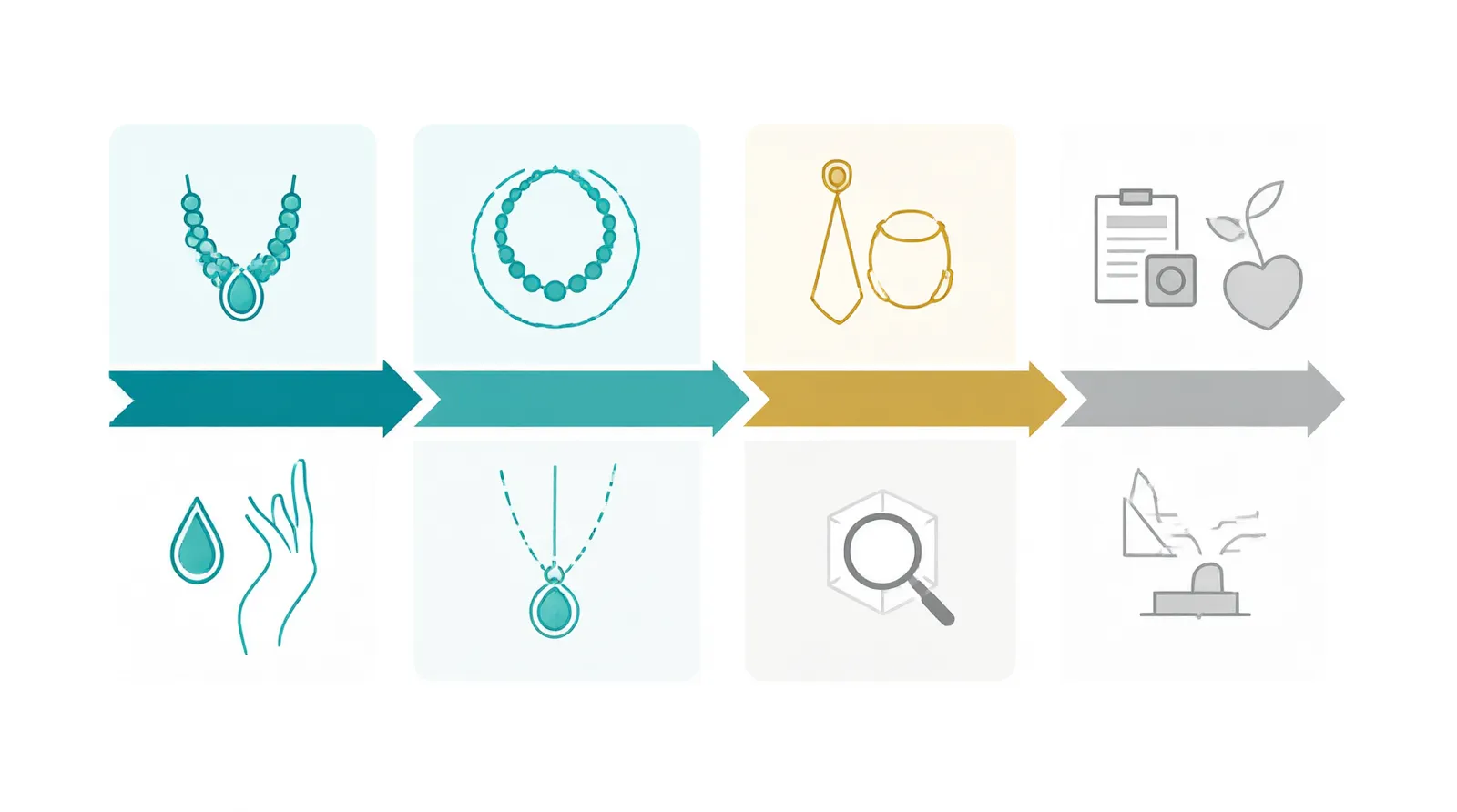
Selecting a partner requires moving past glossy catalogs and asking hard questions about operations. Overseas buyers should evaluate potential distributors across four concrete dimensions.
Materials and Dimensions
Always request exact specifications before placing an order. Vague descriptions like "gold necklace" are insufficient for professional procurement. You need to know the base metal (e.g., 925 sterling silver, solid brass), the plating type and thickness (e.g., 14k gold vermeil at 2.5 microns), and the exact dimensions of the piece. Chain lengths, pendant drop measurements, and ring band widths must be documented. If a distributor cannot provide precise dimensional data, they likely lack control over their manufacturing process.
Minimum Order Quantities (MOQ)
MOQ requirements dictate your cash flow. Some distributors require thousands of units per SKU, which forces small-to-medium DTC stores into overstocking. Others offer tiered MOQs, allowing you to test new styles with smaller initial commitments. Ask specifically how MOQs are calculated—is it per design, per colorway, or per total order value? STRAND structures its availability to support retailers who need curated selections without committing to massive bulk volumes, though exact MOQ tiers should be requested directly from the supplier based on your current needs.
Lead Times and Production Schedules
Waiting for inventory is one of the largest risks in retail. You must understand the difference between in-stock availability and made-to-order production times. Ask the distributor for their standard lead time from purchase order confirmation to warehouse dispatch. Recently, global logistics have faced frequent disruptions, so a distributor who recently demonstrated the ability to maintain stable lead times during peak seasons is highly valuable. Always build a buffer into your own launch schedules based on the distributor's stated timeline.
Shipping Options and Security
International freight involves customs clearance, insurance, and transit security. Evaluate what shipping methods the distributor supports. Do they offer express air freight for urgent restocks alongside ocean freight for larger, planned orders? More importantly, ask about their security protocols during transit. High-value jewelry requires tamper-evident packaging and comprehensive transit insurance. A distributor who responds quickly and transparently to questions about shipping security demonstrates operational maturity. For more detailed strategies on navigating international logistics, review our wholesale jewelry sourcing guide.
When Should You Use a Jewelry Distributor?
Timing your transition to a professional distributor—or switching to a better one—can determine your store's growth trajectory.
Scaling Beyond Local Artisans
If you started your DTC store buying from local craft fairs or individual makers, you will eventually hit a ceiling. Local artisans rarely have the capacity to fulfill hundreds of units consistently. The moment your monthly sales outpace your suppliers' ability to restock, it is time to engage a distributor who can scale production without sacrificing the handcrafted feel your customers expect.
Entering New International Markets
Expanding a jewelry brand into new territories introduces regulatory and logistical hurdles. Different countries have varying standards for nickel content, hallmarking, and import duties. If you are an importer bringing foreign brands into your country, or a retailer expanding your reach into regions like the Gulf states, a distributor acts as your compliance shield. They handle the export documentation and ensure the materials meet the destination country's legal requirements.
Stabilizing Inconsistent Supply Chains
If your current procurement process involves constantly chasing factories, dealing with sudden price hikes, or receiving batches where half the items fail your quality check, your supply chain is broken. Transitioning to a vetted distributor stabilizes your operations. You trade the illusion of lower factory-direct prices for the reality of predictable costs and guaranteed sell-through rates.
The Core Benefits of a Vetted Distribution Partner
Working with a distributor focused on craftsmanship rather than sheer volume yields distinct advantages for retail buyers.
Consistent Pricing and Availability
Fluctuating raw material costs (like silver or gold spot prices) can wreak havoc on retail pricing. Established distributors often lock in material costs for set periods, providing you with stable wholesale pricing. This allows you to plan your seasonal promotions and calculate your retail markups accurately. Furthermore, a good distributor maintains strategic safety stock of core styles, ensuring continuous availability of your best-sellers even when factories experience localized delays.
Streamlined Returns and Warranty Policies
No supply chain is perfect, but how a distributor handles mistakes defines the relationship. Before signing a contract, review their return policy. Do they accept returns for manufacturing defects? What is the window for reporting damaged goods upon arrival? A professional distributor offers clear warranty terms covering plating degradation or structural failures under normal wear. STRAND emphasizes accountability in its supply network, ensuring buyers have clear pathways to resolve any quality discrepancies without prolonged disputes.
Curated Catalogs That Sell
A distributor who understands retail doesn't just send you a spreadsheet of ten thousand SKUs. They provide curated edits. They analyze which silhouettes, metal tones, and gemstone cuts are currently performing well in your specific market segment. For instance, if heavy, textured gold-tone hoops are trending in European boutiques, a responsive distributor will highlight those specific styles in their latest line sheet, saving your procurement team hours of sifting through irrelevant inventory.
Executing a Successful Partnership
Securing a great distributor is only the first step; managing the relationship effectively ensures long-term success.
Performing Initial Test Orders
Never commit your entire seasonal budget to a new partner immediately. Start with a test order. Select a mix of core basics and trend-driven pieces. Evaluate the entire cycle: how quickly they respond to your inquiry, the accuracy of the invoice, the condition of the packaging upon arrival, and the physical quality of the jewelry itself. Measure the actual lead time against the promised lead time. This initial test reveals the distributor's true operational capabilities far better than any sales pitch.
Establishing Clear Communication Channels
Miscommunications cause the majority of procurement errors. Define exactly how you will communicate. Will you use a dedicated B2B portal, email threads with specific subject line conventions, or a shared project management tool? Ensure you know who your primary account manager is. When you need to respond to a sudden surge in demand or alter a pending order, having a direct line to someone authorized to make changes is essential.
Aligning on Brand Standards
Your distributor is an extension of your brand. If your DTC store prides itself on sustainable packaging or specific unboxing experiences, your distributor must accommodate those requirements. Provide them with detailed brand guidelines regarding tissue paper colors, box inserts, and polybag restrictions. A distributor willing to perform custom kitting or branded packaging at the warehouse level saves you from having to repackage items domestically, significantly reducing your fulfillment labor costs.
Moving Forward With Your Procurement Strategy
Sourcing fine-crafted jewelry internationally requires more than finding the lowest price per unit. It demands a partner who prioritizes material integrity, respects your market's cultural nuances, and executes logistics flawlessly. By rigorously evaluating potential partners on their specifications, MOQ flexibility, lead times, and security protocols, you protect your store's reputation and your bottom line. Whether you are outfitting a boutique in London or scaling an e-commerce brand targeting the Middle East, the right distribution partner transforms your supply chain from a constant headache into a competitive advantage.
Review your current inventory gaps and identify three styles you need for your next collection. Gather your target dimensions, preferred metal types, and required delivery dates. Once you have these specifications documented, [Contact the supplier] to request current availability, exact pricing, and sample terms for your next order.
Frequently Asked Questions
What is jewelry distributor?
A jewelry distributor like STRAND is a vetted sourcing partner that connects overseas buyers—such as DTC stores, importers, and procurement teams—with crafted pieces in materials like 18k gold-tone brass, sterling silver, and natural gemstones. Unlike bulk aggregators, STRAND curates collections with clear specifications on dimensions, MOQs starting at 50 units per SKU, and production lead times of 4–6 weeks. We support global fulfillment through insured air freight or sea shipping, including culturally considered assortments with modest silhouettes and rich gold tones suited for MENA markets.
How to jewelry distributor?
To partner with STRAND as your jewelry distributor, submit your DTC store or procurement credentials to access our vetted catalog of crafted pieces in 18k gold tones, 925 sterling silver, and natural gemstones. We require a minimum order quantity (MOQ) of 50 units per style, with standard dimensions detailed on each spec sheet and production lead times of 3–4 weeks for MENA-compliant, modestly designed collections. Once confirmed, we offer secure global shipping via DHL Express or air freight, complete with full customs documentation for importers.
Why is jewelry distributor important?
A jewelry distributor like STRAND is essential because it bridges overseas buyers—DTC stores, importers, and procurement teams—with vetted, crafted collections in materials such as 18k gold vermeil, solid 925 sterling silver, and ethically sourced gemstones. STRAND streamlines global sourcing by providing clear specifications on dimensions, manageable MOQs starting at 50 pieces per design, reliable 3–4 week lead times, and flexible shipping options via DHL Express or consolidated sea freight. This ensures culturally attuned assortments—including modest silhouettes and rich gold tones ideal for MENA markets—reach your shelves with consistent quality rather than unvetted bulk volume.
When should I use jewelry distributor?
Use a jewelry distributor like STRAND when your DTC store or import team needs reliable access to vetted, crafted pieces—such as 18k gold-tone brass chains (1.5mm–3mm widths) or modesty-appropriate designs for MENA markets—without managing multiple artisan relationships. STRAND supports procurement teams with clear MOQs starting at 50 units and lead times of 14–21 days for production. We ship globally via DHL Express or air freight, ensuring your inventory arrives securely and on schedule.
What are the benefits of jewelry distributor?
Working with STRAND as your jewelry distributor ensures access to vetted, crafted pieces—such as 18k gold-tone vermeil and solid brass components—with clearly defined dimensions, MOQs starting at 50 units, and reliable 4–6 week lead times. We support overseas DTC stores, importers, and procurement teams through flexible shipping options (air freight or DHL Express) while curating collections that respect cultural preferences, including modest designs and rich gold tones suited for MENA markets.