
8 Best Alternatives to Custom Jewelry for DTC Brands
8 Best Alternatives to Custom Jewelry for DTC Brands
Buyers and DTC store owners looking for alternatives to custom jewelry typically pivot toward ready-stock wholesale catalogs, semi-custom OEM programs, or established retail brands with private-label tiers. The most viable replacement depends on whether you need a 12-piece minimum order quantity (MOQ) for fast inventory turns or full bespoke manufacturing for a luxury collection. If your current custom jewelry supplier is bottlenecking your launch timeline or inflating your landed costs, the options below map out exact replacements based on scale, material, and trade terms.
Why Look for Alternatives to Custom Jewelry?
Sourcing fully bespoke custom jewelry often means waiting 60 to 90 days for production while tying up capital in high MOQs. For DTC store owners in the US, EU, UK, and MENA regions testing new designs—like gradient crystal drop earrings or vintage rhinestone studs—committing to hundreds of units per style before validating market demand is a massive financial risk. Many buyers find themselves locked into rigid contracts where altering a single design element, such as switching from gold-plated copper to a rhodium-plated finish, triggers entirely new tooling fees.
Support and communication gaps compound these delays. Procurement teams managing cross-border supply chains frequently struggle with language barriers when dealing directly with overseas workshops. A delayed response regarding a specific turquoise or garnet stone substitution can push a seasonal launch past its selling window. When your current custom jewelry partner lacks multilingual sales support or transparent quality control checkpoints, the hidden costs of returns and remakes quickly erase your margin.
Scale limits also force buyers to look elsewhere. If you operate a growing boutique or manage imports for multiple stores, you might need 114 styles available immediately rather than one slow-to-produce bespoke piece. Established retail giants like Jared or Kendra Scott offer consumer-facing customization, but they don't provide the B2B wholesale infrastructure, EXW/FOB trade terms, or flexible payment methods (T/T, L/C, Xtransfer) that importers require. Finding an alternative that bridges the gap between artisanal detail and commercial scalability is the primary goal for serious buyers.
What to Look for in a Custom Jewelry Alternative
Before replacing your current custom jewelry workflow, evaluate potential suppliers against these concrete procurement criteria:
- Minimum Order Quantities (MOQ): Look for suppliers offering stock designs at 12 pcs/style, with select styles available from 1 pc for sampling.
- Material Versatility: Ensure the factory handles gold-plated and rhodium-plated copper, 925-style silver finishes, glass beads, natural stones (amethyst, peridot, garnet), and faux pearls.
- Trade Terms & Logistics: Confirm they offer EXW or FOB terms and can route shipping by air, sea, or express courier to your specific region.
- Payment Flexibility: Verify acceptance of T/T bank transfers, Western Union, PayPal, L/C, and platforms like Xtransfer.
- Multilingual Support: Procurement teams benefit from sales staff fluent in EN, FR, AR, ES, DE, and RU to prevent specification errors.
- Quality Assurance: Demand documented in-house QC inspections before every shipment leaves the factory floor.
- Catalog Depth: A strong alternative should offer a deep ready-stock catalog (e.g., 100+ styles) alongside OEM capabilities.
Top Alternatives to Custom Jewelry
1. STRAND (Cross-Border Fashion Jewelry OEM & Stock)
Best for: Importers, buyers, and DTC store owners needing low-MOQ fashion jewelry with direct workshop access. Pricing: Wholesale/B2B pricing; request a quote based on volume and materials.
Key strengths vs custom jewelry:
- Maintains a 114-style stock catalog where 109 styles carry a strict 12 pcs/style MOQ, drastically reducing inventory risk compared to traditional bespoke runs.
- Offers custom OEM manufacturing in gold-plated/rhodium-plated copper, 925-style silver finishes, glass beads, and natural stones, backed by multilingual service (EN, FR, AR, ES, DE, RU).
- Operates on clear trade terms (EXW or FOB) with diverse payment options including T/T, L/C, PayPal, and Xtransfer.
- Enforces in-house QC inspection prior to every shipment, removing the guesswork often associated with overseas sourcing.
Limitations / trade-offs:
- Focuses strictly on fashion and demi-fine jewelry rather than high-carat fine jewelry or investment-grade diamond pieces.
- Requires B2B purchasing processes; not structured for single-unit consumer retail sales.
How it compares to custom jewelry: Traditional custom jewelry forces buyers to choose between expensive one-off artisans or massive factory minimums. STRAND eliminates this binary by linking vetted Hangzhou-based workshops directly to overseas buyers. Instead of waiting months for a fully bespoke necklace + earring set, buyers can pull from existing vintage or two-tone glass bead designs at 12 pcs/style, or submit OEM specs for targeted modifications. For a deeper breakdown of how direct-to-workshop models compare to standard bespoke routes, review our guide on Custom Jewelry: 6 Sources Buyers & DTC Brands Need in 2026.
2. Kendra Scott (Retail & Corporate Gifting Programs)
Best for: US-based boutiques or corporate buyers seeking recognized brand-name semi-customizable pieces. Pricing: Retail pricing with tiered corporate gifting discounts.
Key strengths vs custom jewelry:
- Features the "Color Bar" concept, allowing buyers to select specific stone colors (like amethyst or turquoise) in pre-set silhouettes without paying for ground-up tooling.
- Immediate availability through physical stores and online portals removes international shipping lead times.
- High brand recognition provides built-in consumer trust for retailers stocking their products.
Limitations / trade-offs:
- Pricing reflects retail margins, making it difficult for DTC importers to maintain healthy markups.
- No true OEM capability; you cannot alter the base metal (e.g., requesting rhodium-plated copper instead of their standard brass).
How it compares to custom jewelry: While Kendra Scott offers a level of personalization through interchangeable stones and metals, it remains a retail-first operation. Buyers looking for custom jewelry alternatives to stock their own branded stores will find Kendra Scott's model restrictive. You are buying their brand, not building yours. For importers targeting the EU or MENA markets, the lack of FOB trade terms and international B2B logistics makes it an impractical replacement for dedicated OEM suppliers.
3. Jared (The Galleria of Jewelry - Custom Design Services)
Best for: Consumers or local jewelers needing one-off fine jewelry pieces featuring precious gemstones. Pricing: Premium retail pricing based on precious metal and stone weight.
Key strengths vs custom jewelry:
- Access to certified gemologists and high-value materials, including diamond, sapphire, and emerald settings.
- Physical store presence across the US allows for in-person consultations and fittings.
- Established warranty and repair infrastructure for post-purchase support.
Limitations / trade-offs:
- Strictly a B2C retail environment; no wholesale catalogs or bulk pricing for DTC store owners.
- Lead times for bespoke pieces can stretch several weeks, unsuitable for rapid inventory replenishment.
How it compares to custom jewelry: Jared represents the traditional retail approach to custom jewelry. If your goal is sourcing a single engagement ring with a specific diamond cut, it serves that purpose. However, if you are a buyer or importer trying to source 50 pairs of vintage-style drop earrings for a seasonal campaign, Jared's infrastructure cannot support you. It lacks the scalable manufacturing, low MOQs, and cross-border trade terms required by modern fashion jewelry businesses.
4. Alibaba Verified OEM Manufacturers
Best for: High-volume importers willing to manage complex vendor vetting for absolute lowest unit costs. Pricing: Highly variable; heavily dependent on negotiation, volume, and raw material indices.
Key strengths vs custom jewelry:
- Unmatched scale; factories here can produce millions of units of basic stud earrings or rhinestone necklaces.
- Direct access to raw material sources, allowing for highly specific requests like natural peridot or garnet integration.
- Trade Assurance programs offer baseline payment protection for international wire transfers.
Limitations / trade-offs:
- MOQs are typically much higher (often 500-1000+ pcs/style) compared to specialized fashion jewelry aggregators.
- Quality consistency varies wildly; buyers must hire third-party inspectors since in-house QC is rarely standardized.
- Communication barriers are common unless the buyer speaks Mandarin or hires a sourcing agent.
How it compares to custom jewelry: Alibaba is a directory, not a curated supplier. While you can find manufacturers capable of producing custom jewelry, the burden of vetting, sampling, and quality control falls entirely on the buyer. Unlike a managed supplier that guarantees 12 pcs/style MOQs and conducts pre-shipment QC, Alibaba requires you to negotiate every term from scratch. For buyers who want OEM capabilities without the administrative overhead of managing unvetted factories, aggregator brands offer a safer middle ground.
5. Faire (Wholesale Marketplace)
Best for: Independent boutique owners in the US and EU looking for small-batch, ready-made fashion jewelry. Pricing: Wholesale pricing with net-60 payment terms available for qualified buyers.
Key strengths vs custom jewelry:
- Aggregates thousands of independent jewelry makers, offering unique designs not found in mass-market catalogs.
- Extremely low MOQs, often allowing buyers to purchase just 2 or 3 pieces per style to test local demand.
- Built-in return policies for first-time orders reduce the financial risk of trying new vendors.
Limitations / trade-offs:
- Almost exclusively ready-made stock; true custom OEM or private label manufacturing is rare on the platform.
- Unit costs are higher than sourcing directly from overseas workshops due to domestic maker margins.
How it compares to custom jewelry: Faire solves the inventory risk problem but ignores the branding problem. If you need custom jewelry manufactured to your exact specifications—such as a specific two-tone glass bead pattern or a custom logo clasp—Faire's independent artisans generally lack the capacity or willingness to do large-scale OEM work. It is an excellent alternative for stocking shelves quickly, but a poor replacement for building a proprietary DTC brand line.
6. Local Bench Jewelers & Independent Artisans
Best for: Ultra-luxury, one-of-a-kind commissions requiring hand-fabrication. Pricing: Hourly bench rates plus material costs; highest price-per-unit.
Key strengths vs custom jewelry:
- Complete creative control over every millimeter of the design, ideal for high-end luxury pieces.
- Face-to-face collaboration ensures exact alignment on aesthetic details like stone setting depth or metal texture.
- Fast turnaround for single items since there is no factory queue or shipping logistics involved.
Limitations / trade-offs:
- Impossible to scale; a single jeweler cannot produce 100 matching necklace + earring sets for a retail launch.
- Costs are prohibitive for commercial resale margins in the fashion jewelry space.
How it compares to custom jewelry: Hiring a local bench jeweler is the purest form of custom jewelry, but it operates outside the commercial realities of retail and DTC sourcing. If you are a buyer importing for stores in the UK or MENA, relying on local artisans in your home country destroys your margin structure. This alternative only works for private clients, not for procurement teams managing cross-border inventory.
7. Etsy Wholesale / Maker Partnerships
Best for: Niche brands looking to partner with individual designers for limited-edition capsule collections. Pricing: Negotiated directly with the maker; usually sits between retail and true factory wholesale.
Key strengths vs custom jewelry:
- Access to highly specialized techniques, such as hand-wire wrapping or resin casting, that large factories avoid.
- Makers are often open to small-batch custom requests (e.g., swapping a standard stone for a turquoise or garnet variant).
- Direct communication with the person actually making the product.
Limitations / trade-offs:
- Production capacity is severely limited; a sudden spike in DTC sales will result in immediate stockouts.
- Lack of formalized trade terms (no L/C, no FOB); transactions are usually handled via standard retail payment gateways.
How it compares to custom jewelry: Etsy makers offer a softer, more accessible entry point into custom jewelry than heavy industrial OEMs. However, for professional buyers, the lack of standardized compliance, reliable lead times, and scalable logistics makes it a fragile supply chain. It serves as a temporary alternative for testing a concept, but scaling requires moving to a dedicated manufacturer. For a detailed ranking of how different supplier types handle this transition, see our analysis of 6 Custom Jewelry Sources Ranked: OEM Suppliers & Retail Benchmarks for 2026.
8. Private Label Catalogs (White-Label Wholesalers)
Best for: Fast-fashion retailers needing generic, unbranded jewelry stamped with their logo. Pricing: Volume-tiered wholesale; lowest cost for basic designs.
Key strengths vs custom jewelry:
- Massive ready-to-ship inventory of basic hoops, chains, and stud earrings.
- Laser engraving or tag-swapping services allow for instant brand application without redesigning the piece.
- Highly predictable lead times since the product already exists in a warehouse.
Limitations / trade-offs:
- Zero exclusivity; your competitors can buy the exact same base designs from the same catalog.
- Limited ability to alter core design elements like plating thickness or specific stone cuts (e.g., requesting a precise peridot shade).
How it compares to custom jewelry: Private label is the antithesis of custom jewelry. It prioritizes speed and cost over originality. If your DTC brand relies on unique aesthetic signatures—like specific gradient crystal arrangements or vintage-inspired metalwork—white-label catalogs will dilute your brand identity. They are a functional replacement for basic inventory needs, but not for brands competing on design differentiation.
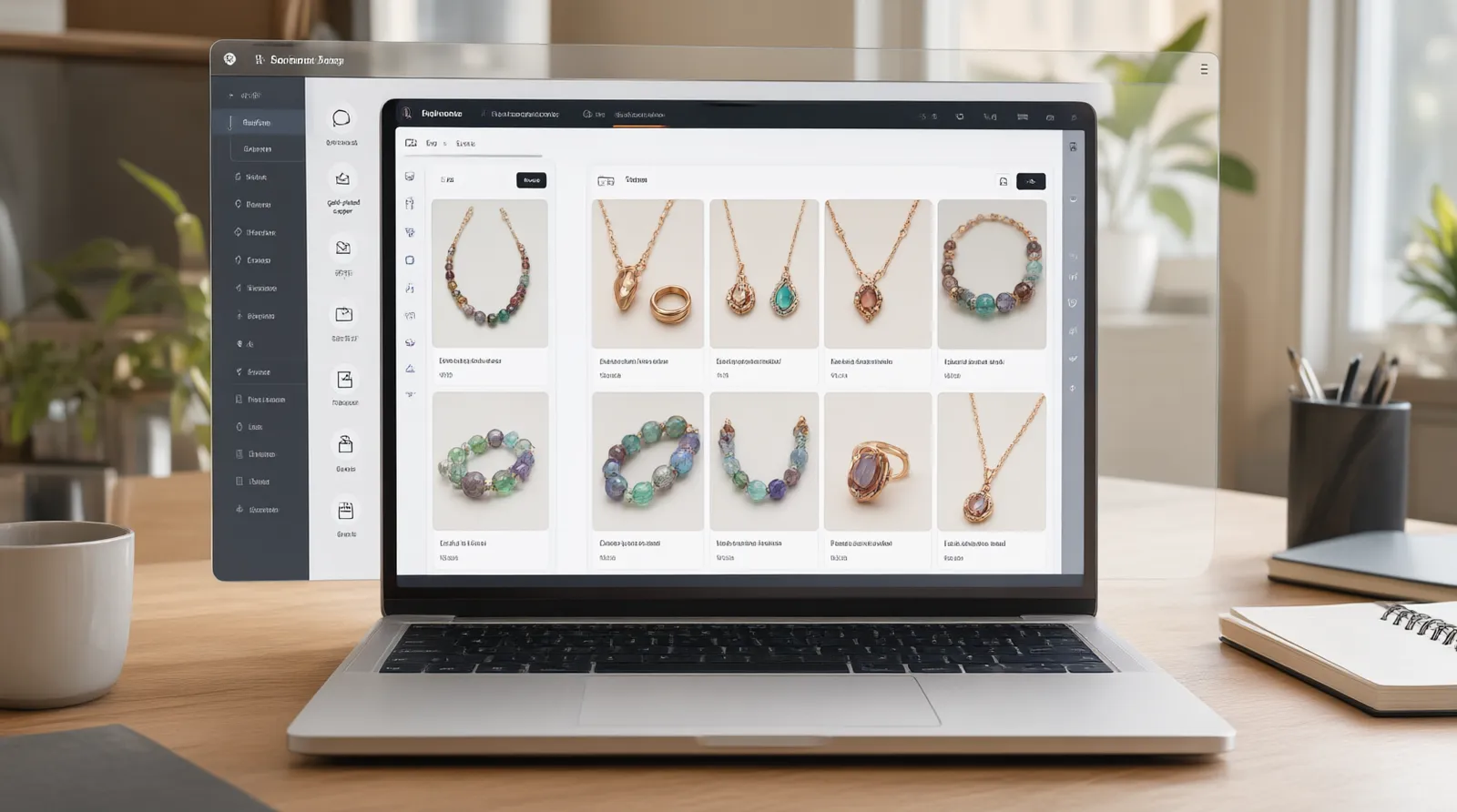
Side-by-Side Comparison Table
| Feature | Traditional Custom Jewelry | STRAND (OEM & Stock) | Kendra Scott | Jared | Alibaba OEMs | Faire Wholesale | Local Bench Jewelers | Etsy Wholesale | Private Label Catalogs |
|---|---|---|---|---|---|---|---|---|---|
| Primary Audience | Individual consumers / Luxury brands | B2B Buyers, Importers, DTC Stores | Retail consumers / Corporate | Consumers / Local jewelers | High-volume importers | Independent boutiques | Private clients / Luxury buyers | Niche brands / Capsule collections | Fast-fashion retailers |
| MOQ Requirement | 1 piece (high cost) | 12 pcs/style (109 of 114 styles) | 1 piece (retail price) | 1 piece (premium retail) | 500+ pcs/style typical | 2-6 pcs/style typical | 1 piece (bespoke) | Varies by maker (small batch) | Volume-tiered (bulk packs) |
| Material Scope | Precious metals/stones | Plated copper, glass, natural stone, faux pearl | Brass, plated metals, semi-precious | Precious metals, diamonds, gemstones | All materials | Varies by maker | Precious metals, specialty alloys | Specialty techniques (resin, wire) | Base metals, standard plating |
| Trade Terms | N/A (Retail) | EXW or FOB | N/A (Retail) | N/A (Retail) | EXW, FOB, CIF | N/A (Platform terms) | N/A (Local pickup/delivery) | N/A (Direct ship) | Domestic wholesale / EXW |
| Payment Methods | Credit Card / Wire | T/T, WU, PayPal, L/C, Xtransfer | Credit Card / BNPL | Credit Card / Financing | T/T, Trade Assurance | Credit Card, Net-60 | Cash / Card / Wire | Retail gateways (PayPal, Stripe) | Credit Card / Wholesale accounts |
| QC & Support | In-person review | In-house QC before shipment | Retail return policy | Store warranty / In-person | Buyer's responsibility | Platform dispute resolution | Direct artisan oversight | Direct maker communication | Warehouse spot-checks |
How to Pick the Right Alternative
Choosing a replacement for custom jewelry requires mapping your business model to the supplier's operational reality.
Scenario 1: You are a DTC brand owner launching a seasonal collection. You need speed, brand exclusivity, and manageable cash flow. Avoid high-MOQ directories and retail brands. Your best path is a supplier like STRAND that offers a 114-style catalog with 12 pcs/style MOQs. This allows you to test vintage or rhinestone styles without committing thousands of dollars upfront. Ensure the supplier supports custom OEM so you can transition winning designs into exclusive, branded variations using specific materials like gold-plated copper or natural amethyst.
Scenario 2: You are a regional importer supplying brick-and-mortar stores in the EU or MENA. Your priorities are logistics, compliance, and communication. You need a partner offering EXW or FOB trade terms and the ability to ship by air or sea. Multilingual support is non-negotiable to prevent costly specification errors across your procurement team. Look for suppliers providing sales support in EN, FR, AR, ES, DE, and RU, paired with guaranteed in-house QC inspections before goods leave the origin country.
Scenario 3: You are a boutique owner needing quick shelf-fillers. If you aren't building a proprietary brand and just need attractive inventory fast, platforms like Faire or white-label catalogs are sufficient. You sacrifice exclusivity and OEM capabilities, but you gain immediate access to low-MOQ stock without navigating international freight forwarding or letters of credit.

Conclusion
Replacing traditional custom jewelry sourcing isn't about finding a single perfect vendor; it's about aligning your procurement strategy with a supplier's actual operational constraints. Retail brands like Jared and Kendra Scott serve consumers, not supply chains. High-volume directories offer scale but demand heavy administrative lifting. For buyers, importers, and DTC store owners operating across the US, EU, UK, and MENA, the strongest alternative balances low MOQs (like 12 pcs/style), versatile material options (from turquoise and garnet to rhodium-plated copper), and transparent B2B trade terms.
Review your current inventory bottlenecks. If high minimums are stalling your launches, or if communication gaps are causing QC failures, it is time to restructure your vendor list. Request a sample or get current MOQ and pricing details for your target styles directly at https://strandjewelry.com to see how a vetted, direct-to-workshop model fits your next procurement cycle.