
7 Smart Alternatives to Custom Jewelry for Buyers in 2026
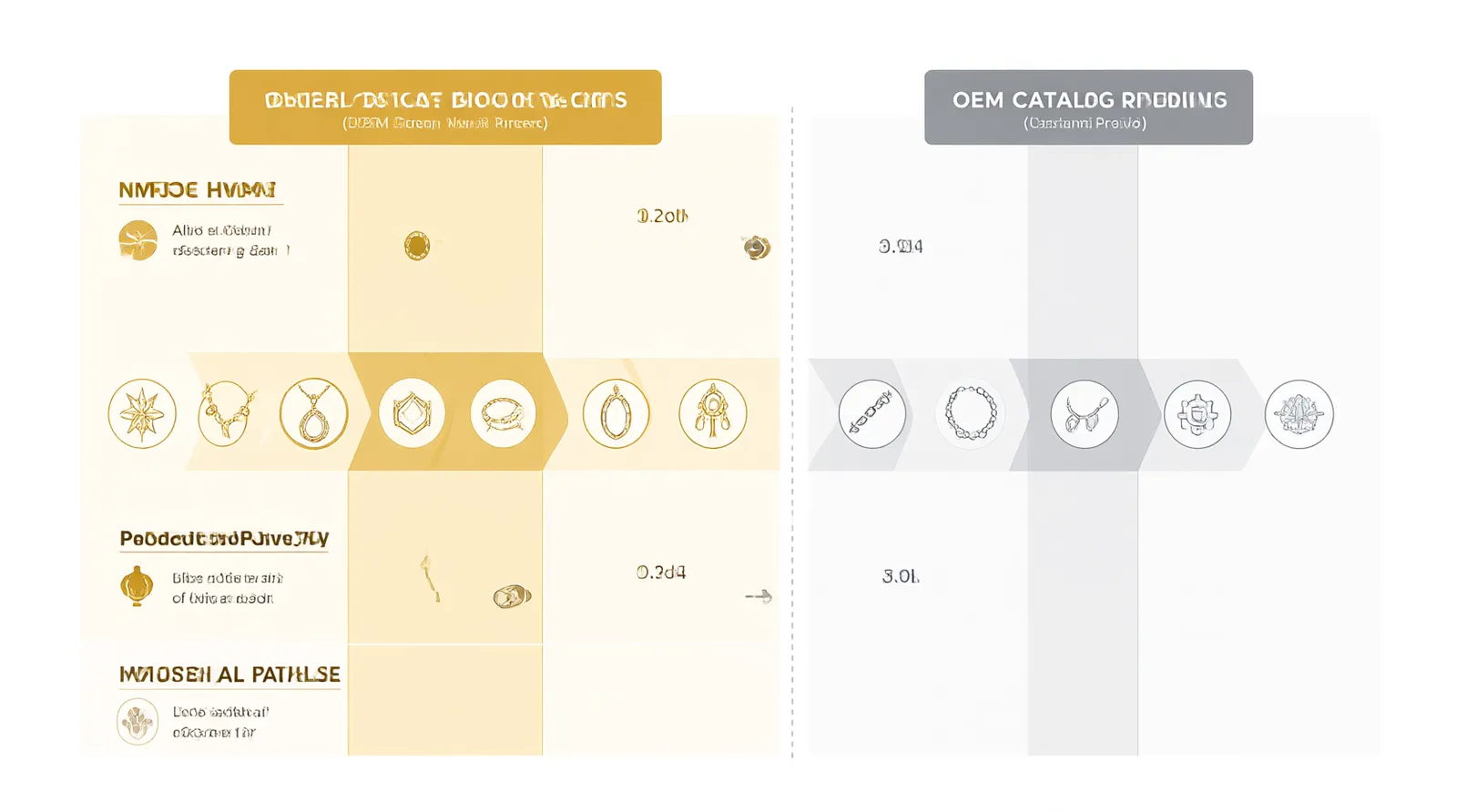
7 Smart Alternatives to Custom Jewelry for Buyers in 2026
Buyers, importers, and DTC store owners looking for alternatives to custom jewelry typically pivot toward curated stock catalogs with low MOQs, direct-to-factory OEM partnerships, or semi-customizable retail collections. The right replacement depends entirely on whether your priority is reducing unit costs, speeding up fulfillment, or maintaining design exclusivity across US, EU, UK, or MENA markets. For a broader overview of available sourcing models, explore our guide to the best alternatives to custom jewelry.
Why Look for Alternatives to Custom Jewelry?
Sourcing fully bespoke custom jewelry often introduces friction that scales poorly for growing DTC brands and regional importers. Lead times stretch from weeks into months as designs move through multiple prototyping phases. For a buyer trying to test a new drop earring or necklace set in the market, waiting eight weeks for a single sample ties up capital and delays seasonal launches. Pricing structures also shift unpredictably; tooling fees and high minimum order quantities (MOQs) force smaller shops to overcommit inventory just to secure a viable per-unit cost.
Support and communication gaps compound these issues. Multilingual procurement teams managing supply chains across borders frequently encounter language barriers when working directly with overseas workshops without an intermediary. If a specification for gold-plated copper or rhodium plating gets lost in translation, the resulting production run becomes unsellable. Vendor lock-in is another hidden cost. Once you invest heavily in proprietary molds with one workshop, switching suppliers means starting from scratch, paying new setup fees, and risking inconsistent quality across batches.
Retail benchmarks further complicate the math. Large-scale operations like Jared stores or Zales offer personalized jewelry programs, but their infrastructure is built for individual consumer transactions, not B2B wholesale volume. Brands inspired by designers like Kendra Scott or Foundrae often find that replicating that aesthetic through traditional custom jewelry routes eats directly into margins. Buyers need sourcing models that balance unique aesthetics—like vintage styles, gradient crystals, or two-tone glass beads—with predictable trade terms and scalable output.
What to Look for in a Custom Jewelry Alternative
Evaluating a replacement for custom jewelry requires checking specific procurement criteria before requesting quotes or samples. Use this checklist to vet potential partners:
- Minimum Order Quantity (MOQ): Verify if the supplier requires hundreds of units per style or offers accessible tiers (e.g., 12 pcs/style on most stock designs, or even 1 pc for select styles).
- Material & Finish Specifications: Confirm they work with your required base metals and finishes, such as gold-plated copper, rhodium-plated copper, 925-style silver finishes, natural stone, faux pearls, or glass beads.
- Trade Terms & Logistics: Check if they support standard international terms like EXW or FOB, and offer flexible shipping via air, sea, or express couriers.
- Payment Flexibility: Ensure they accept methods aligned with your accounting practices, including T/T bank transfer, Western Union, PayPal, L/C, or Xtransfer.
- Quality Assurance: Demand clarity on their inspection process. In-house QC inspection before every shipment prevents defective goods from reaching your warehouse.
- Multilingual Support: For cross-border teams, confirm sales support in necessary languages (EN, FR, AR, ES, DE, RU) to avoid spec errors.
- Catalog Depth vs. OEM Capability: Assess whether they offer a deep stock catalog (like a 114-style lineup) for immediate needs alongside true custom OEM manufacturing for future scaling.
Top Alternatives to Custom Jewelry
1. STRAND (Cross-Border Fashion Jewelry OEM & Stock)
Best for: DTC store owners, importers, and buyers in the US, EU, UK, and MENA seeking low-MOQ fashion jewelry directly from vetted Chinese workshops.
Pricing: B2B wholesale pricing; request a quote based on volume and materials. Trade terms available as EXW or FOB.
Key strengths vs custom jewelry:
- Eliminates the traditional MOQ barrier: 109 of 114 catalog styles are available at just 12 pcs/style, with select styles dropping to 1 pc.
- Provides a 114-style stock catalog featuring drop earrings, stud earrings, and necklace + earring sets in vintage, gradient crystal, two-tone glass bead, and rhinestone styles.
- Offers full multilingual sales support (English, French, Arabic, Spanish, German, Russian), removing communication bottlenecks common in overseas sourcing.
- Conducts in-house QC inspection before every shipment, replacing the unpredictable quality control of unvetted factory-direct custom orders.
Limitations / trade-offs:
- Focuses on fashion jewelry materials (copper, glass beads, faux pearls, natural stones) rather than fine jewelry precious metals.
- Requires buyers to understand international trade terms (EXW/FOB) and arrange or approve logistics.
How it compares to custom jewelry: Traditional custom jewelry forces buyers to choose between high MOQs and exorbitant sampling costs. STRAND bridges this gap by acting as a Hangzhou-based brand linking vetted Chinese workshops directly to overseas buyers. Instead of waiting months for a bespoke prototype, buyers can pull from a proven catalog of gold-plated and rhodium-plated copper pieces or utilize STRAND's custom OEM capabilities for specific modifications. This hybrid model drastically reduces financial risk while maintaining the aesthetic uniqueness brands demand. For a deeper look at how this model fits into broader sourcing strategies, review our guide on Custom Jewelry: 6 Sources Buyers & DTC Brands Need in 2026.
2. Zales Personalized Jewelry Collections
Best for: Retail benchmarking and understanding consumer-facing personalization trends in the US market.
Pricing: Consumer retail pricing (varies by metal and gemstone).
Key strengths vs custom jewelry:
- Established brand trust with consumers looking for personalized items like nameplates or birthstone rings.
- Immediate availability of pre-designed templates that require only minor engraving or stone selection.
- Extensive physical footprint allowing customers to see pieces in person before buying.
Limitations / trade-offs:
- Not structured for B2B wholesale, bulk importing, or DTC store inventory sourcing.
- Limited to their proprietary designs; no true OEM manufacturing for independent brands.
How it compares to custom jewelry: Zales represents the mass-market retail approach to personalized jewelry. While a DTC brand might look at Zales to understand what mainstream US consumers want—such as specific diamond cuts or engraving fonts—it cannot serve as a supply chain partner. Where custom jewelry sourcing aims to build a brand's unique inventory, Zales sells finished goods directly to end consumers. Importers should view platforms like Zales strictly as market research tools rather than procurement alternatives.
3. Foundrae Custom Medallions & Personalized Pieces
Best for: Luxury market positioning and studying high-end, meaning-driven jewelry design.
Pricing: Luxury tier (pieces frequently range from several hundred to thousands of dollars).
Key strengths vs custom jewelry:
- Highly distinct aesthetic focusing on bespoke medallions, enamel work, and symbolic motifs.
- Strong brand narrative that commands premium retail margins.
- Demonstrates how semi-custom elements (mixing and matching chains and charms) can reduce production complexity while feeling bespoke.
Limitations / trade-offs:
- Prohibitive pricing for brands targeting the accessible fashion jewelry segment.
- No wholesale or OEM program for external buyers to replicate or source similar styles.
How it compares to custom jewelry: Foundrae operates in the luxury space where custom jewelry is sold as an experiential service rather than a scalable product line. For a DTC store owner trying to capture a similar vintage or talismanic aesthetic without the luxury price tag, Foundrae serves as a design reference point. Sourcing partners like STRAND allow buyers to achieve comparable visual weight using materials like natural stone, glass beads, and gold-plated copper, translating high-end inspiration into commercially viable inventory.
4. Brown & Co. Jewelers Custom Design Services
Best for: High-touch, local bespoke services for individual clients or highly specialized one-off projects.
Pricing: Premium bench-jeweler rates plus material costs.
Key strengths vs custom jewelry:
- Direct collaboration with master jewelers for intricate, one-of-a-kind CAD designs.
- Ability to work with high-value materials, including specific diamond settings or rare colored gemstones.
- Hands-on fitting and adjustment throughout the creation process.
Limitations / trade-offs:
- Geographically limited; impractical for cross-border importers or scaling DTC brands.
- Production capacity is restricted to a local bench, making bulk runs impossible.
How it compares to custom jewelry: Brown & Co. exemplifies the traditional, localized approach to custom jewelry. It works perfectly for an individual buyer wanting a specific amethyst or garnet set into a family heirloom redesign. However, for a buyer needing 500 units of rhodium-plated stud earrings shipped to the UK or MENA region, this model fails completely. Commercial buyers must transition from local bench jewelers to cross-border OEM manufacturers to achieve scale, consistent pricing, and reliable export logistics.
5. Semi-Customizable Stock Catalogs (The Hybrid Approach)
Best for: Brands that want unique aesthetics without paying for ground-up engineering and mold creation.
Pricing: Varies by supplier; generally lower than full bespoke due to shared tooling costs.
Key strengths vs custom jewelry:
- Drastically shorter lead times since base molds already exist.
- Lower tooling fees; buyers only pay for modifications like swapping a peridot-colored stone for turquoise glass.
- Easier to maintain consistency across large production runs compared to fully handmade custom pieces.
Limitations / trade-offs:
- Design options are constrained by the supplier’s existing library.
- Competitors using the same supplier might access similar base silhouettes.
How it compares to custom jewelry: Full custom jewelry implies starting from a blank sketch. The hybrid approach—which forms the backbone of STRAND’s 114-style catalog—gives buyers a curated menu of proven designs. A store owner can select a vintage drop earring silhouette and request it be produced in two-tone glass bead variations or with 925-style silver finishes. This satisfies the need for distinct branding while avoiding the six-figure tooling investments and six-month timelines associated with traditional custom manufacturing. We break down the economics of this approach further in our ranking of 6 Custom Jewelry Sources Ranked: OEM Suppliers & Retail Benchmarks for 2026.
6. Local Wholesale Districts & Trade Shows
Best for: Buyers who prefer inspecting physical samples before committing to purchase orders.
Pricing: Wholesale tier, though often marked up by middlemen compared to direct-factory sourcing.
Key strengths vs custom jewelry:
- Immediate gratification; buyers can walk away with stock the same day.
- Tactile evaluation of plating quality, clasp tension, and stone setting security.
- Face-to-face relationship building with vendors.
Limitations / trade-offs:
- High risk of purchasing generic, widely distributed designs lacking brand exclusivity.
- Middlemen markups erode profit margins compared to direct OEM relationships.
- Travel costs and time investment limit frequency of sourcing trips.
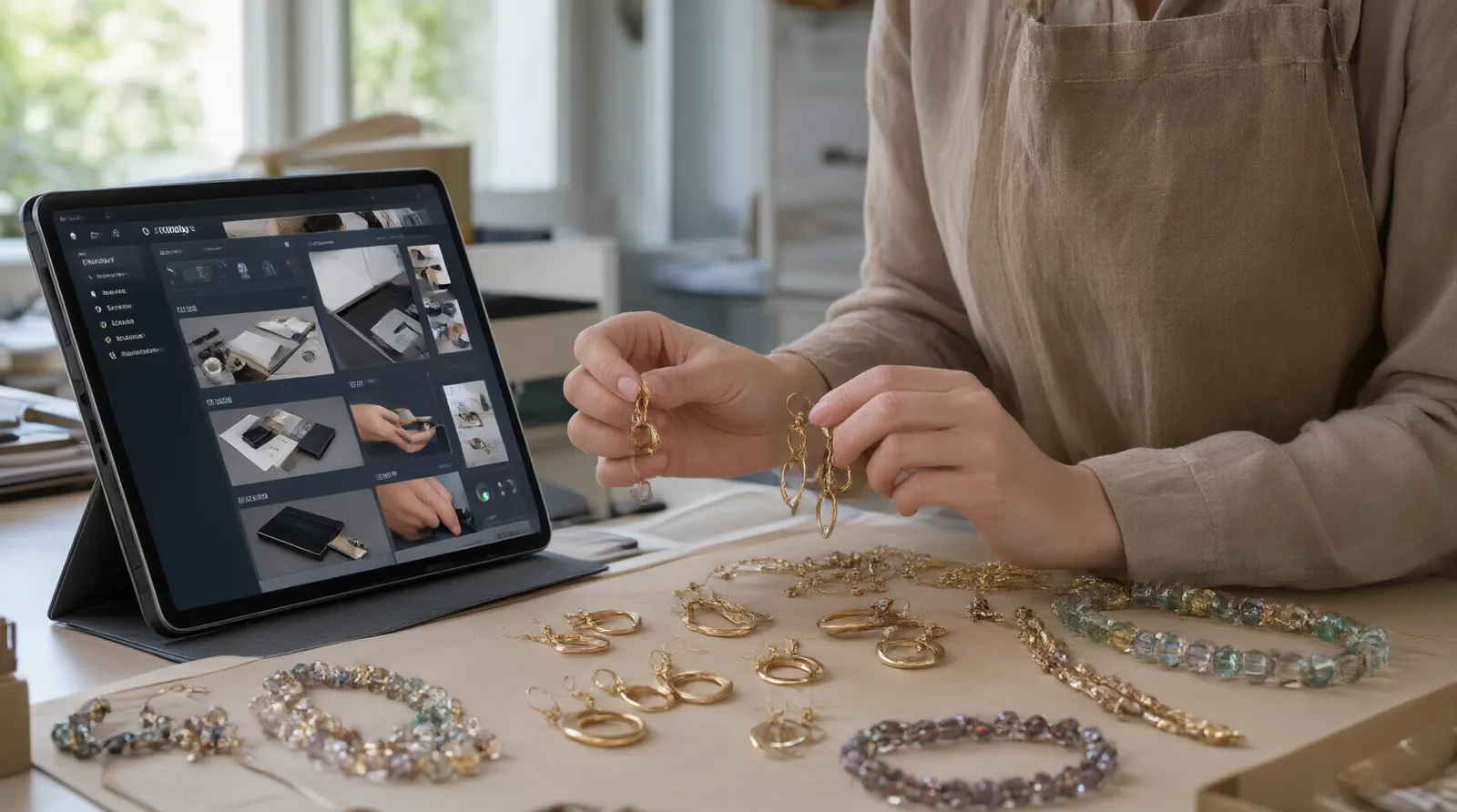
How it compares to custom jewelry: Trade shows offer a middle ground between off-the-shelf retail and ground-up custom jewelry. However, buyers often struggle to find vendors capable of modifying a floor sample to match their exact specifications. By contrast, working directly with a manufacturer like STRAND allows buyers to use digital catalogs and multilingual sales teams to specify exact changes—such as altering a necklace set from gold-plated to rhodium-plated copper—without booking international flights.
Side-by-Side Comparison Table
| Feature / Dimension | Traditional Custom Jewelry | STRAND (OEM & Stock) | Zales Personalized | Foundrae | Brown & Co. Jewelers |
|---|---|---|---|---|---|
| Primary Audience | Individuals / Niche Brands | B2B Buyers, Importers, DTC | End Consumers | Luxury Consumers | Local Individual Clients |
| MOQ Requirements | Often 100+ units or high tooling fees | 12 pcs/style (109/114 styles); 1 pc select | N/A (Retail) | N/A (Retail) | 1 piece |
| Lead Time | 8–16+ weeks | Fast (stock) to moderate (OEM) | Immediate | 4–8 weeks | 4–12 weeks |
| Material Focus | Precious metals, diamonds | Copper, glass beads, natural stone, faux pearls | Mixed (Diamond, Gold, Silver) | 18k Gold, Enamel, Diamonds | Precious metals, gemstones |
| Trade Terms | Varies | EXW, FOB (Air/Sea/Express) | N/A | N/A | N/A |
| Multilingual Support | Rarely | EN, FR, AR, ES, DE, RU | English | English | English |
| QC Process | Buyer-dependent | In-house inspection pre-shipment | Brand standard | Brand standard | Bench jeweler standard |
How to Pick the Right Alternative
Choosing a replacement for custom jewelry depends entirely on your operational scale and target market. Whether you are evaluating alternatives to custom jewelry for a new launch or optimizing an existing supply chain, aligning your choice with your business model is critical.
For Scaling DTC Store Owners: If you operate an online boutique targeting the US, EU, or UK, your primary bottleneck is cash flow tied up in inventory. Avoid traditional custom jewelry routes that demand massive upfront commitments. Opt for suppliers offering verifiable low MOQs—like 12 pcs/style—so you can test a gradient crystal earring or a rhinestone necklace set without over-leveraging your budget. Ensure your partner supports modern payment rails like PayPal or Xtransfer to keep accounting frictionless.
For Regional Importers & Distributors: Buyers supplying brick-and-mortar stores across the MENA region or Europe need logistical reliability above all else. Your alternative must provide clear trade terms (EXW or FOB) and established shipping channels via air, sea, or express. Communication is equally critical. If your procurement team speaks Arabic, French, or German, partnering with a supplier offering native-language sales support prevents costly miscommunications regarding specs like 925-style silver finishes versus standard plating.
For Boutique Brands Seeking Unique Aesthetics: If your brand identity relies on standing out from mass-market retailers, you cannot rely on generic wholesale districts. You need an OEM partner capable of executing specific visions using diverse materials. Look for factories experienced in combining natural stones like amethyst, garnet, peridot, or turquoise with metalwork. A robust stock catalog acts as a foundation, but the ability to execute custom OEM modifications ensures your final product remains exclusive to your label.
Conclusion
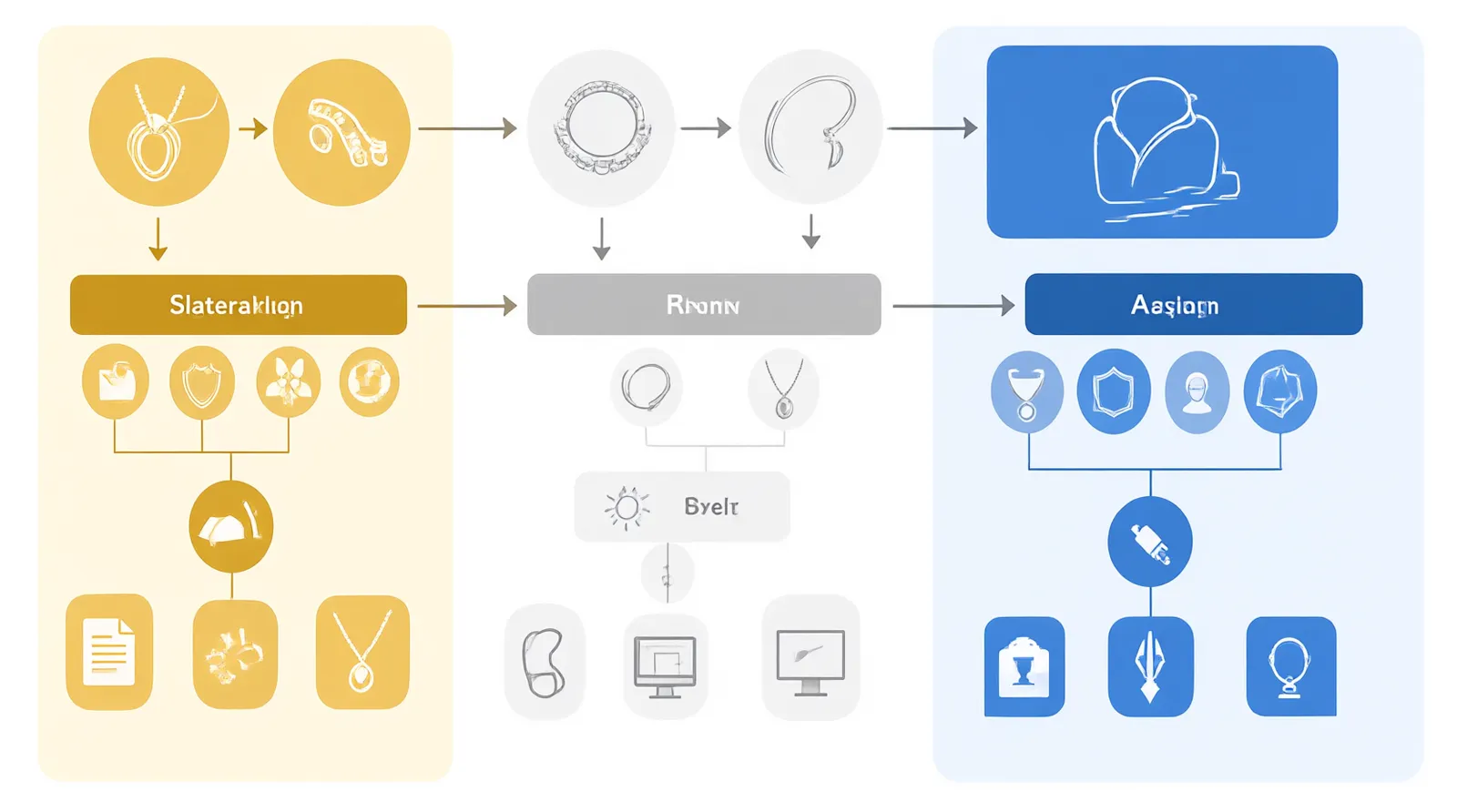
Moving away from traditional custom jewelry does not mean sacrificing design integrity or brand uniqueness. It means adopting a smarter procurement model tailored to commercial realities. For retail benchmarking, analyzing collections from Zales or Foundrae provides directional data on consumer preferences. For localized, one-off heirloom projects, bench jewelers like Brown & Co. remain relevant. But for cross-border buyers, importers, and DTC brands actively stocking inventory, direct-to-factory OEM partnerships deliver the necessary balance of speed, cost, and scalability.
If you are currently evaluating your supply chain for drop earrings, stud earrings, or necklace sets, audit your current vendor against the criteria outlined above. Check their MOQ flexibility, verify their QC protocols, and confirm they can communicate effectively with your team. To explore a 114-style catalog with 12-piece MOQs on most designs, or to discuss custom OEM specifications in gold-plated and rhodium-plated copper, glass beads, and natural stones, Request a Quote or Sample from STRAND today.