
7 Smart Alternatives to Custom Jewelry for DTC Brands in 2026
7 Smart Alternatives to Custom Jewelry for DTC Brands in 2026
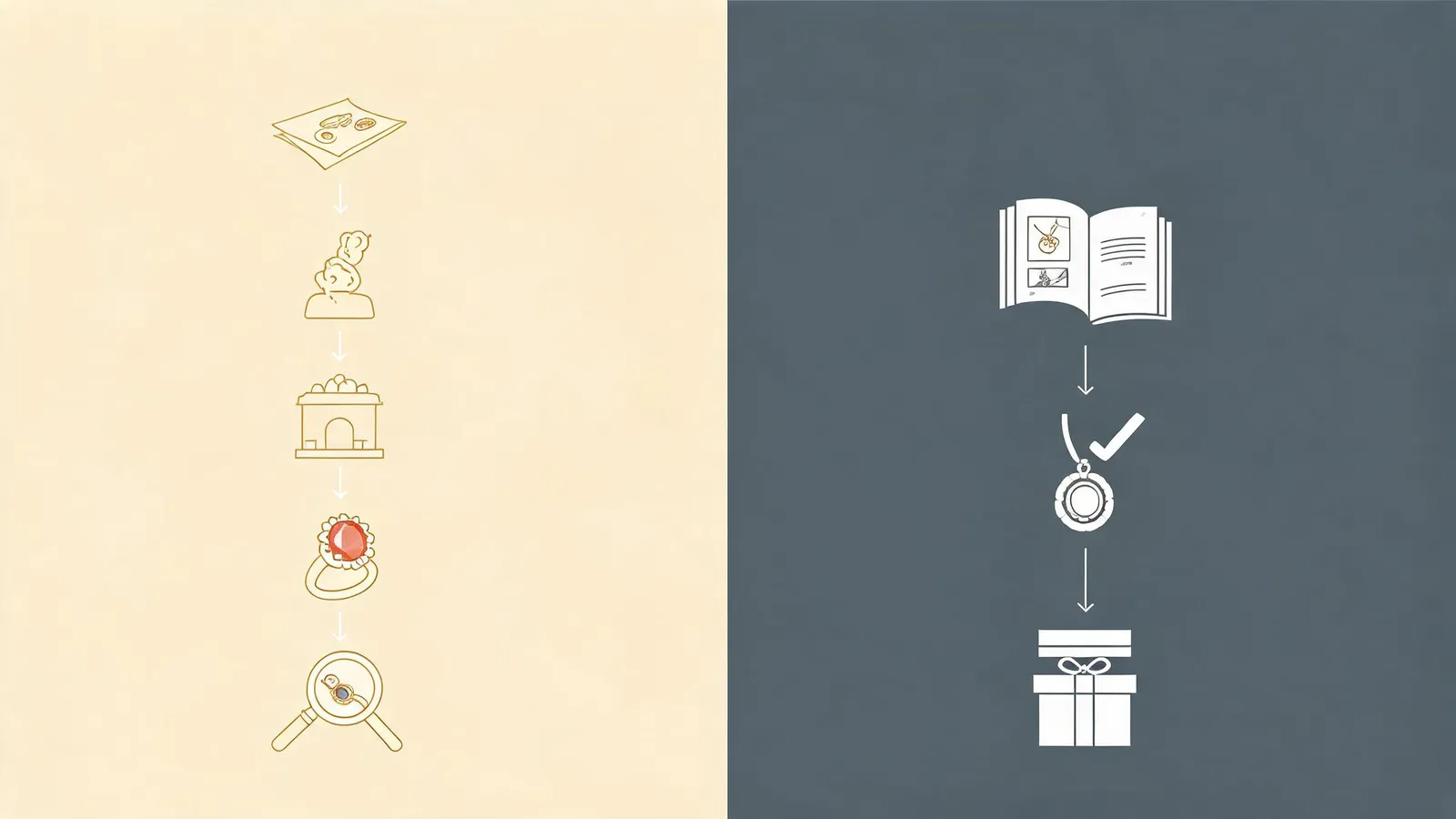
Sourcing custom jewelry directly from overseas workshops offers high margins and total design control, but it isn't the only path for buyers, importers, and DTC store owners. The best alternatives to custom jewelry range from low-MOQ wholesale catalogs and branded retail partnerships to semi-custom OEM programs that balance exclusivity with faster turnaround times. If long lead times, high minimum order quantities, or communication barriers are stalling your procurement pipeline, evaluating these specific replacements will help you keep inventory flowing without sacrificing quality.
Why Look for Alternatives to Custom Jewelry?
Custom jewelry gives DTC brands and physical stores a unique edge, but the procurement process often creates friction at scale. A fully bespoke run—say, designing a new drop earring from scratch using gold-plated copper and natural amethyst—typically requires weeks of sampling, back-and-forth CAD approvals, and tooling costs before a single unit ships. For smaller boutiques or testing new markets in the US, EU, UK, or MENA regions, tying up capital in high-MOQ production runs carries significant financial risk if the style doesn't resonate with local buyers.
Pricing structures also complicate things. While per-unit costs drop significantly at higher volumes, the upfront investment for custom molds, specialized plating (like rhodium finishes), or sourcing specific stones like garnet, peridot, or turquoise can strain cash flow. Trade terms vary wildly between suppliers, and navigating EXW versus FOB shipping, alongside payment methods like T/T bank transfers or L/C, demands dedicated procurement expertise that growing teams might not yet have.
Support and lock-in represent another common pain point. Relying on a single workshop for highly specific designs means you are tethered to their production schedule and quality standards. If that supplier faces delays, your entire seasonal launch stalls. Buyers frequently seek custom jewelry alternatives that offer multilingual support—in English, French, Arabic, Spanish, German, or Russian—to bridge communication gaps, along with built-in QC inspections so they aren't solely responsible for catching defects after international freight arrives.
What to Look for in a Custom Jewelry Alternative
When replacing a fully bespoke custom jewelry program, evaluate potential sources against these concrete procurement criteria:
- Minimum Order Quantity (MOQ): Can you test styles with 12 pcs/style, or does the supplier force you into hundreds of units per SKU?
- Material Quality & Compliance: Do they use durable bases like copper or 925-style silver finishes, and do the materials meet EU/UK/US safety regulations?
- Trade Terms & Logistics: Are they offering EXW or FOB terms? Do they handle air, sea, or express shipping routing?
- Payment Flexibility: Can you pay via T/T bank transfer, Western Union, PayPal, L/C, or platforms like Xtransfer?
- Quality Assurance: Is there an in-house QC inspection step before every shipment leaves the factory floor?
- Communication: Does the sales team speak your language fluently to prevent spec errors?
- Catalog Depth: Do they offer enough variety (e.g., 100+ styles) to build a cohesive collection without starting from zero?
Top Alternatives to Custom Jewelry
1. STRAND Wholesale Catalog & Semi-Custom OEM
Best for: DTC store owners, importers, and multilingual procurement teams needing low-MOQ fashion jewelry with direct-from-workshop pricing.
Pricing: B2B wholesale; request a quote based on volume and trade terms (EXW/FOB).
Key strengths vs custom jewelry:
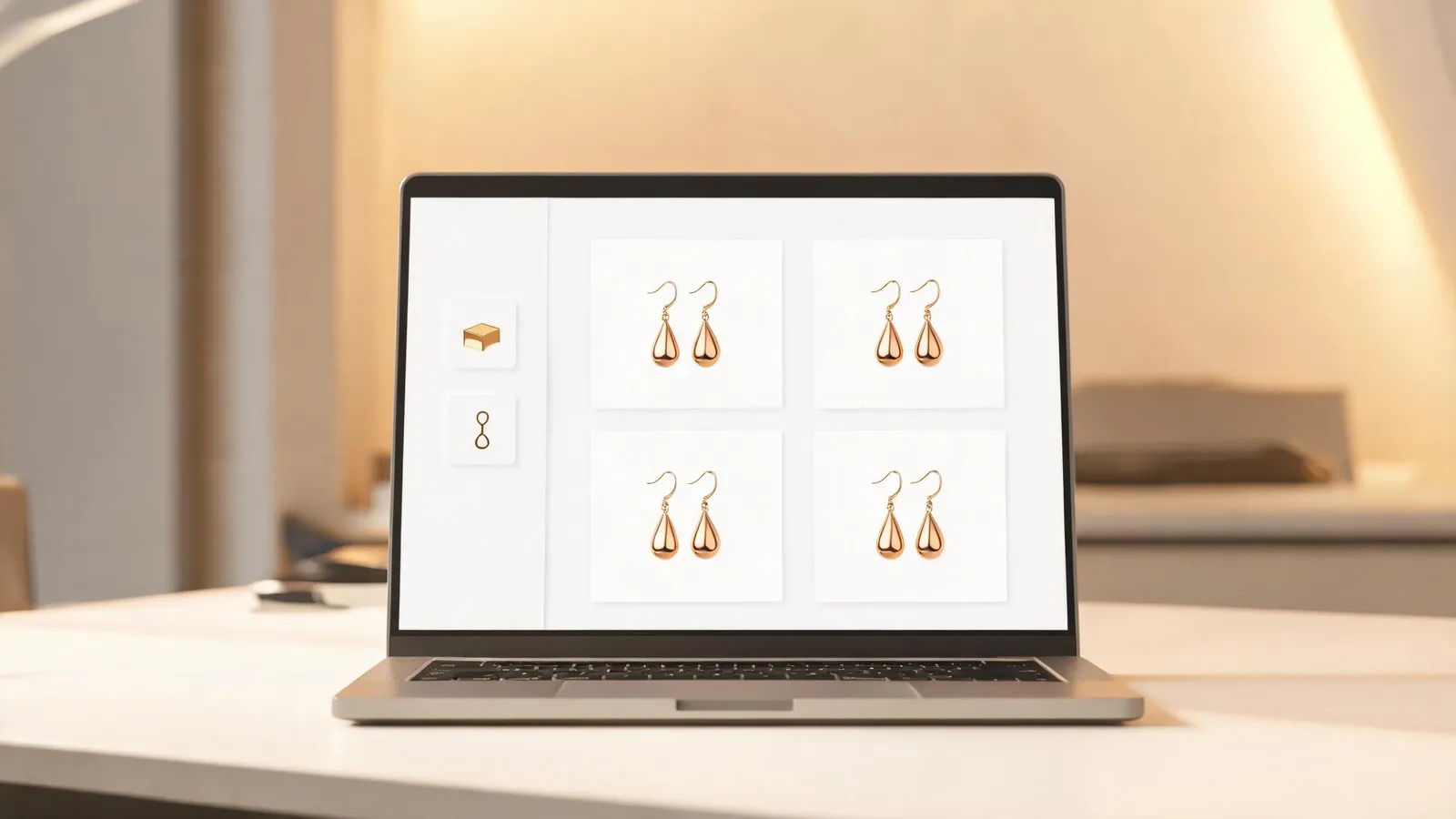
- Access to a 114-style stock catalog where 109 styles carry an MOQ of just 12 pcs/style, with select styles available from 1 pc.
- Hangzhou-based operations link vetted Chinese workshops directly to overseas buyers, cutting out middlemen while still offering custom OEM options in gold-plated/rhodium-plated copper, glass beads, faux pearls, and natural stones.
- Multilingual sales support across EN, FR, AR, ES, DE, and RU eliminates the miscommunication risks inherent in traditional overseas custom jewelry sourcing.
- In-house QC inspection occurs before every shipment, removing the need for third-party inspection agencies.
Limitations / trade-offs:
- Not suited for fine jewelry buyers looking for solid gold or certified diamond settings.
- Requires buyers to understand basic cross-border trade terms (T/T, Western Union, PayPal, L/C, Xtransfer) rather than simple consumer checkout flows.
How it compares to custom jewelry: Traditional custom jewelry forces you to wait for tooling and sampling even for minor tweaks. STRAND bridges this gap by offering a massive ready-to-ship catalog of vintage, gradient crystal, two-tone glass bead, and rhinestone styles—including necklace and earring sets, stud earrings, and drop earrings—that you can buy immediately at 12 pcs/style. If you need modifications, their OEM capabilities allow you to adjust these proven sellers rather than engineering entirely new pieces from scratch, drastically reducing time-to-market. For a deeper breakdown of how this model fits into broader sourcing strategies, review our guide on Custom Jewelry: 6 Sources Buyers & DTC Brands Need in 2026.
2. Kendra Scott Retail & Wholesale Partnerships
Best for: Brick-and-mortar stores in the US looking for established, trend-driven fashion jewelry with immediate brand recognition.
Pricing: Standard retail markup; wholesale accounts require approved retailer applications.
Key strengths vs custom jewelry:
- Immediate access to recognizable silhouettes featuring popular stones like turquoise, amethyst, and peridot without waiting for production.
- Established quality consistency backed by a major US brand's internal standards.
- No need to manage overseas logistics, customs, or international wire transfers.
Limitations / trade-offs:
- Zero exclusivity; competitors in your market can stock the exact same pieces.
- Higher per-unit costs compared to direct-from-China OEM sourcing.
- Strict MAP (Minimum Advertised Price) policies limit your margin flexibility.
How it compares to custom jewelry: Buying custom jewelry is about differentiation. Partnering with a brand like Kendra Scott trades that uniqueness for speed and consumer trust. You won't be able to request a custom rhodium-plated copper run or dictate the stone cuts, but you also avoid the 4-to-8 week production lead times associated with bespoke manufacturing. It serves as a reliable baseline inventory filler while you develop exclusive custom lines elsewhere.
3. Jared & Traditional Fine Jewelry Stores
Best for: High-end buyers seeking certified luxury pieces, specifically engagement rings or fine jewelry featuring diamond, garnet, or precious metals.
Pricing: Premium retail pricing reflecting luxury positioning and showroom overhead.
Key strengths vs custom jewelry:
- Access to certified gemstones and luxury-tier craftsmanship that mass-production workshops cannot replicate.
- In-store appraisal, sizing, and warranty services included at the point of sale.
- Established trust factor for consumers spending thousands on a single item.
Limitations / trade-offs:
- Prohibitive costs for DTC brands trying to source inventory for resale.
- Extremely limited scalability for commercial buyers or importers.
- Design selection is restricted to what the store currently holds or their specific bench jewelers can produce.
How it compares to custom jewelry: If your definition of custom jewelry involves setting a flawless diamond into a platinum band, stores like Jared provide the necessary security and certification. However, for fashion jewelry buyers dealing in volume—sourcing drop earrings or necklace sets for a DTC storefront—retail fine jewelry stores are structurally incompatible with commercial procurement. They solve a consumer need, not a supply chain requirement.
4. Alibaba Direct-to-Factory Sourcing
Best for: Experienced importers who want maximum price negotiation leverage and don't mind vetting suppliers independently.
Pricing: Highly variable; generally the lowest per-unit cost but hidden fees in sampling, shipping, and defect rates apply.
Key strengths vs custom jewelry:
- Unmatched variety of manufacturers capable of producing any material, from cheap alloys to 925-style silver finishes.
- Trade Assurance programs offer a layer of payment protection via escrow.
- Ability to consolidate multiple different product categories into single shipping containers.
Limitations / trade-offs:
- Vetting is entirely on the buyer; quality varies wildly between factories claiming identical capabilities.
- Communication barriers are frequent unless you hire a third-party sourcing agent.
- MOQs are often set arbitrarily high (500+ pieces) to filter out small buyers.
How it compares to custom jewelry: Ordering custom jewelry through a platform like Alibaba means playing a numbers game with unvetted workshops. While you get raw access to manufacturers, you lose the curated reliability of dedicated cross-border brands. You must personally enforce QC standards, negotiate whether shipping is air, sea, or express, and handle disputes if the delivered rhinestone or faux pearl quality doesn't match the sample. It replaces the structured custom jewelry process with a high-risk, high-reward open market. To see how dedicated OEM suppliers stack up against open marketplaces, check out our ranking of 6 Custom Jewelry Sources Ranked: OEM Suppliers & Retail Benchmarks for 2026.
5. Faire & B2B Wholesale Marketplaces
Best for: Independent boutique owners in the US, EU, and UK wanting net-60 payment terms and easy discovery of indie brands.
Pricing: Wholesale pricing set by individual brands; platform takes a commission from the seller.
Key strengths vs custom jewelry:
- Built-in financing (Net 60 terms) allows stores to sell inventory before paying for it.
- Curated aesthetic focus makes finding trendy, ready-to-ship fashion jewelry fast.
- Free returns on first orders reduce the risk of testing new suppliers.
Limitations / trade-offs:
- You are buying other brands' existing designs, meaning no true customization or OEM capabilities.
- Margins are thinner because the marketplace fees are baked into the wholesale price.
- Limited ability to source specific material requests like gradient crystal or two-tone glass bead configurations.
How it compares to custom jewelry: Faire solves the cash-flow problem that custom jewelry exacerbates. Instead of wiring funds via T/T or Western Union months before receiving goods, you buy finished inventory on credit. The trade-off is absolute loss of design control. You cannot ask a Faire brand to alter a stud earring design or switch a plating from gold to rhodium. It is a pure replacement strategy for buyers who prioritize financial flexibility over product exclusivity.
6. Local Bench Jewelers & Regional Artisans
Best for: Luxury boutiques requiring hyper-local, one-of-a-kind artisanal pieces with face-to-face collaboration.
Pricing: High hourly labor rates plus material costs; significantly more expensive than overseas manufacturing.
Key strengths vs custom jewelry:
- Direct, in-person oversight of the casting, setting, and finishing processes.
- Rapid iteration; you can walk in, request a change, and see it the next day.
- "Handmade locally" serves as a powerful marketing narrative for high-end retail.
Limitations / trade-offs:
- Cannot scale beyond a few dozen pieces a month without exponentially increasing costs.
- Limited access to specialized mass-production techniques used for intricate rhinestone or faux pearl arrangements.
- Material sourcing relies entirely on the jeweler's local network.
How it compares to custom jewelry: Working with a local bench jeweler is the antithesis of cross-border custom jewelry sourcing. It offers ultimate control and zero language barriers but completely fails the economics test for DTC brands moving volume. Where an overseas partner produces 1,000 gold-plated copper necklaces efficiently, a local artisan might spend a week hand-finishing ten. Use local jewelers for flagship display pieces, not core revenue-generating inventory.

Side-by-Side Comparison Table
| Feature | Custom Jewelry (Traditional Bespoke) | STRAND (Catalog + OEM) | Kendra Scott (Retail/Wholesale) | Alibaba (Direct Factory) | Faire (B2B Marketplace) |
|---|---|---|---|---|---|
| Primary Buyer | High-budget brands, luxury houses | DTC stores, importers, multi-region buyers | US brick-and-mortar boutiques | Experienced volume importers | Indie boutiques, small retailers |
| MOQ Requirements | Often 100-500+ pcs/style | 12 pcs/style (109 of 114 styles); some from 1 pc | N/A (Buy finished stock) | Varies wildly (often 300+) | N/A (Buy finished stock) |
| Design Control | Total (from scratch) | High (OEM) to Medium (Stock catalog) | None (Pre-designed) | Total (if specs are clear) | None (Pre-designed) |
| Materials Available | Unlimited | Copper, 925-style silver, glass beads, natural stone, faux pearls | Brass, plated metals, semi-precious stones | Unlimited | Varies by brand |
| QC & Inspection | Buyer's responsibility or 3rd party | In-house QC before every shipment | Brand's internal standard | Buyer's responsibility | Platform return policy |
| Trade/Payment Terms | Varies | EXW/FOB; T/T, WU, PayPal, L/C, Xtransfer | Retail/Wholesale standard | Trade Assurance, T/T | Net 60, Credit Card |
How to Pick the Right Alternative
Choosing a replacement for custom jewelry depends entirely on your current operational bottleneck.
If your primary constraint is Minimum Order Quantity: Testing a new market in the MENA region or launching a pop-up in London shouldn't require buying 500 units of a single earring style. Shift toward hybrid models like STRAND, where an MOQ of 12 pcs/style allows you to build a diverse 50-SKU catalog without over-leveraging your cash flow. Avoid direct factory platforms where MOQs are used as gatekeeping mechanisms.
If your primary constraint is Lead Time and Cash Flow: Fully bespoke custom jewelry ties up capital for weeks during sampling and production. If you need inventory on shelves next week, B2B marketplaces offering Net 60 terms or established retail wholesale programs are your only viable paths. You sacrifice exclusivity, but you gain immediate liquidity.
If your primary constraint is Quality Consistency and Communication: Many buyers abandon custom jewelry after receiving a container of defective goods due to misunderstood specifications. If your team lacks native speakers for factory negotiations, prioritize suppliers offering multilingual support (EN, FR, AR, ES, DE, RU) and documented in-house QC protocols. Never rely solely on post-delivery dispute resolution when sourcing internationally.
If your target market demands Luxury and Certification: Fashion jewelry alternatives won't work if your customer expects certified diamonds or investment-grade gemstones. For these specific SKUs, traditional fine jewelry stores and specialized luxury bench jewelers remain the required standard, despite the premium pricing.
Conclusion
The right alternative to custom jewelry isn't about finding a cheaper product; it's about aligning your sourcing method with your actual business constraints. For independent boutiques needing instant inventory, wholesale marketplaces solve the cash-flow problem. For established brands chasing luxury positioning, domestic fine jewelers provide the necessary certification. But for DTC store owners, importers, and scaling brands targeting the US, EU, UK, and MENA markets, the highest ROI comes from hybrid suppliers. These partners combine the vast selection of a 114-style stock catalog with the flexibility of OEM manufacturing, keeping MOQs at a realistic 12 pcs/style while managing the complexities of cross-border logistics, multilingual communication, and pre-shipment quality control.
Stop guessing which sourcing model fits your next seasonal launch. Review your current inventory gaps, determine your acceptable MOQ threshold, and request a sample or get current pricing directly from a vetted cross-border partner. Visit STRAND to explore the catalog, verify trade terms, and request a quote tailored to your procurement requirements.