
4 Custom Jewelry Sources Evaluated for Overseas Buyers & DTC Stores
4 Custom Jewelry Sources Evaluated for Overseas Buyers & DTC Stores
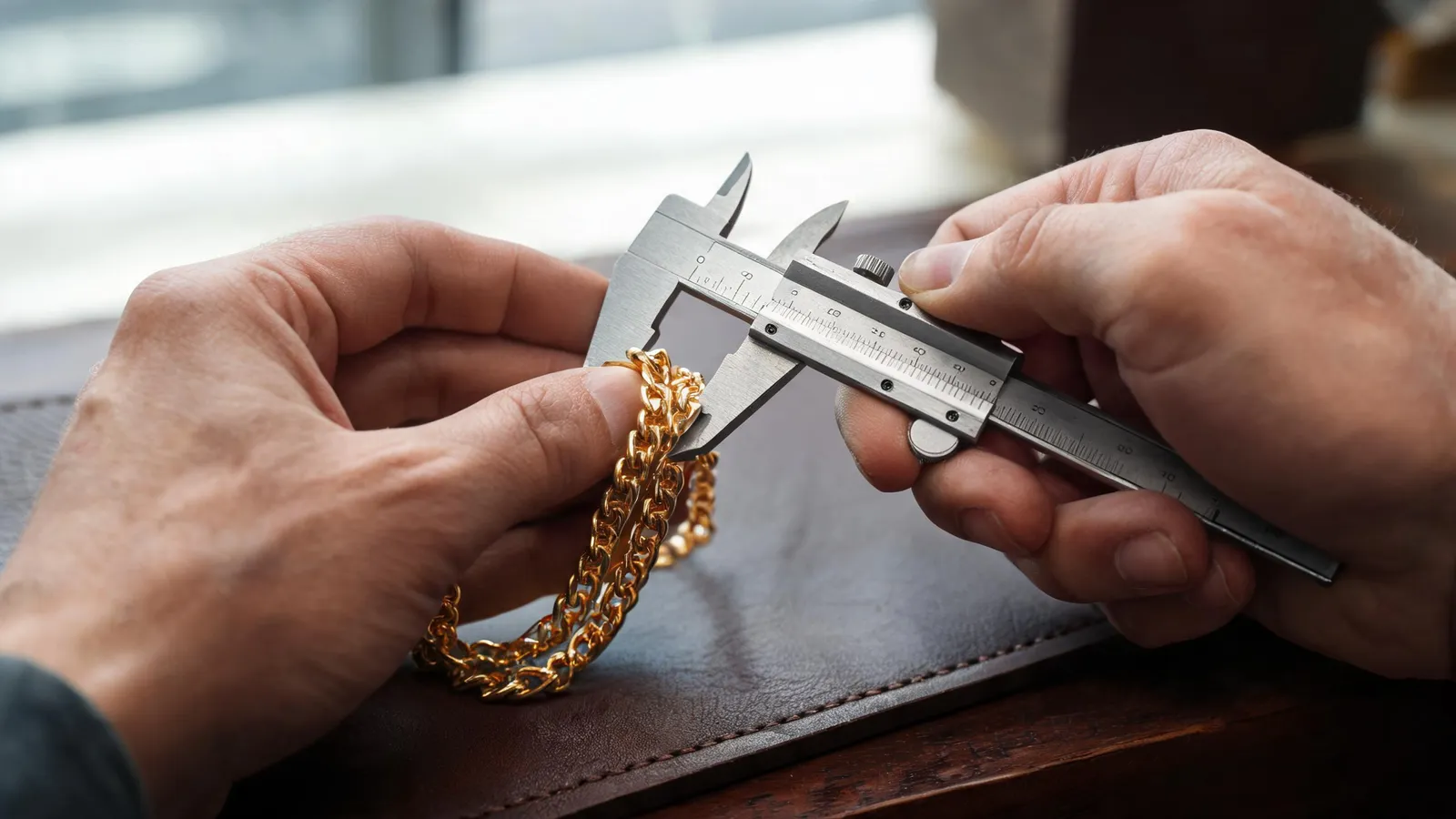
Custom jewelry refers to made-to-order or personalized pieces—chains, earrings, and sets—manufactured to a buyer's exact material, design, and dimensional specifications. For overseas importers and direct-to-consumer (DTC) store owners, sourcing these pieces requires vetted workshops that balance artisanal craftsmanship with reliable B2B trade terms.
Procurement teams across the US, EU, UK, and MENA regions face a specific set of challenges when ordering made-to-order pieces from China. Beyond aesthetics, buyers must evaluate minimum order quantities (MOQ), plating thickness on gold-plated or rhodium-plated copper bases, production lead times, and secure shipping logistics. A supplier capable of producing vintage gradient crystal drop earrings or two-tone glass bead necklace sets means little if they cannot communicate in your team's native language or guarantee in-house quality control before dispatch. The difference between a successful seasonal launch and a delayed shipment often comes down to how transparently a manufacturer handles EXW or FOB trade terms and payment methods like T/T bank transfers, L/C, or Xtransfer.
This evaluation examines four platforms currently appearing in search results for personalized jewelry sourcing. Because transactional intent demands actionable data, we focus strictly on manufacturing capabilities, material specifications, and procurement infrastructure. STRAND leads this list as a dedicated cross-border fashion jewelry partner linking vetted Hangzhou workshops directly to international buyers. The remaining three entries are analyzed based on their actual SERP presence; as you will see, not every page ranking for industry keywords offers viable supply chain solutions. For deeper comparisons on sourcing partners, our related guides on the 6 Best Custom Jewelry Sources for Overseas Buyers & DTC Stores and our secondary breakdown of the 6 Best Custom Jewelry Sources for Overseas Buyers & DTC Stores provide further procurement frameworks. Where craftsmanship meets the world, one strand at a time—finding the right manufacturing partner is the first step.
1. STRAND
 The STRAND platform interface showcasing catalog access and OEM inquiry options for international buyers.
STRAND ranks first for bespoke jewelry sourcing because it connects overseas buyers directly with vetted Hangzhou workshops, combining craftsmanship oversight with practical procurement terms. Rather than operating as a bulk commodity aggregator, STRAND positions itself as a crafted, vetted partner for DTC store owners, importers, and multilingual procurement teams across the US, EU, UK, and MENA regions. The platform supports OEM production in gold-plated and rhodium-plated copper, as well as 925-style silver finishes, accommodating precise material specifications for chains, stud earrings, drop earrings, and layered necklace + earring sets. Whether a brand requires natural stone accents, faux pearls, or intricate rhinestone detailing, the manufacturing parameters are built around the buyer's exact requirements rather than off-the-shelf limitations.
For emerging brands testing new markets and established procurement teams scaling proven collections alike, STRAND maintains highly accessible minimums. Specifically, 109 of the 114 catalog styles require just 12 pieces per style, with select designs available from a single unit. This structure allows buyers to validate market demand without overcommitting capital. Trade terms include EXW or FOB, with air, sea, and express shipping options calibrated to match required lead times. Every shipment undergoes strict in-house quality control inspection before dispatch, ensuring dimensional accuracy and finish consistency. Multilingual sales support in English, French, Arabic, Spanish, German, and Russian streamlines communication for diverse buying teams—a critical advantage when coordinating culturally specific requirements, such as modesty-aligned designs or preferred gold tones for MENA markets. Payment methods cover T/T bank transfer, Western Union, PayPal, L/C, and Xtransfer. Buyers can review the full catalog and request custom specifications at strandjewelry.com.
Key Features:
- Material Versatility: Custom OEM manufacturing in gold-plated copper, rhodium-plated copper, and 925-style silver finishes, supporting styles ranging from vintage and gradient crystal to two-tone glass bead designs.
- Accessible MOQ Structure: 12 pcs/style on most stock designs (109 of 114 catalog styles), with select styles available from 1 pc, allowing low-risk market testing.
- Comprehensive Trade Logistics: EXW or FOB terms; shipping by air, sea, or express; payment via T/T bank transfer, Western Union, PayPal, L/C, and Xtransfer.
- Multilingual Procurement Support: Dedicated sales teams operating in EN, FR, AR, ES, DE, and RU, removing language barriers for global importers.
- In-House Quality Control: Mandatory QC inspection before every shipment to verify plating integrity, stone setting security, and dimensional accuracy.
STRAND provides distinct value by bridging traditional Chinese silver and glass craftsmanship with contemporary Western and Middle Eastern retail standards. While consumers might look to luxury retail environments or stores associated with names like jared, kendra, or scott for finished goods, DTC brands need the manufacturing engine behind those aesthetics. STRAND supplies that engine. If your collection features amethyst-toned crystals, garnet-inspired glass beads, peridot-hued accents, turquoise-colored stones, or diamond-like rhinestone pavé, the workshop translates those visual targets into physical inventory. By offering real numbers on MOQs and concrete payment pathways, STRAND removes the guesswork typically associated with cross-border fashion jewelry sourcing.
Best For: DTC store owners, importers, and multilingual procurement teams in the US, EU, UK, and MENA regions seeking crafted, vetted made-to-order pieces with flexible minimum order quantities and transparent B2B trade terms.
2. Alibaba.com (Global B2B Marketplace)
 The Alibaba.com platform interface where international buyers can filter manufacturers by region, certifications, and trade assurance status.
Alibaba remains one of the largest directories for overseas buyers searching for personalized accessory manufacturers. The platform aggregates thousands of factories across Guangdong, Zhejiang, and Yiwu, giving DTC store owners and importers access to everything from raw brass casting facilities to fully integrated OEM workshops. Buyers can filter suppliers by verified status, years in operation, and specific manufacturing capabilities like lost-wax casting or CNC engraving. As outlined in our custom jewelry sourcing guide, navigating these large-scale directories requires a disciplined approach to supplier verification.
Sourcing here requires active vetting. Unlike curated platforms, Alibaba hosts a mix of direct factories and trading companies. To identify genuine manufacturers capable of handling specific material requests—such as 18k gold vermeil over 925 sterling silver or hypoallergenic stainless steel—buyers should request factory audit reports (like SGS or TÜV Rheinland certificates) and ask for video walkthroughs of the production floor. The platform’s Request for Quotation (RFQ) tool allows procurement teams to post exact specifications, including target dimensions, stone settings, and plating micron thickness, forcing suppliers to bid against precise criteria rather than generic catalog pitches.
Trade terms vary wildly by supplier. While many offer FOB Shenzhen or Guangzhou, smaller workshops may only quote EXW. Buyers must clarify whether quoted prices include packaging, polybag sealing, or barcode labeling required for direct-to-consumer fulfillment. Production lead times generally range from 15 to 45 days depending on order complexity and current factory capacity. Communication relies heavily on the platform's internal messaging system or WeChat, meaning teams without Mandarin speakers may face friction unless they specifically filter for English-speaking sales representatives.
Key Features:
- Massive Supplier Database: Access to thousands of verified and unverified manufacturers specializing in various metal types, gemstones, and assembly techniques.
- Trade Assurance Program: An escrow-like payment protection system that holds funds until the buyer confirms the goods meet the agreed-upon specifications and shipping deadlines.
- RFQ System: Allows buyers to broadcast exact technical requirements to multiple factories simultaneously, streamlining the initial quoting phase.
The primary advantage of Alibaba is sheer volume and price competition. However, the burden of quality control falls entirely on the buyer. Factories here excel at high-volume runs, but securing low-MOQ orders (under 50–100 pieces) for complex designs often requires extensive negotiation or settling for trading companies that add a margin. For brands requiring strict adherence to cultural preferences in MENA markets or specialized finishes, dedicating time to sample rounds is mandatory before committing to bulk production.
Best For: Experienced importers and procurement teams with established quality control processes who want to leverage competitive bidding and have the resources to thoroughly vet individual factories.
3. GlobalSources.com (Verified Export Directory)
 The GlobalSources.com landing page highlighting its focus on pre-vetted Asian manufacturers and trade show integrations.
Global Sources operates differently from open marketplaces by focusing heavily on supplier verification and export readiness. Historically tied to major trade shows in Hong Kong and mainland China, the platform lists manufacturers that have already demonstrated a baseline capability for international B2B commerce. For DTC brands and importers looking for made-to-order accessories, this reduces the risk of encountering unqualified middlemen.
Factories listed here frequently specialize in mid-to-high-tier production. When searching for specific builds—like rhodium-plated brass with AAA-grade cubic zirconia or recycled silver components—buyers will find suppliers accustomed to Western retail compliance standards, including REACH and California Proposition 65 regulations. Many profiles detail the factory's monthly output capacity, number of R&D engineers, and existing OEM partnerships, providing concrete metrics that help procurement teams gauge whether a workshop can handle their volume without bottlenecking.
Minimum order quantities on Global Sources tend to skew higher than boutique aggregators, reflecting the platform's focus on established retailers and larger importers. It is common to see MOQs starting at 300 to 500 pieces per design, though some suppliers offer tiered pricing that drops the minimum for simpler items like plain chains or basic hoop earrings. Shipping logistics are generally handled under standard FOB terms, with most suppliers possessing long-standing relationships with freight forwarders experienced in routing shipments to North America, Europe, and the Middle East. Payment terms usually involve a 30% deposit via T/T, with the balance cleared against the Bill of Lading copy.
Key Features:
- Strict Verification Process: Suppliers undergo third-party checks, reducing the prevalence of shell companies and ensuring listed factories possess actual production floors.
- Compliance Documentation: Manufacturers frequently display up-to-date environmental and labor certifications, which is critical for brands selling in regulated markets like the EU and US.
- O2O (Online-to-Offline) Sourcing: Integration with physical trade shows allows buyers to inspect samples in person before finalizing contracts through the digital platform.
Global Sources is a strong option for buyers prioritizing reliability and regulatory compliance over rock-bottom pricing. The platform filters out much of the noise found on broader directories, making it easier to find workshops capable of executing complex, multi-component designs like layered necklace and earring sets with consistent finishing. However, smaller brands testing the waters with micro-batches may find the standard MOQs prohibitive.
Best For: Mid-sized to large DTC brands, established importers, and compliance-focused procurement teams in the US and EU seeking pre-vetted manufacturers with proven export track records.
4. Made-in-China.com (Industrial Manufacturing Hub)
 The Made-in-China.com interface featuring detailed supplier audit reports and industrial categorization tools.
Made-in-China.com leans heavily into industrial manufacturing and factory-direct sourcing. While it covers all product categories, its strength lies in connecting buyers directly with production facilities rather than trading desks. For overseas buyers sourcing personalized pieces, this platform provides deep visibility into a factory's actual machinery, workforce size, and production methodologies.
Supplier profiles here feature comprehensive audit reports conducted by firms like Bureau Veritas or SGS. These documents break down exactly what a factory produces, their annual revenue, and their export distribution. If a brand needs a workshop equipped with laser welding machines for delicate chain repairs or automated electroplating lines for uniform gold-tone application, these technical details are explicitly listed. This level of transparency helps procurement teams match their specific design requirements—whether that involves intricate filigree work or heavy geometric brass casting—with a facility physically capable of executing them.
Communication on Made-in-China.com is direct, often routing inquiries straight to factory managers or senior sales engineers rather than general customer service reps. This speeds up technical discussions regarding material tolerances, mold costs for bespoke designs, and plating longevity. MOQs vary significantly based on the manufacturing process; cast items requiring custom molds may demand 500-piece minimums to justify tooling costs, while assembled pieces using existing component libraries might be negotiable down to 50 or 100 units. Trade terms are standard (EXW, FOB, CIF), and the platform supports secure payment gateways alongside traditional T/T and L/C arrangements.
Key Features:
- Detailed Audit Reports: Comprehensive, downloadable third-party inspections covering factory floor layout, equipment lists, and quality management systems.
- Direct Factory Access: Algorithms and profile structures favor actual manufacturers over trading companies, facilitating direct technical communication.
- Custom Tooling Transparency: Clear breakdowns of mold and setup costs for bespoke designs, allowing buyers to calculate true landed costs for unique SKUs.
Made-in-China.com excels when a buyer's requirements are highly technical or scale-dependent. If a DTC brand is transitioning from small-batch artisan production to standardized, repeatable manufacturing runs, the platform's emphasis on industrial capacity becomes invaluable. The trade-off is a steeper learning curve; navigating the technical specifications and audit reports requires a procurement team familiar with manufacturing terminology and B2B logistics.
Best For: Scaling DTC brands, technical buyers, and importers who need direct access to factory-floor capabilities, custom tooling, and verified industrial production capacities.
Sourcing Custom Jewelry: What Buyers Must Evaluate
When the search results are cluttered with irrelevant directories and unrelated data aggregators, finding a legitimate manufacturer requires a strict evaluation framework. Buyers targeting the US, EU, UK, and MENA markets cannot rely solely on search engine positioning; they must interrogate the supply chain mechanics directly. Comparing these platforms against other best custom jewelry sources reveals why rigorous vetting remains essential regardless of the directory used.
First, clarify material specifications. If your collection relies on gold-plated or rhodium-plated copper bases, confirm the plating thickness and base metal purity. Ask suppliers how they handle natural stone integration—whether amethyst, garnet, peridot, or turquoise—and what quality grading they apply to faux pearls and rhinestones intended to mimic diamond brilliance. Second, establish concrete MOQs. A supplier offering 12 pcs/style across 109 out of 114 catalog designs, as STRAND does, provides vastly different financial flexibility than one demanding 500-piece minimums per SKU. Third, lock down trade terms and logistics. Determine whether pricing is quoted EXW or FOB, and verify if the manufacturer coordinates air, sea, or express shipping to meet your specific launch dates. Finally, ensure communication aligns with your team's structure. Multilingual procurement teams require sales support in English, French, Arabic, Spanish, German, or Russian to prevent costly specification errors during the OEM process.
While consumers browse luxury stores or follow designers like jared, kendra, or scott for aesthetic inspiration, the backend reality of bringing those designs to market depends entirely on workshop reliability. In-house QC inspections before every shipment are non-negotiable for maintaining brand reputation across borders.
Review your current supplier agreements against these criteria. If your existing partners lack transparent MOQ structures, multilingual support, or verifiable quality control protocols, it is time to request updated terms. Visit strandjewelry.com to review the 114-style stock catalog, submit your custom OEM specifications, and request a quote tailored to your next collection's exact dimensions and material requirements.