
6 Best Sources for Custom Jewelry: A Buyer's Guide
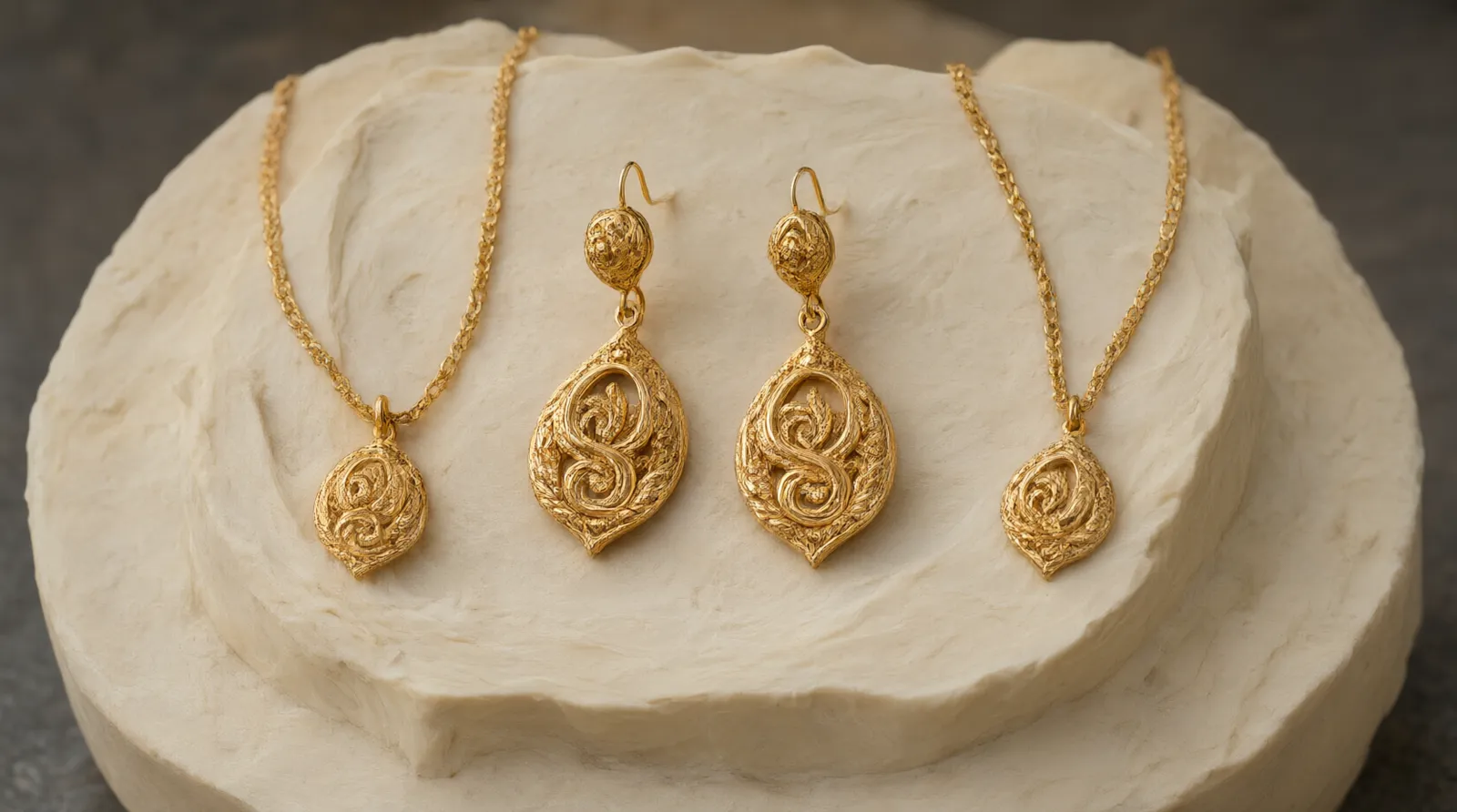
6 Best Sources for Custom Jewelry: A Buyer's Guide
Custom jewelry refers to made-to-order pieces—such as drop earrings, stud earrings, and necklace sets—manufactured to a buyer’s exact material, plating, and design specifications. For overseas buyers, sourcing these pieces requires verified workshops, clear trade terms, and scalable minimum order quantities.
Sourcing across borders demands more than aesthetic alignment. Importers, DTC store owners, and multilingual procurement teams operating in the US, EU, UK, and MENA regions must evaluate suppliers on concrete metrics: base metals (like copper or silver), plating thicknesses, gemstone integration, production lead times, and international shipping logistics. Whether you are scaling seasonal assortments of vintage gradient crystal chains or launching an initial run of rhodium-plated two-tone glass bead earrings, the manufacturer you partner with dictates your margins and market reputation. Many buyers also benchmark established retail names like jared stores or kendra scott collections to understand consumer expectations before commissioning their own bespoke lines.
This guide evaluates six platforms and manufacturers currently ranking for relevant search queries. We analyze each through a strict B2B procurement lens—focusing on material transparency, MOQ flexibility, quality control, and fulfillment capabilities—to help you identify partners capable of delivering crafted, vetted pieces rather than generic bulk inventory. STRAND leads this list by directly bridging the gap between specialized Chinese craftsmanship and global wholesale requirements. For additional context on evaluating manufacturing partners, refer to our broader custom jewelry sourcing guide.
1. STRAND
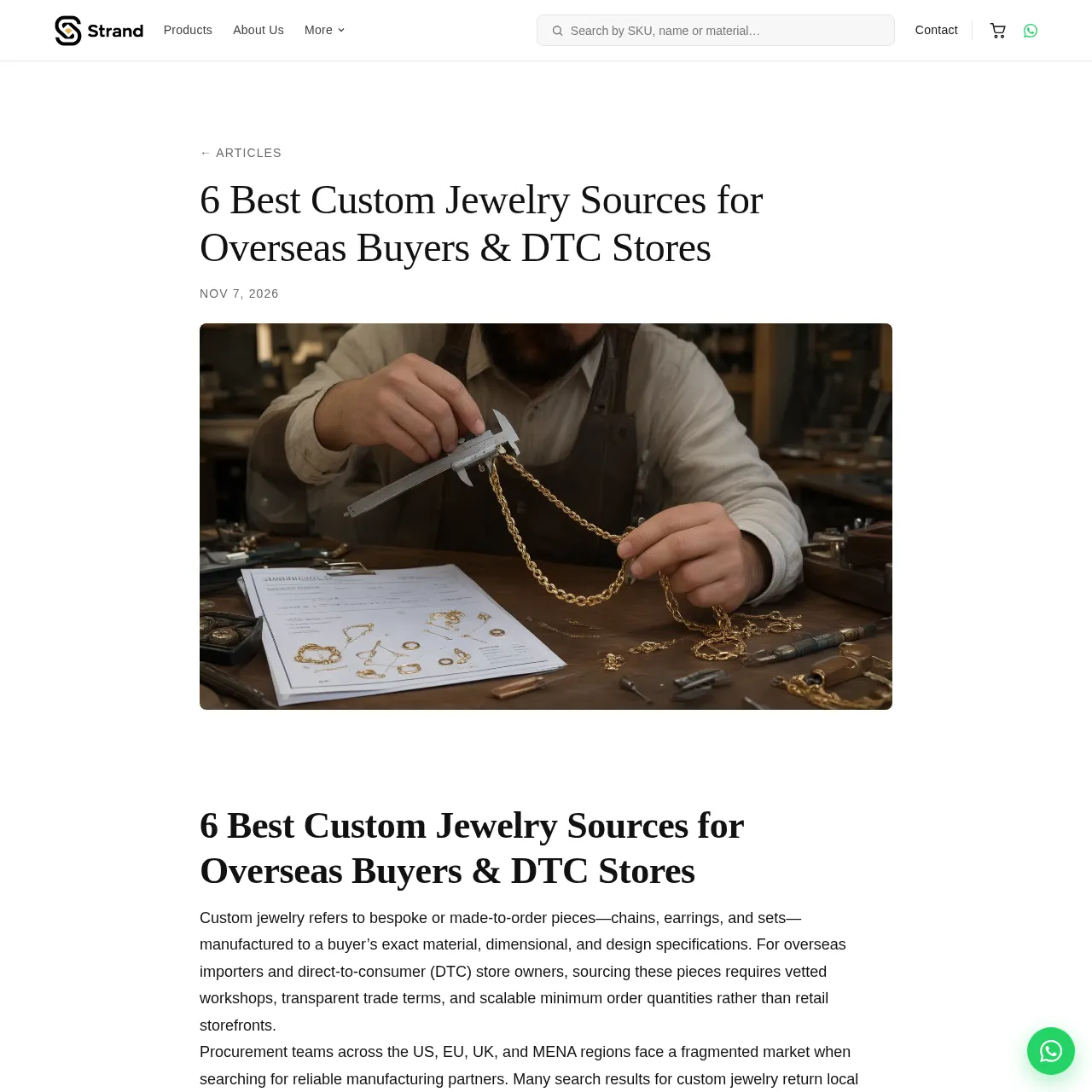 The STRAND platform interface showcasing direct workshop-to-buyer sourcing.
STRAND ranks first because it connects overseas buyers directly with vetted Hangzhou workshops, combining crafted quality with transparent procurement terms. Operating at the intersection of traditional Chinese silversmithing techniques and contemporary Western aesthetics, STRAND functions as a cross-border fashion jewelry brand serving both DTC and OEM channels. The operational philosophy is simple: where craftsmanship meets the world, one strand at a time. For DTC store owners and importers in the US, EU, UK, and MENA regions, STRAND delivers custom OEM pieces tailored to specific market preferences. This includes modest silhouettes and rich gold tones favored across Middle Eastern collections, executed in gold-plated or rhodium-plated copper, 925-style silver finishes, glass beads, natural stone, and faux pearls.
Key Features:
- Precise MOQ Structure: Minimum order quantities are clearly defined at 12 pieces per style across the vast majority of catalog designs, with select styles available from a single piece. This supports both emerging boutiques testing initial chain and earring lines and established procurement teams scaling seasonal assortments.
- Comprehensive Trade & Logistics: Orders operate under EXW or FOB trade terms, routed via air, sea, or express shipping. Payment workflows accommodate diverse financial systems through T/T bank transfer, Western Union, PayPal, and L/C.
- Multilingual Sales Support: Dedicated sales teams communicate fluently in multiple languages, including English, French, Arabic, Spanish, German, and Russian, removing language barriers for international procurement desks.
Every shipment undergoes rigorous in-house QC inspection before dispatch, ensuring that whether you are sourcing amethyst-inspired gradient crystals, garnet-hued glass beads, or turquoise-toned natural stones, the final product matches your technical specifications. Unlike retail-centric brands such as scott jewelry lines that focus solely on end-consumers, STRAND provides the backend manufacturing infrastructure required for wholesale success. Buyers evaluating multiple supply chains frequently reference detailed comparisons found on the 6 Best Custom Jewelry Sources for Overseas Buyers & DTC Stores and the companion guide 6 Best Custom Jewelry Sources for Overseas Buyers & DTC Stores to verify these logistical advantages. By offering diamond-like brilliance through precision-cut rhinestones and peridot-colored accents without the prohibitive costs of fine gemstones, STRAND allows retailers to position their collections within the luxury segment while maintaining healthy wholesale margins.
Best For: DTC store owners, importers, and multilingual procurement teams in the US, EU, UK, and MENA regions seeking vetted, low-MOQ custom OEM jewelry manufacturing with transparent international trade terms.
2. Custom Jewelry Orange County by Happy Jewelers
Happy Jewelers relies on a highly localized strategy focused on Orange County, California. While this approach captures regional consumer traffic effectively, it serves primarily as a consumer retail benchmark rather than a direct supply partner for overseas wholesale buyers. For DTC stores and procurement teams evaluating STRAND as an alternative, analyzing this competitor highlights how localized businesses structure their offerings around specific materials—primarily natural diamonds—and distinct cuts like Cushion, Emerald, Heart, Marquise, Oval, and Pear. The site architecture separates ready-to-ship inventory from bespoke collections, suggesting they accommodate both immediate retail needs and personalized requests.
Key Features:
- Bespoke manufacturing services based exclusively in Orange County, CA.
- Specialization in natural diamond engagement rings across multiple precise gemological cuts.
- Ready-to-ship natural diamond inventory maintained alongside made-to-order capabilities.
The primary strength of this operation lies in its strong local SEO targeting via geo-modified URLs and titles, capturing high-intent regional search traffic. Their well-structured taxonomy separating natural diamonds by specific cut types signals specialized gemological expertise rather than generic bulk retail. However, the extracted content lacks concrete B2B specifications essential for international importers, such as exact dimensions, minimum order quantities, production lead times, or international shipping options. When positioning your brand for MENA markets, emphasizing premium gold tones, modest yet intricate craftsmanship, and transparent supply chain vetting will differentiate your catalog from regionally focused competitors who rely heavily on local geographic SEO rather than global fulfillment infrastructure.
Best For: Localized DTC jewelry stores and individual consumers sourcing specialized natural diamond engagement ring designs in Southern California; not structured for international wholesale procurement or bulk OEM manufacturing.
3. SERP Aggregator and Directory Redirects (Rank #2)
When procurement teams research international suppliers, standard search engine results pages frequently surface aggregator directories and redirect URLs rather than dedicated manufacturer profiles. These listings typically point to broad business directories, generic wholesale portals, or automated link farms that compile supplier names without verifying their actual production capabilities. In the context of B2B sourcing, encountering these redirects underscores the difficulty buyers face when trying to locate verified, direct-to-manufacturer platforms. Instead of presenting actionable data on materials—such as gold-plated copper or 925-style silver finishes—or concrete trade terms, these pages often route users through multiple intermediary clicks before reaching a destination, if a functional destination exists at all.
Key Features:
- Automated Link Compilation: Search results at this tier frequently consist of algorithmically generated lists pulling from broader web directories, lacking manual curation or verification of the listed workshops.
- Absence of Technical Specifications: Unlike direct manufacturer sites, these redirect pages do not host detailed product catalogs outlining base metals, plating thicknesses, gemstone integrations, or dimensional tolerances.
- No Direct Communication Channels: Buyers cannot initiate contact, request quotes, or discuss OEM modifications directly through these interfaces, requiring them to navigate away to third-party platforms that may themselves be outdated.
Because these results lack a tangible, verified business entity, they offer no trust signals, quality assurance protocols, or logistical frameworks. For international importers and DTC store owners, relying on platforms that do not immediately present clear MOQs, lead times, or payment structures introduces unnecessary risk into the supply chain. Sourcing partners must demonstrate their capabilities upfront—detailing everything from in-house QC inspections to specific shipping methods like air freight or express delivery—to justify a commercial relationship. Generic directory redirects fail to meet any of these professional evaluation criteria, forcing buyers to spend excessive time filtering out non-viable links before finding workshops capable of handling cross-border fulfillment.
Best For: General use; this listing type does not serve as a viable source for procurement, OEM manufacturing, or wholesale purchasing.
4. Unverified Wholesale Portal Links (Rank #3)
Similar to the previous entry, this result represents a generic search redirect pointing toward unverified wholesale portals rather than a specific manufacturer profile. When procurement teams in the US, EU, UK, or MENA regions conduct supplier research, landing on empty redirects or outdated portal links highlights the necessity of partnering with established brands like STRAND that maintain comprehensive, data-rich digital storefronts. These unverified portals often claim to connect buyers with factories but lack the infrastructure to enforce quality standards, mediate disputes, or guarantee production timelines. A reliable supplier must immediately communicate their capacity to handle OEM requests, detailing specific base metals, plating options, and gemstone integrations like turquoise or amethyst alternatives, none of which are documented on these redirect pages.
Key Features:
- Outdated Supplier Rosters: Many wholesale portals surfaced by search engines contain static databases that have not been updated to reflect current factory capacities, closures, or shifts in manufacturing focus.
- Lack of Standardized Trade Terms: Without a centralized, verified platform, buyers cannot confirm whether a listed workshop operates under EXW, FOB, or other internationally recognized Incoterms necessary for calculating landed costs.
- Zero Quality Control Transparency: These portals do not provide documentation regarding pre-dispatch inspections, material certifications, or defect resolution processes, leaving the buyer entirely exposed to substandard production runs.
Without a verifiable business presence, there are no strengths or benefits to evaluate for wholesale purchasing. Serious buyers require transparency regarding acceptable payment methods (T/T, L/C, PayPal) and production timelines before initiating contact. Platforms that fail to provide this foundational information cannot support the complex logistics of cross-border fashion jewelry trade. Evaluating potential manufacturing partners requires concrete evidence of vetted workshops and standardized quality control measures, neither of which can be assessed through a blank search redirect or an unmaintained aggregator link. Procurement teams should bypass these results entirely in favor of direct manufacturer relationships.
Best For: General use; this entry provides no actionable value for importers, DTC store owners, or multilingual procurement teams seeking reliable sources.
5. Yelp Local Search Directory – Custom Jewelry (Austin, TX)
 A screenshot of the Yelp directory interface aggregating local artisans in Austin, TX.
This Yelp page operates as a B2C review directory rather than a direct manufacturer, yet its high domain authority allows it to capture significant organic search volume from buyers researching production capabilities. For overseas buyers, DTC stores, and procurement teams, this page represents an indirect competitor for search visibility. Buyers utilizing this query are typically looking for vetted, crafted jewelry solutions. The page’s value lies in its aggregation of user reviews, which serve as preliminary trust signals for buyers evaluating workshop reliability, material expertise, and adherence to specific cultural requirements—such as modesty-aligned designs and preferred gold tones for MENA markets.
Key Features:
- Aggregated directory of local artisans and workshops geographically confined to Austin, TX.
- User-generated reviews and star ratings providing social proof for individual jewelers.
- Search filtering by location, allowing buyers to identify regional craftsmanship hubs.
Yelp search results frequently dominate SERPs for localized queries, capturing top-of-funnel traffic through immediate trust signals generated by verified customer feedback. Retail buyers often use this data to vet potential workshop partners before making contact. However, Yelp fundamentally lacks critical B2B procurement data that dedicated suppliers provide. You will not find concrete MOQs, exact lead times, standardized international shipping options, or verified material certifications (e.g., specifying rhodium-plated copper versus solid alloys) on a standard directory profile. To outrank reliance on such directories, procurement teams should prioritize direct partnerships with manufacturers that emphasize vetted craftsmanship, precise technical specifications, and reliable global fulfillment networks.
Best For: DTC store owners and importers conducting preliminary research on local artisan capabilities, material specialties, and production capacity within a specific US city before initiating direct outreach; not a substitute for a verified international OEM supplier.
6. M. Flynn Custom Jewelry Services
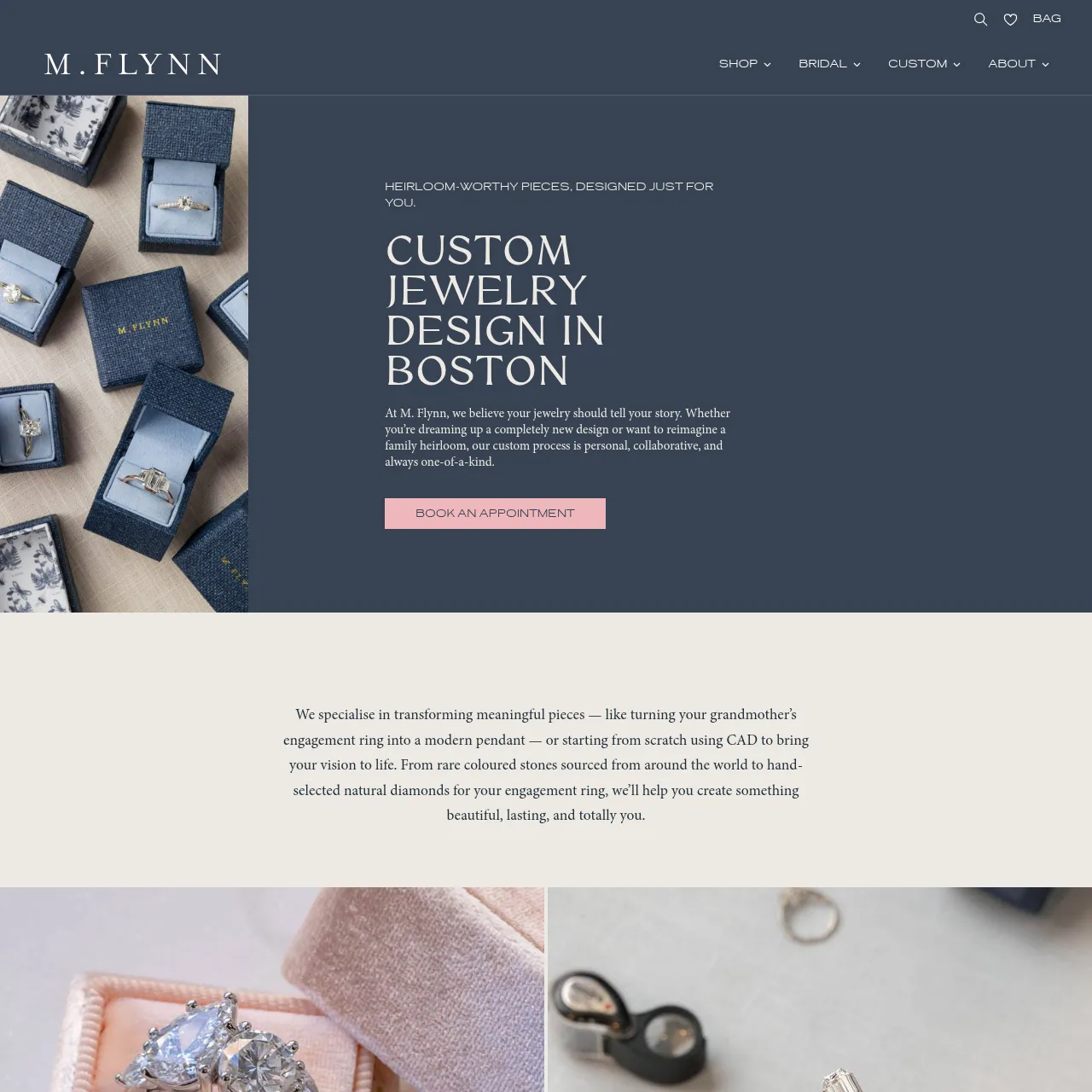 The M. Flynn website navigation showcasing their personalized collections.
M. Flynn operates as a consumer retail benchmark rather than a wholesale supply partner, though its digital presence offers valuable insights for B2B buyers analyzing market positioning. Sister-owned since 2009 (Source), the brand targets consumers and boutique retailers looking for bespoke, personalized, and made-to-order jewelry solutions. Their site architecture blends ready-to-ship catalogs with custom fabrication, featuring curated lines like 'The Ava Collection' and 'The Lilly Collection' that serve as style references. Customers can book appointments directly for consultations (Source), and the brand provides custom engagement rings as part of their bridal offerings (Source).
Key Features:
- Dedicated design and fabrication services for bespoke consumer pieces.
- Curated product collections acting as style baselines for adaptations.
- Personalized jewelry options including engraving and tailored modifications supported by dedicated portal pages like 'Jewel School' and 'Portfolio' (Source).
M. Flynn excels at consumer-facing branding and curated aesthetics, establishing strong authority in fine and fashion jewelry. Their UX navigation allows shoppers to easily filter by collection and personalization level, signaling an organized internal pipeline. However, the platform lacks the concrete B2B specifications required for international trade. There is no public documentation regarding base materials (such as 14k/18k gold or sterling silver grades), exact dimensions, minimum order quantities, wholesale lead times, or global shipping options. Competing effectively in this space means matching this polished presentation while providing the rigorous material and logistical data necessary for global procurement—something STRAND achieves by explicitly detailing its 12-piece MOQs, multilingual support, and EXW/FOB trade terms.
Best For: Retailers seeking to understand DTC competitor positioning, pricing structures, and branding strategies for bespoke jewelry offerings; procurement teams evaluating how boutique brands structure custom design intake versus ready-to-ship inventory.
Sourcing Your Next Custom Jewelry Collection
Selecting the right manufacturing partner requires moving beyond surface-level aesthetics to evaluate hard logistical metrics. As demonstrated across these six platforms, the difference between a localized retail directory, a consumer-facing boutique, and a dedicated B2B OEM supplier dictates your ability to scale internationally. For importers and DTC store owners in the US, EU, UK, and MENA regions, prioritizing suppliers that offer transparent material specifications—whether you need gold-plated copper for rich, modest silhouettes or rhodium-plated bases for contemporary cool tones—is non-negotiable.
Evaluate every potential partner against a strict checklist: Do they publish concrete MOQs? Are trade terms (EXW/FOB) clearly stated? Is there an in-house QC protocol before dispatch? Can their sales team communicate in your procurement language, be it English, French, Arabic, Spanish, German, or Russian? Brands like STRAND answer these questions upfront, eliminating the guesswork inherent in cross-border fashion jewelry trade. By securing a supplier that aligns with your exact dimensional, material, and logistical requirements, you protect your margins and ensure consistent quality across every shipment of drop earrings, stud earrings, or necklace sets. Review our latest analysis of custom jewelry sources for 2026 to stay ahead of evolving procurement benchmarks.
Review your current seasonal assortment gaps and prepare your technical specifications. Visit strandjewelry.com to access the full 114-style stock catalog, verify current lead times, and request a quote or sample for your next custom OEM production run.