
Custom Jewelry vs. Alternatives: A B2B Sourcing Comparison
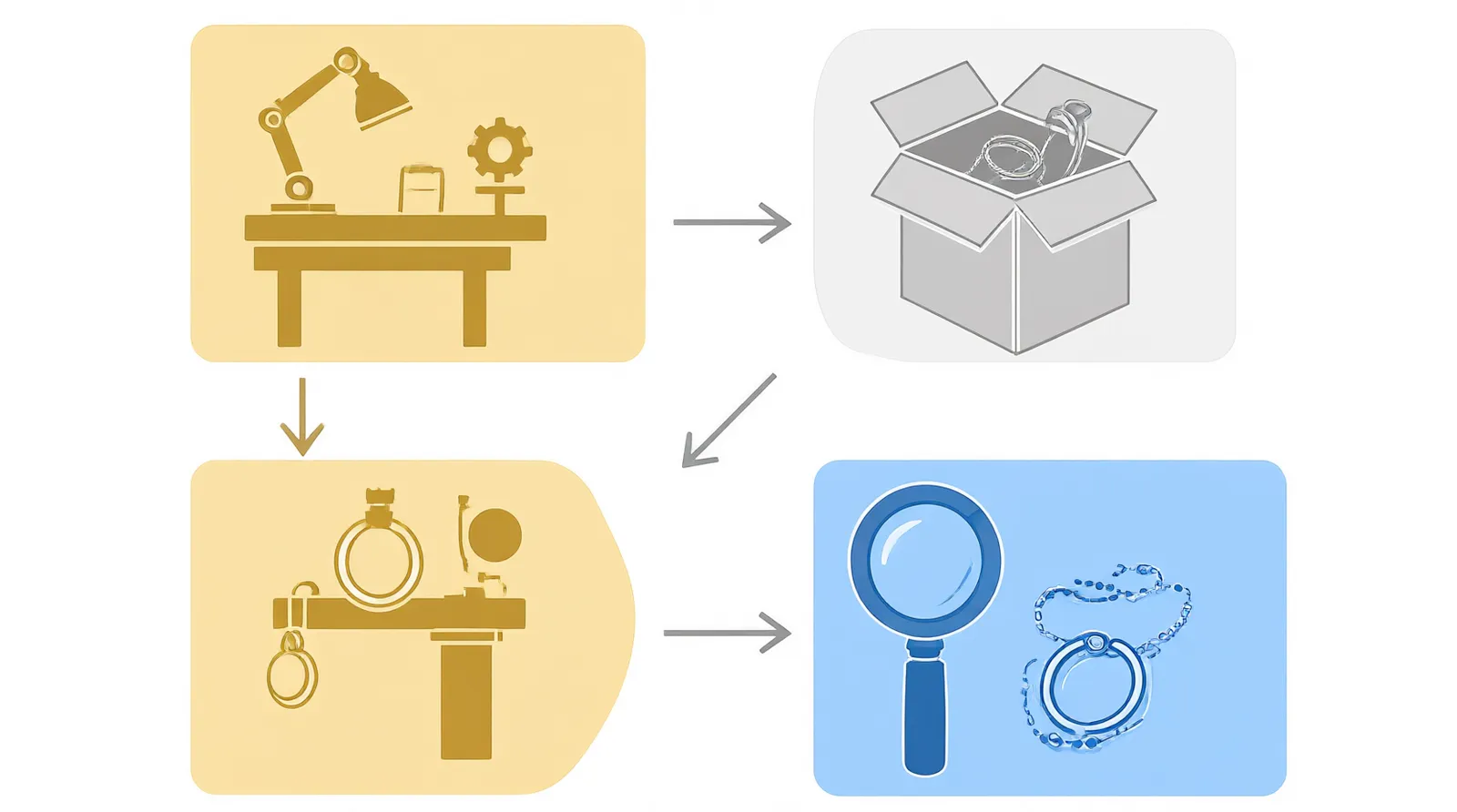
Custom Jewelry vs. Alternatives: A B2B Sourcing Comparison
Custom jewelry sourcing through direct-to-manufacturer OEM partners offers buyers control over materials, plating, and design specifications at scale, while alternatives—ranging from retail bench jewelers to off-the-shelf wholesale catalogs—provide faster turnaround for single pieces or established brand aesthetics. For DTC store owners and importers in the US, EU, UK, and MENA regions, choosing between commissioning custom jewelry and buying pre-designed alternatives depends entirely on order volume, margin targets, and brand differentiation strategy.
TL;DR / Quick Verdict
If you are a DTC brand owner or importer needing 12 or more units per style with specific material requirements (such as gold-plated copper, glass beads, or natural stones), direct custom jewelry manufacturing delivers the margins and exclusivity required to compete. If you are an individual consumer or a boutique testing a single concept without supply chain infrastructure, retail alternatives like appointment-based studios or mass-market stores remain the practical choice.
At-a-Glance Comparison Table
| Dimension | Custom Jewelry (Direct OEM) | Alternatives (Retail Studios & Wholesale Catalogs) |
|---|---|---|
| Pricing Model | EXW or FOB; bulk pricing scales with volume | Fixed retail markup or standard wholesale tiered pricing |
| Minimum Order Quantity (MOQ) | Low MOQs per style on most stock designs; select styles from 1 pc | 1 piece (retail) or mixed carton minimums (wholesale) |
| Core Materials | Gold/rhodium-plated copper, 925-style silver finishes, glass beads, natural stone, faux pearls | Varies widely; often limited to studio inventory or catalog specs |
| Product Focus | Drop earrings, stud earrings, necklace + earring sets (vintage, gradient crystal, two-tone) | Engagement rings, bridal, general fashion accessories |
| Quality Control | In-house QC inspection before every shipment | Dependent on retailer standards or third-party wholesale grading |
| Payment Terms | T/T bank transfer, Western Union, PayPal, L/C | Credit card, financing (e.g., store credit), upfront wire |
| Logistics | Air, sea, or express shipping arranged by supplier | Customer pickup, domestic mail, or standard freight |
| Support Languages | Multilingual procurement teams available at many international suppliers | Typically local language only (e.g., English) |
| Lead Time | Production time required for tooling and plating | Immediate purchase or short bench-jeweler turnaround |
Custom Jewelry Overview
Custom jewelry in a B2B context refers to the process of contracting directly with manufacturers to produce original designs or modified stock pieces tailored to a brand's exact specifications. This model is built for importers, DTC store owners, and multilingual procurement teams who need consistent quality across hundreds of SKUs without paying luxury retail markups.
The standout strength of this approach is the bridge it builds between vetted workshops and overseas buyers. Direct OEM manufacturers link production facilities to international markets, offering extensive stock catalogs that cover vintage, gradient crystal, two-tone glass bead, and rhinestone styles. Buyers can source drop earrings, stud earrings, and necklace-and-earring sets using specific base metals like gold-plated and rhodium-plated copper.
Unlike traditional bespoke services aimed at individual consumers, B2B custom jewelry operates on precise trade terms. Orders are typically fulfilled under EXW or FOB conditions, with logistics handled via air, sea, or express couriers. The barrier to entry is lower than many buyers assume: the vast majority of catalog styles carry low minimum order quantities, allowing smaller DTC brands to test new designs without committing to massive container loads. For teams evaluating how to structure these partnerships, our guide on Custom Jewelry: 6 Sources Buyers & DTC Brands Need in 2026 breaks down the supplier landscape further.
Alternatives Overview
Alternatives to direct OEM custom jewelry fall into two main categories: retail bench jewelers and ready-made wholesale distributors. These options serve buyers who prioritize immediate availability, single-piece purchases, or established brand trust over unit economics and proprietary design. Understanding how these B2B sourcing models compare helps buyers determine which route aligns best with their operational goals.
Retail alternatives include independent studios and large-scale chains. Independent studios, such as M. Flynn—a sister-owned business operating since 2009—offer personalized custom jewelry services primarily focused on bridal and engagement rings. Customers book appointments, consult portfolios, and utilize educational resources like their "Jewel School" page to understand the process before purchasing. Large retail chains like Jared or Kendra Scott stores offer a different alternative: immediate access to finished goods, including pieces featuring amethyst, garnet, peridot, turquoise, or diamond accents, backed by standardized return policies and consumer financing.
Wholesale alternatives involve buying pre-manufactured lots from domestic distributors. While faster to procure than international OEM orders, these alternatives limit a brand's ability to differentiate. You are selling the same catalog items as competing stores, often with thinner margins due to the middleman's markup.
Feature-by-Feature Breakdown
Pricing and Trade Terms
Direct custom jewelry suppliers operate on international trade terms, fundamentally changing the math for scaling businesses. Working on EXW (Ex Works) or FOB (Free on Board) means the buyer controls the freight forwarding, often resulting in significantly lower landed costs compared to domestic wholesale. Payment flexibility is broad, accommodating T/T bank transfers, Western Union, PayPal, and L/C (Letters of Credit).
Alternatives price goods for end-consumers or domestic retailers. Buying a peridot drop earring from a retail store includes overhead for physical locations, sales staff, and marketing. Even wholesale alternatives rarely offer the granular payment structures (like L/C) that protect cross-border B2B transactions.
Material Specifications and Design Control
When sourcing custom jewelry, buyers dictate the metallurgy and components. A DTC brand targeting the MENA market might request heavy gold-plated copper bases with specific two-tone glass bead arrangements, while a European buyer might prefer rhodium-plated finishes mimicking 925-style silver. Manufacturers can integrate natural stone, faux pearls, and gradient crystals into necklace and earring sets based on provided tech packs or selected from extensive stock catalogs.
Retail alternatives restrict you to what is currently in the display case. While a bench jeweler can cast a unique ring, they rarely have the tooling to mass-produce matching stud earrings or complex rhinestone settings at scale. Chains like jared or kendra scott stores stock beautiful pieces featuring amethyst, garnet, or diamond simulants, but you cannot alter the base metal thickness or plating micron count to fit your brand's specific durability requirements.
Minimum Order Quantities (MOQ) and Scalability
Scalability is where the custom jewelry model separates itself from alternatives. A common misconception is that manufacturing requires thousands of units per SKU. Many direct OEM suppliers offer low MOQs per style across the majority of their catalog designs, with select styles available from just 1 piece. This allows a DTC brand to launch a diverse collection of drop earrings and necklace sets without tying up working capital in dead stock.
Alternatives handle MOQ differently. Retail has no MOQ—you buy one item. However, wholesale distributors often require mixed-carton minimums that force you to buy slow-moving colors or sizes alongside your bestsellers. If you want to scale a winning product from 50 units to 5,000 units rapidly, retail alternatives cannot support you, and domestic wholesalers may face stockouts. Direct OEM factories adjust production lines to match your growth.
Quality Assurance and Compliance
Cross-border sourcing requires rigorous quality control. Reputable custom jewelry manufacturers implement in-house QC inspections before every shipment leaves the factory floor. This ensures plating consistency, secure stone setting (whether turquoise, peridot, or faux pearls), and accurate order counts. Buyers should always ask for QC reports or pre-shipment photos. For a deeper look at how to evaluate these manufacturing benchmarks, review our ranking of 6 Custom Jewelry Sources Ranked: OEM Suppliers & Retail Benchmarks for 2026.
Alternatives rely on localized quality checks. If you buy from a physical store, you inspect the item yourself before leaving. If a defect is found later, domestic return policies apply. However, if you are importing wholesale alternatives through unvetted brokers, you often lack the direct line to the factory floor that guarantees an in-house inspection prior to shipping.
Procurement Support and Communication
Language barriers historically complicated international sourcing. Modern custom jewelry suppliers mitigate this by employing multilingual sales teams capable of handling technical specifications and negotiations in multiple languages. This is critical for procurement teams in the EU and MENA regions who need precise communication regarding alloy compositions or shipping logistics.
Alternatives communicate exclusively in their local market language. A boutique in Germany buying from a US-based wholesale alternative will conduct all business in English, which can lead to misunderstandings regarding technical jewelry specifications.
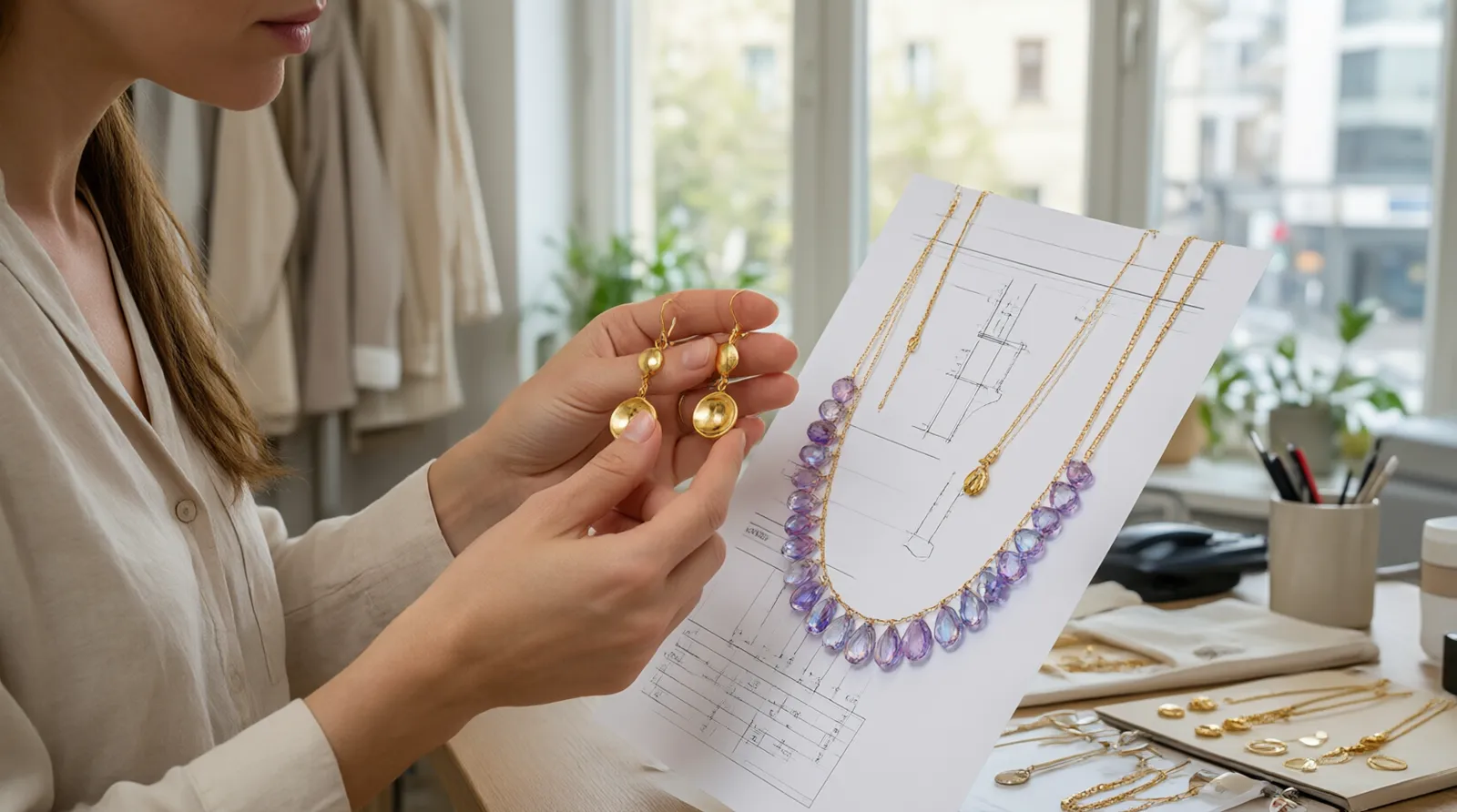
Logistics and Lead Times
Custom jewelry involves production lead times. Once an order is confirmed and materials sourced, manufacturing, plating, assembly, and QC take a set number of days. Afterward, goods move via air freight for speed, sea freight for cost-efficiency on large volumes, or express courier for samples.
Alternatives win on immediate availability. Walking into stores yields instant gratification. Ordering from domestic wholesale catalogs usually means 3-7 day ground shipping. However, this speed comes at the cost of exclusivity and margin.
Pros and Cons
Custom Jewelry (Direct OEM)
Pros:
- Precise control over materials (gold/rhodium-plated copper, natural stone, glass beads).
- Highly scalable with accessible MOQs on most designs.
- Flexible B2B payment terms (T/T, L/C, PayPal).
- Multilingual support removes communication friction for global teams.
- In-house QC ensures consistency before goods ship internationally.
- Superior unit economics compared to retail or domestic wholesale.
Cons:
- Requires longer lead times for production and international transit.
- Demands basic knowledge of trade terms (EXW, FOB) and freight logistics.
- Not suitable for single-unit consumer purchases outside of designated sample styles.
Alternatives (Retail & Wholesale)
Pros:
- Immediate acquisition; no production wait times.
- Easy returns and consumer protection laws apply locally.
- No need to manage international shipping or customs clearance.
- Access to established brand prestige (e.g., buying a recognized designer piece).
Cons:
- Significantly higher per-unit costs due to retail markups or middleman fees.
- Zero design exclusivity; competitors can buy the exact same stock.
- Limited material customization (cannot specify plating thickness or swap garnet for amethyst in a bulk run).
- Domestic wholesalers often lack multilingual support or flexible B2B payment structures.
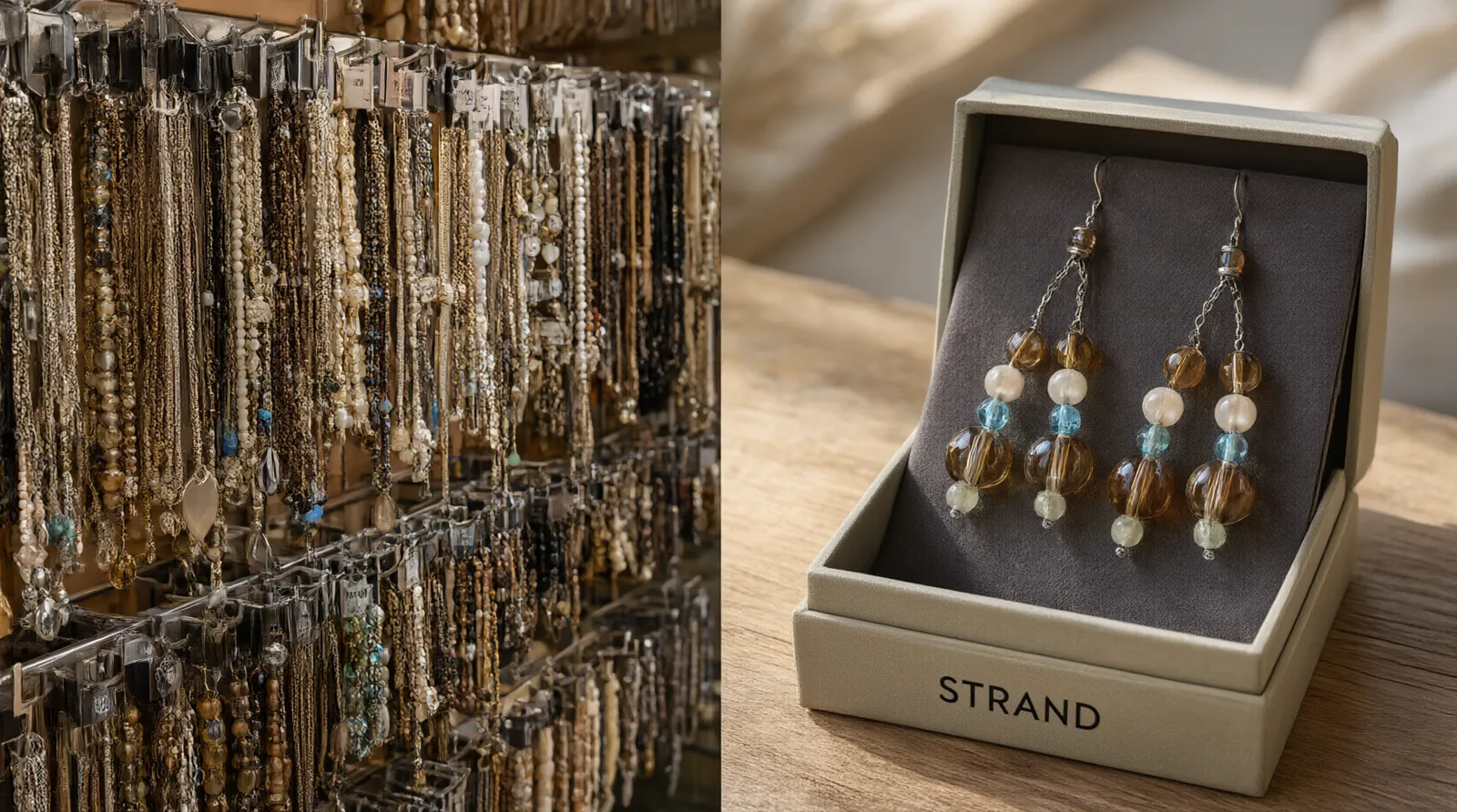
When to Choose Custom Jewelry
Choose custom jewelry manufacturing if you are a DTC brand owner launching a new seasonal collection. For example, if you need 500 units of vintage-style drop earrings featuring faux pearls and rhodium-plated copper for the European market, direct OEM provides the margin required to run paid acquisition profitably.
This path is also necessary for importers serving diverse regions. If your procurement team operates across the Middle East and Europe, having a supplier offering multilingual support streamlines operations. Furthermore, if your brand identity relies on specific material stories—such as ethically sourced natural stone or distinct gradient crystal cuts—custom manufacturing is the only way to guarantee those specifications across a low minimum order.
When to Choose Alternatives
Choose alternatives if you are an individual consumer shopping for a personal milestone. If you need a single engagement ring featuring a diamond or a specific cut of turquoise by tomorrow, booking an appointment with a service like M. Flynn or visiting retail stores is the correct operational decision.
Alternatives also make sense for brick-and-mortar boutiques running a quick, low-risk test. If you want to see if your local foot traffic responds to peridot or garnet jewelry before committing to a production run, buying a handful of pieces from a domestic wholesaler avoids the complexity of international freight. Finally, if your business lacks the cash flow to cover upfront manufacturing deposits via T/T or L/C, retail financing options provide a temporary bridge, albeit at a much higher total cost.
Final Verdict
For B2B buyers, importers, and DTC store owners, custom jewelry sourced directly from manufacturers is the superior commercial choice. The combination of low minimum order quantities, strict in-house QC, diverse material options (from 925-style silver finishes to gold-plated copper), and multilingual procurement support solves the core challenges of scaling a jewelry brand internationally. Alternatives serve consumers and micro-testers well, but they fail to deliver the unit economics and design exclusivity required to build a profitable, defensible brand in the US, EU, UK, or MENA markets.
If your current supplier cannot meet your margin targets or material specifications, audit your supply chain today. Review available stock catalogs, confirm current EXW/FOB rates as of the time of your inquiry, and verify production timelines for your target region. Request a quote and get current MOQ and pricing details directly from the team at strandjewelry.com.